

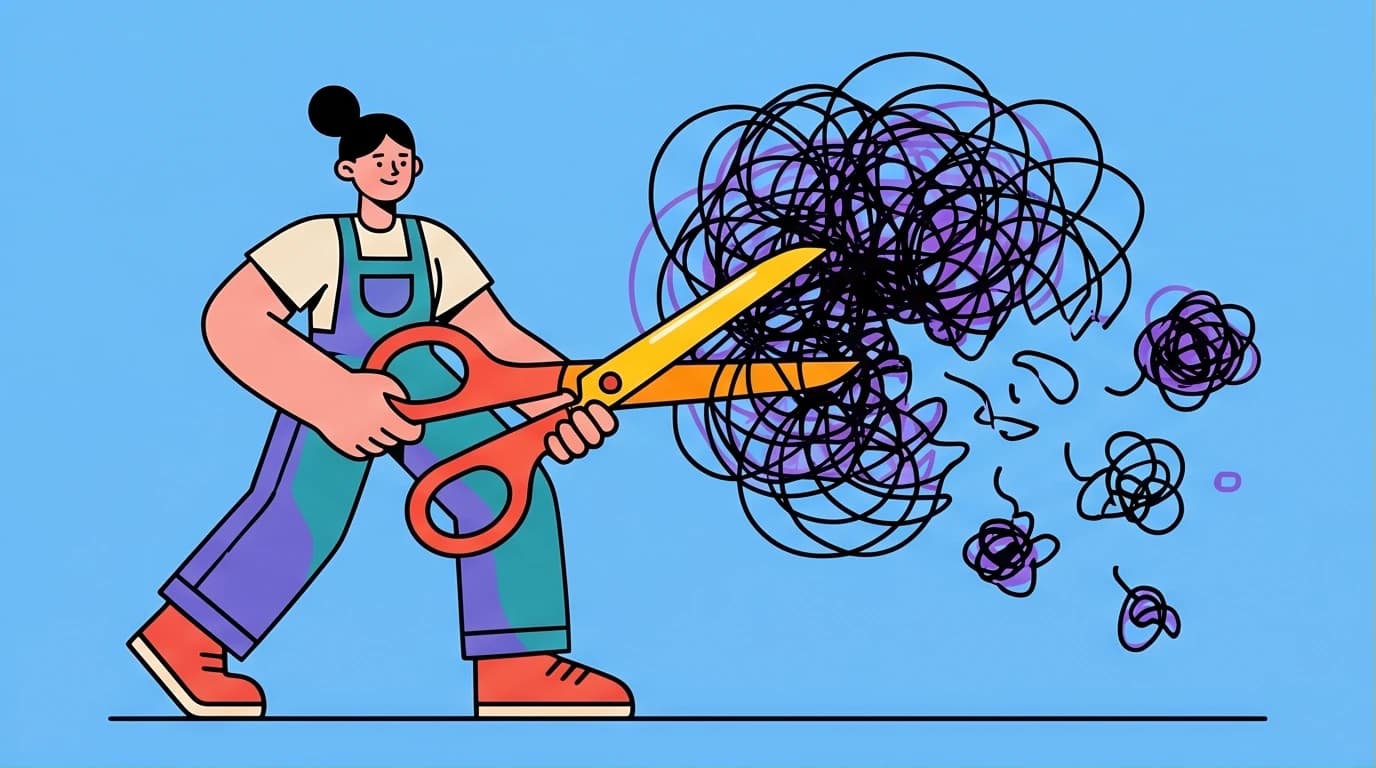
Your heart is racing, your chest feels tight, and a relentless loop of worst-case scenarios is playing on repeat in your mind. You know the panic might not be entirely logical, but your body is reacting like a life-threatening danger is standing right in front of you. You are exhausted, overwhelmed, and looking for a real solution to stop the spiral—not just someone nodding along while you vent.
If you are looking for a practical way out of this exhausting cycle, you are in the right place. Let's break down exactly what this approach is, how it functions, and why it might be the right tool for you.
Cognitive Behavioral Therapy Explained
To understand how to fix the problem, we first need to look at how the problem is built. Cognitive behavioral therapy explained simply is this: your thoughts, your feelings, and your behaviors are all deeply connected.
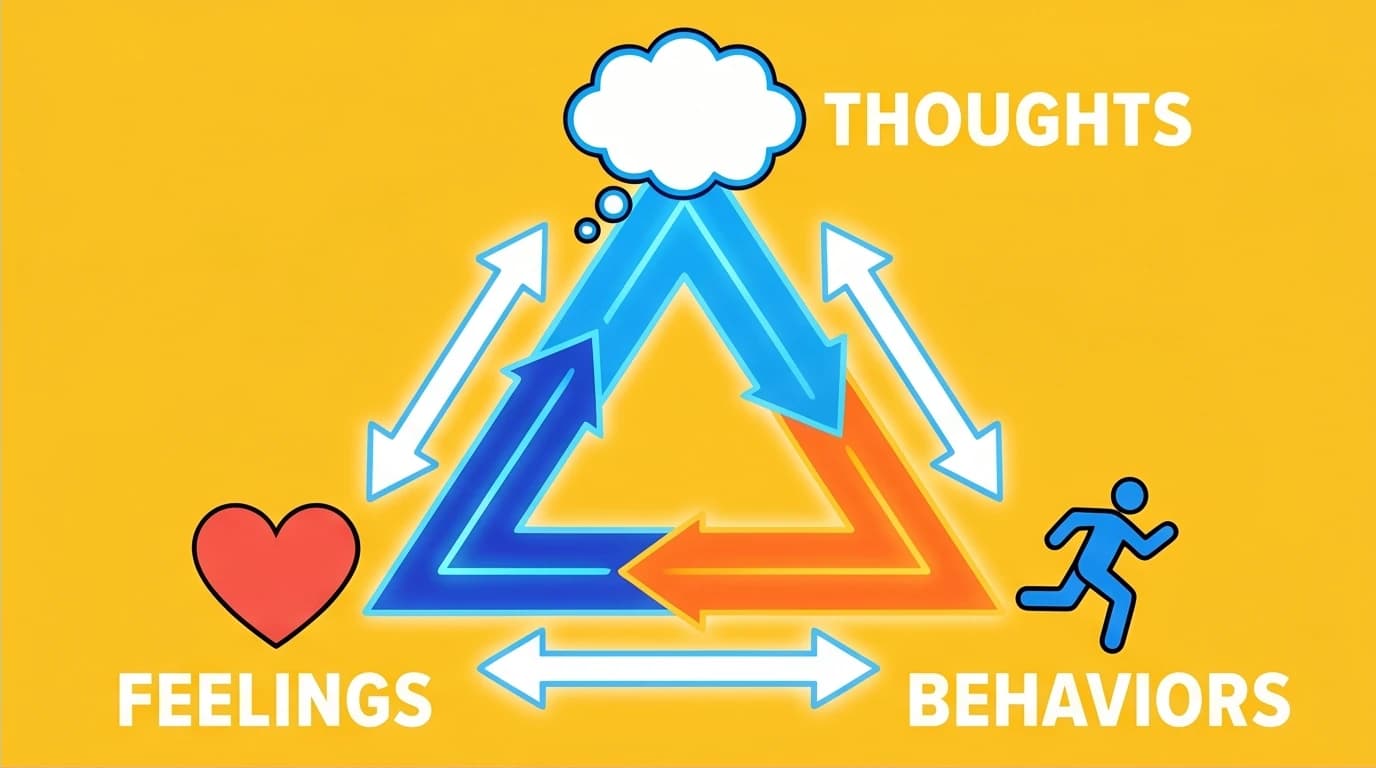
When you experience anxiety, it is rarely the actual event that causes the panic. Instead, it is your interpretation of that event. CBT is built on the "Cognitive Triangle." Here is how it operates:
- Thoughts (What we think): The automatic stories you tell yourself about a situation.
- Feelings (How we feel): The emotional and physical responses (fear, dread, a racing heart, sweating).
- Behaviors (What we do): The actions you take based on those thoughts and feelings (usually avoiding the situation, procrastinating, or seeking constant reassurance).
Imagine your boss sends you a short Slack message at 4:00 PM on a Friday: "Can we talk first thing Monday?"
If you have anxiety, your automatic thought is likely, "I made a huge mistake. I am getting fired." Instantly, your stomach drops, your chest tightens, and your weekend is ruined by dread (Feelings). To cope, you might spend the next 48 hours frantically checking old emails or drinking too much to numb the stress, completely isolating yourself from your family (Behaviors).
CBT steps into this exact scenario. It teaches you to hit the pause button. It shows you how to look at that thought—"I am getting fired"—and examine the evidence. Are you actually getting fired, or is your boss just preparing to assign you a new project? By changing the thought, you immediately dial down the intense physical panic and stop the destructive behaviors.
If you find yourself frequently trapped in these catastrophic thought spirals, you don't have to navigate them alone. Sometimes, having a practical guide to help you identify those mental traps can make all the difference. Clinical psychologist Dr. Andrea Bonior offers an incredible resource that perfectly complements CBT principles. Her book helps you recognize the deeply ingrained negative narratives running through your mind and gives you actionable tools to disarm them before they ruin your day.
Detox Your Thoughts
Andrea Bonior, Ph.D.
 18 Duration
 7 Key Points
 4.6 Rate
How CBT Works for Anxiety
Understanding the theory is one thing, but what does the actual process look like? How CBT works for anxiety comes down to treating you like a detective in your own life. You and your therapist work together to track down the thoughts that are lying to you and put them on trial.
Here is the exact roadmap of how CBT tackles anxiety day-to-day.
1. Catching Cognitive Distortions
Anxiety is a master manipulator. It relies on "cognitive distortions"—mental filters or shortcuts that convince you of a reality that is not actually true. The first step in CBT is learning to spot these traps as they happen. Common distortions include:
- Catastrophizing: Always assuming the absolute worst possible outcome. (e.g., "If I stumble over my words during this presentation, my career is over.")
- Mind Reading: Believing you know what other people are thinking about you. (e.g., "Everyone at this party thinks I am awkward and boring.")
- Emotional Reasoning: Believing that because you feel a certain way, it must be true. (e.g., "I feel terrified about flying, therefore this plane is definitely going to crash.")
2. Cognitive Restructuring (Challenging the Thoughts)
Once you catch the thought, you do not just accept it. You challenge it. A CBT therapist will help you ask hard questions:
- What is the actual evidence that this bad thing will happen?
- Have I handled situations like this before?
- If a friend had this exact thought, what would I tell them?
You replace the distorted, terrifying thought with a balanced, realistic one. Instead of, "This panic attack is going to give me a heart attack and I will die right here," you learn to think, "This is just a surge of adrenaline. It is uncomfortable, but it is not dangerous, and it will pass in a few minutes."

Learning to challenge your own thoughts can feel awkward at first, but it is a skill that gets easier with practice. If you want a deeper dive into exactly how to put your anxiety on trial, Dr. David D. Burns's pioneering work is an absolute must-read. Widely considered one of the most important books on cognitive behavioral therapy ever published, it is packed with practical exercises, worksheets, and proven techniques to help you systematically dismantle cognitive distortions and build a healthier, more realistic mindset.

Feeling Good
David D. Burns, M.D.
41 Duration9 Key Points4.6 RateIf the idea of tackling a dense book feels overwhelming when you're already managing anxiety, you can start absorbing these powerful CBT principles in a more manageable format.


LeapAhead

Get the core insights from foundational psychology books in 15-minute audio or text summaries, helping you learn new coping skills without the pressure of a long read.
3. Behavioral Experiments and Exposure
You cannot just think your way out of anxiety; you have to act your way out of it. Anxiety thrives on avoidance. If you are terrified of driving on the freeway, avoiding the freeway makes the fear stronger.
CBT uses gradual, safe exposure to show your brain that the perceived threat is a false alarm. You might start by just sitting in the driver's seat. A week later, you might drive one block. Eventually, you drive down the interstate. By intentionally facing the fear in small, manageable doses, you break the cycle of avoidance. Your brain learns a new reality: "I did the scary thing, and I survived."
Facing your fears head-on is undeniably daunting, especially when your brain is screaming at you to run away. Avoidance is the fuel that keeps anxiety burning, and learning to stop feeding that fire is crucial. Psychotherapist Jennifer Shannon breaks this process down brilliantly in her work on the "monkey mind." If you are struggling with the exposure aspect of CBT, her book provides a compassionate, easy-to-understand roadmap for breaking the cycle of avoidance, allowing you to retrain your brain to tolerate discomfort and reclaim your life.

Don't Feed the Monkey Mind
Jennifer Shannon
21 Duration8 Key Points4.4 RateIs CBT Effective for Anxiety?
If you are going to invest time, energy, and money into therapy, you need to know it works. Is CBT effective for anxiety? The answer is a resounding yes. It is widely considered the "gold standard" for treating anxiety disorders by the American Psychological Association (APA) and mental health professionals worldwide.
CBT is not just a trendy self-help concept. It is backed by decades of rigorous clinical trials. Here is why it stands out when judging its effectiveness:
- It works across multiple disorders: Whether you are dealing with Generalized Anxiety Disorder (GAD), Social Anxiety, Panic Disorder, or specific phobias, the CBT framework adapts to target the root mechanics of each issue.
- It changes the brain: Functional MRI scans of patients before and after a course of CBT show visible changes in brain activity, specifically in the areas responsible for processing fear and regulating emotions. You are literally rewiring your neural pathways.
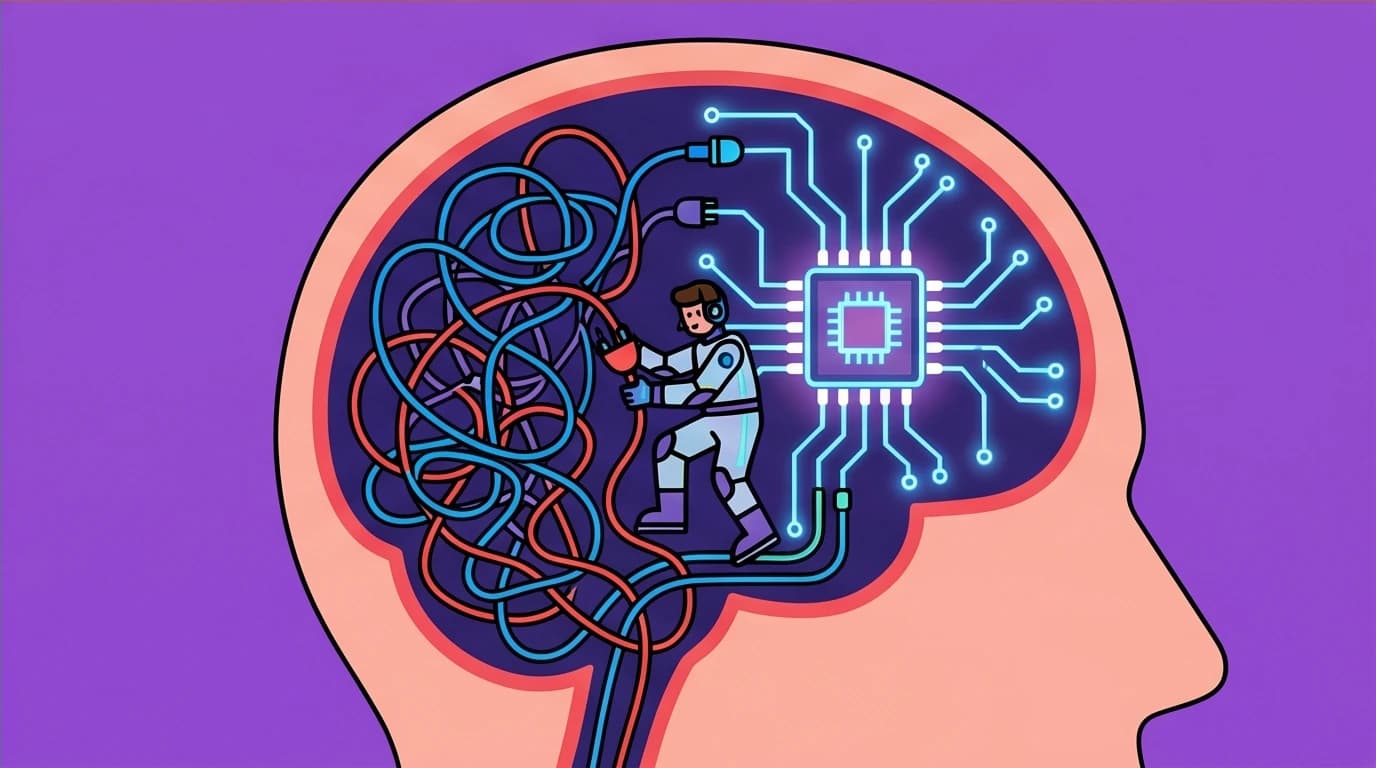
- It outperforms medication alone for long-term results: While anti-anxiety medications can provide necessary short-term relief, they often act like a band-aid. If you stop the medication, the anxiety usually returns. CBT equips you with permanent skills. Many patients find that CBT alone, or a combination of CBT and medication, provides the most robust defense against relapse.
This adaptability is one of CBT's greatest strengths. For instance, the general framework can be specifically tailored to address the unique challenges of certain conditions.
CBT Benefits for Mental Health
Moving beyond just stopping panic attacks, CBT benefits for mental health ripple out into almost every area of your daily life. It is an incredibly empowering process.
You Become Your Own Therapist
Traditional psychoanalysis might have you sitting on a couch for five years talking about your childhood. CBT is highly structured, goal-oriented, and usually time-limited (often lasting between 12 to 20 sessions). The ultimate goal of a CBT therapist is to make themselves obsolete. You walk away with a personalized mental toolkit you can use for the rest of your life.
The beauty of building this personalized mental health toolkit is that you carry it with you long after your therapy sessions end. It is empowering to know you have the coping skills to handle whatever life throws your way. For a phenomenal expansion of that daily toolkit, Dr. Julie Smith's comprehensive guide is like having a therapist in your pocket. It is filled with bite-sized, actionable strategies for managing anxiety, boosting your resilience, and maintaining your emotional well-being over the long haul.
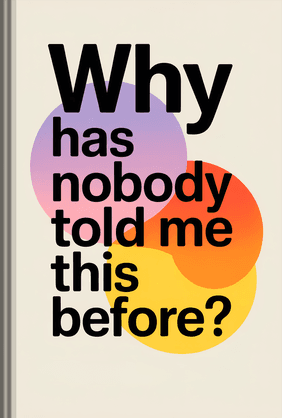
Why Has Nobody Told Me This Before?
Dr. Julie Smith
23 Duration8 Key Points4.6 RateThe key to building a robust mental toolkit is consistency, but it can be tough to find the energy to read after a long day. One practical way to keep learning is by fitting it into small moments, like your commute or a walk.
LeapAhead
Continuously build your mental health toolkit by listening to key ideas from psychology and self-help authors, even when you're too busy or exhausted for a full book.
Focuses on the Present
When you are drowning in anxiety, you do not have the bandwidth to unpack an event that happened twenty years ago. You need relief right now. CBT is highly focused on the present moment. It looks at what is keeping you stuck today and gives you practical exercises to fix it today.
Highly Actionable and Measurable
CBT is not a passive experience. It involves homework. You might track your thoughts in a journal, read a recommended workbook you picked up from Barnes & Noble or Amazon, or practice deep breathing exercises. Because it is structured, you can clearly measure your progress. You will easily recognize when you go from having four panic attacks a week to zero.
The true power of CBT lies in turning these therapeutic insights into consistent, daily habits.
What to Expect and How to Avoid Common Pitfalls
While CBT is incredibly effective, setting the right expectations will save you from frustration.
It takes real effort. Just showing up to a therapist's office for 45 minutes a week will not cure your anxiety. The real magic happens between sessions. If your therapist gives you a worksheet to track your negative thoughts, you have to do the work. Think of it like physical therapy; the exercises might ache a bit at first, but doing them daily is what heals the muscle.
It gets slightly uncomfortable before it gets better. Facing your fears through behavioral exposure is hard. Your anxiety might briefly spike when you start challenging your deeply held beliefs or facing situations you have avoided for years. Expect this. It is a sign the therapy is working, not failing.
It is not just "positive thinking." A major misconception is that CBT tells you to just "look on the bright side." It does not. Toxic positivity is useless against a true anxiety disorder. CBT is about accurate thinking. It helps you see the world exactly as it is—neither artificially sunny nor completely catastrophic.
FAQ
How long does it take for CBT to start working?
Many people begin to notice a reduction in their anxiety symptoms within 4 to 8 sessions. A standard course of CBT usually lasts between 12 and 20 weeks. Because it is highly structured, you will not be left wondering if you are making progress; you and your therapist will track your symptoms regularly.
Many people begin to notice a reduction in their anxiety symptoms within 4 to 8 sessions. A standard course of CBT usually lasts between 12 and 20 weeks. Because it is highly structured, you will not be left wondering if you are making progress; you and your therapist will track your symptoms regularly.
Can I do CBT on my own, or do I need a therapist?
While working with a licensed professional is the most effective route—especially if your anxiety is severe or causing panic attacks—the principles of CBT are highly accessible. There are excellent, evidence-based workbooks and apps available that teach the basics of cognitive restructuring. However, a therapist provides objective feedback that is often crucial when your own brain is tricking you.
While working with a licensed professional is the most effective route—especially if your anxiety is severe or causing panic attacks—the principles of CBT are highly accessible. There are excellent, evidence-based workbooks and apps available that teach the basics of cognitive restructuring. However, a therapist provides objective feedback that is often crucial when your own brain is tricking you.
Do I need to take medication while doing CBT?
Not necessarily. Many people successfully manage and overcome their anxiety using CBT alone. However, if your anxiety is so intense that you cannot focus in therapy or complete the behavioral exercises, your doctor or psychiatrist might recommend medication to turn down the "volume" of your panic enough so that the CBT techniques can take root.
Not necessarily. Many people successfully manage and overcome their anxiety using CBT alone. However, if your anxiety is so intense that you cannot focus in therapy or complete the behavioral exercises, your doctor or psychiatrist might recommend medication to turn down the "volume" of your panic enough so that the CBT techniques can take root.
Will my therapist make me face my biggest fears on day one?
Absolutely not. Exposure is done gradually and collaboratively. You will create a "fear ladder" with your therapist, starting with very small, manageable situations that cause mild discomfort. You will never be forced into a situation you are not prepared to handle. You are always in the driver's seat.
Absolutely not. Exposure is done gradually and collaboratively. You will create a "fear ladder" with your therapist, starting with very small, manageable situations that cause mild discomfort. You will never be forced into a situation you are not prepared to handle. You are always in the driver's seat.