

You hear the word everywhere. A manager tells their team to be more resilient during a corporate restructuring. A therapist mentions it after you describe a difficult breakup. You see books about it topping the charts on Amazon. But what does it actually mean in practice?
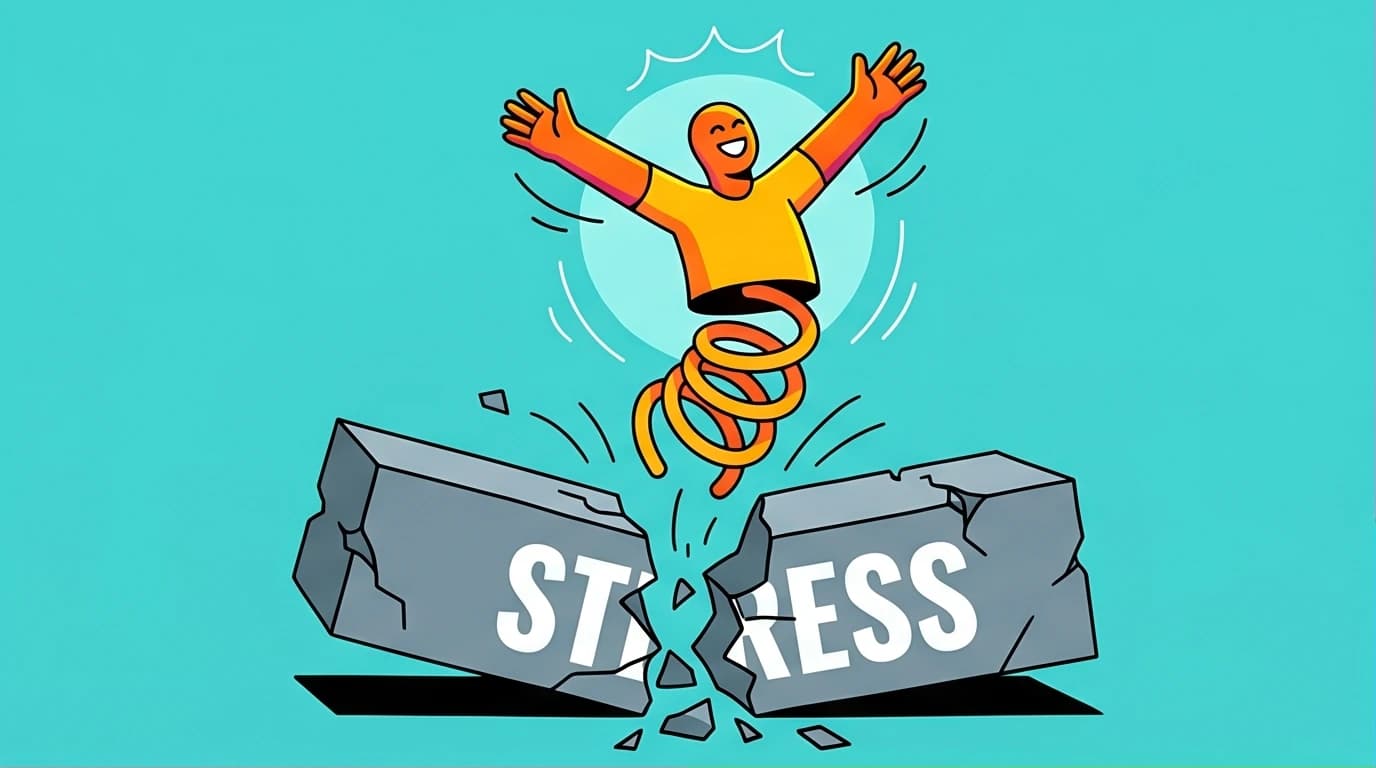
Many people mistakenly believe that being resilient means you do not feel stress, sadness, or anger. They think it means walking through a storm without getting wet. That is clinically inaccurate. Emotional resilience is not an impenetrable shield. It is a shock absorber. You still feel the bump in the road, but you do not let it wreck the car.
If you are trying to understand your own emotional baseline, you need to strip away the pop-psychology buzzwords. You need to look at the clinical markers of how a person processes a setback, organizes their thoughts, and moves forward.
The Psychological Resilience Definition
To understand how you handle stress, we first need to look at the exact psychological resilience definition.
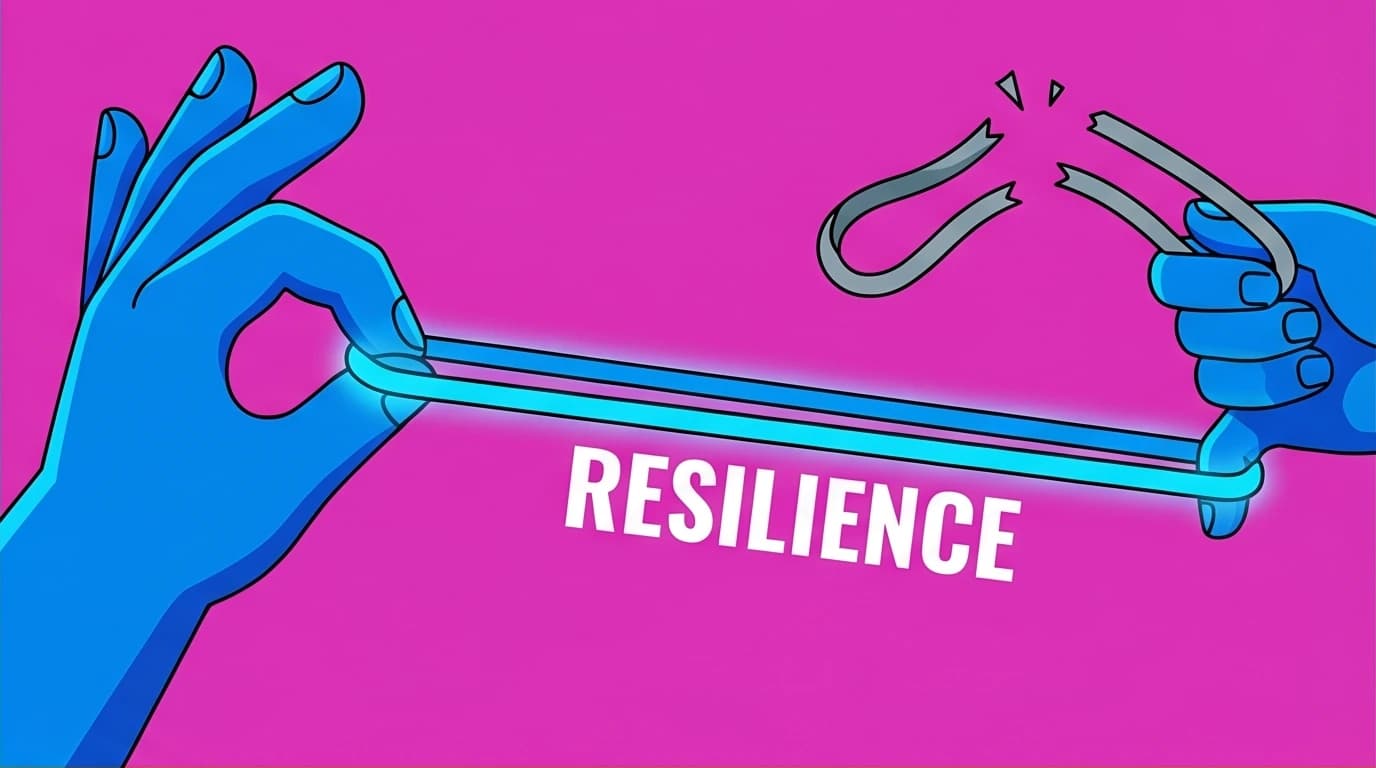
In clinical psychology, resilience refers to the process of adapting well in the face of adversity, trauma, tragedy, threats, or significant sources of stress. Think of it as a rubber band. When stretched by family issues, relationship problems, or workplace stressors, a resilient rubber band expands to handle the tension and then snaps back to its original shape. A non-resilient rubber band stays stretched out, loses its elasticity, or breaks entirely.
From a neurobiological standpoint, resilience involves the efficient regulation of the sympathetic nervous system (your fight-or-flight response) and the parasympathetic nervous system (your rest-and-digest response). When a stressful event occurs, your brain releases cortisol and adrenaline. Your heart rate spikes. This is a normal, healthy reaction.
Resilience is what happens next.
A resilient individual experiences the spike but possesses the cognitive and emotional tools to bring their nervous system back to a baseline state relatively quickly. They do not stay stuck in a loop of panic or chronic stress. They process the negative emotion, accurately evaluate the threat, and organize a path forward.
To truly understand how deep this rubber-band effect goes, it helps to look at the science behind our nervous system's response to extreme stress. If you are fascinated by the neurobiology of fight-or-flight responses and want to learn exactly how physical and emotional trauma reorganizes the brain, Dr. Bessel van der Kolk’s groundbreaking work is an absolute must-read. It offers incredible insight into how our bodies physically hold onto stress and, more importantly, how we can release it to establish a healthier baseline.
The Body Keeps The Score
Bessel Van Der Kolk
 32 Duration
 10 Key Points
 4.5 Rate
Resilience vs Mental Toughness: What Is the Difference?
When people search for ways to handle stress, they often confuse two highly distinct concepts: resilience vs mental toughness. Understanding the difference is critical if you want to accurately assess your own behavioral traits.
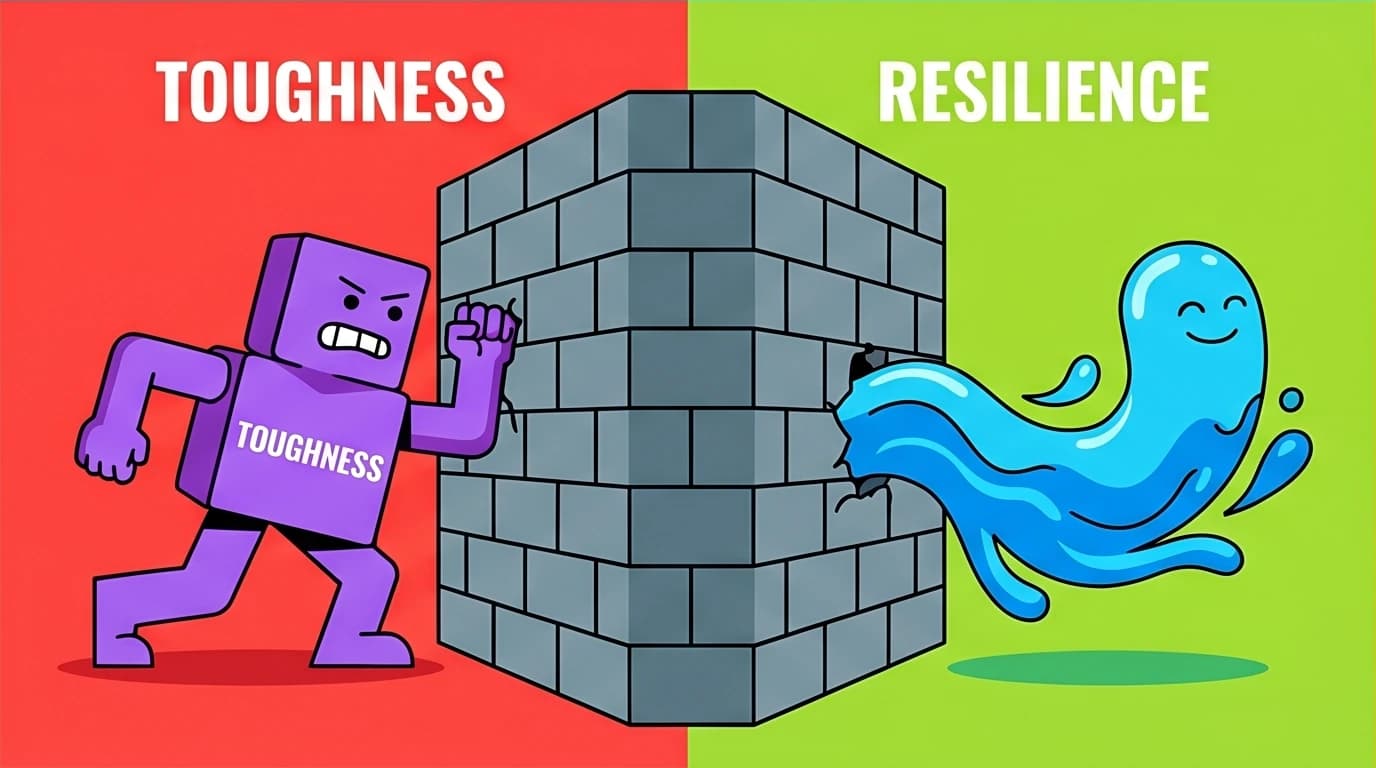
Mental toughness is often associated with grit, endurance, and pushing through pain. It is a mindset built on discipline and unwavering focus. An athlete running a marathon in 90-degree Fahrenheit heat relies on mental toughness to ignore muscle fatigue and cross the finish line. Toughness says, "I will not let this break me. I will push through."
Resilience, on the other hand, is about recovery and adaptability. It is softer, more fluid, and requires high emotional intelligence. It says, "This broke me down a little bit, but I will repair, learn, and recover."
Here is how they differ in practice:
- Response to Pain: Mental toughness suppresses or ignores emotional pain to achieve a goal. Emotional resilience acknowledges the pain, processes it, and heals from it.
- Flexibility: Mental toughness is rigid. You stick to the plan no matter what. Resilience is highly flexible. If the plan fails, you pivot and find a new route.
- Burnout Risk: Relying solely on mental toughness often leads to severe burnout because the individual never stops to process their emotional load. Resilience prevents burnout because it builds rest, reflection, and emotional processing into the recovery cycle.
You need both in life, but mental toughness without emotional resilience is a recipe for a sudden psychological crash.
The distinction between stubbornly pushing through pain and actually processing it is the key to avoiding a total psychological crash. If you find yourself constantly relying on grit and mental toughness but feeling entirely exhausted at the end of every week, you might be on the fast track to burnout. Emily and Amelia Nagoski dive deep into this exact phenomenon, offering science-backed strategies for completing the stress cycle so you can actually recover instead of just surviving another day.

Burnout
Emily Nagoski, Ph.D., Amelia Nagoski, DMA
25 Duration9 Key Points4.5 RateReading insightful books like these is a powerful step, but it can be tough to find the energy when you're already feeling drained.


This app lets you absorb the key ideas from bestselling books in 15-minute audio or text summaries, so you can learn without adding to your cognitive load.
 LeapAhead
Characteristics of a Resilient Person
If you want to evaluate your own capacity for recovery, look at your daily habits. Psychologists have identified specific behavioral markers that indicate a high capacity for bouncing back.
Here are the core characteristics of a resilient person:
1. High Cognitive Flexibility
Resilient people do not get stuck in black-and-white thinking. When a sudden roadblock appears, they can reframe the situation. If a project fails at work, they do not immediately think, "I am a failure and I will be fired." They think, "This strategy failed. What data can I pull from this to make the next attempt better?" They can view a single event from multiple perspectives.
2. An Internal Locus of Control
People with an internal locus of control believe that their actions directly influence their outcomes. They do not view themselves as helpless victims of circumstance. Even in situations where they have very little control—like an economic downturn or a sudden illness—they immediately search for the variables they can control, such as their daily routine, their attitude, or their treatment plan.
3. Competent Emotional Regulation
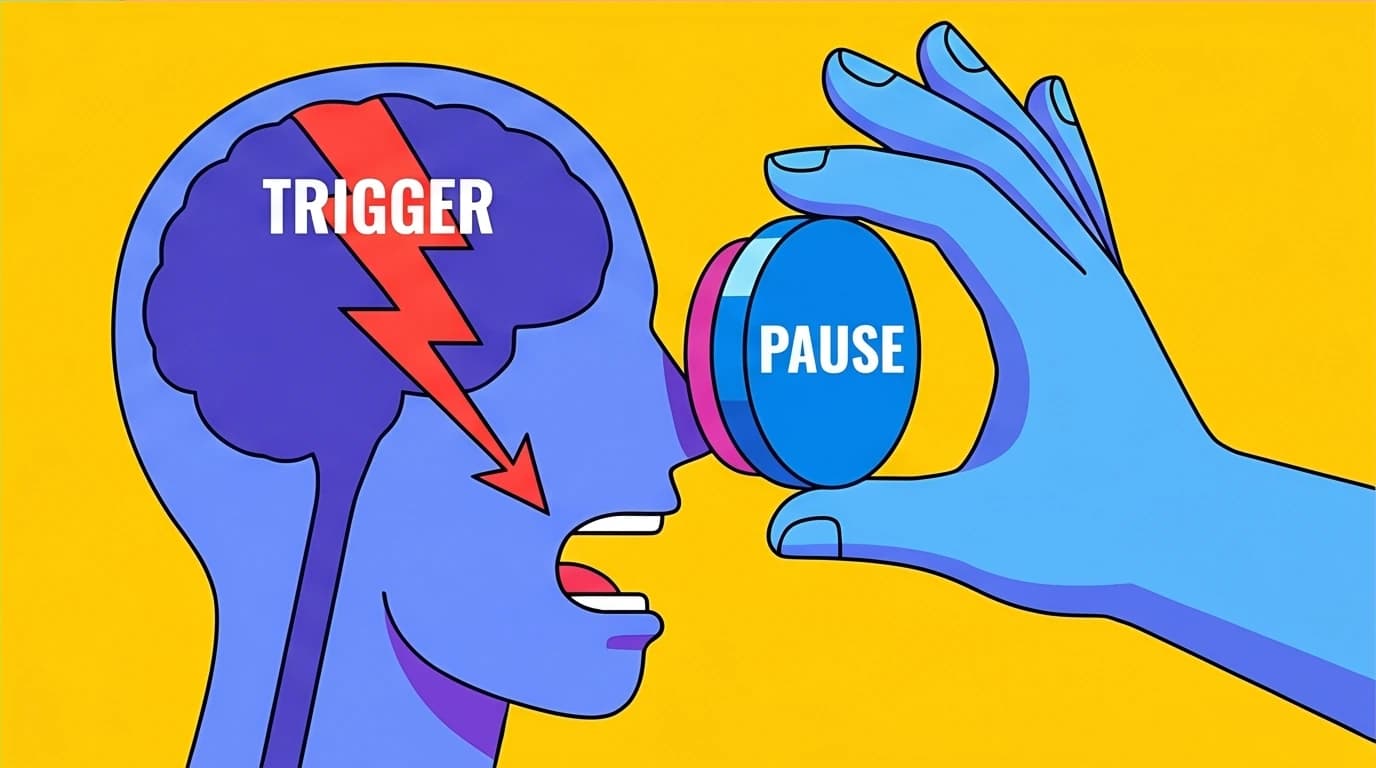
This is the bedrock of resilience. Resilient people still feel intense anger, frustration, and grief. However, they possess the ability to insert a pause between the emotional trigger and their reaction. They notice their heart racing and their frustration rising, but they do not immediately yell, send a passive-aggressive email, or shut down. They sit with the emotion, identify it, and let the initial wave pass before making a decision.
4. Realistic Optimism
This is entirely different from toxic positivity. Toxic positivity forces a smile and says, "Everything happens for a reason!" when something terrible occurs. Realistic optimism acknowledges the harsh reality of a bad situation but maintains a core belief that things will eventually improve if the right steps are taken. It is the balance between accepting a negative present and trusting in a positive future.
Mastering realistic optimism can feel incredibly difficult if your default setting is to expect the worst. Fortunately, optimism isn't a fixed personality trait—it is a cognitive skill that you can intentionally develop over time. Dr. Martin E. P. Seligman, the father of positive psychology, explores exactly how to break free from self-defeating thought patterns and cultivate a more constructive outlook. His research provides actionable exercises to help you reframe setbacks without falling into the trap of toxic positivity.
Learned Optimism
Martin E. P. Seligman. Ph.D
40 Duration8 Key Points4.8 Rate5. Seeking Connection Over Isolation
When non-resilient individuals face heavy stress, their default mechanism is often isolation. They pull away from friends, family, and colleagues. A highly resilient person recognizes that human connection regulates the nervous system. They reach out. They talk to a mentor, schedule a therapy session, or grab a coffee with a friend to vocalize their stress.
Developing these characteristics is a conscious practice. If you are ready to move from understanding to action, there are specific exercises you can implement to strengthen your emotional core.
Examples of Resilience in Everyday Life
You do not need to survive a natural disaster to practice emotional resilience. It is built and tested in small, ordinary moments. Below are clear examples of resilience in everyday life that highlight how these psychological traits look in action.
Scenario A: The Sudden Financial Hit
Imagine your car breaks down on the highway 50 miles from home. The repair shop quotes you $1,200.
- Non-Resilient Response: You spiral into a panic. You spend three days complaining to everyone about your terrible luck. You feel targeted by the universe, lose sleep, and let the stress ruin your focus at work for a week.
- Resilient Response: You allow yourself to be furious and stressed for the afternoon—because it is genuinely a frustrating situation. Then, you regulate. You accept the reality of the bill, organize your budget, figure out where to cut back this month to cover the cost, and move on. You process the frustration and do not let it bleed into the rest of your week.
Scenario B: Professional Criticism
You spend three weeks preparing a presentation. During the meeting, your director stops you halfway through and sharply critiques the data, effectively killing the project.
- Non-Resilient Response: You take the critique as a personal attack on your intelligence. You get defensive in the meeting. Afterward, you quietly disengage from your job, harbor deep resentment toward your boss, and refuse to put effort into the next project.
- Resilient Response: You feel the immediate sting of embarrassment. You take a breath to steady your heart rate and listen to the feedback without defending yourself. Later, you separate your self-worth from the work. You realize the director was right about the data, apply the feedback, and improve your analytical process for the next pitch.
This ability to depersonalize feedback and focus on growth is a cornerstone of professional maturity. It is a skill that can be developed to handle career setbacks with greater ease.
Scenario C: Daily Parenting Chaos
You are at a Barnes & Noble trying to browse for a book, and your toddler suddenly throws a massive, screaming tantrum on the floor because you won't buy a toy. Strangers are staring.
- Non-Resilient Response: Your anxiety spikes. You feel intensely embarrassed and start yelling at the child, escalating the situation. You leave the store feeling like a terrible parent and let the bad mood ruin the entire Saturday.
- Resilient Response: You recognize your own stress rising. You take a deep breath to regulate your nervous system so you do not project your anxiety onto the child. You calmly pick up the toddler, leave the store to remove the audience, and wait for them to calm down. You recognize that toddlers lack emotional regulation, accept the moment for what it is, and continue your day once the storm passes.
How to Assess Your Own Baseline
If you are reading this to figure out where you stand, ask yourself these three direct questions about your behavior over the past six months:
- How long is my recovery time? When a minor inconvenience happens (a spilled coffee, a delayed flight, a negative comment), does it ruin your hour, your day, or your whole week? Resilient people have shorter recovery times.
- Do I isolate or connect? When you feel overwhelmed, do you cancel plans and lock yourself in your room, or do you seek out a trusted friend or partner to talk it through?
- Can I identify the emotion? When you are stressed, can you name the specific feeling (e.g., "I feel inadequate right now" or "I feel out of control"), or do you just feel a massive, blurry cloud of "bad"? Granular emotional awareness is a prerequisite for resilience.
Emotional resilience is a dynamic trait. It is not something you are simply born with or without. It is a muscle. Every time you face a minor setback, properly label your emotion, and choose an adaptable response instead of a rigid one, you are physically rewiring your brain's neural pathways to handle the next challenge with more grace.
As mentioned, granular emotional awareness is the foundation of true resilience. If you struggle to accurately name what you are feeling—defaulting to vague terms like "stressed" or "bad"—you cannot effectively process those emotions. Brené Brown’s extensive research on human connection provides an incredible roadmap for expanding your emotional vocabulary. By learning to pinpoint exactly what you are experiencing, you can drastically reduce your recovery time and build a much stronger, more adaptable psychological framework for the future.

Atlas of the Heart
Brené Brown
21 Duration8 Key Points4.6 RateFAQ
Can emotional resilience be learned later in life?
Yes. Because of neuroplasticity, the brain's ability to reorganize itself by forming new neural connections, you can build emotional resilience at any age. This is done through targeted practices like cognitive behavioral therapy (CBT), mindfulness, consistently reframing negative thoughts, and gradually exposing yourself to manageable stress to build tolerance.
Yes. Because of neuroplasticity, the brain's ability to reorganize itself by forming new neural connections, you can build emotional resilience at any age. This is done through targeted practices like cognitive behavioral therapy (CBT), mindfulness, consistently reframing negative thoughts, and gradually exposing yourself to manageable stress to build tolerance.
Is it possible to be too resilient?
What people call being "too resilient" is usually just emotional suppression or stubbornness. If you find yourself enduring a highly toxic workplace or an abusive relationship because you pride yourself on your ability to "bounce back" from anything, that is not resilience. True emotional resilience includes the clarity and self-respect to walk away from chronically damaging environments.
What people call being "too resilient" is usually just emotional suppression or stubbornness. If you find yourself enduring a highly toxic workplace or an abusive relationship because you pride yourself on your ability to "bounce back" from anything, that is not resilience. True emotional resilience includes the clarity and self-respect to walk away from chronically damaging environments.
How do I know if I am lacking emotional resilience?
Common signs include feeling constantly victimized by daily circumstances, relying heavily on unhealthy coping mechanisms (like alcohol or doom-scrolling) to numb out, experiencing chronic anger over minor inconveniences, and having a prolonged inability to move past previous failures. If a minor setback consistently derails your entire week, your resilience baseline may need attention.
Common signs include feeling constantly victimized by daily circumstances, relying heavily on unhealthy coping mechanisms (like alcohol or doom-scrolling) to numb out, experiencing chronic anger over minor inconveniences, and having a prolonged inability to move past previous failures. If a minor setback consistently derails your entire week, your resilience baseline may need attention.