


You are facing aggressive quarterly targets, shrinking departmental budgets, and an organizational restructuring that seems to change weekly. Your calendar is double-booked, and your direct reports are looking to you for answers you simply do not have. Navigating the modern corporate landscape requires more than just raw grit. It demands a systematic approach to absorbing shock, making fast decisions, and bouncing back without burning out.
Redefining Emotional Resilience at Work
A dangerous myth in corporate culture equates resilience with invulnerability. The assumption is that strong professionals simply power through exhaustion and ignore friction. That approach leads directly to executive burnout.
True emotional resilience at work focuses on the speed and efficiency of your recovery, not your ability to endure endless punishment. Think of high-performance athletes. They do not train 24 hours a day. They exert intense effort, then follow strict recovery protocols. In a corporate environment, resilience is your psychological recovery protocol. It is the capacity to process negative events, regulate your emotional response, and return to a baseline of clear, strategic thinking.
Grasping the fundamentals of emotional resilience is the first step to cultivating it in yourself and your team.
If you find yourself constantly powering through exhaustion instead of genuinely processing workplace stress, rethinking your approach to emotional regulation is a game-changer. Developing the vocabulary and mental flexibility to navigate these difficult feelings without letting them hijack your day is crucial for long-term career survival. For those who want to dive deeper into practical frameworks for processing negative emotions and returning to a baseline of clear thinking, checking out expert insights on the topic can completely transform your daily workflow.

Emotional Agility
Susan David, Ph.D.
 48 Duration
 8 Key Points
 4.5 Rate
Personal Frameworks: Overcoming Career Setbacks
Before you can lead a team through a crisis, you must stabilize your own foundation. Whether you lost a major client, missed out on a promotion, or survived a grueling round of layoffs, overcoming career setbacks requires cognitive discipline.
The Cognitive Restructuring Method
When a setback occurs, high-stress environments push our brains into catastrophic thinking. Stop the spiral by forcing your thoughts through a structured filter:
- Identify the trigger: Write down the exact event without emotion. ("The product launch was delayed by three months.")
- Audit your narrative: What are you telling yourself about this event? ("I am failing as a manager, and leadership is going to replace me.")
- Challenge the assumption: Is that narrative 100% true? Look at the actual data.
- Reframe the action: Shift from victimhood to agency. ("The delay is frustrating, but it gives us time to fix the remaining bugs. I need to outline a revised timeline for the executive board tomorrow.")

Strategic Detachment
You cannot solve deep organizational problems while constantly responding to Slack messages at 10 PM. Strategic detachment means setting hard boundaries to protect your cognitive bandwidth. Leave your laptop in another room after a certain hour. Use your PTO. Distance provides the perspective necessary to solve complex problems.
Reclaiming your evenings and weekends is not just about catching up on sleep; it is a strategic business decision that directly impacts your leadership capabilities. Unfortunately, modern corporate culture often glorifies burnout and non-stop hustle, making it incredibly difficult to enforce these boundaries without feeling guilty. If you are looking for a blueprint on how to push back against the "always-on" mentality and design a calmer, more sustainable way to run your team, exploring alternative models of workplace culture is an excellent next step.
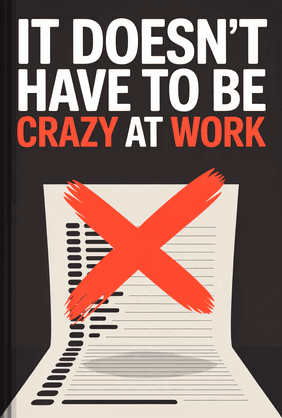
It Doesn't Have to Be Crazy at Work
Jason Fried, David Heinemeier Hansson
21 Duration9 Key Points4.7 RateBut when your days are already packed, finding the time and energy to read books like these cover-to-cover can feel daunting. If you want to absorb these essential ideas without adding to your workload, an app can help.

Get the core ideas from business bestsellers on creating calmer, more effective workplaces in just 15-minute audio or text summaries.

Download LeapAhead App now
Building Leadership Resilience
Building leadership resilience requires acknowledging a difficult truth: as a manager, you absorb anxiety from the executives above you and the direct reports below you. If you do not actively manage this compound stress, you will break.
The Oxygen Mask Principle
Airlines tell you to secure your own oxygen mask before assisting others. Corporate leadership functions the same way. If you are sleep-deprived, highly reactive, and operating entirely on adrenaline, your poor decision-making will infect your team. Prioritizing your physical health, mental focus, and professional boundaries is not selfish. It is a fundamental requirement of your job description.
Compartmentalization and Peer Networks
Do not process your executive-level stress with your junior employees. It destroys their confidence in the company. Instead, compartmentalize the information. Build a peer network of other managers—either internally or through external industry groups—where you can candidly discuss leadership challenges, vent frustrations, and crowdsource solutions without violating confidentiality or damaging team morale.
Cultivating Resilient Teams During Corporate Transitions
Your team's ability to weather a storm dictates your ultimate success as a leader. Building resilient teams means engineering an environment where people feel safe to take calculated risks, make mistakes, and speak the truth during turbulent times.
Establish Psychological Safety
Fear destroys performance. If employees worry they will be fired for raising a red flag on a failing project, they will hide the problem until it explodes. Explicitly reward transparency. When a team member brings you bad news, your first response must be, "Thank you for bringing this to my attention. Let's look at how we can fix it." This builds a culture that tackles problems early.
Creating an environment where your direct reports feel comfortable delivering bad news does not happen by accident. It requires intentional leadership and a deep understanding of team dynamics. When employees are paralyzed by the fear of making mistakes, innovation grinds to an absolute halt and hidden issues fester. If you want to learn exactly how to cultivate a transparent culture where speaking up is actively encouraged rather than punished, there is foundational research on building teams that thrive on open communication and continuous learning.
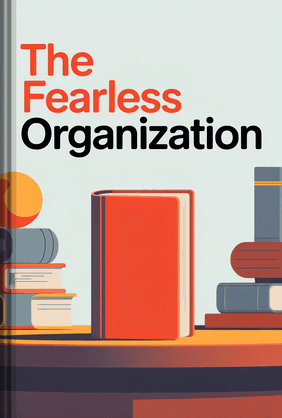
The Fearless Organization
Amy C. Edmondson
53 Duration10 Key Points4.6 RateImplement Ruthless Prioritization
During a crisis, asking a team to maintain a massive list of secondary projects guarantees failure across the board. You must act as a shield. Review your team's workload and aggressively cut or pause non-essential initiatives. Give them three clear, high-impact priorities. When everything is a priority, nothing is. Protecting your team's focus is the highest form of leadership resilience.
Protecting your team's bandwidth during times of organizational chaos is arguably your most vital role as a leader. It is easy to fall into the trap of trying to execute a dozen projects poorly rather than doing two or three things exceptionally well. Mastering the art of saying "no" to good ideas so you can focus entirely on great ones takes practice. To equip yourself with the tools needed to relentlessly cut through the noise and figure out what truly matters, consider exploring strategies dedicated to the disciplined pursuit of less.
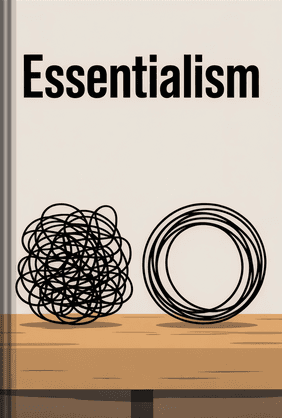
Essentialism
Greg McKeown
32 Duration10 Key Points4.6 Rate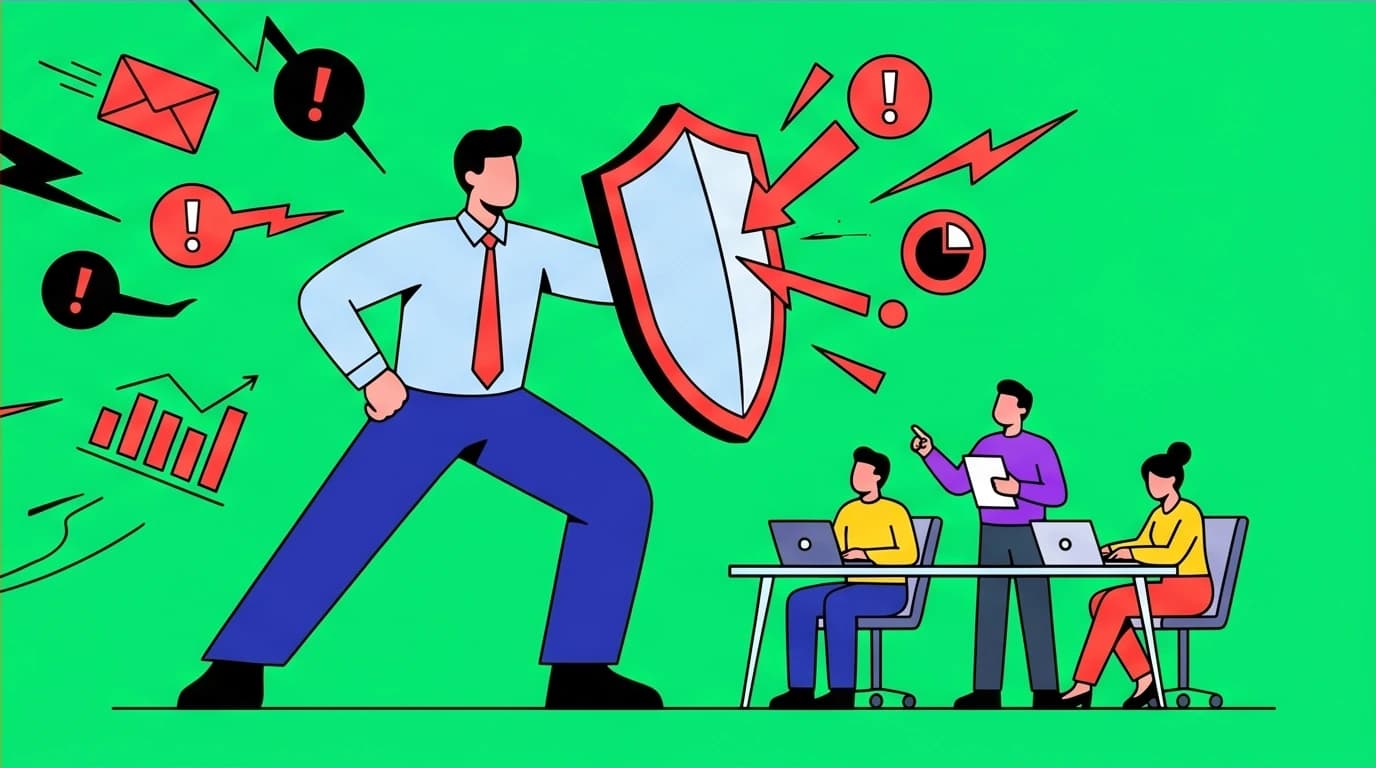
Create Predictability Micro-Habits
When a company is undergoing massive changes—like an acquisition or a major pivot—employees lose their sense of stability. Counteract macro-unpredictability with micro-predictability. Hold your weekly 1-on-1s at the exact same time. Send out a consistent Friday afternoon recap email. These small routines give your team an anchor of certainty when the rest of the business feels chaotic.
Building these frameworks for resilience is an ongoing process. For leaders who want to consistently learn from top thinkers but are too exhausted for heavy reading after a long day, microlearning can be a powerful tool.
The frameworks in this article provide a strong foundation for managing stress. For a broader look at developing this crucial skill, you can explore more techniques.
Reading is one of the best ways to internalize these concepts and discover new frameworks.
Fit powerful ideas on leadership, productivity, and resilience into your day with 15-minute book summaries you can read or listen to on your commute.
Download LeapAhead App now
FAQ
Q: Can resilience be learned, or is it an innate personality trait?
Resilience is a learned behavior, much like a muscle that can be strengthened through targeted exercise. While some people naturally regulate stress better, anyone can adopt cognitive frameworks, boundary-setting practices, and recovery habits to drastically improve their resilience in high-pressure environments.
Resilience is a learned behavior, much like a muscle that can be strengthened through targeted exercise. While some people naturally regulate stress better, anyone can adopt cognitive frameworks, boundary-setting practices, and recovery habits to drastically improve their resilience in high-pressure environments.
Q: How do I build resilience in a truly toxic work environment?
You cannot out-resilience a deeply toxic, abusive culture. If your organization features constant public humiliation, systemic gaslighting, or unethical demands, your best strategy is an exit plan. Use your resilience strictly to protect your mental health and maintain professional boundaries while you actively search for a new role.
You cannot out-resilience a deeply toxic, abusive culture. If your organization features constant public humiliation, systemic gaslighting, or unethical demands, your best strategy is an exit plan. Use your resilience strictly to protect your mental health and maintain professional boundaries while you actively search for a new role.
Q: How can managers push for high performance without damaging team resilience?
The key is matching high demands with high support. You can set aggressive targets and hold people accountable, provided you also supply the necessary resources, clear roadblocks, and offer actionable feedback. Pushing for results only destroys resilience when leaders demand impossible outcomes while offering zero support or clarity.
The key is matching high demands with high support. You can set aggressive targets and hold people accountable, provided you also supply the necessary resources, clear roadblocks, and offer actionable feedback. Pushing for results only destroys resilience when leaders demand impossible outcomes while offering zero support or clarity.