

Setbacks derail careers. Unexpected losses shatter daily routines. Chronic stress drains your energy. When you hit a wall, raw motivation usually falls short. You do not need empty platitudes; you need functional blueprints to rewire your mindset and process difficult emotions.
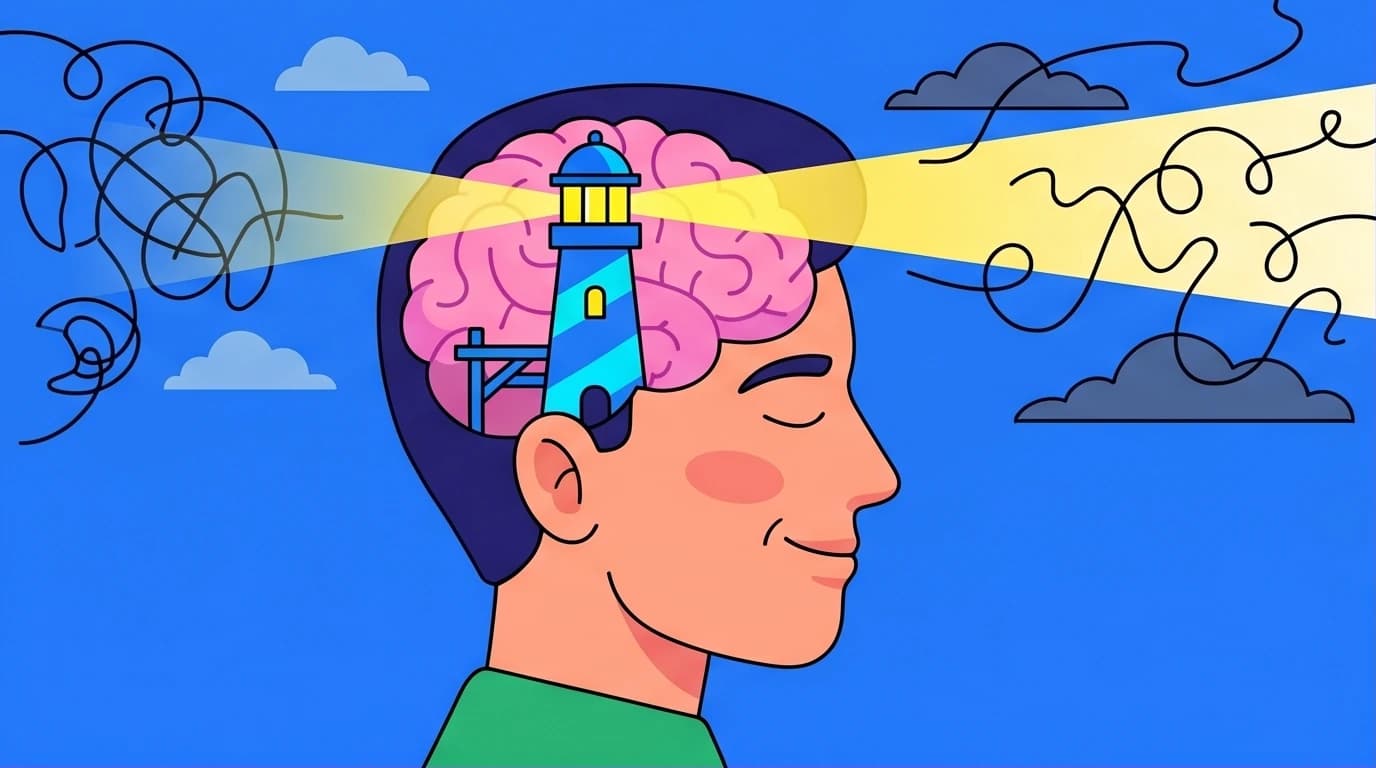
Reading the right literature provides a quiet, controlled environment to study how others survived and thrived. To help you build an anti-fragile mind, we curated the definitive list of the best books on resilience. We categorized them by their primary focus—whether you need scientific frameworks, raw inspiration, or practical stoicism.
Decoding the Science: Books on Emotional Resilience
Understanding the psychological mechanisms behind how we process failure is the first step to building a resilient mind. These books decode the science of bouncing back.
1. Option B by Sheryl Sandberg and Adam Grant
When Facebook COO Sheryl Sandberg suddenly lost her husband, she faced a void that felt impossible to cross. She teamed up with Wharton psychologist Adam Grant to write a definitive guide on building resilience in the face of devastating trauma.
This is one of the most practical books on emotional resilience available today. It dismantles the "three Ps" that stunt recovery: Personalization (thinking it is your fault), Pervasiveness (thinking an event will affect all areas of your life), and Permanence (thinking the shock will last forever).
- Core Takeaway: Resilience is not a fixed personality trait. It is a muscle you can build.
- Who Should Read It: Anyone processing a severe personal loss, career failure, or unexpected life transition.
- Best Format: The hardcover or paperback makes a thoughtful gift, while the audiobook (available on Apple Books or Audible) feels intensely personal.
If you are dealing with sudden adversity, reading the actual text of Option B is a profoundly comforting experience. Sandberg’s vulnerability paired with Grant’s actionable psychological frameworks provides a roadmap to reclaiming your joy. Whether you are navigating a professional setback or a personal loss, having this book on your nightstand feels like talking to a deeply empathetic friend who happens to have a Ph.D. in human behavior.
Option B
Sheryl Sandberg, Adam Grant
 46 Duration
 9 Key Points
 4.5 Rate
2. Mindset: The New Psychology of Success by Carol S. Dweck
Stanford psychologist Carol Dweck spent decades researching how our beliefs about our own capabilities influence our reality. While not marketed exclusively as a crisis management manual, it forms the foundation of all resilience work.
Dweck explains the difference between a "fixed mindset" (believing intelligence and talent are static) and a "growth mindset" (believing abilities can be developed through dedication). When adversity strikes, a fixed mindset sees failure as an identity. A growth mindset sees it as data.
- Core Takeaway: The word "yet" is your greatest weapon. You haven't solved the problem yet.
- Who Should Read It: Managers, parents, and self-improvement enthusiasts trying to stop self-sabotaging behaviors after a failure.

Understanding the theory behind the growth mindset is one thing, but actually implementing it in your daily life requires guidance. Dweck's groundbreaking book offers countless real-world examples—from the classroom to the boardroom—showing exactly how to reframe your internal monologue. If you want to stop letting the fear of failure dictate your choices, picking up a copy of Mindset is a fantastic investment in your personal development.
Mindset
Carol S. Dweck
51 Duration8 Key Points4.6 Rate3. A Modern Tool for a Busy Schedule: LeapAhead
For many, the biggest obstacle to learning isn't a lack of desire, but a lack of time. If your schedule is too fragmented for full-length books, a microlearning app like LeapAhead offers a pragmatic way to absorb the core ideas from many of the titles on this list. It condenses bestselling nonfiction books into 15-minute summaries available in both text and audio formats.
Instead of letting a book gather dust on your nightstand, you can learn its key lessons during a commute, workout, or coffee break. With a library of over 30,000 titles, it's a powerful tool for building a consistent learning habit and conquering "reading debt."
- Core Takeaway: Consistent, small learning sessions are more achievable than infrequent, long reading marathons.
- Who Should Use It: Busy professionals, commuters, and anyone who wants to learn more but struggles to find the time.
- Best Format: The mobile app is designed for on-the-go learning, making it easy to fit into any part of your day.
While summaries can't replicate the immersive experience of reading a full book, they are incredibly effective for discovering new concepts and reinforcing knowledge. For those wanting to build mental toughness but facing a packed calendar, LeapAhead provides a valuable, accessible solution. However, users seeking deep, academic-level analysis may find the summarized format too concise for their needs.


Absorb key ideas from the world's best resilience books in just 15 minutes with LeapAhead.
 LeapAhead
Enduring the Unthinkable: Books About Overcoming Adversity
Sometimes, the best way to navigate your own hardship is to study those who survived unimaginable circumstances. These historical and biographical accounts provide profound perspective.
4. Man's Search for Meaning by Viktor E. Frankl
If you only read one book from this list, make it this one. Viktor Frankl, a psychiatrist who survived multiple Nazi concentration camps, chronicles his harrowing experience and introduces logotherapy.
Frankl observed that prisoners who survived longest were not necessarily the physically strongest, but those who maintained a sense of meaning for their future. This stands as the ultimate benchmark among books about overcoming adversity. It teaches that while you cannot control what happens to you, you retain the absolute freedom to choose your response.
- Core Takeaway: Between stimulus and response, there is a space. In that space lies our freedom to choose our attitude.
- Who Should Read It: Anyone feeling deeply lost, overwhelmed by suffering, or searching for purpose in dark times.

Frankl’s masterpiece is widely considered required reading for the human experience. It's a remarkably short book, yet it carries the weight of a lifetime of wisdom. If you are struggling to find a silver lining or feeling crushed by the sheer weight of life's demands, having a physical copy of Man's Search for Meaning to underline and reflect upon can completely shift your daily perspective.
Man's Search for Meaning
Viktor E. Frankl
44 Duration8 Key Points4.6 Rate5. The Choice: Embrace the Possible by Dr. Edith Eva Eger
At age sixteen, Edith Eger was sent to Auschwitz. Decades later, she became a prominent clinical psychologist helping veterans, victims of abuse, and everyday people heal from their traumas. The Choice beautifully bridges raw survival memoir with clinical psychology.
Eger argues that our own minds can become our tightest prisons. We often stay trapped in our past long after the actual danger has passed. Her actionable advice focuses on moving from victimhood to survivorship.
- Core Takeaway: You cannot heal what you refuse to feel.
- Who Should Read It: Readers who appreciate deeply moving, narrative-driven non-fiction books about bouncing back and reclaiming autonomy.
Forging Armor: Mental Toughness Books
Mental toughness focuses heavily on endurance, discipline, and pushing past perceived physical and mental limits. These selections are designed to make you comfortable with discomfort.
6. Grit: The Power of Passion and Perseverance by Angela Duckworth
Why do some people succeed while others fail, even when they possess equal talent? Angela Duckworth answers this by defining "grit"—a specific blend of passion and long-term perseverance.
Duckworth's research spans West Point cadets to National Spelling Bee champions. She provides a clear equation: Talent × Effort = Skill. Skill × Effort = Achievement. Effort counts twice. This is one of the most heavily cited mental toughness books for a reason: it systematically removes "natural talent" as an excuse for quitting.
- Core Takeaway: Consistency of effort over the long run matters far more than intense, short-term sprints of motivation.
- Who Should Read It: Entrepreneurs, athletes, and professionals feeling frustrated by a lack of immediate progress.
If you find yourself starting new projects with massive enthusiasm only to fizzle out when the honeymoon phase ends, you need to read this book. Duckworth's meticulous research proves that you don't need a golden ticket of natural talent to reach the top of your field. Adding Grit to your reading list will give you the practical tools needed to develop unwavering perseverance and outwork your self-doubt.
Grit
Angela Duckworth
18 Duration8 Key Points4.6 Rate7. Can't Hurt Me: Master Your Mind and Defy the Odds by David Goggins
David Goggins transformed himself from a depressed, overweight young man into a US Armed Forces icon and one of the world's top endurance athletes, running races over 100 miles long.
His book is aggressive, unfiltered, and highly effective. Goggins introduces concepts like the "Accountability Mirror" and the "40% Rule," which suggests that when your mind tells you that you are completely exhausted, you have only tapped into 40% of your actual capacity.
- Core Takeaway: Motivation is fleeting; discipline is the only thing that will carry you through genuine hardship.
- Who Should Read It: People who need a sharp wake-up call and prefer tough love over gentle encouragement.
- Best Format: The Audible version is highly recommended. Goggins and the narrator treat the audiobook like a podcast, pausing between chapters to add exclusive, unscripted context.
Actionable Philosophies: Non-Fiction Books About Bouncing Back
Philosophy doesn't have to be academic. These selections turn ancient wisdom and modern risk theory into practical systems for everyday life.
8. The Obstacle Is the Way by Ryan Holiday
Ryan Holiday brought Stoicism to modern America. Drawing on the writings of Marcus Aurelius, Seneca, and Epictetus, this book reframes how we view roadblocks.
Instead of seeing a problem as something blocking your path, Holiday teaches you to view the problem as the path. If a project fails, it teaches you what doesn't work. If a competitor undercuts you, they force you to innovate.
- Core Takeaway: A crisis is a terrible thing to waste. Use adversity as fuel for your own fire.
- Who Should Read It: Startup founders, creatives, and anyone dealing with high-stress environments who needs a quick, actionable mindset shift.
For those times when everything seems to be going wrong—when the promotion goes to someone else, or a key client walks away—this modern take on Stoicism is the ultimate mental reset. Holiday's writing is incredibly punchy and easy to digest, making it perfect for busy professionals. Grab a copy of The Obstacle Is the Way to learn how America's top CEOs and athletes turn their biggest headaches into their greatest advantages.
The Obstacle Is the Way
Ryan Holiday
44 Duration7 Key Points4.6 Rate9. Antifragile: Things That Gain from Disorder by Nassim Nicholas Taleb
Resilience is often defined as returning to your original state after a shock. Taleb argues that we should aim higher: we should become antifragile.
Things that are fragile break under stress. Things that are resilient resist stress and stay exactly the same. Things that are antifragile actually get stronger and better when exposed to volatility, randomness, and stress. Think of human bones or the immune system. Taleb teaches you how to structure your finances, career, and mindset to benefit from chaos rather than fear it.
- Core Takeaway: Do not try to predict the storm. Build a ship that sails better when the wind blows hard.
- Who Should Read It: Analytical thinkers, investors, and readers who want a systemic, macro-level approach to navigating uncertainty.

How to Choose Your Next Read
With so many excellent options, start by identifying your immediate need:
- For immediate grief or shock: Pick up Option B. It is gentle, practical, and highly empathetic.
- For perspective on suffering: Read Man's Search for Meaning. It is short but heavy, and consistently ranks high on Goodreads and Amazon.
- For career or athletic drive: Grab Grit or Can't Hurt Me. They provide the structured discipline necessary to push through plateaus.
Read with a pen in hand. Resilience is not absorbed by osmosis; it requires active engagement with the material. Pick one concept from your chosen book and apply it tomorrow morning.
Turn your commute into a masterclass on mental toughness. Try LeapAhead to start learning on the go.
LeapAheadFAQ
What is the best book for someone going through a sudden tragedy?
Option B by Sheryl Sandberg and Adam Grant is widely considered the standard for navigating sudden tragedy. It directly addresses the isolation of grief and provides evidence-based tactics for finding joy again without forcing toxic positivity.
Option B by Sheryl Sandberg and Adam Grant is widely considered the standard for navigating sudden tragedy. It directly addresses the isolation of grief and provides evidence-based tactics for finding joy again without forcing toxic positivity.
Is there a difference between mental toughness and emotional resilience?
Yes. Mental toughness generally refers to the discipline, focus, and endurance required to push through difficult tasks and achieve high performance (e.g., running a marathon, finishing a hard project). Emotional resilience is the psychological ability to process stress, adapt to sudden adversity, and recover from emotional trauma without breaking down.
Yes. Mental toughness generally refers to the discipline, focus, and endurance required to push through difficult tasks and achieve high performance (e.g., running a marathon, finishing a hard project). Emotional resilience is the psychological ability to process stress, adapt to sudden adversity, and recover from emotional trauma without breaking down.
I don't have time to read. Are these books effective as audiobooks?
Absolutely. Many self-improvement enthusiasts prefer consuming these titles on platforms like Audible. Autobiographical books like Can't Hurt Me are actually enhanced in audio format, as the author provides additional commentary. The Obstacle Is the Way is also incredibly easy to consume during a commute or a workout.
Absolutely. Many self-improvement enthusiasts prefer consuming these titles on platforms like Audible. Autobiographical books like Can't Hurt Me are actually enhanced in audio format, as the author provides additional commentary. The Obstacle Is the Way is also incredibly easy to consume during a commute or a workout.
Where can I find objective reviews before buying these books?
Goodreads is the best platform to read unbiased user reviews and find specific quotes from these books. Barnes & Noble and Amazon also offer extensive customer feedback sections that often highlight whether a book leans more toward academic theory or practical application.
Goodreads is the best platform to read unbiased user reviews and find specific quotes from these books. Barnes & Noble and Amazon also offer extensive customer feedback sections that often highlight whether a book leans more toward academic theory or practical application.