


You are likely staring at a spreadsheet analyzing competitors, trying to figure out how to undercut their pricing by 10% or add a marginally better feature. But if you are fighting for inches in a crowded market, you are already losing. Building a successful startup is not about outworking a dozen rivals in a race to the bottom. It is about avoiding them entirely.
To survive and scale, you need to rethink everything business school taught you about market dynamics.
The Core Problem with Perfect Competition
Standard economic theory holds perfect competition up as the ideal state of a market. In this model, multiple firms offer identical products, consumers have perfect information, and prices are driven down by market forces.
For the consumer, this sounds great. For a business, it is a nightmare.
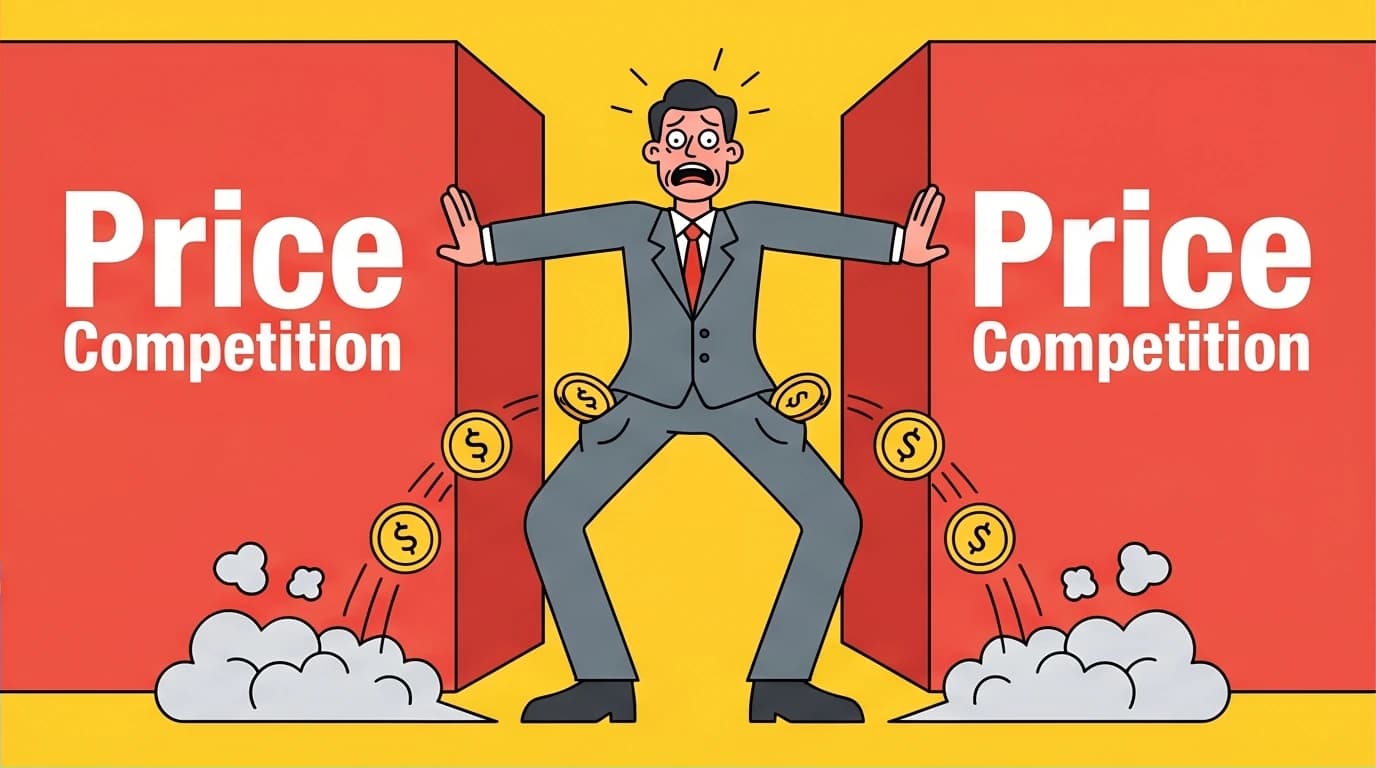
Under perfect competition, profit margins are driven exactly to zero. If you run a local coffee shop, you cannot charge $8 for a latte when the shop across the street charges $4. You are forced to compete on price, operate on razor-thin margins, and struggle to pay employees. You have no capital left over to invest in better training, superior equipment, or actual innovation.
This brings us to the fundamental dynamic of the Peter Thiel monopoly vs competition debate. Thiel argues that if you want to build a lasting, valuable business, perfect competition is the exact opposite of what you should aim for. You want to build a business so distinct that you dictate the pricing, control the market, and generate enough surplus capital to fund ambitious, long-term projects.
For a comprehensive breakdown of the book's core ideas and chapter-by-chapter insights, our detailed summary is an excellent place to start.
Why "Competition Is for Losers"
People often treat business like a sport. In sports, competition is inherently valuable because the goal is to beat the opponent on a predefined playing field. In business, treating your market like a battlefield destroys value.
When Thiel famously stated that competition is for losers, he meant it literally.
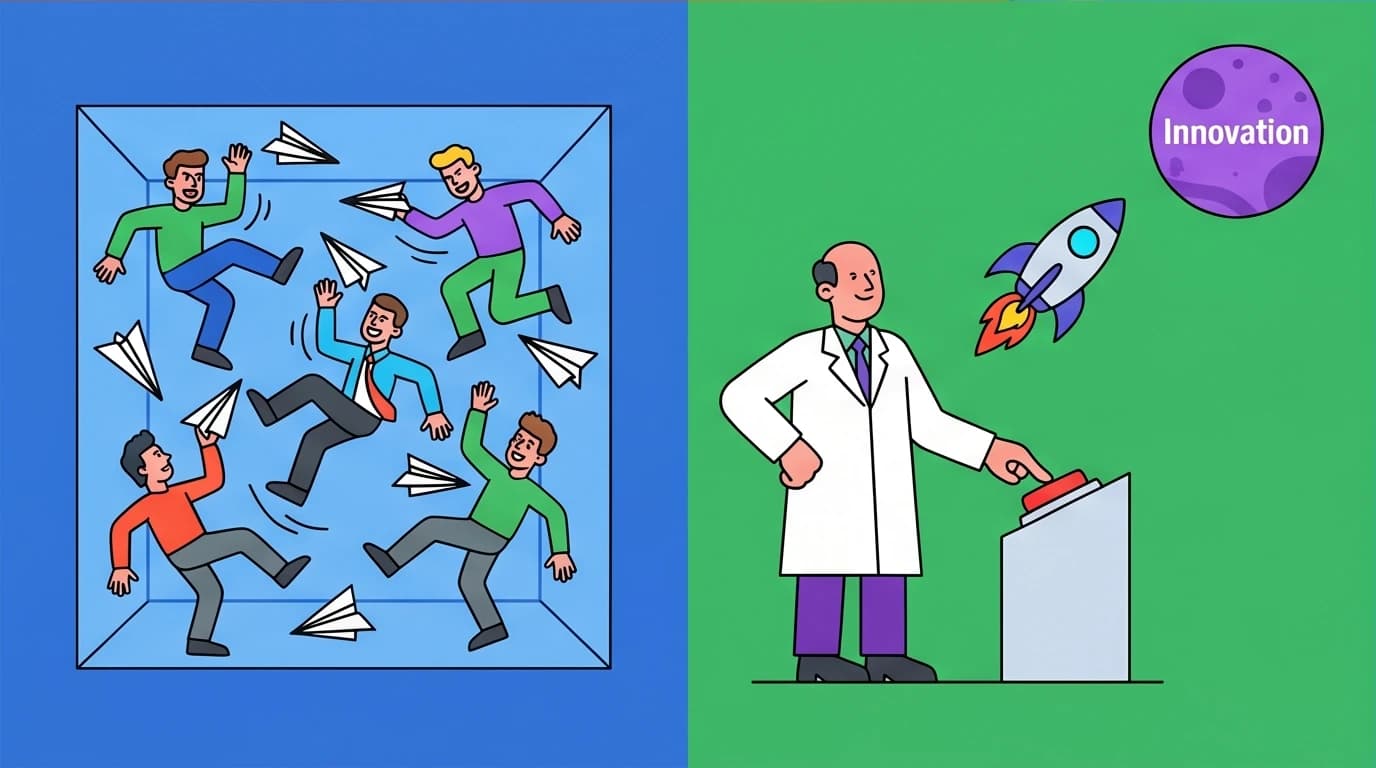
Companies obsessed with competing lose sight of innovating. They track their rivals’ feature updates, match their marketing spend, and mimic their product roadmaps. This creates an echo chamber of marginal improvements. Look at the airline industry. United, Delta, and American Airlines constantly fight over routes, baggage fees, and legroom. They generate billions in revenue but historically retain pennies in profit per passenger. They are trapped in a competitive struggle.
Google, on the other hand, does not compete in search. It processes over 90% of global search queries. Because it does not have to worry about a serious rival threatening its core business every morning, it can afford to invest billions into experimental projects like autonomous driving, quantum computing, and advanced AI.
When you eliminate competition, you free up the mental and financial bandwidth required to invent the future.
This single phrase captures the book's philosophy perfectly. For more powerful insights from Peter Thiel, it's worth exploring the context behind his most impactful statements.
If you want to fully grasp why fighting for marginal improvements is a losing game, you need to go straight to the source. Peter Thiel’s foundational book dives deeper into this exact philosophy, challenging everything traditional business schools teach about market dynamics. It is an essential read for any ambitious founder who wants to stop competing and start inventing entirely new categories. If you are ready to build a lasting enterprise, this is the ultimate playbook.

Zero to One
Peter Thiel, Blake Masters
 47 Duration
 8 Key Points
 4.5 Rate
Defining the Creative Monopoly
When Americans hear the word "monopoly," they immediately think of illegal cartels, government corruption, or bullies like standard oil jacking up prices because consumers have no alternative.
That is a monopoly built on artificial scarcity or regulatory capture. It extracts value without creating anything new.
A creative monopoly Zero to One style is fundamentally different. It is a monopoly achieved by being so incredibly good at what you do that no other firm can offer a viable alternative. You are not artificially restricting supply; you are creating a new demand that only you can fulfill.
Apple created a monopoly on the premium smartphone ecosystem with the iPhone. They did not lobby the government to ban Android; they simply built a proprietary combination of hardware and software that was orders of magnitude better than the status quo.
Creative monopolies drive progress. They introduce entirely new categories of products, pushing society from zero to one. Once they establish that monopoly, their outsized profits act as the reward for successfully innovating.
The concept of a creative monopoly aligns perfectly with the idea of rendering your competition irrelevant. If you are struggling to figure out how to step away from crowded, cutthroat industries—what economists call "red oceans"—and instead create uncontested market space, there is a masterclass available on this exact topic. This classic strategy guide provides actionable frameworks for finding your own "blue ocean," allowing you to capture new demand rather than fighting over existing customers.
Blue Ocean Strategy
W. Chan Kim
47 Duration8 Key Points4.6 RateExecuting a Zero to One Business Strategy
Understanding the theory is useless if you cannot apply it. If you are a product manager or founder, you cannot just declare a monopoly. You have to engineer one from the ground up.
A successful Zero to One business strategy relies on a specific sequence of execution. You must secure a tiny beachhead market before expanding.
1. Dominate a Tiny Niche First
The biggest mistake early-stage startups make is going after a "1% share of a $100 billion market." It sounds pragmatic, but it is a trap. If a market is that massive, it is already swarming with entrenched competitors. You will be ignored and crushed.
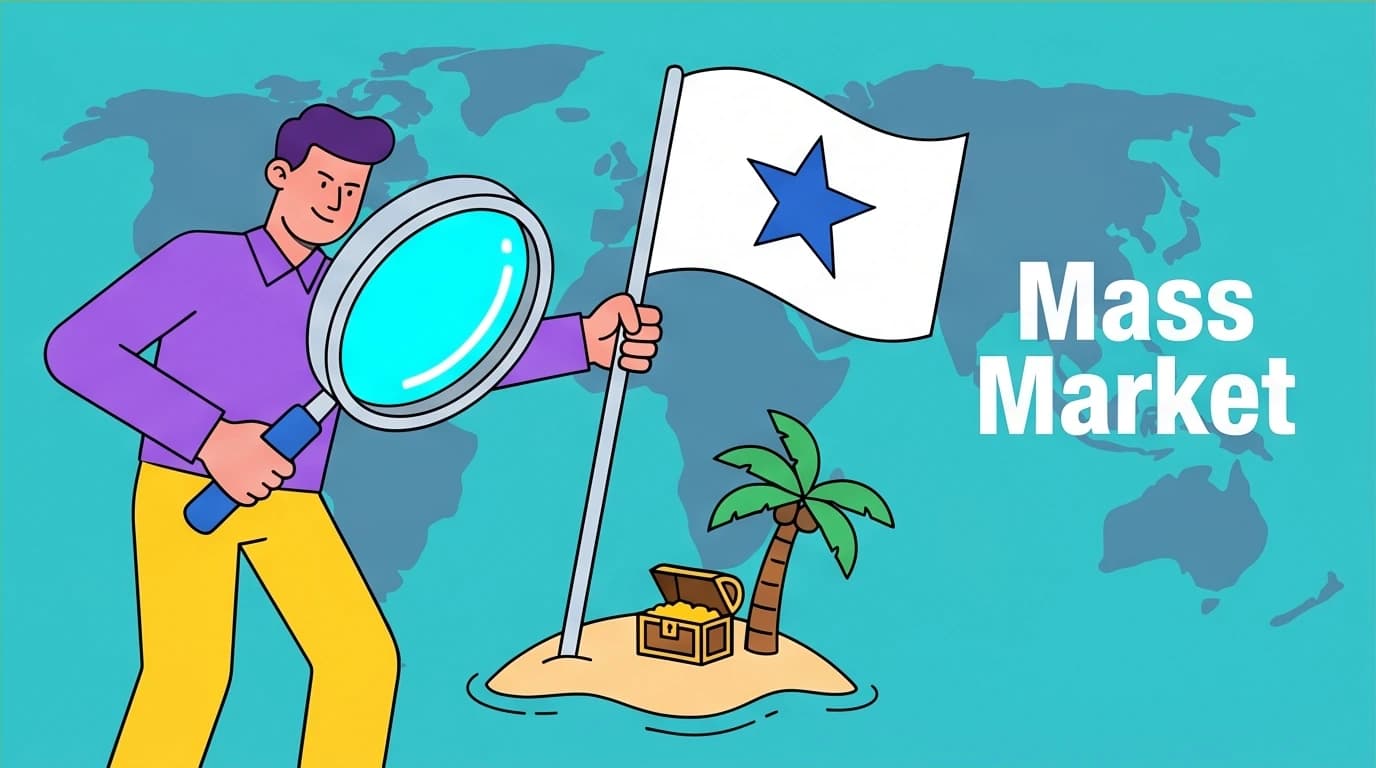
Instead, find a tiny, hyper-specific market and capture 80% to 100% of it.
When Amazon launched, Jeff Bezos did not try to build the "everything store" on day one. He built a bookstore. Books were easy to ship, had a massive catalog that physical stores could not hold, and appealed to a specific early-internet demographic. Only after Amazon completely monopolized online book sales did it expand into CDs, DVDs, and eventually everything else.
When Amazon launched, Jeff Bezos did not try to build the "everything store" on day one. He built a bookstore. Books were easy to ship, had a massive catalog that physical stores could not hold, and appealed to a specific early-internet demographic. Only after Amazon completely monopolized online book sales did it expand into CDs, DVDs, and eventually everything else.
Start with a market so small that major players do not even care it exists.
2. Build Your Moat
Once you capture your tiny market, you need defense mechanisms to prevent copycats from eroding your margins. A creative monopoly relies on four specific moats:
- Proprietary Technology: Your product must be at least 10x better than its closest substitute. A 20% improvement is not enough to make users switch. Google’s search algorithm was 10x better than AltaVista. PayPal’s email-based payment system was 10x faster than mailing a physical check.
- Network Effects: Your product must become more valuable as more people use it. A social network with one user is useless. A payment network with a million users is powerful. However, network effects only work if the product is valuable to its very first users in that initial small niche.
- Economies of Scale: A software startup has high fixed costs (writing the code) but near-zero marginal costs (distributing the software). A true monopoly gets stronger as it gets bigger because the fixed costs are spread over a massive user base.
- Branding: A strong brand creates a psychological monopoly. Apple exerts immense pricing power because people do not just want a smartphone; they specifically want an iPhone.
3. Expand in Concentric Circles
Do not jump randomly into new industries. Expand logically from your dominated niche into adjacent markets.
Amazon moved from books to similar retail media. Tesla did not start by building a cheap sedan for the masses. They started with a high-end electric sports car (the Roadster) for a tiny market of wealthy eco-enthusiasts. Once they monopolized that microscopic niche and proved the technology, they moved to luxury sedans (Model S), and only years later expanded to mass-market vehicles (Model 3).
Amazon moved from books to similar retail media. Tesla did not start by building a cheap sedan for the masses. They started with a high-end electric sports car (the Roadster) for a tiny market of wealthy eco-enthusiasts. Once they monopolized that microscopic niche and proved the technology, they moved to luxury sedans (Model S), and only years later expanded to mass-market vehicles (Model 3).
Moving from a microscopic niche of passionate early adopters into broader, mainstream markets is where most startups fail. Expanding in concentric circles sounds logical, but the execution requires navigating a treacherous gap in consumer behavior. To successfully make that leap without losing your initial momentum, you will want to study the definitive guide on bringing disruptive products to larger audiences. It is a must-read for scaling your beachhead market into a full-blown monopoly.

Crossing the Chasm
Geoffrey A. Moore
17 Duration7 Key Points5 RateCommon Traps to Avoid
If you are trying to implement this thinking into your current roadmap, watch out for these fatal errors.
The "Disruption" Trap:
Silicon Valley loves the word disruption. But disruption implies a fight. If you set out to "disrupt" an existing massive industry, you are picking a fight with powerful incumbents who will use their resources to kill you. Do not disrupt. Evade. Create a market that does not exist so you can grow unchallenged.
Silicon Valley loves the word disruption. But disruption implies a fight. If you set out to "disrupt" an existing massive industry, you are picking a fight with powerful incumbents who will use their resources to kill you. Do not disrupt. Evade. Create a market that does not exist so you can grow unchallenged.
The First Mover Myth:
Being the first to enter a market is not a strategy; it is a timing event. Yahoo was a first mover in search. Myspace was a first mover in social. The goal is not to be the first mover; the goal is to be the last mover. You want to be the company that makes the definitive, 10x better product that closes out the category entirely.
Being the first to enter a market is not a strategy; it is a timing event. Yahoo was a first mover in search. Myspace was a first mover in social. The goal is not to be the first mover; the goal is to be the last mover. You want to be the company that makes the definitive, 10x better product that closes out the category entirely.
Fake Monopolies (The Intersection Delusion):
Founders often lie to themselves about their market size to feel like a monopoly. They take a generic product and stack adjectives to make it sound unique. "We are the only cloud-based, AI-driven, B2B inventory management tool for left-handed dentists in the Pacific Northwest."
That is not a creative monopoly. That is a non-existent market. Your niche must have real demand and actual money flowing through it.
Founders often lie to themselves about their market size to feel like a monopoly. They take a generic product and stack adjectives to make it sound unique. "We are the only cloud-based, AI-driven, B2B inventory management tool for left-handed dentists in the Pacific Northwest."
That is not a creative monopoly. That is a non-existent market. Your niche must have real demand and actual money flowing through it.
The ability to avoid these traps often comes down to contrarian thinking. At the heart of this mindset is Thiel's challenge to founders to identify a fundamental truth that few others agree on.
Learn how to approach the famous Peter Thiel interview question to sharpen your contrarian thinking.
The Verdict on Market Strategy
Stop obsessing over what your competitors are doing. If you are constantly looking sideways, you will never move forward. Focus entirely on the specific problem you are solving, the specific users you are serving, and how you can build a proprietary solution so effective that nobody else can even attempt to match it.
Build a monopoly, capture the value, and use that leverage to push the world forward.
Executing a visionary strategy and building a monopoly is incredibly grueling work. Once you step away from the safety of the standard competitive playbook, you will face unprecedented leadership challenges, brutal decisions, and moments where everything seems to be falling apart. For a raw, unfiltered look at what it actually takes to run and scale a groundbreaking startup through the toughest of times, this book is arguably the best advice you will ever get from a Silicon Valley veteran.

The Hard Thing About Hard Things
Ben Horowitz
38 Duration8 Key Points4.6 RateThat's a powerful reading list for any founder. If your schedule is too packed to get through all these essential books right away, you can absorb their core ideas in a fraction of the time.


Get the key lessons from essential business books like Zero to One in just 15 minutes, perfect for busy founders who need to learn critical strategies on the go.
 LeapAhead
FAQ
Is building a monopoly actually legal?
Yes, as long as it is a "creative monopoly." US antitrust laws generally target companies that abuse their market dominance to artificially fix prices, block competitors through illegal agreements, or harm consumers. If your monopoly is the natural result of having a vastly superior product and intellectual property—and you do not engage in anti-competitive bullying—it is perfectly legal and highly rewarded.
Yes, as long as it is a "creative monopoly." US antitrust laws generally target companies that abuse their market dominance to artificially fix prices, block competitors through illegal agreements, or harm consumers. If your monopoly is the natural result of having a vastly superior product and intellectual property—and you do not engage in anti-competitive bullying—it is perfectly legal and highly rewarded.
How do I know if my starting market is small enough to monopolize?
A good rule of thumb is to look for a highly concentrated group of people who share a specific, urgent problem, but represent a total addressable market (TAM) of only a few million dollars initially. If large corporations would look at your market and say, "That's too small to matter," you have found the right starting point.
A good rule of thumb is to look for a highly concentrated group of people who share a specific, urgent problem, but represent a total addressable market (TAM) of only a few million dollars initially. If large corporations would look at your market and say, "That's too small to matter," you have found the right starting point.
Does "Zero to One" mean I cannot look at existing industries at all?
No. You can target an existing industry, but you must offer a completely novel approach, not a marginal improvement. Airbnb tackled the existing hospitality industry, but they didn't build slightly cheaper hotels. They utilized existing residential real estate to create an entirely new category of accommodation.
No. You can target an existing industry, but you must offer a completely novel approach, not a marginal improvement. Airbnb tackled the existing hospitality industry, but they didn't build slightly cheaper hotels. They utilized existing residential real estate to create an entirely new category of accommodation.
What if competitors inevitably copy my unique product?
This is why proprietary technology and network effects are critical. If your product is easily copied in six months by a team of cheap developers, you never had a Zero to One advantage; you just had a temporary head start. Your core engine must be fundamentally difficult to replicate.
This is why proprietary technology and network effects are critical. If your product is easily copied in six months by a team of cheap developers, you never had a Zero to One advantage; you just had a temporary head start. Your core engine must be fundamentally difficult to replicate.