

You are staring at a blank pitch deck slide or a blinking cursor on LinkedIn, trying to explain why your business matters. You do not need another generic business cliché about "working hard" or "disrupting the industry." You need a sharp, paradigm-shifting insight that instantly hooks an investor or reader.

Peter Thiel’s manifesto on innovation provides exactly that. The book is not just a theoretical text; it is an operating manual for building something truly new in a market flooded with copycats.
Below is a curated breakdown of the top Zero to One quotes. Instead of just listing them, we break down what they mean and exactly how you can leverage them to build authority, pitch investors, and sharpen your own strategic thinking.
Escaping the Trap: The "Competition is for Losers" Quote
Most business schools teach that competition is a healthy necessity. Thiel argues the exact opposite. He suggests that perfect competition destroys profit margins and prevents long-term innovation.
"Competition is for losers."
This is arguably the most famous line in the book. It sounds arrogant at first, but it is deeply rooted in microeconomics. When companies fiercely compete in a crowded market, they are forced to lower prices, which destroys capital.
- How to use it: Drop this into the "Market Landscape" slide of your pitch deck. Use it to explain why your startup is not fighting in a red ocean, but rather creating a completely new category where you have no direct rivals.

The Ultimate Zero to One Monopoly Quote
"All happy companies are different: each one earns a monopoly by solving a unique problem. All failed companies are the same: they failed to escape competition."
A "monopoly" in Thiel's vocabulary does not mean an illegal bully operating like a cartel. It means a creative monopoly—a company that is so good at what it does that no other firm can offer a close substitute. Think Google in search circa 2006.
A "monopoly" in Thiel's vocabulary does not mean an illegal bully operating like a cartel. It means a creative monopoly—a company that is so good at what it does that no other firm can offer a close substitute. Think Google in search circa 2006.
- How to use it: Use this when defending your company's unique value proposition. It proves you understand that true value capture requires differentiation, not just a slightly better feature set.
"If you want to create and capture lasting value, don't build an undifferentiated commodity business."
Commodities are bought entirely on price. If you are building a SaaS tool that looks exactly like four other tools on the market, you are building a commodity. Investors do not fund commodities; they fund unique, defensible technology.
For a more detailed exploration of this core principle, it's worth understanding the nuances of Thiel's business strategy and why he believes a creative monopoly is the ultimate goal for any ambitious startup.
Thiel's argument against fighting in a "red ocean" of bloody competition pairs perfectly with the concept of creating uncontested market space. If you are struggling to figure out how to differentiate your software or service from the dozens of identical competitors in your industry, you need a framework for finding clear waters. Learning how to reconstruct market boundaries and make the competition irrelevant is the logical next step for your business.
Blue Ocean Strategy
W. Chan Kim
 47 Duration
 8 Key Points
 4.6 Rate
Contrarian Thinking: Breaking from the Crowd
If you want to go from zero to one, you cannot rely on consensus. Consensus is already priced into the market. Peter Thiel quotes heavily emphasize the necessity of independent thought.
"What important truth do very few people agree with you on?"
Thiel famously uses this as his core interview question. It acts as a filter. If your answer is something obvious like "education is important," you fail. For those preparing for high-stakes interviews, learning how to structure an effective response is critical.
A true contrarian truth is highly specific, deeply researched, and often uncomfortable for the mainstream to accept.
- How to use it: Make this the foundation of your startup's origin story. Before you explain what you built, tell your audience the contrarian truth that forced you to build it.
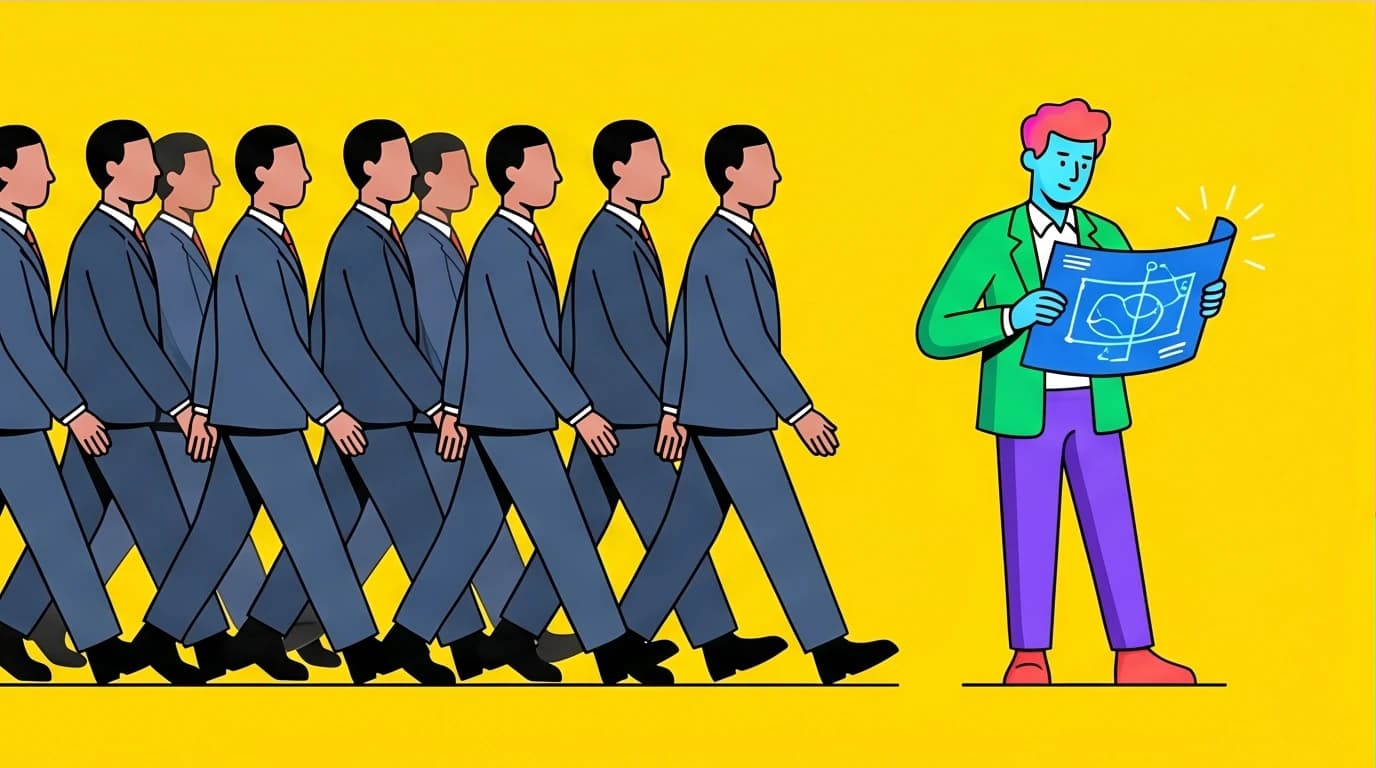
"The most contrarian thing of all is not to oppose the crowd but to think for yourself."
Being a contrarian does not mean automatically doing the opposite of what the crowd does. That is just conformity in reverse. True contrarianism requires looking at raw data and arriving at a conclusion independently, regardless of what the current Silicon Valley trend dictates.
"Brilliant thinking is rare, but courage is in even shorter supply than genius."
Founders often fail not because they lack intelligence, but because they lack the nerve to stick to an unpopular idea long enough for the market to realize they were right.
The Mechanics of Innovation: Going from 0 to 1
Progress takes two forms: horizontal (going from 1 to n, or copying things that work) and vertical (going from 0 to 1, or doing something completely new). The Zero to One best quotes perfectly capture the difficulty and necessity of vertical progress.
"Doing what we already know how to do takes the world from 1 to n, adding more of something familiar. But every time we create something new, we go from 0 to 1."
Globalism is 1 to n. Taking a business model that works in the United States and applying it to a new geography is horizontal progress. Technology is 0 to 1. Building an entirely new search algorithm or a reusable rocket is vertical progress.
- How to use it: Share this insight with your product team. Use it as a benchmark for your roadmap. Are your upcoming features just taking you from 1 to n, or are you genuinely pushing a 0 to 1 innovation?
"We wanted flying cars, instead we got 140 characters."
This quote critiques the venture capital industry's shift away from hard tech and physical engineering toward low-risk software and consumer apps.
- How to use it: If you are a hard-tech or deep-tech founder (robotics, biotech, space), this is your battle cry. Use this quote to align with investors who are tired of funding incremental software updates and want to back monumental physical progress.
Understanding why established industries struggle to make these massive leaps from 0 to 1 is crucial. Often, the very best companies fail not because they build bad products, but because they listen too closely to their current customers instead of pursuing disruptive, vertical progress. Exploring why market leaders miss the next wave of technology will help you spot the blind spots in your own corporate strategy before a nimble startup beats you to it.
The Innovator's Dilemma
Clayton M. Christensen
22 Duration7 Key Points4.8 Rate
Building the Right Foundation
You cannot build a monopoly if your internal team is fractured. Thiel places a massive premium on the early architecture of a company.
"Thiel’s Law: A startup messed up at its foundation cannot be fixed."
Bad decisions made early on—choosing the wrong co-founder, making a poor equity split, or putting the wrong people on the board—will eventually kill the company. You cannot patch a cracked foundation later.
"As a general rule, everyone you involve with your company should be involved full-time."
Consultants and part-time advisors have misaligned incentives. They do not share the existential risk of the founders. If someone is not fully committed to the mission, they are likely dragging the company down.
"Sales is hidden. The best salespeople are not the ones who look like salespeople."
Engineers often drastically underestimate the importance of distribution. A great product will not sell itself. You need a distribution strategy that is just as innovative as the product itself.
Building a solid foundation sounds easy in theory, but the reality of running a startup involves agonizing choices about firing early employees, managing board dynamics, and surviving near-death company experiences. When things inevitably go wrong, you need more than just optimistic advice; you need a raw, unfiltered guide on how to navigate the darkest days of leadership and keep your fragile organization from collapsing.
The Hard Thing About Hard Things
Ben Horowitz
38 Duration8 Key Points4.6 RateHow to Apply These Quotes in High-Stakes Scenarios
Reading Zero to One quotes is great for personal motivation, but their true utility lies in application. Here is how you deploy them effectively.
In Pitch Decks:
Never use a quote as an empty decoration. If you use the "competition is for losers quote," follow it immediately with a slide showing your exact mechanism for capturing a monopoly. Show your proprietary tech, your network effects, or your massive economies of scale.
Never use a quote as an empty decoration. If you use the "competition is for losers quote," follow it immediately with a slide showing your exact mechanism for capturing a monopoly. Show your proprietary tech, your network effects, or your massive economies of scale.
In Content Creation (LinkedIn/X):
Do not just post a graphic with Peter Thiel quotes. Post the quote, and then provide a specific, real-world example from your own industry. For instance, post his quote about undifferentiated commodities, and then tear down two competing e-commerce brands to show why one is failing and the other is thriving.
Do not just post a graphic with Peter Thiel quotes. Post the quote, and then provide a specific, real-world example from your own industry. For instance, post his quote about undifferentiated commodities, and then tear down two competing e-commerce brands to show why one is failing and the other is thriving.
In Hiring:
Use the "contrarian truth" question in your own interviews. You want early-stage employees who can think critically, not just follow playbooks. Ask candidates what they firmly believe about your industry that most other professionals would disagree with.
Use the "contrarian truth" question in your own interviews. You want early-stage employees who can think critically, not just follow playbooks. Ask candidates what they firmly believe about your industry that most other professionals would disagree with.
Once you have started integrating these contrarian questions into your hiring and pitch decks, you will likely want the complete playbook. But for busy founders, finding the time to read the full texts of Zero to One, The Innovator's Dilemma, and other classics can be a challenge.


Grasp the core ideas from essential business books in just 15 minutes, making it easy for busy founders and professionals to stay sharp and absorb new strategies on the go.
 LeapAhead
Reading the full text that sparked these startup philosophies is the best way to master the concepts of vertical progress and creative monopolies. It is practically a rite of passage for founders, investors, and anyone trying to build the next big thing in the United States or beyond.

Zero to One
Peter Thiel, Blake Masters
47 Duration8 Key Points4.5 RateFor a deeper understanding of the book's core arguments and key takeaways, a high-level summary can provide the context you need to apply these quotes effectively.
FAQ
What is the main message of Zero to One?
The core message is that the most valuable companies in the world create entirely new markets rather than competing in existing ones. Instead of making incremental improvements (going from 1 to n), founders should focus on vertical progress—inventing something completely new (going from 0 to 1) and establishing a creative monopoly.
The core message is that the most valuable companies in the world create entirely new markets rather than competing in existing ones. Instead of making incremental improvements (going from 1 to n), founders should focus on vertical progress—inventing something completely new (going from 0 to 1) and establishing a creative monopoly.
Who said "competition is for losers"?
Peter Thiel wrote this in his book Zero to One, which was co-authored with Blake Masters. The phrase is meant to challenge the traditional economic view that competition is inherently good for business. Thiel argues that competition destroys profit margins, while monopolies allow companies to plan for the future and invest heavily in innovation.
Peter Thiel wrote this in his book Zero to One, which was co-authored with Blake Masters. The phrase is meant to challenge the traditional economic view that competition is inherently good for business. Thiel argues that competition destroys profit margins, while monopolies allow companies to plan for the future and invest heavily in innovation.
Are Peter Thiel quotes still relevant in today's startup ecosystem?
Yes. In fact, they are more relevant than ever. During periods of massive capital injection, many startups survive by copying existing models (1 to n). However, during economic downturns or shifts into hard tech and artificial intelligence, only companies that build defensible, 0 to 1 technology survive. The principles of seeking monopolies and avoiding saturated markets remain foundational truths for venture-backed startups.
Yes. In fact, they are more relevant than ever. During periods of massive capital injection, many startups survive by copying existing models (1 to n). However, during economic downturns or shifts into hard tech and artificial intelligence, only companies that build defensible, 0 to 1 technology survive. The principles of seeking monopolies and avoiding saturated markets remain foundational truths for venture-backed startups.