

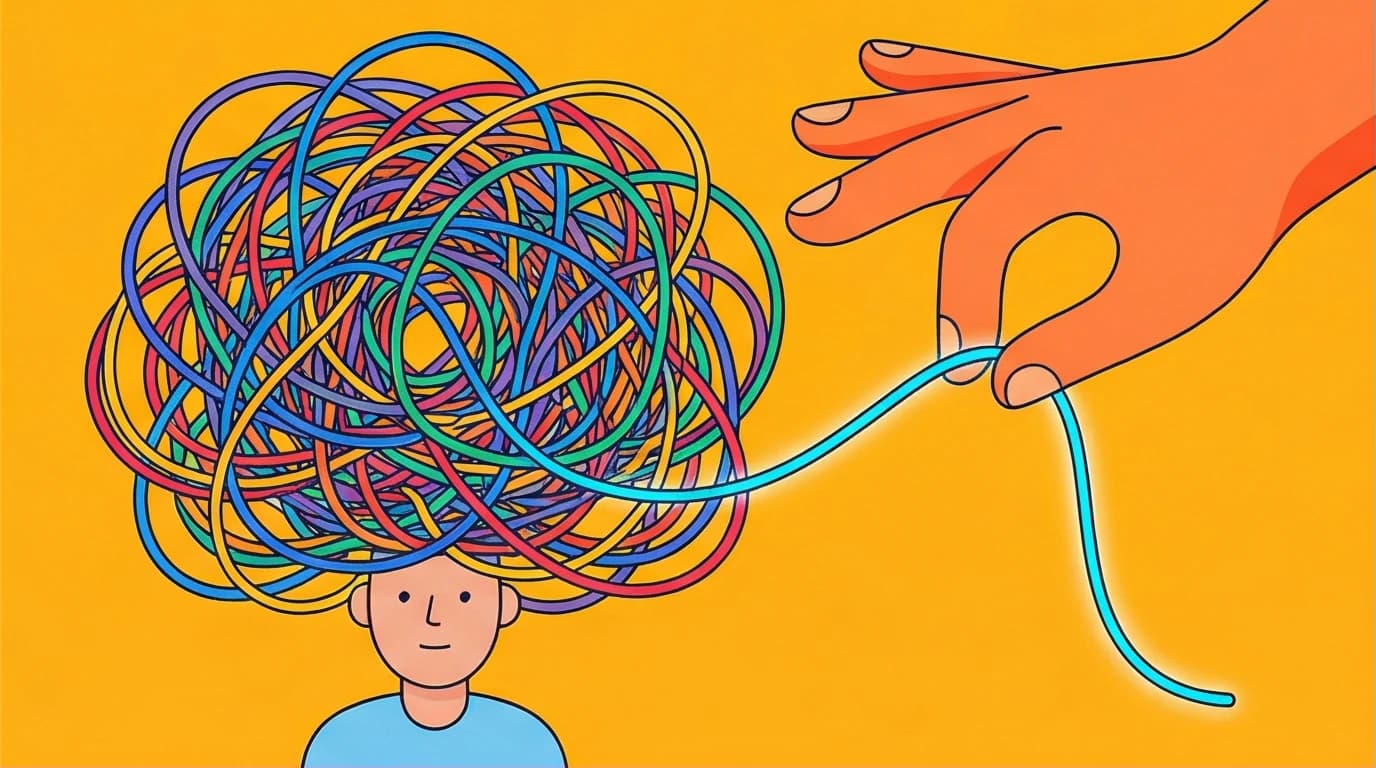
You are staring at a text message that has been left on "read" for four hours. Your mind races. Did you say something wrong? Are they losing interest? Or maybe you are on the other side of the screen. Your new partner wants to hang out for the fourth time this week, and you suddenly feel an overwhelming urge to cancel your plans, turn off your phone, and be alone.
You are not crazy. You are not broken. You are simply operating on a hardwired biological relationship system.
If you are actively dating or trying to make a new relationship work, flying blind is a massive waste of time. You end up repeating the same toxic cycles, attracting the exact same emotionally unavailable partners, and suffering through the same painful breakups.
You need clarity. You need to map your emotional triggers. Let's break down the framework so you can figure out your pattern today.
For a high-level overview before you dive into the self-assessment, you can explore
to familiarize yourself with the foundational ideas.

Why You Need to Map Your Emotional Triggers Now
When you start dating someone new, everyone is on their best behavior. The red flags are hidden. The communication seems easy. But fast forward three months, and the real emotional machinery kicks in.
If you frequently ask yourself "how to know my attachment style," you are already a step ahead of most people. Most daters walk around blaming their exes or chalking up failed relationships to "bad timing." The reality is much more clinical. We all have a specific tolerance for intimacy and a specific reaction to distance.
Dr. Amir Levine and Rachel Heller revolutionized how we date by bringing adult attachment theory to the mainstream. The Amir Levine attachment styles framework proves that our romantic behaviors are not character flaws. They are evolutionary survival mechanisms.
Taking the Attached book test is not about slapping a label on yourself so you can play the victim. It is a strategic move. When you understand your baseline, you stop taking your partner's behavior personally. You learn how to communicate your needs clearly. Most importantly, you learn how to spot incompatible partners before you invest months of your life into them.
If you find yourself fascinated by the idea that our romantic behaviors are hardwired survival mechanisms, it helps to dive deeper into how these emotional bonds are formed. Understanding the science behind our need for connection can completely transform how you approach dating in the United States today. For a groundbreaking look into how adult attachment drives our need for secure emotional bonds, consider exploring the foundational science of couples therapy. These insights provide an incredible foundation for recognizing your own emotional triggers and learning how to build lasting, resilient relationships without falling into the trap of self-blame.
Hold Me Tight
Dr. Sue Johnson
 26 Duration
 10 Key Points
 4.6 Rate
The Core Diagnostic: Anxious Avoidant Secure Test
While you should absolutely pick up a copy of the book at Barnes & Noble or listen to it on Audible for the full questionnaire, we can run a highly effective diagnostic right here.
Think of this as your practical anxious avoidant secure test. Do not answer based on how you wish you acted. Answer based on how you actually acted in your last two relationships.
Scenario 1: The Distance Trigger
You have been dating someone for a month. Things are going great. Suddenly, they get swamped at work and their texting frequency drops from ten times a day to just one short message at night.
- Reaction A: You feel a knot in your stomach. You start overanalyzing your last date. You send a low-stakes text ("Hey, just checking in!") to test the waters. If they don't reply quickly, your anxiety skyrockets.
- Reaction B: You feel slightly relieved. You take the opportunity to catch up on your own hobbies and enjoy the space. You might even find their sudden distance a little appealing.
- Reaction C: You notice the shift, but you assume they are just busy. You go about your day and plan to ask them about their workload the next time you see them.
Scenario 2: The Commitment Conversation
Your partner brings up the idea of making things exclusive or planning a trip together three months in the future.
- Reaction A: You are thrilled. This is exactly what you wanted. You eagerly agree and immediately start planning. You might even push to define the relationship further.
- Reaction B: You feel a sudden wave of claustrophobia. You start noticing little flaws in your partner—how they chew their food, their choice of shoes. You give a vague answer and look for an exit strategy.
- Reaction C: You are happy to have the conversation. You discuss what exclusivity means to both of you calmly and agree to the trip because you genuinely enjoy their company.
Scenario 3: The Post-Argument Cooldown
You just had a heated argument about weekend plans. Voices were raised.
- Reaction A: You cannot sleep. You need to resolve it right now. You follow them into the other room because the physical and emotional distance is agonizing. You will apologize just to make the tension stop.
- Reaction B: You need out. You leave the apartment or shut down completely. You refuse to engage and prefer to act like nothing happened the next day. Talking about it further feels exhausting.
- Reaction C: You are upset, but you can regulate your emotions. You ask for an hour to cool down, then return to the conversation ready to find a compromise.
Decoding Your Results
If you answered mostly A, you lean heavily Anxious.
If you answered mostly B, you lean heavily Avoidant.
If you answered mostly C, you lean heavily Secure.
If you answered mostly B, you lean heavily Avoidant.
If you answered mostly C, you lean heavily Secure.

By applying the principles of the attachment style quiz Attached outlines, you can now build a strategy tailored to your specific emotional wiring.
If You Are Anxious: Stop Playing Games
You have a hyper-activated attachment system. You are incredibly perceptive and can sense tiny shifts in your partner's mood. This is a superpower, but it often works against you.
Your biggest dating trap is equating anxiety with chemistry. If a partner keeps you guessing, your activated system makes you obsess over them. You confuse those butterflies with true love, when in reality, it is just your nervous system panicking.
- Your Action Plan: Stop dating potential. Date reality. You require consistency, reassurance, and clear communication. Do not pretend you are "cool" with casual dating if you are not. State your needs early. If you tell a new prospect that you value daily communication and they call you "needy," walk away immediately. They are doing you a favor. Your ultimate goal is to identify and date secure partners who will naturally soothe your nervous system.
Related Reading: For anxious types, identifying incompatible partners is crucial. Learn
to save yourself time and emotional energy.
If You Are Avoidant: Beware the Phantom Ex
Your attachment system deactivates when someone gets too close. You value independence above all else. When intimacy increases, you subconsciously deploy "deactivating strategies" to create distance.
You might suddenly decide your partner is not intellectual enough, or you might obsess over an idealized "phantom ex" who you conveniently forget you also pushed away. You often feel smothered by perfectly normal relationship requests.
- Your Action Plan: Recognize your sabotage tactics. When you suddenly feel the urge to bolt from a perfectly good relationship, pause. Ask yourself: Is this person actually doing something wrong, or is my independence feeling threatened? Stop focusing on minor imperfections. If you want a lasting relationship, you have to practice leaning into the discomfort of intimacy instead of running out the back door.
If You Are Secure: Protect Your Energy
You are comfortable with intimacy and comfortable with independence. You don't play games, you communicate clearly, and you expect the same in return.
- Your Action Plan: Your biggest risk is staying in a bad relationship too long because you have a high tolerance for emotional heavy lifting. Do not become a rehabilitation center for avoidant partners. Just because you can handle their hot-and-cold behavior does not mean you should have to. Keep your boundaries firm.
Maintaining that secure attachment style requires a robust defense system, especially if you have a history of overextending yourself to fix emotionally unavailable partners. It is easy to blur the lines between being a supportive partner and sacrificing your own peace of mind. Learning to establish and enforce healthy limits is an absolute necessity in the modern dating landscape. If you struggle to hold your ground or frequently feel drained by demanding relationships, mastering the art of boundary-setting will be your most valuable asset in protecting your energy and your heart.
Set Boundaries, Find Peace
Nedra Glover Tawwab
29 Duration10 Key Points4.5 RateThe Anxious-Avoidant Trap: How to Break the Cycle
If you only take away one lesson from the Amir Levine framework, let it be this: Anxious and Avoidant individuals are naturally drawn to each other, creating a highly toxic, self-perpetuating cycle.
The Anxious person wants closer proximity. The Avoidant person feels smothered and pulls away. The Anxious person panics and pursues harder. The Avoidant person completely shuts down.
This dynamic validates both of their deepest fears. The Anxious person confirms that they will always be abandoned. The Avoidant person confirms that relationships are suffocating traps.
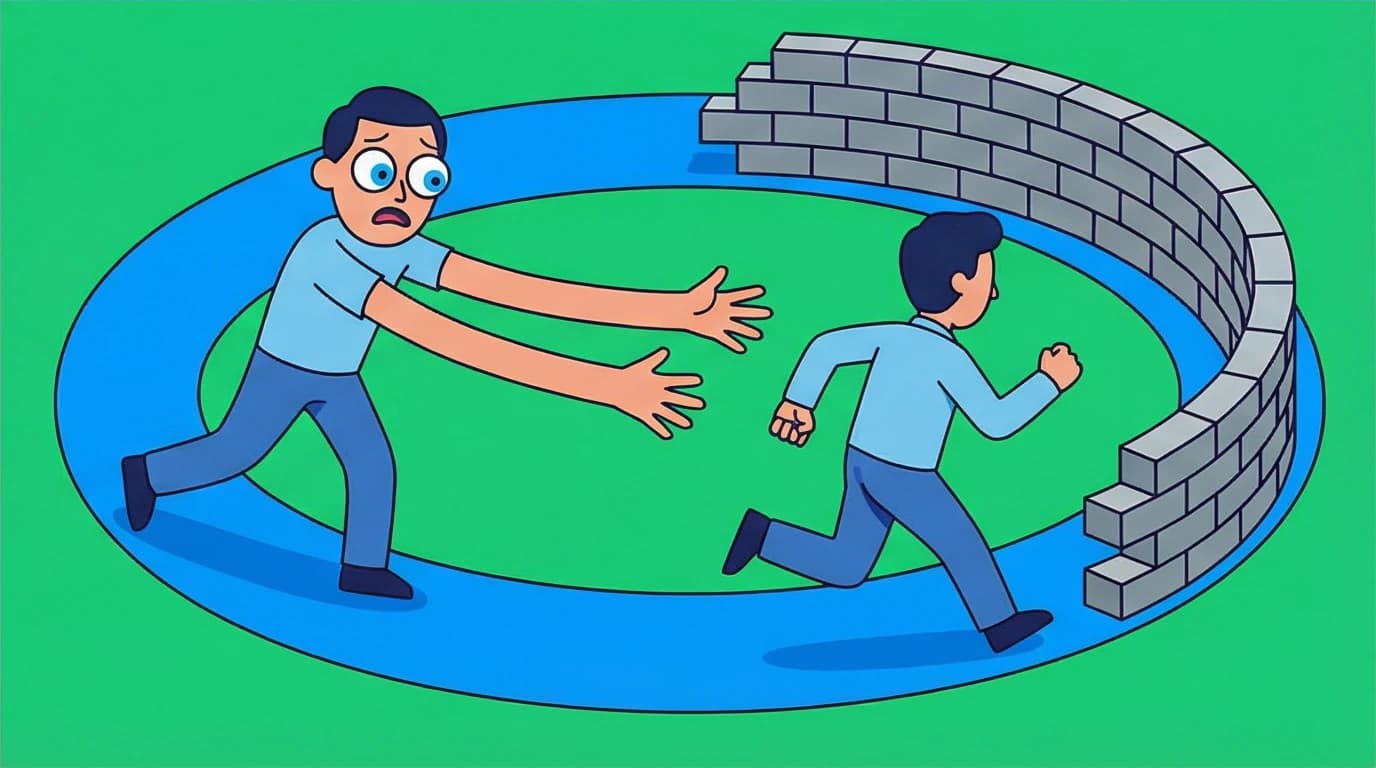
If you find yourself stuck in this loop, you have to break it. If you are anxious, you must stop chasing. If you are avoidant, you must stop running. Often, the easiest way to break the cycle is simply to step out of the dating pool, reset your standards, and exclusively filter for secure partners who do not trigger this traumatic dance.
You might also enjoy: This dynamic is so common it has a name. For a deeper analysis, read about the
.
Breaking these deep-seated patterns requires learning new strategies, but it can be tough to find the time and energy to read dense psychology books. To get the essential insights quickly, you can listen to the core ideas from top relationship experts during your commute.

Master the key lessons from bestselling books on attachment theory and relationships in just 15 minutes, helping you break toxic cycles and build healthier connections.

Download LeapAhead App now
Stepping out of a toxic anxious-avoidant loop often means completely rewiring your approach to dating. It requires you to stop relying on that initial spark of anxiety-induced chemistry and start making intentional, data-driven decisions about who you let into your life. Behavioral science offers incredible tools to help you identify your blind spots and stop repeating the same dating mistakes. If you are ready to stop leaving your love life up to chance and want a proven framework for finding a truly compatible partner, applying modern behavioral insights to your dating strategy is a massive game-changer.
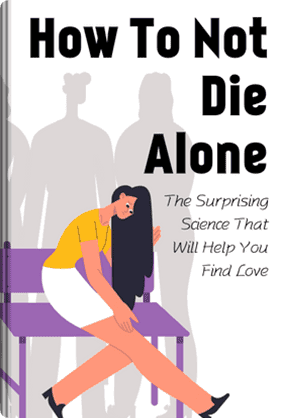
How To Not Die Alone
Logan Ury
25 Duration10 Key Points4.7 RateLeveraging Your Knowledge in Real Life
Knowing your pattern is useless if you do not change your behavior. Treat dating like a data-gathering mission.
When you go on a first date, pay attention to how they talk about their exes. Do they say, "We just wanted different things" (Secure)? Do they say, "All my exes were crazy and clingy" (Avoidant)? Do they overshare all their past relationship trauma within the first hour (Anxious)?
You have the tools now. Order the book on Amazon if you want to dive deeper into the science. Read it, take the official assessments, and start dating with your eyes wide open. You hold the power to dictate how you are treated, but it starts with understanding how you operate.
And if you want to get the powerful insights from Attached but struggle to find the time to sit down and read, there's a way to learn on the go.
Absorb the core lessons from Attached in a 15-minute audio summary, perfect for turning your daily commute or workout into a productive learning session.
Download LeapAhead App now
As you begin treating your dating life like a data-gathering mission, having the original source material on hand is invaluable. The foundational concepts of adult attachment theory offer a definitive roadmap for decoding confusing behaviors and finally understanding why you pursue the partners you do. Reading the full, unabridged text will give you access to the complete diagnostic quizzes and tailored strategies for your specific style. If you are serious about breaking your toxic dating patterns and finding a genuinely secure connection, picking up this revolutionary guide is the best investment you can make in your romantic future.
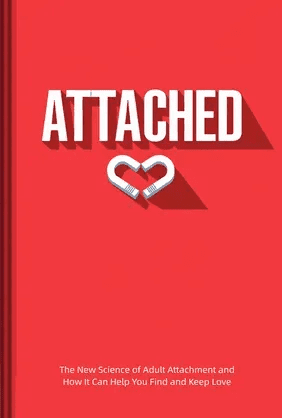
Attached
Amir Levine, PhD, Rachel Heller, MA
48 Duration9 Key Points4.5 RateFAQ
Can my attachment style change over time?
Yes. Your attachment style is not a life sentence. On average, about 25% of people change their attachment style over a four-year period. Anxious person who dates a highly secure partner can "earn" security over time as their nervous system learns to trust. Conversely, a secure person who stays in a deeply toxic relationship with a severe avoidant can develop anxious tendencies.
Yes. Your attachment style is not a life sentence. On average, about 25% of people change their attachment style over a four-year period. Anxious person who dates a highly secure partner can "earn" security over time as their nervous system learns to trust. Conversely, a secure person who stays in a deeply toxic relationship with a severe avoidant can develop anxious tendencies.
How do I take the official test from the book?
You can find the official, comprehensive questionnaire in the first part of the book Attached by Amir Levine and Rachel Heller. You can purchase a physical copy or download it on Amazon Kindle or Apple Books. The official test breaks down your scores mathematically to give you a precise reading of your emotional baseline.
You can find the official, comprehensive questionnaire in the first part of the book Attached by Amir Levine and Rachel Heller. You can purchase a physical copy or download it on Amazon Kindle or Apple Books. The official test breaks down your scores mathematically to give you a precise reading of your emotional baseline.
Is it possible to be both anxious and avoidant?
Yes, though it is rare. This is known as "Fearful-Avoidant" or "Disorganized" attachment. People with this style desperately crave intimacy but are simultaneously terrified of it. They exhibit high anxiety and high avoidance. This usually stems from significant childhood trauma and often requires the help of a professional therapist to navigate successfully.
Yes, though it is rare. This is known as "Fearful-Avoidant" or "Disorganized" attachment. People with this style desperately crave intimacy but are simultaneously terrified of it. They exhibit high anxiety and high avoidance. This usually stems from significant childhood trauma and often requires the help of a professional therapist to navigate successfully.
Should I ask my new partner to take the quiz?
Do not force a quiz on them on date two. Instead, bring up the concepts casually. Say something like, "I was reading this fascinating book about how people handle relationship stress." Gauge their reaction. A secure person will be interested and open to the discussion. An avoidant person might dismiss it as "psychobabble" or change the subject quickly. Their reaction tells you everything you need to know.
Do not force a quiz on them on date two. Instead, bring up the concepts casually. Say something like, "I was reading this fascinating book about how people handle relationship stress." Gauge their reaction. A secure person will be interested and open to the discussion. An avoidant person might dismiss it as "psychobabble" or change the subject quickly. Their reaction tells you everything you need to know.