

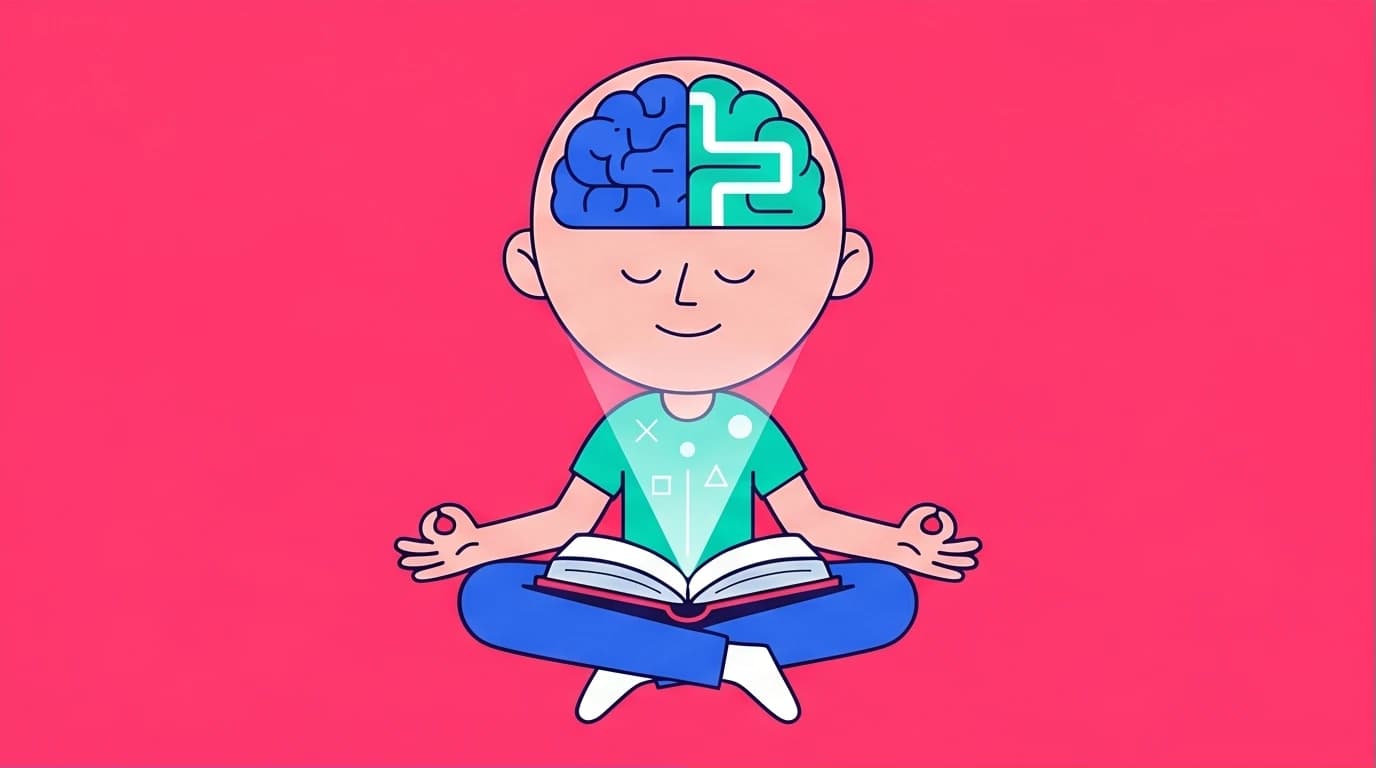
You want to understand the mechanics of your own mind, but the self-help shelves at Barnes & Noble are cluttered with shallow platitudes and toxic positivity. Finding rigorous, evidence-based literature that treats consciousness as a science rather than a mystical quick fix feels like searching for a needle in a haystack. You need hard-hitting resources that respect your intelligence, backed by clinical research and profound philosophical frameworks.
Why Systematic Reading Outperforms Meditation Apps
Meditation apps are useful tools for building daily habits and setting timers. However, if your goal is cognitive restructuring, an app simply cannot deliver the necessary depth. Learning mindfulness philosophy requires sustained, focused attention—the exact kind of attention cultivated by deep reading.

When you engage with a well-researched book, you are not just following guided audio. You are analyzing the structural components of human suffering, unraveling the Default Mode Network (DMN) in the brain, and understanding exactly why certain practices alter your neurochemistry. To move beyond novice status, you must read the foundational texts.
While these books provide the essential theory, putting that knowledge into practice is the next critical step.


Struggle to find time for deep reading? LeapAhead delivers the core insights from mindfulness books in 15-minute summaries, helping you build a consistent learning habit on the go.
 LeapAhead
Top Books for Meditation: Foundational Science and Frameworks
If you want to understand what happens inside your brain when you sit on a cushion, you need to read the pioneers who brought Eastern contemplative practices into Western clinical and scientific settings.
1. Wherever You Go, There You Are by Jon Kabat-Zinn
Jon Kabat-Zinn is a molecular biologist who founded the Mindfulness-Based Stress Reduction (MBSR) clinic at the University of Massachusetts Medical School. This book stripped away the esoteric barriers of meditation, proving its efficacy for chronic pain and severe anxiety.
Core Insight: Mindfulness is not about clearing your mind of all thoughts. It is about paying attention on purpose, in the present moment, and non-judgmentally. Kabat-Zinn maps out how to anchor yourself in the present, emphasizing that the "here and now" is the only place where you have any actual power to effect change.
If you are ready to stop letting life pass you by on autopilot, Kabat-Zinn's groundbreaking work is the perfect starting point. This foundational read strips away the intimidating jargon and provides a highly accessible, profoundly impactful introduction to meditation. It is a must-have for anyone looking to build a sustainable, everyday mindfulness practice without needing to retreat to a mountaintop.

Wherever You Go, There You Are
Jon Kabat-Zinn
 19 Duration
 8 Key Points
 4.6 Rate
2. Altered Traits by Daniel Goleman and Richard J. Davidson
For the skeptical reader who demands empirical evidence, this is mandatory reading. Goleman (famed for his work on Emotional Intelligence) and Davidson (a pioneering neuroscientist) review thousands of fMRI scans to separate the hype from the actual science.
Core Insight: The book distinguishes between "states" (temporary feelings of calm during meditation) and "traits" (lasting changes in brain structure). They provide concrete proof that thousands of hours of meditation physically thicken the prefrontal cortex and shrink the amygdala, fundamentally altering how humans react to stress.
3. LeapAhead: Digesting Core Concepts on the Go
While not a traditional book, LeapAhead is a microlearning app that addresses a critical modern challenge: finding time to engage with dense material. It offers 15-minute text and audio summaries of over 30,000 nonfiction books, including many foundational texts in psychology and neuroscience. For the busy professional who wants to absorb the key ideas from the authors on this list during a commute or workout, it serves as an excellent gateway.
Core Insight: The biggest barrier to learning isn't complexity; it's consistency. By breaking down complex books into digestible summaries, LeapAhead allows you to build a sustainable learning habit. While a summary can't replace the depth of a full text, it ensures you can consistently absorb core principles from authors like Kabat-Zinn and Goleman, even when you don't have hours to dedicate to deep reading. However, users seeking full academic depth may find the summarized format limiting, and its mobile-first design is less suited for those who prefer long study sessions on a desktop.
Books About Mindfulness and Psychology
The intersection of mindfulness and clinical psychology has produced some of the most effective therapeutic models of the last two decades. The following books explore how awareness directly dismantles psychological trauma, anxiety loops, and depressive rumination.
4. Radical Acceptance by Tara Brach
Tara Brach is both a clinical psychologist and a seasoned meditation teacher. She addresses the pervasive American epidemic of "not feeling good enough" and the harsh inner critic that drives perfectionism and burnout.
Core Insight: Real transformation begins when we stop fighting our own reality. Brach introduces the RAIN framework (Recognize, Allow, Investigate, Nurture) as a practical psychological tool to dismantle negative emotion loops. It bridges the gap between traditional therapy and self-directed mindfulness practice.
The frameworks in books like Radical Acceptance are powerful tools for understanding the roots of unease. Applying these concepts through targeted exercises can offer significant relief.
5. Mindfulness: An Eight-Week Plan for Finding Peace in a Frantic World by Mark Williams and Danny Penman
Co-authored by a professor of clinical psychology at Oxford University, this book is based on Mindfulness-Based Cognitive Therapy (MBCT). It was originally developed to prevent severe depression relapse and proved so effective that it is now recommended by the UK’s National Health Service.
Core Insight: The book outlines how our minds default to "doing mode"—constantly analyzing, problem-solving, and worrying. It provides a structured, eight-week clinical pathway to switch the brain into "being mode," utilizing exercises that systematically break the association between negative moods and negative thinking.
For readers who thrive on clear, actionable instructions rather than abstract philosophy, this eight-week curriculum is an absolute game-changer. Williams and Penman provide a clinically proven roadmap that fits seamlessly into a busy American lifestyle. Grab this guide if you want a step-by-step method to dialing down your anxiety and reclaiming your focus in a hyper-connected world.
This ability to direct your attention is a cornerstone of a successful meditation practice and has profound implications for professional life.

Mindfulness
Mark Williams & Danny Penman
25 Duration10 Key Points4.5 RateMastering the Concepts: Mindfulness Book Summaries & Key Principles
Reading dozens of books takes time. If you want to accelerate your learning curve, reviewing detailed mindfulness book summaries on platforms like Goodreads or finding audio synopses on Audible can help you identify which full texts deserve your time.
Across the primary literature, three core scientific and philosophical pillars consistently emerge:
The Illusion of the Self
Advanced texts, particularly Sam Harris’s Waking Up, focus heavily on the neuroscientific and philosophical concept that the "self" (the voice inside your head) is an illusion. Brain imaging shows that what we perceive as a unified ego is actually a collection of transient neurological events. Realizing this experimentally through meditation drastically reduces emotional reactivity. You stop taking your own thoughts so personally.

If you find yourself rolling your eyes at typical New Age spirituality, Sam Harris offers the ultimate antidote. Blending his background in neuroscience with deep philosophical inquiry, he breaks down the mechanics of the ego in a way that is incredibly refreshing for analytical thinkers. This read will fundamentally challenge how you perceive your own consciousness, offering a rigorous, logic-driven path to inner peace.

Waking Up
Sam Harris
15 Duration6 Key Points4.6 RateNeuroplasticity and the Default Mode Network (DMN)
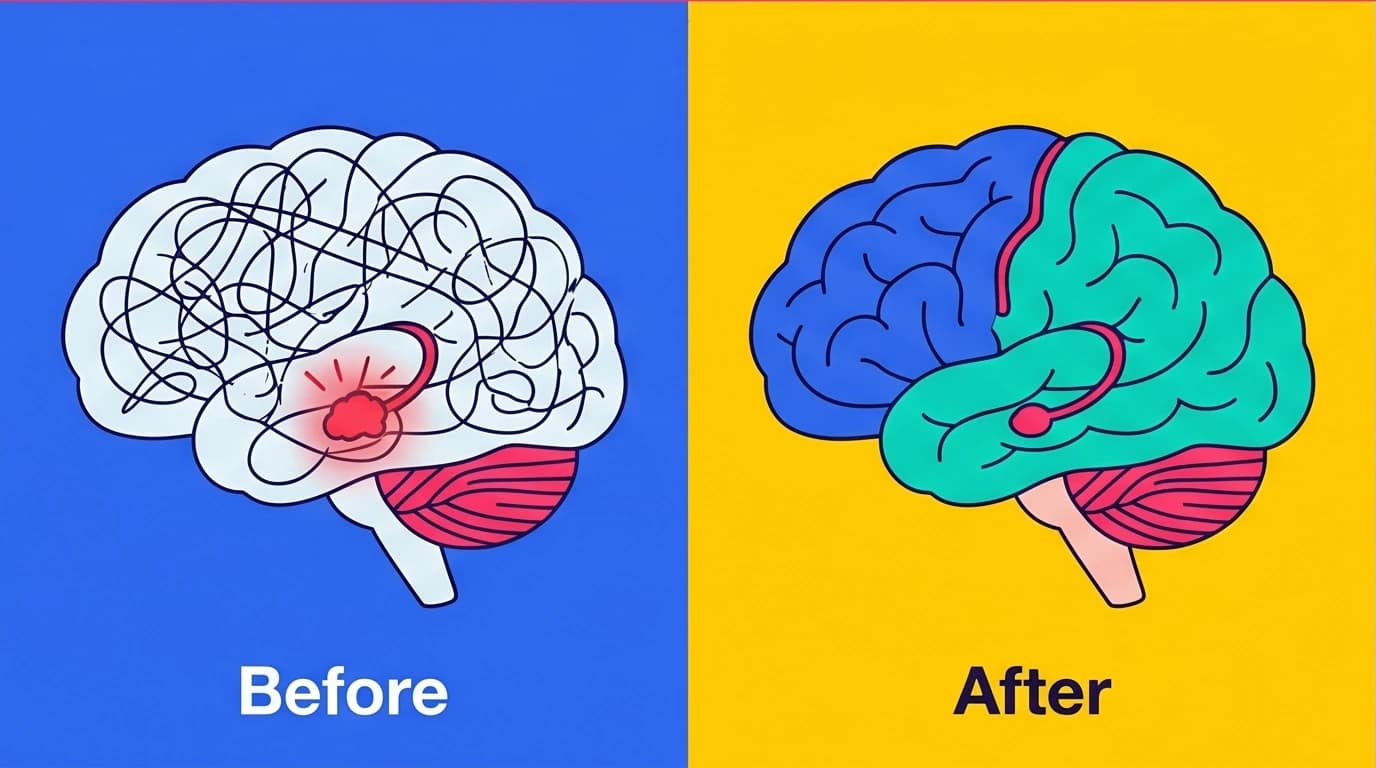
The DMN is the brain network active when your mind wanders, usually obsessing over the past or worrying about the future. Overactive DMNs are directly correlated with unhappiness and clinical depression. The scientific consensus across these books is that focused attention practices downregulate the DMN. You are literally rewiring your brain's hardware to stay in the present.
Somatic Experiencing
Many psychological texts highlight that trauma and severe stress are stored in the body. Traditional talk therapy often falls short because it only engages the rational brain. Mindfulness practices force you to scan and sit with physical sensations, allowing the nervous system to process and discharge deeply held biological stress.
To truly grasp how deeply our biology holds onto past stress, you must look beyond traditional mindfulness texts and explore the pioneering science of trauma. Dr. Bessel van der Kolk’s masterwork perfectly complements a somatic meditation practice by explaining exactly how emotional pain physically reshapes our nervous system. It is an essential, deeply validating read for anyone trying to release decades of pent-up tension from their body.
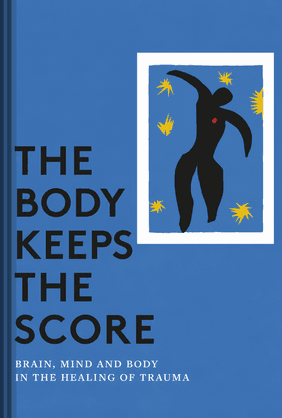
The Body Keeps The Score
Bessel Van Der Kolk
32 Duration10 Key Points4.5 RateHow to Choose Your Next Read
Your choice of reading material should directly align with your current knowledge gaps. Use this decision matrix to prioritize your purchases on Amazon or your local bookstore:
- For the hard-nosed skeptic: Read Altered Traits or Waking Up. You need the fMRI scans, the clinical trials, and the rigorous philosophical deconstruction of consciousness to buy into the process.
- For the chronic over-thinker: Read Mindfulness: An Eight-Week Plan. You need a highly structured, week-by-week curriculum that tells you exactly what to do and when to do it.
- For those battling harsh inner critics: Read Radical Acceptance. You need the intersection of psychological healing and self-compassion to break the cycle of perfectionism.
Explore the key ideas from these foundational mindfulness texts before you commit. LeapAhead's audio and text summaries let you sample the best books in minutes.
LeapAheadCommon Pitfalls to Avoid in Mindfulness Literature
Not all books in this space are created equal. As you build your library, watch out for these traps:
- The Trap of Toxic Positivity: Avoid books that suggest mindfulness is about "only thinking good thoughts." True mindfulness requires you to observe anger, grief, and jealousy without trying to aggressively suppress them.
- The "Relaxation" Misconception: Books that market meditation purely as a relaxation technique miss the point. Mindfulness is a mental workout. It requires effort, attention, and sometimes confronting uncomfortable psychological truths.
- Reading Without Practicing: The biggest failure mode for lifelong learners is intellectualizing the concept without sitting on the cushion. You cannot read your way to a calmer nervous system. The books are maps; you still have to walk the territory.
FAQ
Do I need to meditate while reading these books, or can I just read them for the theory?
While you will gain significant intellectual value and psychological insight from the theory alone, the cognitive benefits (like neuroplasticity and lowered baseline stress) only occur through consistent practice. Most of these books contain specific exercises designed to be practiced alongside the reading.
While you will gain significant intellectual value and psychological insight from the theory alone, the cognitive benefits (like neuroplasticity and lowered baseline stress) only occur through consistent practice. Most of these books contain specific exercises designed to be practiced alongside the reading.
Where is the best place to find mindfulness book summaries if I am short on time?
If you want to preview a book's core arguments before committing, apps like Blinkist or Shortform provide high-quality structural breakdowns. Additionally, searching for specific titles on Goodreads will often yield highly detailed, user-generated summaries in the top reviews.
If you want to preview a book's core arguments before committing, apps like Blinkist or Shortform provide high-quality structural breakdowns. Additionally, searching for specific titles on Goodreads will often yield highly detailed, user-generated summaries in the top reviews.
Are there specific books better suited for beginners versus advanced practitioners?
Yes. Beginners should start with Wherever You Go, There You Are for its approachable, jargon-free introduction. Advanced practitioners looking to deepen their philosophical understanding should prioritize The Mind Illuminated by John Yates (Culadasa) or Waking Up by Sam Harris, which deal with complex stages of sustained attention and the nature of consciousness.
Yes. Beginners should start with Wherever You Go, There You Are for its approachable, jargon-free introduction. Advanced practitioners looking to deepen their philosophical understanding should prioritize The Mind Illuminated by John Yates (Culadasa) or Waking Up by Sam Harris, which deal with complex stages of sustained attention and the nature of consciousness.