

You stare at your screen. The deadline is tomorrow morning. Instead of opening that document, you reorganize your desk, check your email for the fourth time, or scroll through your phone.
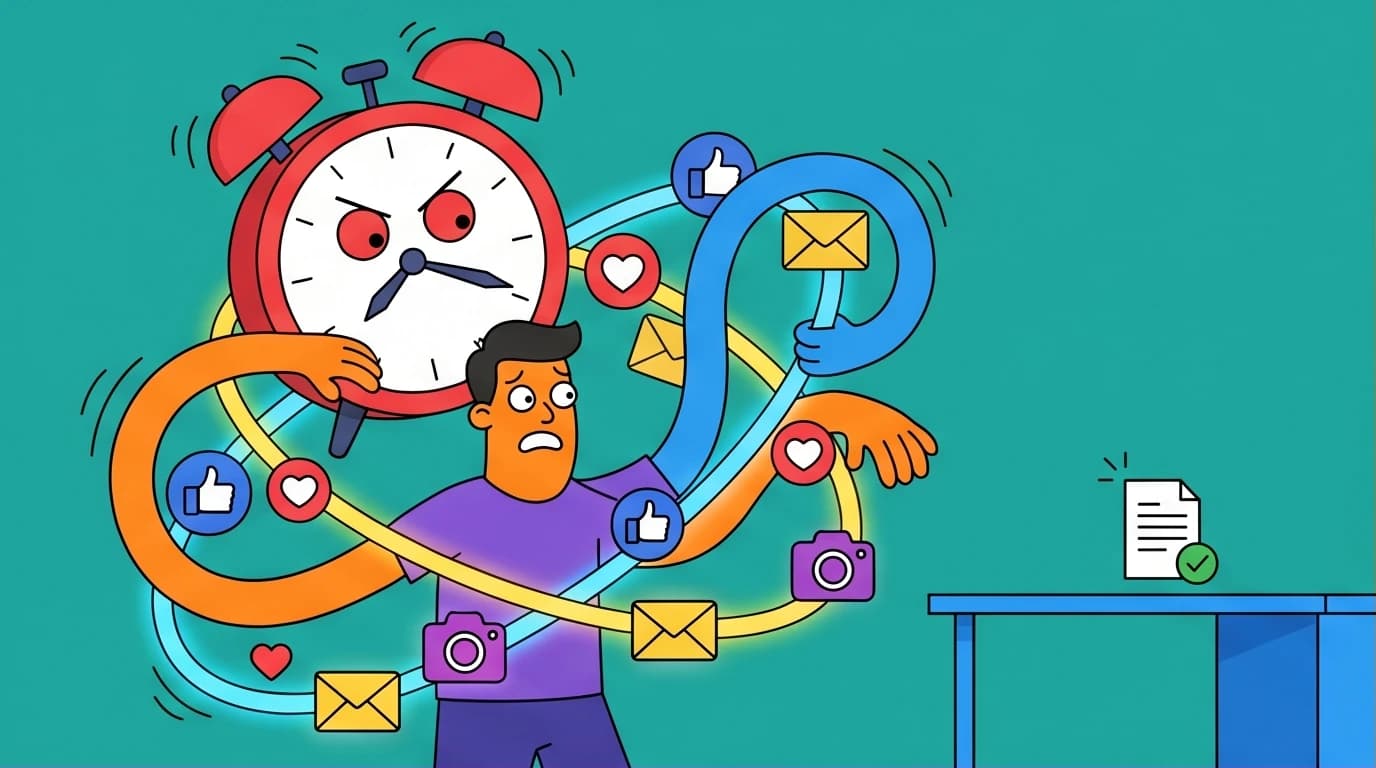
You aren't lacking motivation. You know exactly what needs to be done. Yet, you are stuck in a miserable cycle of avoidance and guilt.
Reading about productivity won't magically do the work for you. But the best books on procrastination provide something much more valuable: specific, engineered frameworks to trick your brain into starting. Whether you prefer to highlight a paperback from Barnes & Noble or listen to an Audible summary on your morning commute, mastering these concepts will fundamentally change how you approach your daily tasks.
Here is the definitive guide to the books and tools that actually help you get things done.
1. Atomic Habits by James Clear
Best for: Building long-term momentum and redesigning your environment.
When people search for ways to stop delaying, they often overlook the sheer power of micro-behaviors. The solution to the atomic habits procrastination loop is incredibly simple: make the right behavior obvious, attractive, easy, and satisfying.
Clear argues that you do not rise to the level of your goals; you fall to the level of your systems. Procrastination is just a symptom of a poorly designed system. If your phone is sitting next to your laptop, you have designed a system for distraction.
Core Takeaway: The 2-Minute Rule
If a habit takes less than two minutes, do it right now. When starting a large project, scale it down to a two-minute version. Don't sit down to "write a report." Sit down to "write one sentence." Mastering the art of showing up kills the friction that causes delay.
If a habit takes less than two minutes, do it right now. When starting a large project, scale it down to a two-minute version. Don't sit down to "write a report." Sit down to "write one sentence." Mastering the art of showing up kills the friction that causes delay.
If you're tired of relying on fleeting motivation and want a foolproof system to engineer your daily routine, this is the ultimate playbook. It breaks down the psychology of why we fail to stick to our goals and provides concrete, actionable steps to make good habits inevitable. Grab a copy to learn how tiny, incremental changes can completely transform your productivity and help you beat procrastination for good.

Atomic Habits
James Clear
 26 Duration
 8 Key Points
 4.7 Rate
2. Eat That Frog! by Brian Tracy
Best for: Overwhelming workloads and poor prioritization.
If you have 20 things on your to-do list, you will naturally gravitate toward the easiest, least important tasks to feel a false sense of accomplishment. Brian Tracy wrote the exact antidote to this problem.
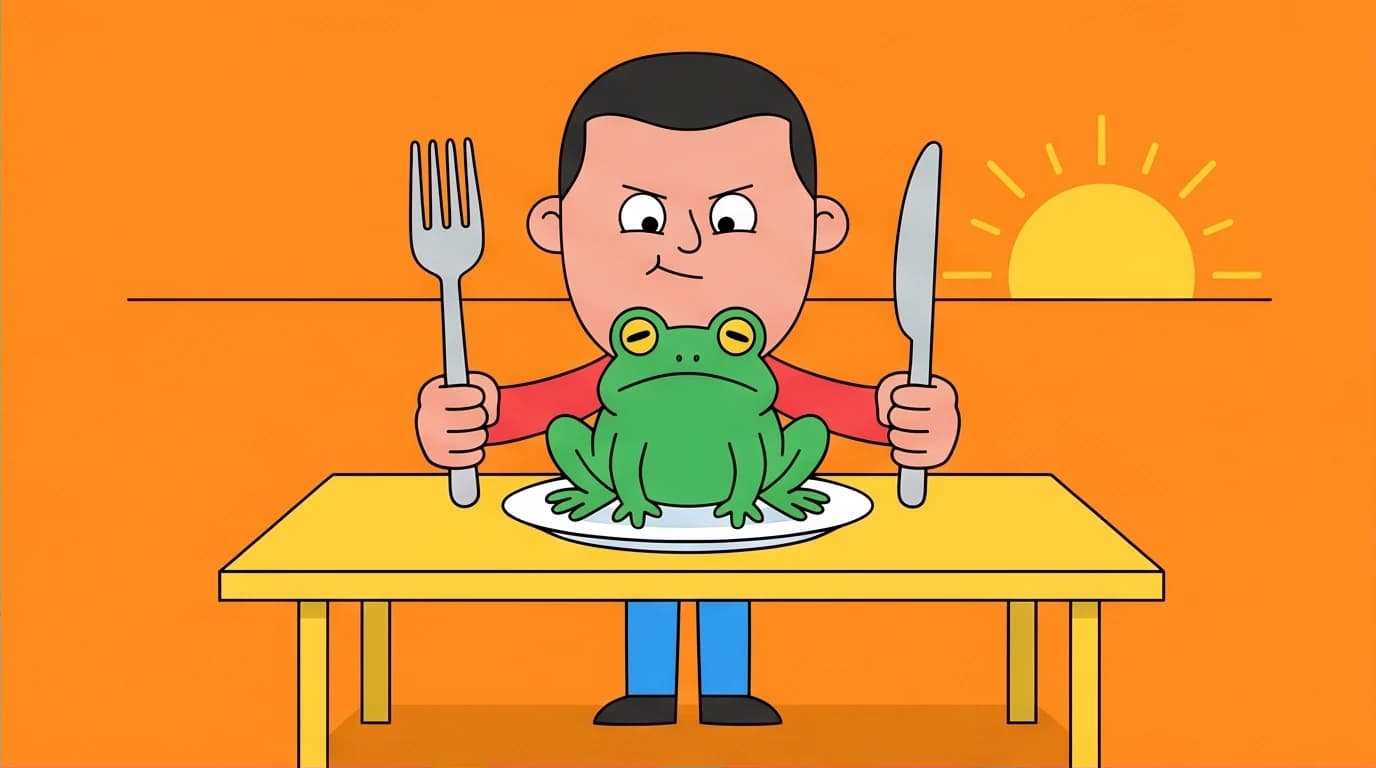
A quick eat that frog summary: Your "frog" is your biggest, most important task. It is the one you are most likely to procrastinate on, but it also yields the greatest positive impact on your life. Tracy’s rule is simple. Eat the frog first thing in the morning. Do not check your email. Do not organize your files. Just eat the frog.
Core Takeaway: The ABCDE Method
Assign a letter to every task on your list.
Assign a letter to every task on your list.
- A: Must do (the frogs). Serious consequences if left undone.
- B: Should do. Mild consequences.
- C: Nice to do. No consequences.
- D: Delegate.
- E: Eliminate.
Never start a B task while an A task is left undone.
For anyone staring at an impossibly long to-do list, learning to tackle your most daunting task first is a total game-changer. This quick, high-impact read is packed with time management strategies that force you to prioritize execution over busywork. If you are ready to stop putting off your most critical responsibilities and start your mornings with serious momentum, add this classic to your nightstand.
Eat That Frog!
Brian Tracy
37 Duration8 Key Points4.6 Rate3. The Now Habit by Neil Fiore
Best for: Perfectionists and high-achievers who suffer from anxiety.
Many people search for self help books for laziness when they are failing to execute. Fiore completely flips this narrative. He proves that procrastination is not laziness. It is a coping mechanism for anxiety.
You delay because you are terrified of failing, or because you demand absolute perfection from yourself. The Now Habit attacks the emotional root of delay. It removes the guilt associated with resting and replaces the dread of work with a focus on starting.
Core Takeaway: The Unschedule
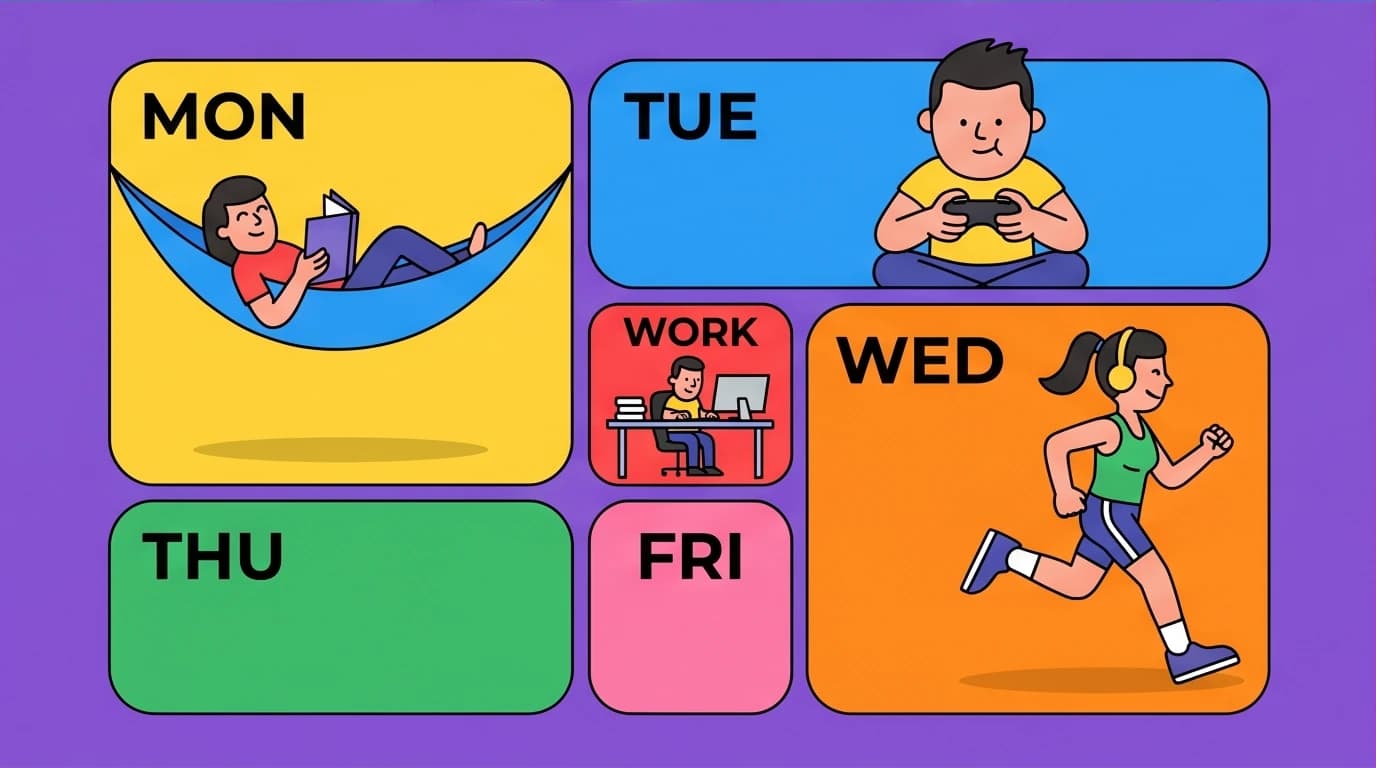
Instead of scheduling your work, schedule your guilt-free play, meals, sleep, and socializing first. You will quickly realize you only have a few hours of actual work time available. This creates a healthy sense of urgency. When you do work, you only commit to 30 minutes of uninterrupted effort. No demands for perfection—just 30 minutes of starting.
Instead of scheduling your work, schedule your guilt-free play, meals, sleep, and socializing first. You will quickly realize you only have a few hours of actual work time available. This creates a healthy sense of urgency. When you do work, you only commit to 30 minutes of uninterrupted effort. No demands for perfection—just 30 minutes of starting.
Perfectionism and a fear of failure are often the hidden culprits keeping you from hitting your deadlines. This insightful guide shifts the focus away from sheer willpower, offering a compassionate approach to managing the anxiety that triggers your avoidance. By adopting these methods, you can finally learn to work guilt-free, enjoy your downtime, and view getting started as a manageable, low-stress process.
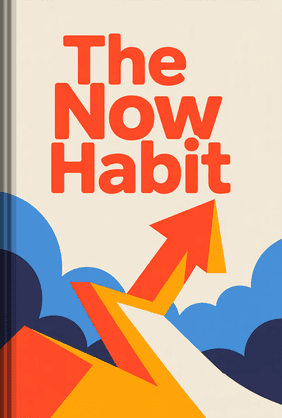
The Now Habit
Neil Fiore, Ph.D.
48 Duration8 Key Points4.6 Rate4. LeapAhead App: Digesting Key Ideas in 15 Minutes
Best for: Busy people who want to absorb core concepts without reading entire books.
Let's be honest: one of the biggest reasons we procrastinate on reading is because a 300-page book feels like a monumental task. LeapAhead addresses this head-on by providing a modern alternative. It's a microlearning app that distills bestselling non-fiction books—including many on this list—into 15-minute audio and text summaries. This approach is designed for the fragmented reality of modern life, allowing you to turn a commute, a lunch break, or a workout into a productive learning session.
Core Takeaway: Habit-Stacking with Microlearning
The app's power lies in its ability to be "stacked" onto your existing routine, a principle straight out of Atomic Habits. Instead of trying to find a new hour-long block to read, you can absorb the key insights from Eat That Frog! while making coffee. The app uses daily goals and personalized recommendations to help you build a consistent learning habit, 15 minutes at a time. This method removes the initial friction and overwhelming feeling that often leads to putting off self-improvement.
The app's power lies in its ability to be "stacked" onto your existing routine, a principle straight out of Atomic Habits. Instead of trying to find a new hour-long block to read, you can absorb the key insights from Eat That Frog! while making coffee. The app uses daily goals and personalized recommendations to help you build a consistent learning habit, 15 minutes at a time. This method removes the initial friction and overwhelming feeling that often leads to putting off self-improvement.
While LeapAhead is incredibly efficient for grasping core ideas, its summaries may not satisfy those seeking deep, academic-level detail. Furthermore, its mobile-first design is perfect for learning on the go but might feel limiting for users who prefer to study on a desktop. However, for anyone looking to clear their "reading debt" and consistently learn from the world's best thinkers without the heavy time commitment, it's a powerful tool for turning intent into action.

Overwhelmed by your reading list? LeapAhead summarizes bestselling books on procrastination into 15-minute audio digests to help you learn on the go.
 LeapAhead
5. Solving the Procrastination Puzzle by Timothy A. Pychyl
Best for: Readers who want a short, science-backed explanation of why they delay.
Dr. Pychyl has studied procrastination for decades. His book is short, punchy, and highly practical. He focuses on the concept of "mood repair." We procrastinate because the task at hand makes us feel bad (bored, frustrated, anxious). We avoid the task to feel better in the short term, sacrificing our future selves.
Core Takeaway: "Just Get Started"
Motivation does not precede action. Action precedes motivation. Pychyl emphasizes that you do not need to feel like doing something to actually do it. Recognize the negative emotion, accept that you don't want to do the work, and start anyway.
Motivation does not precede action. Action precedes motivation. Pychyl emphasizes that you do not need to feel like doing something to actually do it. Recognize the negative emotion, accept that you don't want to do the work, and start anyway.
6. The War of Art by Steven Pressfield
Best for: Creatives, writers, entrepreneurs, and anyone tackling a passion project.
If you are trying to write a book, start a business, or get in shape, you will face an invisible, toxic force. Pressfield calls it "Resistance." Resistance aims to keep things exactly as they are. It feeds on fear and rationalization.
This isn't a traditional time-management book. It is a swift kick in the teeth. It demands that you stop acting like an amateur and start treating your creative work like a blue-collar job. You punch in, you do the work, and you punch out.
Core Takeaway: Turn Pro
Amateurs wait for inspiration to strike. Professionals sit down at their desks every single morning, regardless of how they feel. Beating procrastination requires adopting a professional mindset.
Amateurs wait for inspiration to strike. Professionals sit down at their desks every single morning, regardless of how they feel. Beating procrastination requires adopting a professional mindset.
7. Procrastination: Why You Do It, What to Do About It by Jane B. Burka and Lenora M. Yuen
Best for: Deep psychological insight and long-term behavioral change.
Written by two psychologists, this book digs deep into the roots of delay. It explores how procrastination ties into our self-worth, our fear of success, and our rebellion against control. If you have tried every time-management app on your iPhone and nothing works, this book offers the psychological diagnosis you need.
Core Takeaway: Set Behavioral Goals
Instead of setting vague, outcome-based goals ("I want to get a promotion"), set specific, behavioral goals ("I will spend 45 minutes every Tuesday updating my portfolio"). Focus entirely on what you can control.
Instead of setting vague, outcome-based goals ("I want to get a promotion"), set specific, behavioral goals ("I will spend 45 minutes every Tuesday updating my portfolio"). Focus entirely on what you can control.
8. Essentialism: The Disciplined Pursuit of Less by Greg McKeown
Best for: People who procrastinate because they are overwhelmed by too many commitments.
Sometimes you aren't avoiding work; you just have too much of it. When every task feels urgent, your brain shuts down. Essentialism is about ruthless prioritization. It teaches you how to say no so you can say yes to the few things that actually matter.

Core Takeaway: The 90 Percent Rule
When evaluating an opportunity or a task, rate it on a scale of 0 to 100. If it scores less than a 90, automatically change the score to zero and reject it. By clearing out the clutter, you eliminate the decision fatigue that leads to procrastination.
When evaluating an opportunity or a task, rate it on a scale of 0 to 100. If it scores less than a 90, automatically change the score to zero and reject it. By clearing out the clutter, you eliminate the decision fatigue that leads to procrastination.
When everything feels like a top priority, it’s no wonder you feel paralyzed. This brilliant manifesto will teach you how to ruthlessly edit your commitments, say no with confidence, and reclaim your time for the things that truly move the needle. If you want to stop spreading yourself so thin and eliminate the decision fatigue that drives your procrastination, this is a must-read.
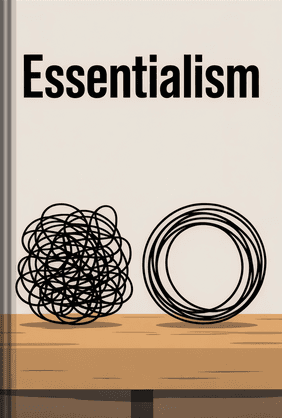
Essentialism
Greg McKeown
32 Duration10 Key Points4.6 RateStop Looking for "Self Help Books for Laziness"
The biggest mistake readers make is misdiagnosing their problem. You head to Amazon or Goodreads and type in "how to stop being lazy."
Laziness is an absolute lack of desire to act. You sit on the couch, watch TV, and feel completely fine about it. Procrastination is entirely different. Procrastination is wanting to act, knowing you need to act, failing to act, and feeling terrible about it.
The books about overcoming procrastination listed above work because they treat the actual disease: fear, poor system design, and emotional dysregulation. Stop calling yourself lazy. It is an inaccurate label that only fuels the guilt cycle.
How to Apply These Books Immediately
Do not read these books back-to-back. That is just another form of procrastination disguised as productive research. Pick one book based on your specific bottleneck right now.
- If your environment is chaotic: Start with Atomic Habits.
- If you have one massive project you are avoiding: Read Eat That Frog!.
- If anxiety and perfectionism paralyze you: Pick up The Now Habit.
If you commute, use Audible. Listen at 1.2x speed to absorb the frameworks while driving. If you prefer physical books, grab a pen and physically mark up the margins.
Turn your commute into a powerful learning session. With LeapAhead, you can listen to key insights from books like Atomic Habits in just 15 minutes.
LeapAheadRead chapter one. Put the book down. Execute the first rule.
FAQ
Are audiobooks as effective as reading for overcoming procrastination?
Yes. For many procrastinators, sitting down to read a 300-page book is just another overwhelming task. Audiobooks remove the friction. Listening to an audiobook during a commute or while doing chores is a highly efficient way to absorb the frameworks without dedicating extra time.
Yes. For many procrastinators, sitting down to read a 300-page book is just another overwhelming task. Audiobooks remove the friction. Listening to an audiobook during a commute or while doing chores is a highly efficient way to absorb the frameworks without dedicating extra time.
I read productivity books but never take action. How do I fix this?
Stop reading the entire book at once. Treat the book like an instruction manual. Read the first chapter, identify one actionable step (like James Clear's 2-Minute Rule), and close the book. Do not read chapter two until you have applied the lesson from chapter one.
Stop reading the entire book at once. Treat the book like an instruction manual. Read the first chapter, identify one actionable step (like James Clear's 2-Minute Rule), and close the book. Do not read chapter two until you have applied the lesson from chapter one.
Is Eat That Frog! still relevant today?
Absolutely. While the technology we use has changed, human psychology remains exactly the same. The core philosophy of identifying your highest-impact task and executing it before checking your inbox or Slack messages is more crucial now than it was twenty years ago.
Absolutely. While the technology we use has changed, human psychology remains exactly the same. The core philosophy of identifying your highest-impact task and executing it before checking your inbox or Slack messages is more crucial now than it was twenty years ago.
Which book is best if I struggle with ADHD?
While not exclusively for ADHD, The Now Habit by Neil Fiore is highly recommended. It focuses on breaking tasks down into incredibly small, 30-minute increments and removing the anxiety of the "big picture." This directly helps bypass the executive dysfunction often associated with ADHD.
While not exclusively for ADHD, The Now Habit by Neil Fiore is highly recommended. It focuses on breaking tasks down into incredibly small, 30-minute increments and removing the anxiety of the "big picture." This directly helps bypass the executive dysfunction often associated with ADHD.