


You are crushing your metrics, hitting every deadline, and outperforming your peers. Yet, hard work alone will not guarantee a promotion to a management role. Executives are looking for individuals who can elevate an entire team, not just carry the load themselves.
The gap between a stellar individual contributor and a competent manager is deep. Bridging it means unlearning the exact habits that made you successful in the first place. You need a new playbook to signal your readiness to leadership. Building a targeted library of books for aspiring managers is the smartest first step you can take to map out that transition.
Why You Must Shift Your Mindset Before Getting the Title
Many ambitious professionals wait until they receive a promotion to figure out how to manage people. This is a fatal career mistake. You do not get the title and then learn to lead; you demonstrate leadership, and the title follows.

Reading targeted career advancement books right now gives you a massive competitive advantage. It provides you with the vocabulary, strategic frameworks, and conflict-resolution tools that executives already use. When you speak their language in meetings, propose solutions that factor in the wider business context, and handle workplace friction with maturity, decision-makers take notice.
Unlike broad, theoretical reads, preparing for management books offer tactical advice. They force you to look up from your daily tasks and understand how the business actually operates.
The Essential Reading List: Books to Read Before Becoming a Manager
Building your foundational knowledge requires a mix of strategy, psychology, and tactical communication. Grab physical copies at Barnes & Noble so you can highlight them, download them on Amazon Kindle, or listen on Audible during your commute. Here are the definitive books you need on your shelf.


Busy schedule? Absorb the key insights from these leadership books and thousands more in just 15 minutes a day with the LeapAhead app.
 LeapAhead
1. The Making of a Manager by Julie Zhuo
The Core Focus: Navigating the everyday realities and the imposter syndrome of stepping into management.
Julie Zhuo became a manager at Facebook at age 25. She felt completely unprepared, staring at a team of her former peers. If you want a book that strips away the corporate jargon and tells you exactly what the first few months feel like, this is it. It is arguably the most approachable starting point among books to read before becoming a manager.
Zhuo explains the fundamental truth of management: your job is no longer about doing the work; your job is to get better outcomes from a group of people working together.
What you will learn:
- How to run effective 1-on-1 meetings that actually uncover roadblocks.
- How to handle the awkward transition of managing people who were your friends yesterday.
- Why hiring well is the ultimate lever for your team’s success.
Actionable Takeaway: Start viewing your current project meetings through a manager’s lens. Are the meetings producing decisions, or just sharing information? Volunteer to structure the next team meeting agenda to maximize efficiency.
If you are looking for a roadmap that speaks directly to the anxieties of becoming a boss for the first time, you absolutely need to pick up a copy of Zhuo's groundbreaking guide. It feels less like a sterile textbook and more like getting coffee with a mentor who has already navigated the messy, confusing reality of managing former peers. This read will give you the exact frameworks you need to organize your team and build immediate confidence.
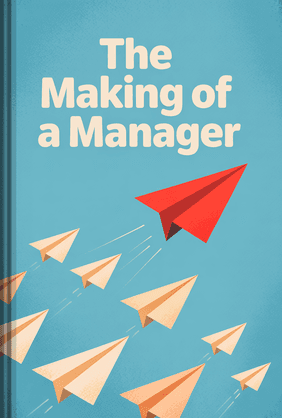
The Making of a Manager
Julie Zhuo
 47 Duration
 9 Key Points
 4.6 Rate
2. What Got You Here Won't Get You There by Marshall Goldsmith
The Core Focus: Eliminating the toxic behavioral habits that stall career growth.
This is a mandatory read for high-achievers. Goldsmith, a legendary executive coach, points out that the traits making you a great individual contributor—like wanting to add your two cents to every idea, or needing to win every argument—are the exact traits that will disqualify you from leadership.

What you will learn:
- Why "adding too much value" demotivates your peers.
- The danger of starting sentences with "No," "But," or "However."
- How to accept feedback without being defensive.
Actionable Takeaway: Track your conversations for one week. Notice how many times you interrupt a colleague to improve their idea. Stop doing it. Let them own their ideas fully, which builds their confidence and your reputation as a collaborator.
For driven professionals looking to break into the executive ranks, Goldsmith’s masterclass on behavioral change is an absolute must-read. Recognizing your blind spots is the first step toward true leadership, and this eye-opening guide provides practical, no-nonsense strategies to stop holding yourself back. You will learn how to ditch the subtle, counterproductive habits you don't even realize you have, clearing the runway for your next major career leap.

What Got You Here Won't Get You There
Marshall Goldsmith
15 Duration7 Key Points4.3 Rate3. Act Like a Leader, Think Like a Leader by Herminia Ibarra
The Core Focus: Redefining your job scope to develop executive presence.
You might think that if you just do your current job perfectly, you will be promoted. Ibarra argues the exact opposite. To move up, you need to "outsight"—you must look outside your immediate tasks and network across the organization. This stands out among leadership skills books because it demands you act before you feel entirely ready.
What you will learn:
- The "authenticity trap" and why sticking to your comfort zone stunts your growth.
- How to build a strategic network outside your immediate department.
- Why you need to stop doing the work you love (and excel at) to make room for strategic thinking.
Actionable Takeaway: Identify one leader in a completely different department—say, Marketing if you are in Engineering—and ask them for a 15-minute coffee chat. Understand their quarterly goals. This builds your macro-level business awareness.
4. LeapAhead App: A Library in Your Pocket
The Core Focus: Absorbing key ideas from hundreds of business books in 15-minute sprints.
Let’s be realistic: as a busy professional, you might not have time to read all these books cover-to-cover immediately. That’s where a tool like LeapAhead becomes a strategic advantage. It's a microlearning app that provides 15-minute audio and text summaries of over 30,000 bestselling nonfiction books. For an aspiring manager, it’s a powerful way to rapidly build foundational knowledge across a wide range of leadership topics—from communication to strategy—during a commute or workout.
What you will learn:
- How to build a consistent learning habit, even on the busiest days, using daily goals and check-ins.
- How to quickly grasp the core frameworks from major business thinkers without getting bogged down.
- How to retain more information through visual infographics, mind maps, and key insight cards.
Actionable Takeaway: Download the app and use your commute for the next three days to listen to summaries of books on a topic you feel weak in, like team motivation or financial acumen. Notice how quickly you can absorb the foundational concepts.
While a 15-minute summary can't replace the deep nuance of a full book, LeapAhead is incredibly effective for surveying a wide range of ideas and identifying which books on this list you should prioritize for a deeper dive. Its mobile-first design makes it a practical tool for consistent learning, but users who prefer long-form desktop study may find it limiting. For a busy professional, it's a perfect way to turn fragmented time into a powerful learning habit.
5. Crucial Conversations by Kerry Patterson, Joseph Grenny, Ron McMillan, and Al Switzler
The Core Focus: Handling high-stakes, emotional conversations without burning bridges.
Managers deal with conflict constantly. Whether it is negotiating a budget, giving critical feedback to a defensive employee, or pushing back against an unrealistic executive mandate, communication is the job. If you shy away from conflict or lose your temper when challenged, you will not survive in leadership.
What you will learn:
- How to recognize when a conversation shifts from routine to critical.
- Techniques to keep dialogue open even when the other person is angry.
- How to separate facts from the stories we tell ourselves about a situation.
Actionable Takeaway: The next time a peer drops the ball on a shared project, do not send a passive-aggressive email or complain to your boss. Address them directly, focusing purely on the facts of the missed deadline without assigning malicious intent.
Mastering the art of high-stakes communication is arguably the most valuable skill you can develop on your path to management. This exceptional guide takes the fear out of conflict and gives you a proven blueprint for keeping dialogue constructive, even when tensions run high. By making this required reading in your professional development journey, you will learn how to tackle tough workplace discussions head-on while actually strengthening your working relationships.

Crucial Conversations
Kerry Patterson, Joseph Grenny, Ron McMillan, Al Switzer
20 Duration9 Key Points4.7 Rate6. Multipliers by Liz Wiseman
The Core Focus: Learning how to amplify the intelligence of the people around you.
Some leaders drain the energy and capability out of their teams (Diminishers). Others amplify the smarts and capabilities of everyone around them (Multipliers). As an aspiring manager, your goal is to prove you are a Multiplier.
Executives look for people who elevate the team. If you are the person who always has to be the smartest in the room, you are signaling that you are a Diminisher.
What you will learn:
- How to ask questions that spark innovation rather than dictating solutions.
- The difference between being a tyrant and being a "challenger."
- How to give people ownership of outcomes, not just tasks.
Actionable Takeaway: When a junior colleague asks you for help solving a problem, do not just give them the answer. Ask them: "What do you think our best options are?" Guide them to the solution instead of handing it to them.
To truly show executives that you are ready for a leadership title, you have to prove you can draw out the absolute best in your colleagues. Wiseman's brilliant research perfectly illustrates how the most effective managers act as talent magnets, fostering environments where innovation thrives. Adding this essential book to your library will completely reshape how you interact with your peers, ensuring you become the kind of leader people actively want to work for.

Multipliers
Liz Wiseman with Greg McKeown
38 Duration9 Key Points4.7 RateBusy schedule? Absorb the key insights from these leadership books and thousands more in just 15 minutes a day with the LeapAhead app.
LeapAheadPractical Steps to Demonstrate Leadership Potential
Reading is only half the equation. You must translate the insights from these leadership skills books into visible actions. Executives do not promote based on your reading list; they promote based on the behavioral shifts they observe.
Take Ownership of the "Gray Areas"
Every company has tasks or broken processes that fall between the cracks of different departments. No one owns them, so everyone ignores them. Step up and fix one. Map out a new process, get buy-in from the affected teams, and present the solution to your boss. This proves you care about the broader business, not just your specific job description.
Every company has tasks or broken processes that fall between the cracks of different departments. No one owns them, so everyone ignores them. Step up and fix one. Map out a new process, get buy-in from the affected teams, and present the solution to your boss. This proves you care about the broader business, not just your specific job description.
Master the Art of Managing Up
Do not wait for your manager to ask for updates. Anticipate their needs. Send brief, bulleted end-of-week summaries detailing what you accomplished, what is at risk, and what you are prioritizing next week. By making your boss's job easier, you prove you understand executive priorities.
Do not wait for your manager to ask for updates. Anticipate their needs. Send brief, bulleted end-of-week summaries detailing what you accomplished, what is at risk, and what you are prioritizing next week. By making your boss's job easier, you prove you understand executive priorities.
Mentor New Hires
You do not need a management title to mentor someone. When a new employee joins your team, informally take them under your wing. Help them navigate the company culture, explain where resources are located, and check in on them. Your current manager will notice that you naturally assume a leadership posture.
You do not need a management title to mentor someone. When a new employee joins your team, informally take them under your wing. Help them navigate the company culture, explain where resources are located, and check in on them. Your current manager will notice that you naturally assume a leadership posture.
Common Pitfalls to Avoid on Your Path to Leadership
As you prepare for a promotion, ambition can sometimes cross the line into arrogance. Avoid these critical mistakes.
Do Not Boss Your Peers Around
There is a massive difference between demonstrating leadership and acting like you are already the boss. Do not start delegating your own grunt work to your peers. Leadership at the individual contributor level is about influence, collaboration, and support—not issuing commands.
There is a massive difference between demonstrating leadership and acting like you are already the boss. Do not start delegating your own grunt work to your peers. Leadership at the individual contributor level is about influence, collaboration, and support—not issuing commands.
Do Not Hoard Information to Seem Indispensable
A common fear is that if you train someone else to do your job, you become expendable. The opposite is true in the corporate world. If you are the only person who knows how to execute a critical function, your company cannot afford to promote you out of that role. Document your processes. Cross-train your peers. Make yourself replaceable in your current role so you can be elevated to the next one.

A common fear is that if you train someone else to do your job, you become expendable. The opposite is true in the corporate world. If you are the only person who knows how to execute a critical function, your company cannot afford to promote you out of that role. Document your processes. Cross-train your peers. Make yourself replaceable in your current role so you can be elevated to the next one.
Do Not Rely Solely on Technical Skills
What got you noticed was your ability to code, sell, design, or analyze data better than anyone else. But management is not about being the best technician; it is about human psychology, resource allocation, and strategy. Stop trying to prove you are the best at the technical work, and start proving you understand how the business makes money.
What got you noticed was your ability to code, sell, design, or analyze data better than anyone else. But management is not about being the best technician; it is about human psychology, resource allocation, and strategy. Stop trying to prove you are the best at the technical work, and start proving you understand how the business makes money.
FAQ
Do I really need to read these if I already have an MBA?
Yes. An MBA teaches you business administration, finance, and operational strategy. However, the day-to-day reality of managing human beings—dealing with imposter syndrome, delivering tough feedback, and navigating office politics—is rarely covered in depth in a graduate program. These books bridge the gap between academic theory and daily workplace reality.
Yes. An MBA teaches you business administration, finance, and operational strategy. However, the day-to-day reality of managing human beings—dealing with imposter syndrome, delivering tough feedback, and navigating office politics—is rarely covered in depth in a graduate program. These books bridge the gap between academic theory and daily workplace reality.
How long does it take to transition from an individual contributor to a manager?
It varies widely depending on your company's growth rate and turnover, but typically it takes 12 to 24 months of sustained, visible leadership behavior to earn a promotion. You need enough time to prove that your strategic thinking and collaborative approach are consistent traits, not just a temporary phase.
It varies widely depending on your company's growth rate and turnover, but typically it takes 12 to 24 months of sustained, visible leadership behavior to earn a promotion. You need enough time to prove that your strategic thinking and collaborative approach are consistent traits, not just a temporary phase.
What if my current boss isn’t supportive of my goal to become a manager?
If your direct manager blocks your growth, you need to expand your visibility. Use the networking strategies from Act Like a Leader, Think Like a Leader to build relationships with leaders in other departments. Volunteer for cross-functional projects. If the culture is genuinely toxic and upward mobility is impossible, use the leadership skills you are developing to interview for a management role at a new company.
If your direct manager blocks your growth, you need to expand your visibility. Use the networking strategies from Act Like a Leader, Think Like a Leader to build relationships with leaders in other departments. Volunteer for cross-functional projects. If the culture is genuinely toxic and upward mobility is impossible, use the leadership skills you are developing to interview for a management role at a new company.
Are audiobooks as effective as physical books for these topics?
Absolutely. Many ambitious professionals consume career advancement books via Audible during their commute or workout. The key is retention and action. If you use audiobooks, keep a digital note-taking app handy on your phone. Pause when you hear a valuable framework and write down one specific way you will apply it at work that same week.
Absolutely. Many ambitious professionals consume career advancement books via Audible during their commute or workout. The key is retention and action. If you use audiobooks, keep a digital note-taking app handy on your phone. Pause when you hear a valuable framework and write down one specific way you will apply it at work that same week.