

You are exhausted. You keep saying yes when your mind and body are screaming no, simply because you want to avoid conflict or fear disappointing someone. You are dealing with people who view your limits as a personal attack, leaving you drained and questioning your own sanity. You do not need another lecture on self-care. You need permission to protect your peace.
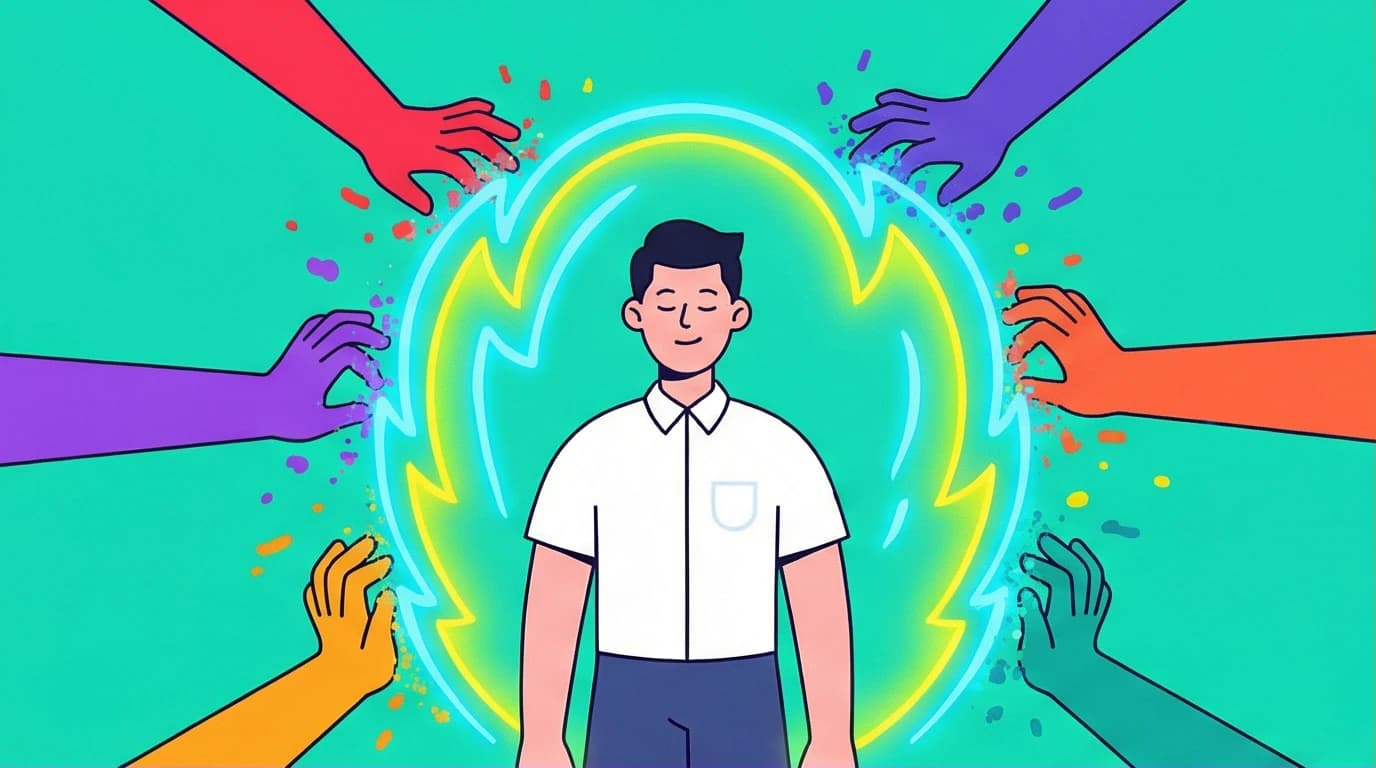
If you have ever browsed Amazon or stood in a Barnes & Noble desperately looking for a way out of toxic dynamics, Dr. Henry Cloud and Dr. John Townsend's groundbreaking book offers a lifeline. The following boundaries book quotes are not just nice phrases to write in a journal. They are psychological tools. They are designed to validate your reality, crush your misplaced guilt, and give you the exact framework you need to stand firm.
Why Henry Cloud Boundaries Quotes Resonate So Deeply
Dr. Henry Cloud and Dr. John Townsend fundamentally changed how we understand relationships. Their core message is simple but confrontational: you are responsible to others, but you are responsible for yourself.
People read this book and highlight almost every page because it addresses a universal struggle—the confusion between loving someone and enabling them. If you look at reviews on Goodreads, you will notice a common thread: readers finally realize that setting a limit is an act of honesty. Without boundaries, relationships are built on resentment, not love.
To get a complete picture of the book's structure and core arguments before diving into specific quotes, it's helpful to start with an overview.
Let's break down the most essential quotes from Boundaries book, categorizing them by the exact emotional hurdle you are trying to overcome today.
While quotes and excerpts are a fantastic starting point, nothing beats reading the foundational text that started it all. If you are tired of living on edge and want the complete psychological and spiritual framework for protecting your time, Boundaries is a must-read. Cloud and Townsend will help you identify exactly where your responsibility ends and someone else's begins. It is highly recommended to grab a copy and keep it on your nightstand as a daily reminder of your worth.
Boundaries
Dr. Henry Cloud and Dr. John Townsend
 47 Duration
 10 Key Points
 4.7 Rate
Saying No Quotes: Boundaries in Action
The inability to say no is the root of boundary issues. We fear that saying no makes us bad friends, bad children, or bad employees. These specific saying no quotes Boundaries provides will help you reframe a rejection as an act of self-definition.
1. "Boundaries define us. They define what is me and what is not me."
The Meaning: A physical fence shows you where your yard ends and your neighbor’s begins. Emotional limits do the exact same thing for your identity. If you never say no, you blur into the people around you, absorbing their stress, their responsibilities, and their emotions.
The Action: Stop taking on feelings that do not belong to you. If your mother is upset because you cannot attend a Sunday dinner, her disappointment is her yard. Your decision to rest is your yard. Let her manage her own disappointment.

The Action: Stop taking on feelings that do not belong to you. If your mother is upset because you cannot attend a Sunday dinner, her disappointment is her yard. Your decision to rest is your yard. Let her manage her own disappointment.
2. "We can't manipulate people into swallowing our boundaries by sugarcoating them. Boundaries are a 'take it or leave it' proposition."
The Meaning: You cannot control how someone reacts to your "no." Many people soften their boundaries, over-explain, or apologize profusely to prevent the other person from getting angry. This never works.
Real-Life Script: Instead of saying, "I'm so incredibly sorry, I feel terrible about this, but I just don't think I can help you move this weekend because my back hurts," try directness. Say, "I am not able to help you move this weekend. I hope it goes smoothly." You do not owe anyone a five-page defense of your limits.
Real-Life Script: Instead of saying, "I'm so incredibly sorry, I feel terrible about this, but I just don't think I can help you move this weekend because my back hurts," try directness. Say, "I am not able to help you move this weekend. I hope it goes smoothly." You do not owe anyone a five-page defense of your limits.
3. "Compliant people have fuzzy and indistinct boundaries; they melt into the demands and needs of other people."
The Meaning: Compliance is often disguised as being a "team player" or a "nice person." In reality, compliance driven by fear of conflict is just a lack of boundary structure. If you melt into others' demands, you will eventually burn out.
The Action: Identify one area in your life where you are currently "melting." Are you staying late at work because your boss hints at it? Establish a hard stop time today. Log off. The discomfort you feel is just a growing pain of building a boundary.
The Action: Identify one area in your life where you are currently "melting." Are you staying late at work because your boss hints at it? Establish a hard stop time today. Log off. The discomfort you feel is just a growing pain of building a boundary.
Even when you understand the theory of boundaries, actually forming the word "no" can feel like climbing Mount Everest for a chronic people-pleaser. If you are still struggling to break the habit of compliance, you might need a highly tactical approach to shutting down unreasonable requests. Damon Zahariades offers a practical, step-by-step manual that pairs perfectly with Cloud and Townsend’s philosophy. It will teach you how to push back against demands without sounding aggressive or feeling overwhelmed with guilt.
The Art of Saying NO
Damon Zahariades
16 Duration9 Key Points4.6 RateIf your reading list is starting to feel overwhelming, but you're eager to absorb the core concepts from these life-changing books, an app can help bridge the gap.

LeapAhead offers 15-minute audio and text summaries of powerful books like 'Boundaries', helping you grasp key principles for setting limits even on your busiest days.
Download LeapAhead App now
Inspirational Quotes About Boundaries and Overcoming Guilt
Guilt is the first emotion you will feel when you start standing up for yourself. It is completely normal. These inspirational quotes about boundaries are perfect for writing on a sticky note and putting on your mirror. They remind you that guilt does not equal doing something wrong.
4. "If you feel yourself getting angry, resentful, or exhausted, pay attention to where you haven't set a boundary."
The Meaning: Resentment is an alarm bell. When you feel bitter toward a friend who constantly vents to you but never listens, your resentment is telling you that a limit has been breached.
The Action: Use your anger as a map. Next time you feel that familiar, hot resentment building in your chest, ask yourself: What boundary did I fail to communicate?

The Action: Use your anger as a map. Next time you feel that familiar, hot resentment building in your chest, ask yourself: What boundary did I fail to communicate?
5. "We must own our own thoughts and feelings. We must not own the thoughts and feelings of others."
The Meaning: Empathy is beautiful, but carrying someone else's emotional baggage as if it were your own is destructive. You are not responsible for keeping everyone around you happy 100% of the time.
Real-Life Script: When someone tries to make you feel guilty for their bad mood, remind yourself silently: I am a witness to their anger, not the cause of it, and not the cure for it.
Real-Life Script: When someone tries to make you feel guilty for their bad mood, remind yourself silently: I am a witness to their anger, not the cause of it, and not the cure for it.
6. "Limits aren't about controlling others; they're about managing yourself."
The Meaning: A common mistake is using boundaries to force someone else to change. "You need to stop yelling at me" is a demand. A boundary is about your own action.
The Action: Shift your focus from their behavior to your response. "If you continue to yell, I will leave the room." You are not controlling them; you are protecting yourself.
The Action: Shift your focus from their behavior to your response. "If you continue to yell, I will leave the room." You are not controlling them; you are protecting yourself.
These quotes are powerful because they are based on a set of consistent, underlying principles. Understanding these core rules can make it easier to apply the concepts in your daily life.
Shedding the guilt that comes with establishing limits is a process that takes time, patience, and often a bit of professional guidance. If you are looking for a modern, highly relatable perspective to complement your journey, licensed therapist Nedra Glover Tawwab’s guide is phenomenal. She breaks down the complex emotions of guilt and resentment into actionable steps, showing you exactly how to advocate for yourself in both your personal and professional life. It is the perfect tool for turning your new mindset into a daily practice.
Set Boundaries, Find Peace
Nedra Glover Tawwab
29 Duration10 Key Points4.5 RateExcerpts for Dealing with Toxic and Manipulative Behavior
Toxic individuals actively test limits. They use guilt trips, gaslighting, and anger to force you to retreat. The authors offer incredibly sharp insights for dealing with manipulative people who refuse to respect a "no."
7. "You can't have a relationship with someone who is not taking responsibility for themselves."
The Meaning: Manipulators love to play the victim. They shift blame, making you responsible for their poor choices or bad moods. Real relationship requires mutual accountability. If they refuse to own their actions, the foundation is completely broken.
The Action: Stop trying to fix them. If you are dealing with an addict, a chronically irresponsible sibling, or a narcissistic partner, realize that your constant rescuing is actually preventing them from facing the consequences of their actions.
The Action: Stop trying to fix them. If you are dealing with an addict, a chronically irresponsible sibling, or a narcissistic partner, realize that your constant rescuing is actually preventing them from facing the consequences of their actions.
8. "People with poor boundaries struggle with saying no to the control, pressure, demands, and sometimes the real needs of others."
The Meaning: Sometimes the hardest boundary to set is with someone who genuinely has a need. But just because someone is in need does not mean you are the one required to meet it, especially if it drains your own necessary resources.
The Action: Remember that saying no to a demand does not make you a villain. It makes you a human with limits. Even your car needs gas; you cannot run on empty just because someone else wants a ride.
The Action: Remember that saying no to a demand does not make you a villain. It makes you a human with limits. Even your car needs gas; you cannot run on empty just because someone else wants a ride.
9. "Forgiveness is something that is given; trust is something that is earned."
The Meaning: Toxic people often demand immediate trust after an apology. They weaponize the concept of forgiveness. Cloud and Townsend make a brilliant distinction: you can forgive someone in your heart to release your own bitterness, but you do not have to hand them the keys to your house again.
Real-Life Script: "I forgive you for what happened. However, my trust has been broken, and it will take time and consistent changed behavior for that to be rebuilt. Until then, I need distance."

Real-Life Script: "I forgive you for what happened. However, my trust has been broken, and it will take time and consistent changed behavior for that to be rebuilt. Until then, I need distance."
Standing up to someone who respects you is one thing, but enforcing limits with a highly manipulative person requires an entirely different toolkit. Toxic individuals thrive on making you doubt your own sanity through fear, obligation, and guilt (often referred to as the "FOG" technique). To successfully navigate these minefields without getting pulled back in, you need a specialized strategy. Dr. Susan Forward’s groundbreaking work will teach you exactly how to spot emotional extortion and neutralize it before it drains your energy.
Emotional Blackmail
Susan Forward, PhD, with Donna Frazier
36 Duration10 Key Points4.7 RateBuilding a library of these essential books is the first step, but finding the time and energy to get through them all can be a challenge. If you want to start applying these crucial insights right away, you can begin with the core ideas.
LeapAhead condenses life-changing books on topics like emotional intelligence and setting boundaries into 15-minute audio sessions, perfect for learning key strategies when you're too busy for a full book.
Download LeapAhead App now
How to Apply Henry Cloud Boundaries Quotes in Real Life
Reading the book—whether you grabbed a hardcover, downloaded it on Apple Books, or listened to the audiobook on Audible during your commute—is only step one. Execution is where the real work happens.
Here is how you turn these quotes into concrete habits:
1. Create a "Boundary Vault"
Pick your three favorite quotes from this list. Save them in the Notes app on your phone. When you receive a text message that makes your stomach drop—a demand from a parent, an unreasonable request from a coworker—do not reply immediately. Open your app. Read the quotes. Let the authors' authority ground you before you type your response.
Pick your three favorite quotes from this list. Save them in the Notes app on your phone. When you receive a text message that makes your stomach drop—a demand from a parent, an unreasonable request from a coworker—do not reply immediately. Open your app. Read the quotes. Let the authors' authority ground you before you type your response.
2. Stop Over-Explaining
Notice how simple the quotes are. They do not contain paragraphs of apologies. When you set a boundary, practice the "Period Rule." Give your boundary, and put a period at the end of the sentence.
Weak: "I can't come to the party because I have to wash my hair, and I'm really tired, and I hope you aren't mad."
Strong: "I won't be able to make it to the party tonight. Have a great time."
Notice how simple the quotes are. They do not contain paragraphs of apologies. When you set a boundary, practice the "Period Rule." Give your boundary, and put a period at the end of the sentence.
Weak: "I can't come to the party because I have to wash my hair, and I'm really tired, and I hope you aren't mad."
Strong: "I won't be able to make it to the party tonight. Have a great time."
3. Expect the Pushback
When you start implementing these concepts, the people who benefited from your lack of boundaries will get upset. This is not a sign that you are doing something wrong; it is proof that the boundary was necessary. Stand firm. Let them be upset. Their reaction is their yard, not yours.
When you start implementing these concepts, the people who benefited from your lack of boundaries will get upset. This is not a sign that you are doing something wrong; it is proof that the boundary was necessary. Stand firm. Let them be upset. Their reaction is their yard, not yours.
As you integrate these ideas, you might find yourself questioning the spiritual or philosophical underpinnings of the book, a topic many readers explore.
FAQ
Are boundaries biblical or selfish?
Dr. Henry Cloud and Dr. John Townsend wrote the book from a Christian perspective, directly addressing the fear that boundaries are selfish. They argue that setting limits is highly biblical. You cannot truly love or give freely if you are doing it out of compulsion, resentment, or fear. Boundaries protect your resources so you can love others in a healthy, sustainable way.
Dr. Henry Cloud and Dr. John Townsend wrote the book from a Christian perspective, directly addressing the fear that boundaries are selfish. They argue that setting limits is highly biblical. You cannot truly love or give freely if you are doing it out of compulsion, resentment, or fear. Boundaries protect your resources so you can love others in a healthy, sustainable way.
What do I do if someone gets angry when I set a limit?
Let them be angry. Anger is a common reaction when someone loses control over you or loses access to your time and energy. Do not retreat or apologize for your boundary just to calm them down. Validate their feeling briefly ("I understand you are frustrated"), but maintain your limit ("...but I am still not available to do this").
Let them be angry. Anger is a common reaction when someone loses control over you or loses access to your time and energy. Do not retreat or apologize for your boundary just to calm them down. Validate their feeling briefly ("I understand you are frustrated"), but maintain your limit ("...but I am still not available to do this").
How do I stop feeling guilty after saying no?
Guilt is a habit, not a compass. Just because you feel guilty does not mean you made a mistake. Acknowledge the feeling without acting on it. Remind yourself of the core premise of the book: taking responsibility for yourself means occasionally disappointing others. Over time, as you practice, the guilt will fade and be replaced by a sense of peace and self-respect.
Guilt is a habit, not a compass. Just because you feel guilty does not mean you made a mistake. Acknowledge the feeling without acting on it. Remind yourself of the core premise of the book: taking responsibility for yourself means occasionally disappointing others. Over time, as you practice, the guilt will fade and be replaced by a sense of peace and self-respect.
Where is the best place to start if I want to read the full Boundaries book?
The original Boundaries: When to Say Yes, How to Say No to Take Control of Your Life is available at all major retailers like Amazon and Barnes & Noble. If you are short on time, the Audible version is highly recommended, as hearing the authors explain the concepts can be incredibly validating. They also have specific spin-off books like Boundaries in Marriage and Boundaries with Kids if you need targeted advice.
The original Boundaries: When to Say Yes, How to Say No to Take Control of Your Life is available at all major retailers like Amazon and Barnes & Noble. If you are short on time, the Audible version is highly recommended, as hearing the authors explain the concepts can be incredibly validating. They also have specific spin-off books like Boundaries in Marriage and Boundaries with Kids if you need targeted advice.