

You sit at your desk for eight hours, answer 50 emails, reply to dozens of Slack notifications, and at 5 PM, you realize you accomplished absolutely nothing of substance. Your attention span feels completely fried.

If you are looking for a brutally honest deep work review, you are likely trying to figure out if Cal Newport’s bestselling productivity manual is the cure to your brain fog, or just another unrealistic self-help book. The truth sits somewhere in the middle. Newport's core argument is undeniable: the ability to focus without distraction is becoming increasingly rare, and therefore increasingly valuable in the modern economy.
But can a normal person with a boss, a mortgage, and an overflowing inbox actually apply it? Let's break down the mechanics of the book, the valid critiques, and whether it deserves a spot on your shelf.
The Core Concept: Shallow vs. Deep Work
Before you decide to pick up a copy on Amazon or grab the audiobook on Audible, you need to understand the fundamental premise Newport builds his entire philosophy upon. He divides all professional activities into two buckets.
Deep Work refers to professional activities performed in a state of distraction-free concentration that push your cognitive capabilities to their limit. These efforts create new value, improve your skill, and are hard to replicate. Think writing code, drafting a legal brief, designing a building, or outlining a massive project.
Shallow Work consists of non-cognitively demanding, logistical-style tasks, often performed while distracted. These efforts tend not to create much new value in the world and are easy to replicate. Think answering emails, attending status meetings, filling out expense reports, and organizing your digital files.
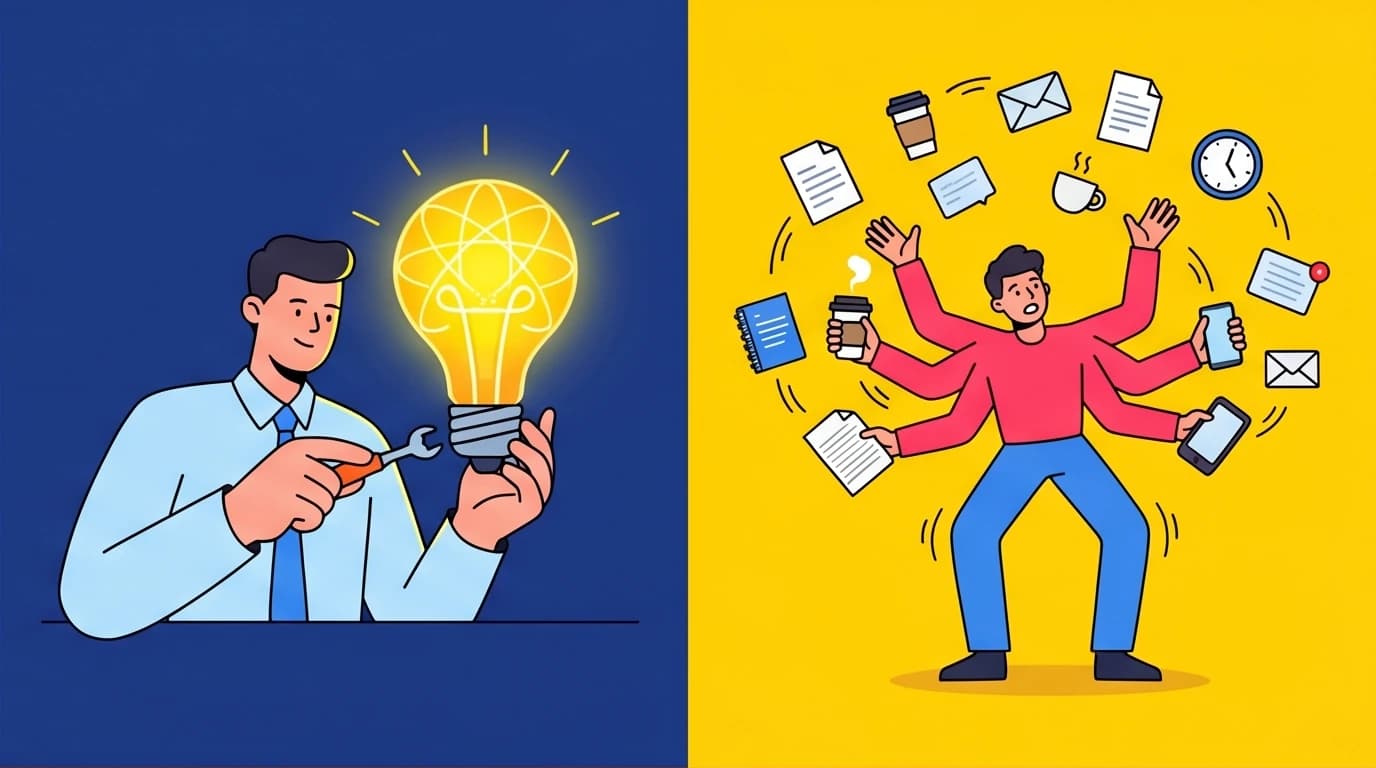
Newport argues that we are drowning in shallow work. We mistake being busy (rapid-fire email responses) for being productive. The premise of the book is a systematic guide to ruthlessly eliminating the shallow to make room for the deep.
If this breakdown of shallow versus deep tasks hits a little too close to home, it might be time to read the source material for yourself. Cal Newport’s original book dives much deeper into the neurology of focus and provides compelling case studies of historical figures who used these exact methods to achieve greatness. If you are ready to stop drowning in busywork and start moving the needle on your career, picking up this modern productivity classic is the best first step.
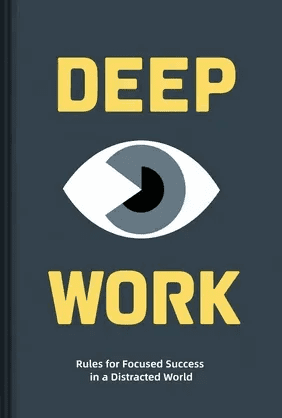
Deep Work
Cal Newport
 47 Duration
 8 Key Points
 4.6 Rate
Breaking Down the Four Rules
Any thorough deep work book review needs to look at the actual framework Newport provides. The second half of the book is highly tactical, built around four distinct rules.
Rule 1: Work Deeply
You cannot just wait for inspiration to strike or hope you find a spare two hours in your calendar. You have to aggressively schedule deep work. Newport outlines four different scheduling philosophies, realizing that a one-size-fits-all approach fails.
- Monastic Philosophy: Isolating yourself completely. Think Bill Gates taking "Think Weeks" in a cabin. Not realistic for most of us.
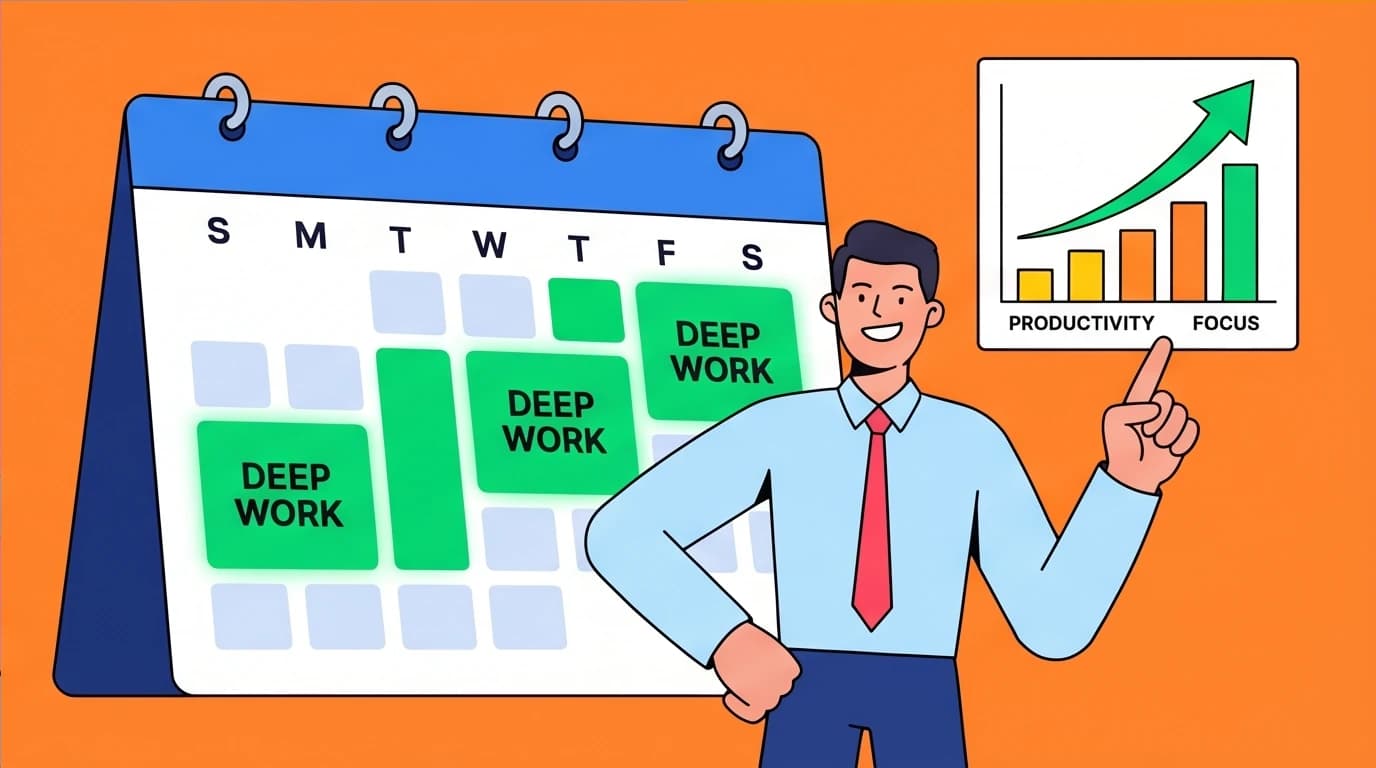
- Bimodal Philosophy: Dividing your time, dedicating clearly defined stretches to deep pursuits and leaving the rest open to everything else. Maybe you take Tuesdays and Thursdays completely offline.
- Rhythmic Philosophy: Creating a simple daily habit. Doing 90 minutes of deep work every single morning before checking email. This is the most practical method for the average knowledge worker.
- Journalistic Philosophy: Fitting deep work wherever you can in your schedule, shifting into focus mode at a moment's notice. This requires immense mental discipline.
Rule 2: Embrace Boredom
Our brains are currently wired for constant novel stimuli. If you pull out your phone the second you get in line at the grocery store or wait at a red light, your brain loses its tolerance for boredom. Newport argues that you have to train your brain to handle the discomfort of sustained focus. If you don't break your addiction to distraction, you will never achieve deep work, no matter how perfectly you block your calendar.
Breaking your smartphone addiction and learning to sit with boredom is easier said than done. If you find yourself constantly reaching for your device the second your brain faces a challenging task, you need a psychological toolkit to fight back. Nir Eyal explores the root causes of our constant need for novel stimuli and offers an incredibly practical framework for taking back control of your attention. It is the perfect companion read for anyone struggling to make Newport’s focus rules stick.
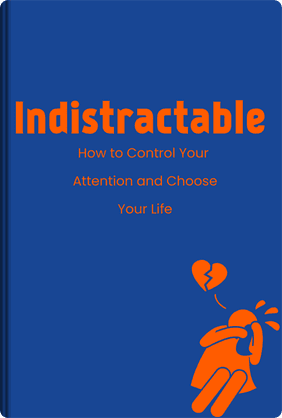
Indistractable
Nir Eyal
23 Duration10 Key Points4.5 RateRule 3: Quit Social Media
This is where Newport loses some people, but his argument is compelling. He pushes back against the "any benefit" mindset—the idea that you should use a tool if it offers any possible benefit. Instead, he advocates for the craftsman approach. You should only use a tool (like Twitter, Instagram, or LinkedIn) if its positive impacts on your core goals significantly outweigh its negative impacts. For most professionals, social media fails this test miserably.
Rule 4: Drain the Shallows
This rule is about treating your time with extreme respect. Newport suggests scheduling every single minute of your workday in blocks. If a task takes longer than expected, you adjust the blocks, but you never just "wing it." He also advocates for making yourself harder to reach, setting expectations with your team about your email response times.
Draining the shallows requires you to say "no" to a lot of incoming requests, which can feel incredibly uncomfortable in a corporate environment. If you struggle with people-pleasing or feel overwhelmed by competing priorities, you have to learn how to separate the vital few tasks from the trivial many. Greg McKeown’s brilliant guide to doing less—but better—will give you the exact framework you need to ruthlessly edit your to-do list and protect your newly scheduled deep work blocks.
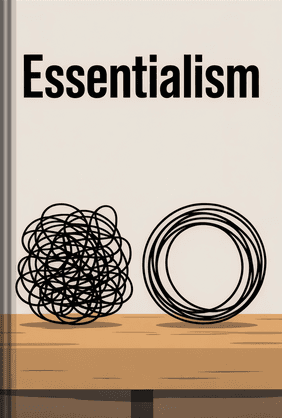
Essentialism
Greg McKeown
32 Duration10 Key Points4.6 RateFeeling motivated but a little overwhelmed by this new reading list? If your schedule is too packed to tackle all three full books right now, you can start by absorbing their core principles first.

This app distills the key ideas from productivity classics like these into 15-minute audio and text summaries, so you can learn faster on a tight schedule.
Download LeapAhead App now
The Pushback: Valid Deep Work Criticism
To provide a truly balanced perspective, we have to look at the flaws. If you dig into almost any deep work reddit review on communities like r/productivity or r/books, you will find a remarkably consistent sentiment: "Great concept, but Cal Newport is a tenured professor, not a middle manager in corporate America."
This deep work criticism is incredibly valid.
Newport writes from the perspective of an academic and an author. In his world, producing high-level research papers and writing books are the only metrics of success. If he ignores his email for three days, a book still gets written.
If an account executive, a customer service manager, or an IT support specialist ignores their email for three days, they get fired.

For many roles in the US workforce, shallow work is the work. If your job is to unblock your team, facilitate communication, or respond to rapid-fire client requests, trying to implement Newport's Monastic or Bimodal philosophies will destroy your career.
Furthermore, the book assumes you have a high degree of autonomy over your schedule. Many employees do not have the political capital to tell their boss, "I am doing deep work right now, I will answer your Slack message in four hours."
So, Is Deep Work Worth Reading?
The ultimate question: is deep work worth reading? The answer depends entirely on your current career path, your level of autonomy, and your ability to adapt rigid advice to messy reality.
You absolutely need to read this book if:
- You are a writer, software engineer, designer, or academic.
- You are a freelancer or entrepreneur who dictates your own schedule.
- You are a student struggling to balance studying with the endless pull of TikTok and Instagram.
- Your income is directly tied to the quality and rarity of the output you produce.
You should skip or just skim this book if:
- Your job title includes words like "Coordinator," "Support," or "Dispatcher."
- You are a CEO or high-level manager whose primary value is being available to make rapid decisions and guide your team.
- You have zero control over your daily schedule and face strict corporate mandates on response times.
Even if you fall into the second camp, the core philosophy holds weight. You might not be able to carve out four hours of uninterrupted focus, but you can likely manage 60 minutes a day. The true value of Newport's book isn't in following his exact schedule; it is in realizing how much of your day is stolen by low-value tasks that masquerade as real work.
How to Actually Apply the Book in Real Life
If you decide to dive in, do not try to overhaul your entire life on day one. Here is the realistic way to apply Newport’s strategies without alienating your coworkers.
1. Start with the Rhythmic Approach
Do not attempt a week-long digital detox. Block exactly one hour on your calendar tomorrow morning. Label it "Focus Time." Close your email tab, quit Slack, put your phone in another room, and work on your most important project. Prove to yourself that you can survive 60 minutes disconnected.
Do not attempt a week-long digital detox. Block exactly one hour on your calendar tomorrow morning. Label it "Focus Time." Close your email tab, quit Slack, put your phone in another room, and work on your most important project. Prove to yourself that you can survive 60 minutes disconnected.
2. Optimize Your Tool Stack
You might not be able to quit social media if you work in marketing, but you can utilize website blockers. Tools like Freedom or Cold Turkey can lock you out of distracting sites during your scheduled deep work blocks.
You might not be able to quit social media if you work in marketing, but you can utilize website blockers. Tools like Freedom or Cold Turkey can lock you out of distracting sites during your scheduled deep work blocks.
3. Manage Expectations Proactively
Instead of just ignoring your boss, communicate. Tell your team, "I am going heads-down on the Q3 report from 9 AM to 11 AM. If there is an absolute emergency, call my cell." Most reasonable managers will respect this boundary because it results in better output for the company.
Instead of just ignoring your boss, communicate. Tell your team, "I am going heads-down on the Q3 report from 9 AM to 11 AM. If there is an absolute emergency, call my cell." Most reasonable managers will respect this boundary because it results in better output for the company.
4. Track Your Deep Hours
Keep a simple tally on a piece of paper next to your keyboard. Every time you complete an hour of genuine, unbroken deep work, make a mark. Watching that metric grow is highly motivating and keeps you honest about how much deep work you are actually achieving versus how much time you are just sitting at your desk.
Keep a simple tally on a piece of paper next to your keyboard. Every time you complete an hour of genuine, unbroken deep work, make a mark. Watching that metric grow is highly motivating and keeps you honest about how much deep work you are actually achieving versus how much time you are just sitting at your desk.
Transforming these deep work strategies from a one-week experiment into a permanent lifestyle change requires a fundamental shift in how you build routines. Relying on willpower alone to block out distractions will eventually lead to burnout. Instead, you need a proven system for making good habits automatic and bad habits (like mindless scrolling) nearly impossible. James Clear’s masterclass on habit formation provides the exact blueprint you need to seamlessly integrate focus blocks into your daily corporate grind.

Atomic Habits
James Clear
26 Duration8 Key Points4.7 RateOf course, finding the time to read all these recommended books can feel like a deep work project in itself. If you want a faster way to absorb these powerful concepts and start applying them, there's a more modern approach.
Listen to the main takeaways from books like *Atomic Habits* and *Deep Work* during your commute, turning otherwise wasted time into your most productive learning session of the day.
Download LeapAhead App now
FAQ
Does this book offer anything I can't get from a 10-minute YouTube summary?
Yes. While a summary gives you the definitions of deep and shallow work, Newport’s book builds a rigorous, evidence-based argument that actually shifts your mindset. The value is in the detailed case studies and the psychological breakdown of why we crave distraction. Reading the book is, in itself, an exercise in deep work.
Yes. While a summary gives you the definitions of deep and shallow work, Newport’s book builds a rigorous, evidence-based argument that actually shifts your mindset. The value is in the detailed case studies and the psychological breakdown of why we crave distraction. Reading the book is, in itself, an exercise in deep work.
Is the audiobook version of Deep Work good?
The audiobook on Audible is excellent and very easy to follow. Because the book is structured logically rather than relying on heavy charts or graphs, it translates perfectly to audio. It is highly recommended for your daily commute.
The audiobook on Audible is excellent and very easy to follow. Because the book is structured logically rather than relying on heavy charts or graphs, it translates perfectly to audio. It is highly recommended for your daily commute.
How long does it take to see results from these strategies?
If you implement a strict 90-minute deep work block every morning, you will notice a massive spike in your core output within the first week. However, retraining your brain to comfortably handle the "boredom" of single-tasking usually takes about three to four weeks of consistent effort.
If you implement a strict 90-minute deep work block every morning, you will notice a massive spike in your core output within the first week. However, retraining your brain to comfortably handle the "boredom" of single-tasking usually takes about three to four weeks of consistent effort.
Can I do deep work in an open-plan office?
It is incredibly difficult, but possible. You will need to invest in high-quality noise-canceling headphones and establish clear visual cues with your coworkers. Many people use the "headphones on means do not disturb unless the building is on fire" rule. If your office is simply too chaotic, you may need to utilize conference rooms or negotiate working from home for part of the week.
It is incredibly difficult, but possible. You will need to invest in high-quality noise-canceling headphones and establish clear visual cues with your coworkers. Many people use the "headphones on means do not disturb unless the building is on fire" rule. If your office is simply too chaotic, you may need to utilize conference rooms or negotiate working from home for part of the week.