

You are staring at your Amazon cart or holding a spare Audible credit, wondering if Drive is actually going to change how you work or manage your team. You have probably been burned before by 300-page business books that could have been a simple blog post. Let's cut through the hype and look at exactly what you get for your money, what you should skip, and whether this bestseller deserves a spot on your bookshelf.

The Core Premise: Why Carrots and Sticks Don't Work
Daniel Pink’s central argument is simple but disruptive: the way most businesses organize their teams and reward employees is completely disconnected from what science knows about human behavior.
Pink breaks human motivation down into three operating systems:
- Motivation 1.0: Basic survival instincts (food, water, shelter).
- Motivation 2.0: Reward and punishment. The classic "carrot and stick" approach used by most corporate HR departments.
- Motivation 3.0: Intrinsic motivation. The deep-seated desire to direct our own lives, expand our capabilities, and live a life of purpose.
Pink argues that Motivation 2.0 works fine for routine, algorithmic tasks—like packing boxes in an Amazon fulfillment center or doing basic data entry. But if a job requires creativity, complex problem-solving, or out-of-the-box thinking, traditional financial incentives actually decrease performance.
This is the exact moment where the book grabs you. If you manage a team of software developers, designers, or strategists, you realize immediately why your current bonus structure might be backfiring.

The "Big Three" Elements of Motivation 3.0
The heavy lifting of the book is dedicated to three pillars of intrinsic motivation. Understanding these is the main reason you pick up this book.

1. Autonomy (Directing Your Own Life)
People want control over what they do, when they do it, who they do it with, and how they do it. Pink cites companies like Atlassian and their "FedEx Days" (now ShipIt Days), where employees are given 24 hours to work on any project they want, as long as they deliver it overnight. Autonomy is not about abandoning management; it is about bypassing micromanagement.
2. Mastery (Getting Better at Things that Matter)
Humans naturally want to get better at stuff. It is why people play the guitar on weekends or spend hours organizing their fantasy football rosters without getting paid. Pink introduces the concept of "Goldilocks tasks"—challenges that are neither too hard (causing anxiety) nor too easy (causing boredom). As a manager, your job is to align your team's daily work with these Goldilocks tasks to trigger a state of flow.
Achieving that coveted state of mastery requires a fundamental shift in how you view failure and effort. Since Pink heavily relies on the concept of a "growth mindset" to explain this drive, reading the foundational research behind it is a smart next step. This groundbreaking work explains exactly how our beliefs about our own capabilities shape our ultimate success, whether you are managing a corporate team or coaching a kid's soccer roster.
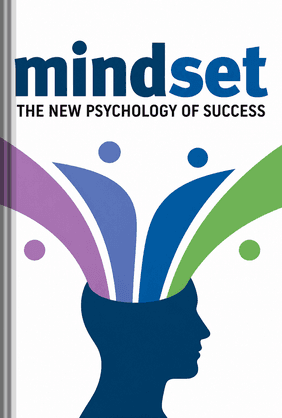
Mindset
Carol S. Dweck
 51 Duration
 8 Key Points
 4.6 Rate
3. Purpose (Serving Something Larger)
Profit motives alone do not inspire people to wake up early and crush their goals. People need a transcendent purpose. Pink contrasts companies focused solely on profit maximization with those emphasizing purpose maximization. When employees understand the "why" behind their work, their resilience and creativity skyrocket.
If you want to truly grasp how purpose maximizes performance and loyalty, you should consider diving into the exact book that popularized the concept. Simon Sinek's iconic exploration of how great leaders inspire action is the perfect follow-up for any manager looking to build a purpose-driven culture from the ground up. It will completely reframe how you pitch projects to your team.
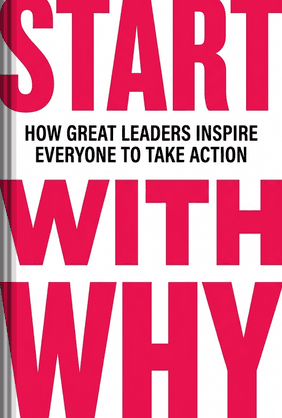
Start with Why
Simon Sinek
45 Duration7 Key Points4.6 RateDrive Book Criticism: Where It Falls Short
Every honest Drive Daniel Pink review has to address the elephant in the room: the pacing and the padding.

1. The Business Book Bloat
Like many titles in the self-improvement and management genres, Drive suffers from formatting bloat. The core thesis is brilliant and deeply supported by behavioral economics, but the middle chapters drag. Pink repeats his points using different anecdotes that do not add new layers to the argument. You will catch yourself skimming whole pages once you grasp the Autonomy-Mastery-Purpose framework.
Like many titles in the self-improvement and management genres, Drive suffers from formatting bloat. The core thesis is brilliant and deeply supported by behavioral economics, but the middle chapters drag. Pink repeats his points using different anecdotes that do not add new layers to the argument. You will catch yourself skimming whole pages once you grasp the Autonomy-Mastery-Purpose framework.
2. The Replicability Crisis in Psychology
Pink relies heavily on behavioral psychology and economics studies from the late 20th and early 21st centuries. In recent years, the social sciences have faced a "replication crisis," where some classic experiments fail to produce the same results when tested today. While the macro-level theory of intrinsic motivation holds up exceptionally well, a few of the micro-studies Pink cites as gospel are now viewed with skepticism by modern psychologists.
Pink relies heavily on behavioral psychology and economics studies from the late 20th and early 21st centuries. In recent years, the social sciences have faced a "replication crisis," where some classic experiments fail to produce the same results when tested today. While the macro-level theory of intrinsic motivation holds up exceptionally well, a few of the micro-studies Pink cites as gospel are now viewed with skepticism by modern psychologists.
3. Execution Gap
The book is fantastic at diagnosing the problem and identifying the ideal state. However, it lacks a robust, step-by-step roadmap for a mid-level manager trying to dismantle a deeply entrenched Motivation 2.0 corporate culture. The "Type I Toolkit" at the back of the book offers some exercises, but they often feel too lightweight for serious organizational change.
The book is fantastic at diagnosing the problem and identifying the ideal state. However, it lacks a robust, step-by-step roadmap for a mid-level manager trying to dismantle a deeply entrenched Motivation 2.0 corporate culture. The "Type I Toolkit" at the back of the book offers some exercises, but they often feel too lightweight for serious organizational change.


Tired of 300-page business books that could be a blog post? Get the core ideas from books like *Drive* in 15 minutes.
 LeapAhead
Because Drive leaves mid-level managers without a concrete roadmap for changing daily routines, you will likely need a tactical manual to bridge that execution gap. James Clear provides the ultimate blueprint for breaking bad habits and building a system that actually works on a day-to-day basis. It serves as the perfect execution manual to complement Pink's high-level motivation theories, giving you the exact steps needed to reorganize your workflow.

Atomic Habits
James Clear
26 Duration8 Key Points4.7 RateSo, Is Drive Worth Reading?
The short answer: Yes, but you should read it strategically.
If you are asking yourself is Drive worth reading, the answer depends entirely on your reading strategy. Do not treat this like a novel you read cover-to-cover.
Who should read it:
- Founders and Managers: If you are building a team or restructuring compensation, the first four chapters are mandatory reading.
- Parents and Educators: The insights into how rewards destroy a child's natural curiosity are eye-opening and immediately applicable.
- Knowledge Workers: If you feel burned out despite a good salary, this book will help you articulate exactly what is missing in your career (usually autonomy or purpose).
How to read it:
Read Parts 1 and 2 thoroughly. When you hit the endless corporate anecdotes in the middle, give yourself permission to skim. Jump directly to Part 3 (The Type I Toolkit) and grab a highlighter. The summaries and actionable lists at the end are where the real ROI lives.
Read Parts 1 and 2 thoroughly. When you hit the endless corporate anecdotes in the middle, give yourself permission to skim. Jump directly to Part 3 (The Type I Toolkit) and grab a highlighter. The summaries and actionable lists at the end are where the real ROI lives.
Read strategically by getting the main takeaways from books like *Drive* without the fluff. Try LeapAhead for free.
LeapAheadDrive Book Audiobook Review: Worth an Audible Credit?
If you commute a lot of miles every week, audiobooks are your best friend. But is this specific audio version good?
Narration Quality: Daniel Pink narrates the audiobook himself. Author-narrated books can be a gamble, but Pink is an experienced public speaker with a clear, engaging, and conversational tone. He sounds like a smart mentor talking to you over coffee, rather than a college professor reading a textbook.
Listening Speed: The pacing is slightly deliberate. If you are a veteran audiobook listener, you will comfortably handle this at 1.5x to 1.7x speed without losing any comprehension. At that speed, the roughly 5.5-hour runtime drops down to about a 3.5-hour listen—perfect for a few days of commuting.
The Verdict on Audio: This is a strong yes for the audiobook format. Because the middle sections can be repetitive, having Pink read them to you while you drive or hit the gym makes the pacing issues much more forgivable than staring at the physical pages. Save your cash, use an Audible credit, and enjoy the listen.
Books Like Drive by Daniel Pink
If you finish Drive and want to dive deeper into behavioral change, habit formation, or deep work without the typical corporate fluff, here are some of the best books and tools:
- Mindset: The New Psychology of Success by Carol S. Dweck: Pink references Dweck's work heavily in Drive. If you want the pure, unfiltered science behind the "growth mindset" and how it fuels Mastery, go straight to the source.
- Atomic Habits by James Clear: While Drive tells you why you are motivated, Atomic Habits gives you the brutal, tactical blueprint on how to organize your daily routines. It is the perfect execution manual to pair with Pink's theory.
- Deep Work by Cal Newport: If you want to achieve Mastery (one of Pink’s big three), you need focus. Newport’s book destroys the myth of multitasking and provides a strict framework for doing high-level, distraction-free work in a noisy world.
- LeapAhead (Book Summary App): For those who loved the core ideas of Drive but were frustrated by the business book bloat, an app like LeapAhead is a game-changer. It distills bestselling nonfiction books into 15-minute audio or text summaries, allowing you to absorb key frameworks—like Autonomy, Mastery, and Purpose—while commuting or on a coffee break. While you'll miss the author's detailed anecdotes, it's an incredibly efficient way to clear your "reading debt" and decide which books are worth a deeper dive. It's a pragmatic solution for busy professionals who want the knowledge without the fluff.
- Punished by Rewards by Alfie Kohn: If you want a deeper, more academic, and far more aggressive critique of the "carrot and stick" culture, Kohn's book is a classic that covers similar ground but with a heavier punch.
As mentioned in our list of alternatives, if your goal is to hit the level of mastery that Pink describes, you have to protect your focus at all costs. Cal Newport's rigorous guide to distraction-free productivity is practically a survival manual for modern knowledge workers. If you are serious about transforming your career, maximizing your output, and avoiding the constant hum of notifications, grab a copy to pair with your newfound motivation.
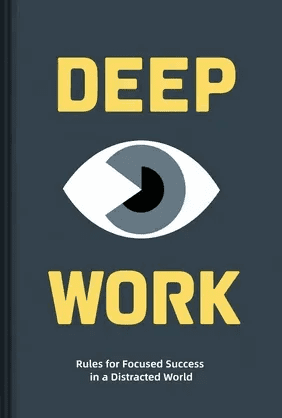
Deep Work
Cal Newport
47 Duration8 Key Points4.6 RateFAQ
Does Drive only apply to corporate managers, or can I use it for personal goals?
While the examples heavily lean on corporate America (like tech companies and law firms), the core framework applies perfectly to personal goals. If you are struggling to stick to a fitness routine or a side hustle, analyzing your situation through the lens of Autonomy, Mastery, and Purpose will quickly reveal why your current strategy is failing.
While the examples heavily lean on corporate America (like tech companies and law firms), the core framework applies perfectly to personal goals. If you are struggling to stick to a fitness routine or a side hustle, analyzing your situation through the lens of Autonomy, Mastery, and Purpose will quickly reveal why your current strategy is failing.
How long does it actually take to read Drive?
The physical book is about 288 pages. An average reader will finish it in about 4 to 5 hours. However, if you use the skimming strategy for the anecdote-heavy middle chapters, you can extract 90% of the book's value in about 2.5 hours.
The physical book is about 288 pages. An average reader will finish it in about 4 to 5 hours. However, if you use the skimming strategy for the anecdote-heavy middle chapters, you can extract 90% of the book's value in about 2.5 hours.
Is the research in Drive outdated now?
The book was published in 2009. While the specific company examples (like the early days of Wikipedia vs. Microsoft Encarta) show their age, the underlying cognitive science is still highly relevant. Human psychology does not change in a decade. The fact that carrots and sticks destroy creative thinking remains a proven baseline in behavioral economics.
The book was published in 2009. While the specific company examples (like the early days of Wikipedia vs. Microsoft Encarta) show their age, the underlying cognitive science is still highly relevant. Human psychology does not change in a decade. The fact that carrots and sticks destroy creative thinking remains a proven baseline in behavioral economics.
If I already watched Daniel Pink's TED Talk on motivation, do I still need to read the book?
Pink’s famous TED Talk ("The puzzle of motivation") is a brilliant 18-minute summary of Motivation 2.0 vs. Motivation 3.0. If you just want the theory to sound smart at a dinner party, the TED Talk is enough. If you want the "Type I Toolkit" to actually apply these concepts to your organization or your kids, you need the book.
Pink’s famous TED Talk ("The puzzle of motivation") is a brilliant 18-minute summary of Motivation 2.0 vs. Motivation 3.0. If you just want the theory to sound smart at a dinner party, the TED Talk is enough. If you want the "Type I Toolkit" to actually apply these concepts to your organization or your kids, you need the book.