


You set the bonuses. You track the KPIs. You outline clear consequences for missing targets. Yet, your team’s engagement remains stagnant, and creative problem-solving is nowhere to be found. The traditional "carrot and stick" management style is actively harming your bottom line. You know you need a new approach, but finding the time to digest a 200-plus page management book is a luxury you don't have.
If the very problem of "no time to read" is what brought you to this summary, there are ways to absorb these crucial ideas without committing to a full book.


LeapAhead

Get the core concepts from *Drive* and other groundbreaking business books in just 15-minute audio or text explainers, perfect for a busy manager's schedule.
This Drive Daniel Pink summary cuts straight to the science of human motivation. We strip away the fluff and deliver the exact frameworks you need to rethink how you manage your team, structure your own work, and drive actual results without relying on outdated tactics.
A Quick Drive Book Synopsis: The Death of the Carrot and Stick
To understand where we are going, you have to understand where we have been. Pink categorizes the evolution of human motivation into three distinct operating systems.
- Motivation 1.0 (Biological): Early humans were motivated purely by survival. We needed food, water, and shelter.
- Motivation 2.0 (Extrinsic): As society industrialized, we built systems around external rewards and punishments. This is the classic "carrot and stick" model. It assumes people inherently dislike work and must be forced or enticed to do it. It worked exceptionally well for routine, assembly-line tasks.
- Motivation 3.0 (Intrinsic): The modern era requires creative, complex problem-solving. Motivation 2.0 actively destroys creativity. Today, people are driven by the intrinsic desire to learn, create, and make the world a better place.
Pink uses a perfect example to illustrate this shift: Encarta vs. Wikipedia.
In the 1990s, Microsoft poured millions into Encarta, paying highly educated professionals to write encyclopedia entries. Meanwhile, Wikipedia launched a model where volunteers contributed articles for free. No carrots, no sticks. Wikipedia demolished Encarta because intrinsic motivation (creating something valuable for the world) proved infinitely more powerful than extrinsic financial rewards.
In the 1990s, Microsoft poured millions into Encarta, paying highly educated professionals to write encyclopedia entries. Meanwhile, Wikipedia launched a model where volunteers contributed articles for free. No carrots, no sticks. Wikipedia demolished Encarta because intrinsic motivation (creating something valuable for the world) proved infinitely more powerful than extrinsic financial rewards.
The fundamental shift from external rewards to internal drive is the crux of Pink's argument. For a more detailed comparison of these two motivational models, it's helpful to explore the psychological reasons why the old way often does more harm than good.
If this summary has already sparked some ideas for your own team, there's nothing quite like reading the source material. While we've distilled the core concepts here, Daniel Pink's full book dives into decades of fascinating psychological research and provides even more robust case studies on human motivation. For leaders who want to completely overhaul their organizational culture, grabbing a copy of the original text is a highly recommended next step.

Drive
Daniel H. Pink
 24 Duration
 11 Key Points
 4.5 Rate
Daniel Pink Drive Key Takeaways: The 3 Pillars of Motivation
When external rewards fail, what actually works? Pink identifies two types of behavior: Type X (fueled by extrinsic desires) and Type I (fueled by intrinsic desires). To cultivate Type I behavior in yourself or your employees, you must build an environment supported by three pillars.
1. Autonomy: The Desire to Direct Our Own Lives
Management is a technology invented in the 1850s to guarantee compliance. But compliance is no longer enough; modern businesses need engagement. Engagement requires autonomy.
Autonomy is not about isolation or doing whatever you want without accountability. It is about acting with choice. People need autonomy over the Four T’s:
- Task: What people actually do. Innovative companies like Google popularized "20% time," where engineers spend one day a week working on any project they want. This autonomy led to the creation of Gmail and Google News.
- Time: When people work. Shifting toward a Results-Only Work Environment (ROWE), where employees don't have schedules but simply need to get the work done, drastically increases productivity and lowers turnover.
- Technique: How people do the work. Give your team a goal, but let them figure out the exact path to reach it. Micromanagement kills technique autonomy.
- Team: Who people work with. Allowing employees to assemble their own project teams leads to higher satisfaction and better output.
Want to see what radical autonomy looks like at scale? Since Pink specifically highlights Google's innovative approach to giving employees control over their time and projects, you might be curious about how the tech giant manages its unconventional HR practices. Former Google SVP of People Operations Laszlo Bock breaks down exactly how they built a culture of freedom and creativity. It's a fantastic companion read if you're trying to figure out how to implement autonomy without losing accountability.
Work Rules!
Laszlo Bock
38 Duration9 Key Points4.8 Rate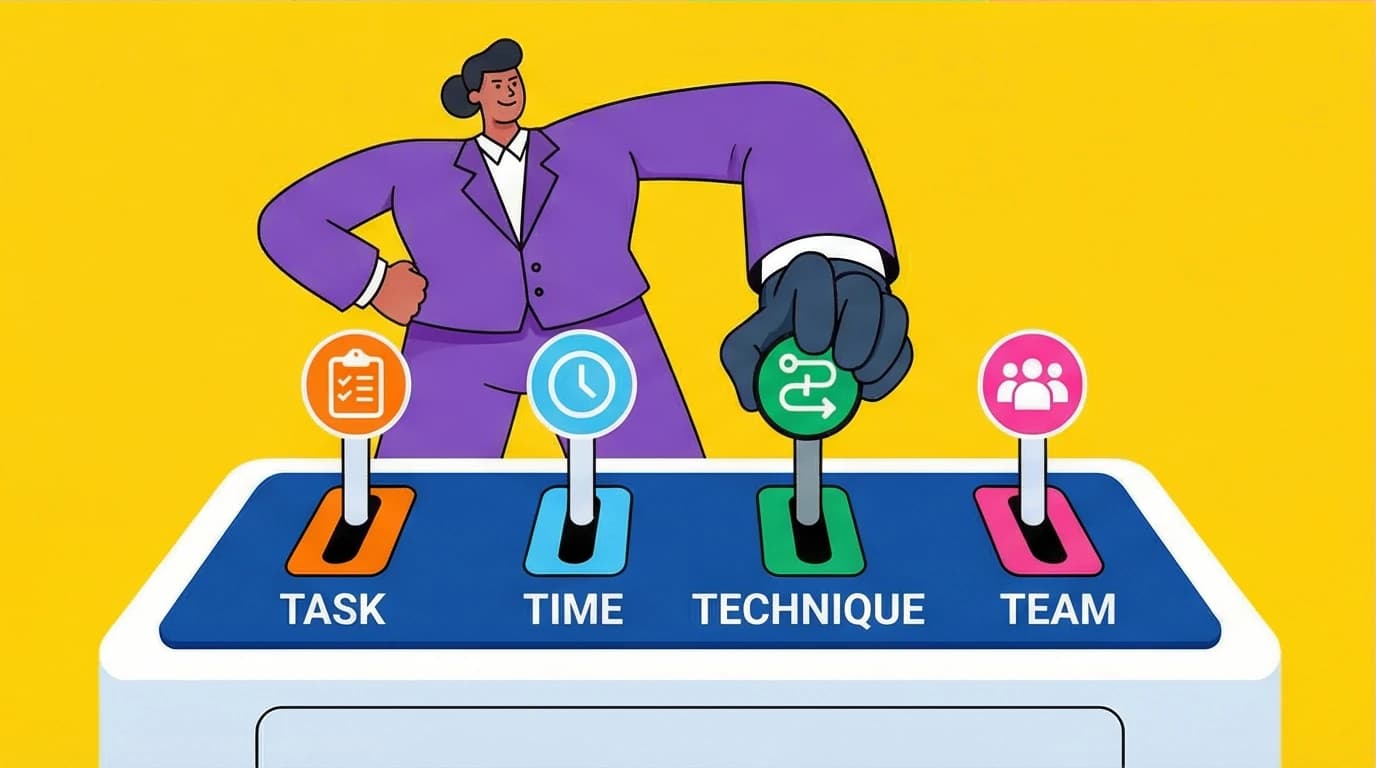
2. Mastery: The Urge to Get Better
Mastery is the desire to continually improve at something that matters. If Motivation 2.0 requires compliance, Motivation 3.0 demands engagement. Only engagement produces mastery.
Pink outlines the three laws of mastery:
- Mastery is a Mindset: You must believe that your abilities are not fixed, but can be improved through effort (an incremental mindset).
- Mastery is a Pain: It requires grit, deliberate practice, and pushing through frustration. It is not always fun in the moment.
- Mastery is an Asymptote: You can get infinitely close to absolute mastery, but you can never fully reach it. The joy is in the pursuit.
Practical Check: Are your employees working on "Goldilocks tasks"? These are tasks that are not too easy (which causes boredom) and not too hard (which causes anxiety). They are just right, pushing the employee slightly beyond their current skill level to trigger a "flow" state.
Pink's assertion that "mastery is a mindset" leans heavily on the foundational psychological concept that our abilities are fluid, not fixed. If you're fascinated by the idea of continuous improvement and want to learn how to cultivate this exact growth-oriented attitude in yourself or your employees, exploring the original research behind this concept is a game-changer. It will fundamentally shift how you view challenges, effort, and the pursuit of mastery.

Mindset
Carol S. Dweck
51 Duration8 Key Points4.6 Rate
3. Purpose: The Yearning to Serve Something Larger
The final pillar is purpose. Humans naturally seek a cause greater and more enduring than themselves.
Traditionally, businesses focused solely on the "profit motive." Pink argues that the most successful modern companies prioritize the "purpose motive." When the profit motive gets unmoored from the purpose motive, bad things happen (unethical behavior, low quality, high turnover).
You can inject purpose into the workplace immediately by changing your vocabulary. Use "we" and "us" instead of "they." Connect everyday tasks directly to the end user who benefits from the product or service.
Aligning your team behind a "purpose motive" sounds great in theory, but it can be notoriously difficult to put into practice. If you are struggling to define your organization's core mission or want to learn how to communicate your vision in a way that truly inspires people to take action, looking at the world's most successful purpose-driven leaders is incredibly helpful. Uncovering your underlying "why" is the ultimate key to unlocking Motivation 3.0.
Start with Why
Simon Sinek
45 Duration7 Key Points4.6 RateUnderstanding Autonomy, Mastery, and Purpose is the first step. The next is learning how to weave these three powerful drivers into your team's culture and your own professional life.
Drive Chapter Summaries: A Structural Breakdown
If you are looking for specific Drive chapter summaries to navigate the book's structure quickly, here is exactly how Pink organizes his arguments.
Part 1: A New Operating System
- Chapter 1: The Rise and Fall of Motivation 2.0. Explores why the old carrot-and-stick model is incompatible with modern, creative work.
- Chapter 2: Seven Reasons Carrots and Sticks (Often) Produce Bad Results. Pink reveals that extrinsic rewards can extinguish intrinsic motivation, diminish performance, crush creativity, crowd out good behavior, encourage cheating, become addictive, and foster short-term thinking.
- Chapter 3: Type I and Type X. Defines the difference between extrinsic-driven people (Type X) and intrinsic-driven people (Type I). Type I behavior is made, not born.
Part 2: The Three Elements
- Chapter 4: Autonomy. Breaks down the Four T's (Task, Time, Technique, Team) and provides case studies of companies abandoning traditional management.
- Chapter 5: Mastery. Discusses "flow" and the psychological necessity of tackling challenging tasks.
- Chapter 6: Purpose. Contrasts purpose maximization with profit maximization, showing how purpose-driven companies attract the best talent.
Part 3: The Type I Toolkit
- Chapter 7 to Epilogue: A dedicated section providing actionable strategies for individuals, businesses, and parents to implement Motivation 3.0.
Actionable Toolkit: Applying This Drive Book Summary Today
Understanding the theory means nothing without execution. Here is how you apply this complete Drive book summary to your current workflows.
For Managers and Leaders
- Take Money Off the Table: Motivation 3.0 does not mean you can underpay people. If employees are constantly worried about their salary, they will only focus on the money. Pay them fairly, or slightly above market rate, so the issue of money disappears and they can focus entirely on the work.
- Host a "FedEx Day": Software company Atlassian gives employees 24 hours to work on any problem they want, with any team they want. The only rule: they must deliver the results the next day (hence, FedEx). This injects a massive dose of autonomy and mastery.
- Conduct an Autonomy Audit: Ask your team to rate their autonomy over their Task, Time, Technique, and Team on a scale of 1 to 10. Find the lowest scores and implement one change this quarter to raise them.
For Individual Professionals
- Ask "What is my sentence?": Pink suggests Presidents are often remembered by a single sentence (e.g., "He won the Civil War and preserved the union"). What is your sentence? This clarifies your personal purpose.
- Design Your Own Performance Review: Do not wait for an annual review. Set your own learning goals and evaluate your own progress monthly. This puts you in charge of your mastery.
Putting these ideas into action is where real change happens. If you're looking for more concrete ways to build a high-performance environment based on Pink's principles, there are many practical strategies you can implement.
Continuously learning about motivation and leadership is key to mastery, but it can be hard to keep up with all the great books out there. If your reading list is growing faster than your free time, an app can help you absorb the core ideas efficiently.
LeapAhead
Listen to key insights from the books mentioned in this article, like *Drive* and *Start with Why*, in 15-minute summaries to accelerate your leadership learning.
FAQ
Does Daniel Pink suggest eliminating money as a motivator entirely?
No. Pink is extremely clear that baseline compensation must be adequate and fair. If people feel underpaid, they will fixate on the money. His argument is that once you pay people enough to take the issue of money off the table, offering additional financial bonuses for creative tasks actually decreases performance.
No. Pink is extremely clear that baseline compensation must be adequate and fair. If people feel underpaid, they will fixate on the money. His argument is that once you pay people enough to take the issue of money off the table, offering additional financial bonuses for creative tasks actually decreases performance.
Are "carrots and sticks" always bad?
Not always. "If-then" rewards work perfectly for algorithmic, routine tasks where the rules are clear and there is a single solution (like stuffing envelopes or basic data entry). They only fail—and often backfire—for heuristic, creative tasks that require out-of-the-box thinking.
Not always. "If-then" rewards work perfectly for algorithmic, routine tasks where the rules are clear and there is a single solution (like stuffing envelopes or basic data entry). They only fail—and often backfire—for heuristic, creative tasks that require out-of-the-box thinking.
How can I motivate employees doing boring, routine tasks?
If the task is strictly algorithmic, Pink suggests three steps:
If the task is strictly algorithmic, Pink suggests three steps:
- Offer a rationale (explain why this boring task is critical to the company's larger purpose).
- Acknowledge that the task is boring (this builds empathy).
- Allow people to complete the task their own way (give them autonomy over the technique).
How long does it take to read Drive by Daniel Pink?
The book is about 240 pages. For the average reader, it takes about 5 to 6 hours to read cover to cover. If you don't have that time, utilizing the core takeaways of Autonomy, Mastery, and Purpose from this summary will give you the foundational tools you need to shift your management style today.
The book is about 240 pages. For the average reader, it takes about 5 to 6 hours to read cover to cover. If you don't have that time, utilizing the core takeaways of Autonomy, Mastery, and Purpose from this summary will give you the foundational tools you need to shift your management style today.