

You sit down at the dinner table, and within five minutes, a simple update about your career turns into a tense lecture about respect, stability, and tradition. You speak English, they prefer their native tongue, and it feels like you are living in two entirely different worlds under the exact same roof. The exhaustion of constantly translating not just your vocabulary, but your entire worldview to your parents or grandparents is a heavy burden. You are not alone in this frustration.

Understanding the Root of the Disconnect
The friction you feel is rarely just about age. For first and second-generation Americans, a disagreement at home is actually a crash course in cross cultural communication.
You are navigating the American ideals of individualism, self-expression, and personal happiness. Your older relatives likely operate on a framework built around collective survival, duty, and sacrifice. When you tell them you want to switch careers to find "fulfillment," they hear a threat to the stability they sacrificed everything to build. They are not trying to dismiss your feelings; they are applying an entirely different cultural operating system to your life.
The Clash of Two Worlds
If you analyze the prominent themes of Amy Tan cultural identity explorations—most notably in The Joy Luck Club—you see a raw depiction of this exact dynamic. The tension springs from unexpressed love masked as harsh criticism. Immigrant parents often show affection by making sure you are fed, housed, and financially secure. Younger generations, raised in a US culture that values verbal validation, seek affection through words of affirmation and emotional support. You are both speaking love, but neither is fluent in the other's dialect.
If you find yourself constantly drained by a parent's inability to offer the emotional validation you were raised to expect in the United States, it can be incredibly healing to reframe how you view their capacity for connection. Recognizing that your older relatives might simply lack the tools to express vulnerability is often the first step toward finding peace. To dive deeper into this dynamic and learn how to protect your own emotional energy while maintaining family ties, this insightful psychological guide is highly recommended.

Adult Children of Emotionally Immature Parents
Lindsay C. Gibson, Psy.D.
 39 Duration
 8 Key Points
 4.6 Rate
Actionable Strategies for Bridging Generational Differences
You cannot change your parents' past, nor should you erase your own American upbringing. The goal is finding a middle ground where mutual respect exists.
Stop Trying to Win the Debate
The most common mistake is treating family conversations like a courtroom trial. You present logic, facts, and well-reasoned arguments expecting an older relative to suddenly realize they were wrong. That rarely happens. When values clash, facts do not change minds; they trigger defensive walls. Shift your goal from "changing their mind" to "understanding their underlying fear." If they criticize your financial choices, address the fear of instability rather than defending your budget spreadsheet.
Shifting away from a debate-style mindset is easier said than done, especially when family members know exactly which buttons to push to make your blood boil. When conversations turn tense, having a proven framework to keep the dialogue constructive is invaluable. If you want to learn specific techniques for keeping your cool, decoding defensive behaviors, and safely addressing highly sensitive topics without blowing up the relationship, this communication classic offers incredible strategies for managing family disputes.

Crucial Conversations
Kerry Patterson, Joseph Grenny, Ron McMillan, Al Switzer
20 Duration9 Key Points4.7 RateIf your reading list is starting to feel overwhelming, but you're eager to absorb the key ideas from books like these, there's a more efficient way to get started.


LeapAhead

Quickly learn the core strategies from communication and psychology books like Crucial Conversations in 15-minute audio or text summaries, perfect for busy schedules.

Tactics for Overcoming Language Barriers Family Members Face
When dealing with a multilingual household, the words you use matter less than the intention behind them. Overcoming language barriers family friction creates requires practical workarounds:
- Learn their emotional vocabulary: You do not need to be perfectly fluent in their native language, but learn the specific words they use for pride, worry, love, and fear.
- Drop the western therapy speak: Terms like "gaslighting," "toxic," or "boundaries" do not translate well into many traditional cultures. Instead of saying, "You are violating my boundaries," say, "When you do this, it makes it hard for me to want to share my life with you."
- Use the "Action-First" approach: If verbal communication always leads to arguments due to lost translations, pivot to shared activities. Cooking a traditional meal together, fixing something around the house, or going for a walk often bridges the gap better than sitting face-to-face trying to force a deep conversation.
Practice Strategic Compromise
Identify the hills you are willing to die on. Career choices, who you marry, and how you raise your kids are major life pillars where you must hold your ground. However, letting them win on minor issues—like taking their advice on home remedies or letting them organize the pantry their way—gives them the respect and authority they crave without compromising your core life decisions.
Figuring out which hills to die on and which to surrender requires a deep understanding of your own limits. While Western therapy speak might not always translate well across the dinner table, establishing clear rules for your own life is non-negotiable if you want to prevent resentment. For those struggling to clearly define what they will and will not tolerate—especially under the heavy weight of cultural guilt—learning how to assert yourself compassionately is an absolute game-changer. This empowering book breaks down exactly how to claim your space.

Set Boundaries, Find Peace
Nedra Glover Tawwab
29 Duration10 Key Points4.5 RateCommon Pitfalls to Avoid
Expecting an Apology. Many older generation relatives simply do not have the cultural conditioning to say "I am sorry" directly. They might apologize by cutting up a plate of fruit for you or suddenly asking if you want a jacket. Accept the fruit. That is the apology.

Taking Criticism at Face Value. A comment about you looking tired, gaining weight, or working too hard is often a poorly executed expression of concern. Filter the harsh words out and listen for the anxiety underneath. They are projecting their survival fears onto you.
Forcing Complete Understanding. You do not need your family to fully understand your life to have a relationship with them. Bridging generational differences means accepting that some parts of your American life will always remain a mystery to them.
Often, the anxieties and survival fears our parents project onto us have roots that stretch back long before we were even born. The immigrant experience and cultural hardships carry a heavy emotional toll that can literally be passed down through generations, shaping the way your family argues, loves, and worries today. If you are ready to explore the fascinating science of inherited family trauma and discover how to break the invisible cycles keeping your family stuck in unhealthy patterns, this eye-opening book offers a powerful path toward collective healing.
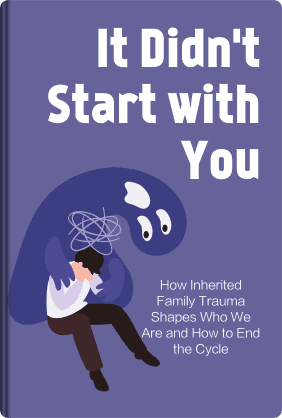
It Didn't Start with You
Mark Wolynn
21 Duration8 Key Points4.8 RateExploring all these powerful books can feel like a big time commitment, especially when you're already drained from family stress. A great way to start absorbing these vital concepts is by listening to their key insights first.
LeapAhead
Get the main takeaways from bestselling psychology books on communication and boundaries in short, easy-to-digest formats, helping you learn and heal without the overwhelm.
FAQ
What if my parents refuse to see my point of view?
Accept that they may never see the world through your lens. Their mindset was solidified decades ago in a completely different environment. Focus on establishing mutual respect for your differences rather than demanding ideological alignment.
Accept that they may never see the world through your lens. Their mindset was solidified decades ago in a completely different environment. Focus on establishing mutual respect for your differences rather than demanding ideological alignment.
How do I handle the guilt when setting boundaries?
Guilt is a natural byproduct of breaking generational cycles. Acknowledge the guilt, but do not let it dictate your actions. Setting boundaries protects the relationship from turning into deep resentment. You are setting rules to keep them in your life, not to push them out.
Guilt is a natural byproduct of breaking generational cycles. Acknowledge the guilt, but do not let it dictate your actions. Setting boundaries protects the relationship from turning into deep resentment. You are setting rules to keep them in your life, not to push them out.
Is it worth trying if the language barrier is too severe?
Yes. If complex verbal communication is impossible, shift your entire focus to non-verbal connection and shared routines. Shared meals, watching a television show together, or looking at old photographs can sustain a meaningful connection without requiring a shared fluent language.
Yes. If complex verbal communication is impossible, shift your entire focus to non-verbal connection and shared routines. Shared meals, watching a television show together, or looking at old photographs can sustain a meaningful connection without requiring a shared fluent language.