

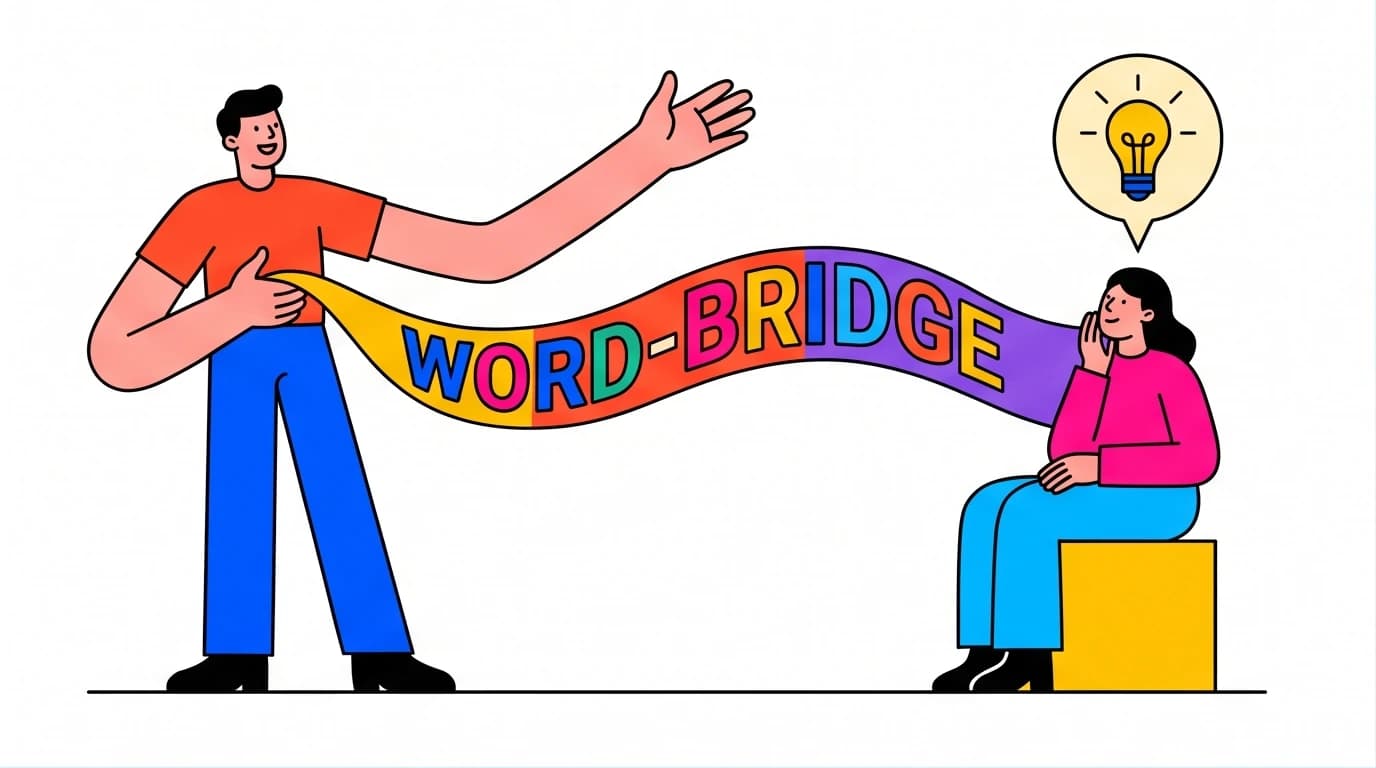
You have a powerful message, but your audience remains disconnected. Whether you are leading a corporate team through a massive restructuring or drafting a deeply personal memoir, presenting raw facts and logic rarely moves people to care. The real struggle is finding the exact narrative structure that turns your individual experience into a shared emotional bridge. You want to connect without crossing the line into oversharing or melodrama.
To achieve this, you need a structured approach to narrative building. Here is exactly how to leverage storytelling to break down walls, navigate heavy emotional truths, and become a more effective communicator.
The Core Mechanics of Empathetic Storytelling
Empathy is not sympathy. Sympathy is looking down into a hole and feeling sorry for the person trapped inside. Empathy is climbing down into that hole and saying, "I know what it's like down here, and you are not alone."

Storytelling for empathy works because it forces the audience to step into the protagonist's shoes. It relies on a simple but rigid equation: Specific Circumstance + Universal Emotion = Empathetic Connection.
If you tell a story about losing a multi-million dollar client in Chicago due to a software glitch, very few people can relate to the specific circumstance. But if you focus on the exact moment you realized you let your entire team down, everyone relates to the universal emotion of shame, failure, and the fear of letting others down.
To build this connection, your narrative must contain three elements:
- The Flawed Protagonist: Perfection repels empathy. Your audience needs to see mistakes, blind spots, or fears early in the story.
- The Turning Point of Vulnerability: The moment the protagonist is forced to confront their reality without defenses.
- The Earned Insight: A realization that shifts their worldview, offering value to the listener.
If you're trying to figure out how to structure your protagonist's journey—whether for a brand message or a personal essay—understanding the mechanics of a compelling narrative is essential. You want to invite your audience into the story without confusing them. Donald Miller's framework is an excellent resource for this. While it is tailored toward business and marketing, his principles on clarifying your message and guiding your audience through a transformational journey apply to almost any form of empathetic storytelling.
Building a StoryBrand
Donald Miller
 25 Duration
 11 Key Points
 4.5 Rate
Navigating Heavy Topics: Writing About Family Trauma
Nowhere is the need for empathetic storytelling more critical than when dealing with deeply personal, painful histories. Writing about family trauma presents a unique challenge for aspiring writers and communicators. The instinct is to document the pain exactly as it happened. But raw pain does not automatically generate empathy. Without structure, it often alienates the reader.
When you bring trauma into your storytelling, you are asking your audience to carry a heavy weight. You must guide them through it responsibly.
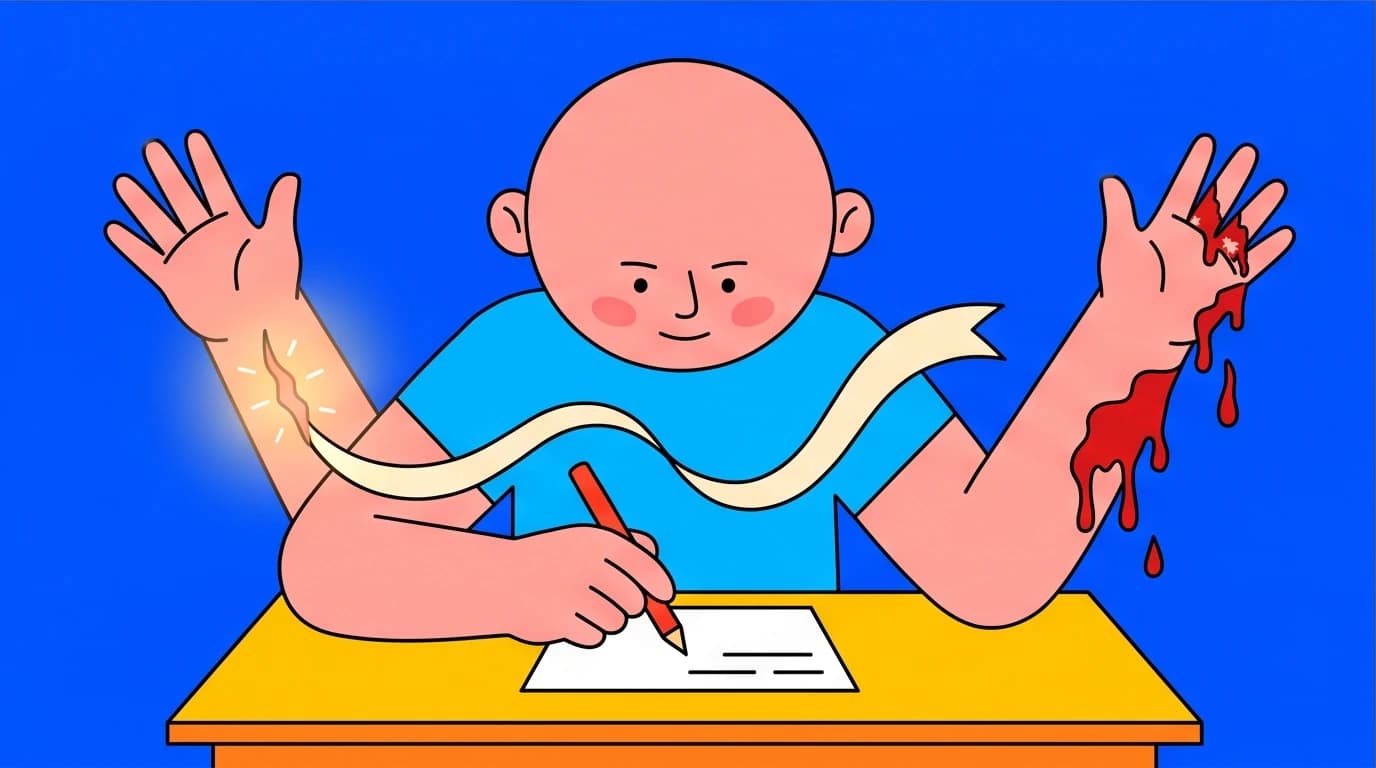
Share the Scar, Not the Open Wound
The golden rule of handling trauma in narratives is to write from a place of reflection, not active distress. Open wounds bleed on the reader, causing discomfort and defensive detachment. Scars, however, tell a story of survival, healing, and lessons learned. When writing about family trauma, frame the narrative around the mechanics of the relationship and the journey toward understanding, rather than just chronicling the abuse or neglect.
Find the Universal Need
At the heart of every familial conflict is a universal human need that was unmet: the need for approval, the need for safety, or the fear of abandonment. When you shift the focus from "Look what they did to me" to "Look at what we were both desperately trying to find," the narrative stops being a courtroom and becomes a mirror. The reader stops judging the characters and starts recognizing their own family dynamics.
Unpacking generational narratives and family histories can feel overwhelming, especially when you are trying to understand the deeper universal needs that were left unmet. If you are writing a memoir or simply trying to make sense of your own inherited family patterns to tell a more authentic story, it helps to explore how trauma is passed down. Mark Wolynn's groundbreaking work offers incredible insights into how family history shapes our emotional responses, providing a powerful lens for anyone looking to write about familial pain with genuine empathy and depth.
It Didn't Start with You
Mark Wolynn
21 Duration8 Key Points4.8 RateAmy Tan's own memoir offers a powerful example of navigating these complex histories with honesty and reflection, turning personal pain into a journey of self-discovery.
The Amy Tan Storytelling Style: A Masterclass in Emotional Resonance
To understand how to execute this practically, we can look at highly successful cultural touchstones. If you browse the shelves of Barnes & Noble or check Amazon bestsellers, certain authors stand out for their ability to generate massive empathy across cultural divides. The Amy Tan storytelling style offers a perfect blueprint.
In works like The Joy Luck Club, Tan explores generational trauma, immigrant experiences in the United States, and intense mother-daughter conflicts. She achieves incredible emotional resonance without making her characters into pure heroes or pure villains.
For a deeper look into the novel's structure and major themes, exploring a summary can provide valuable context for your own writing.
How does she do it?
The Shifting Point of View
Tan builds empathy by rotating the perspective. A daughter tells a story of her mother acting incredibly cruel and controlling. The reader feels empathy for the daughter. But in the next chapter, the mother tells the story of her past—the devastating losses she endured before coming to America, and the sheer terror she feels that her daughter might waste her life.
Suddenly, the reader feels empathy for the mother. The control was actually a desperate, misunderstood form of love.
When you want to build empathy in your own stories, use this technique. Present the conflict, but then reveal the hidden, internal logic of the opposing side. Show why they believed they were doing the right thing. This dismantles judgment and forces the audience into a state of deep empathetic engagement.
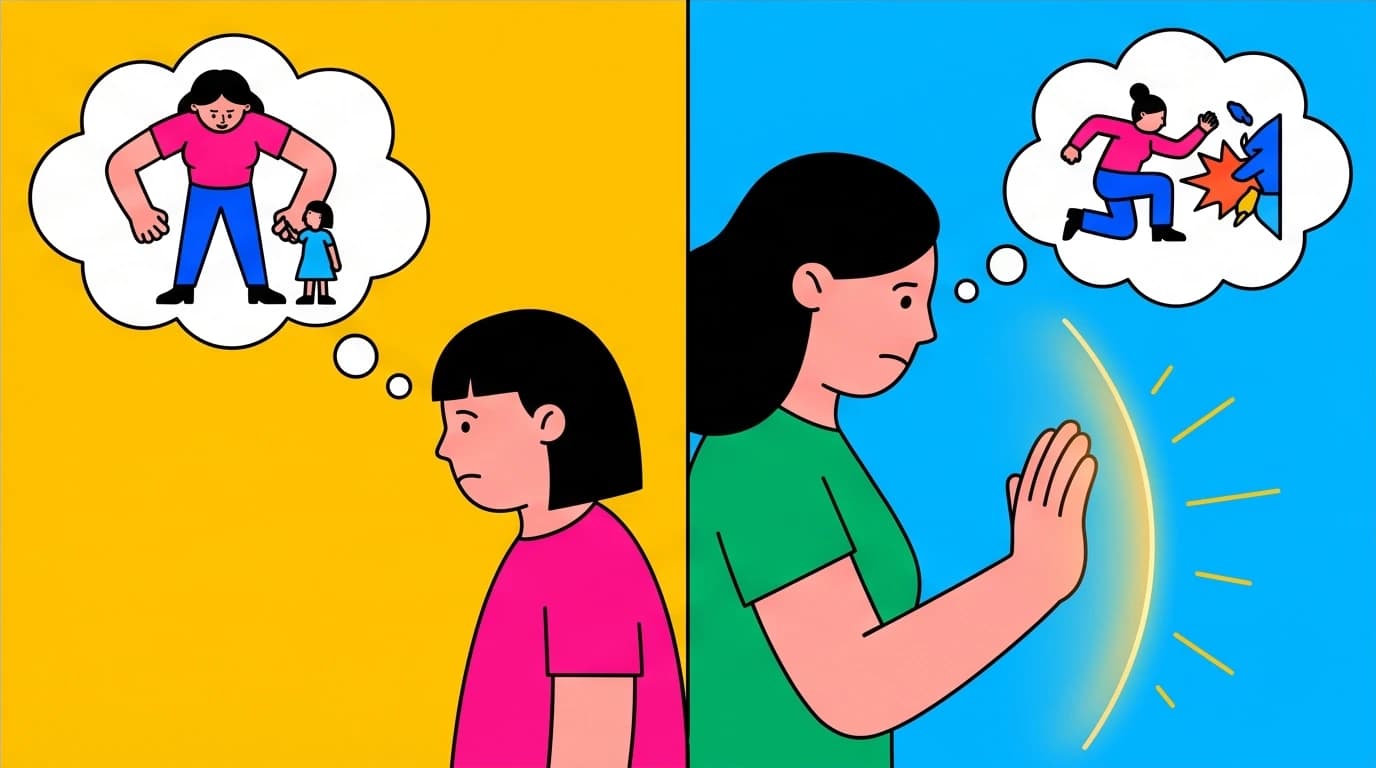
These complex dynamics are central to Tan's work, providing a powerful lens for understanding our own family histories.
Developing Emotional Intelligence Through Narrative
Crafting these kinds of stories does more than just capture an audience's attention; it fundamentally changes you as the storyteller. The act of structuring a narrative around other people's perspectives is a highly effective method for developing emotional intelligence (EQ).
Emotional intelligence consists of self-awareness, self-regulation, social awareness, and relationship management. Storytelling forces you to exercise all four muscles simultaneously.
- Self-Awareness: To tell a story where you are the flawed protagonist, you must honestly audit your past behaviors, motivations, and insecurities.
- Social Awareness: To write a convincing antagonist or opposing viewpoint—like applying the Amy Tan method—you must step outside your own ego and accurately map someone else's emotional landscape.
- Emotional Granularity: Empathy requires precise language. Instead of saying "I was mad," storytelling forces you to distinguish between feeling betrayed, humiliated, or defensive. This expansion of emotional vocabulary directly boosts EQ.
By repeatedly engaging in storytelling for empathy, you train your brain to default to curiosity rather than judgment when faced with real-world conflicts.
Developing the precise emotional vocabulary required for this level of storytelling takes practice. When you can accurately name an emotion—shifting from a generic feeling of "bad" to a highly specific state like "anguish" or "disappointment"—you instantly elevate your emotional intelligence and your writing. Brené Brown provides an extraordinary roadmap for this exact skill. Her comprehensive guide maps out dozens of human emotions and experiences, giving you the exact language you need to craft deeply resonant, highly empathetic narratives that connect with your audience.

Atlas of the Heart
Brené Brown
21 Duration8 Key Points4.6 RateDeveloping this emotional vocabulary is a journey, and learning from experts is key. But if your to-read list is already a mile long, you can get a head start on these concepts in a more manageable way.

Absorb the core lessons on emotional intelligence from authors like Brené Brown with 15-minute book summaries that fit into your busy day.

Download LeapAhead App now
Improving Communication Skills in Leadership and Daily Life
This framework is not limited to novelists or memoirists. It is a critical tool for improving communication skills across all professional and personal domains. Leaders who rely solely on data, metrics, and bulleted lists often fail to inspire action because data speaks to the mind, while behavior is driven by the heart.
The Corporate Application
Imagine a CEO announcing a massive pivot in company strategy that requires long hours and tight budgets.
The standard, empathy-lacking approach: "We are shifting focus to XYZ product to increase Q3 margins by 15%. This requires mandatory overtime." (Result: Resentment, disengagement).
The empathetic storytelling approach: The CEO shares a brief story about a specific moment they realized the old strategy was failing. They describe the anxiety of knowing jobs were on the line, the difficult conversations with the board, and the realization that pivoting was the only way to protect the team's future. They acknowledge the heavy burden this places on employees right now.
By showing vulnerability and explaining the human element behind the decision, the leader bridges the gap between the C-suite and the frontlines. The strategy becomes a shared journey rather than a top-down mandate.
The Daily Interaction
You can shrink this down to everyday conversations. When giving constructive feedback, frame it within a micro-story of your own past struggles with the same issue. When pitching a product, tell the story of the exact user frustration that led to its creation. Empathetic communication signals to the listener: "I see you, I understand your friction, and I am on your side."
Translating these storytelling techniques into the corporate world can completely transform how you lead, sell, and build culture. You don't have to be a professional novelist to leverage the power of a well-timed, empathetic story in the boardroom. If you want to learn how to integrate authentic narratives into your company's DNA, Kindra Hall breaks down the exact frameworks business leaders use to captivate their teams and customers. It’s an invaluable read for anyone looking to replace dry data with stories that genuinely inspire action.

Stories That Stick
Kindra Hall
29 Duration9 Key Points4.7 RateCommon Pitfalls: Where Empathetic Stories Fail
Even with good intentions, storytelling can backfire if not executed with discipline. Watch out for these three major traps:
- Trauma Dumping: Sharing highly emotional, unresolved pain without a clear purpose or lesson. This overwhelms the audience and triggers their defense mechanisms. Your story must have a destination. If you are still in the middle of the crisis, it might be too early to use it as a teaching tool.
- Manufactured Vulnerability: Audiences have highly tuned radar for manipulation. Sharing a "weakness" that is actually a humblebrag (e.g., "My biggest flaw is that I care too much and work too hard") instantly destroys trust. True vulnerability requires a real risk to your ego.
- Forcing a Neat Resolution: Real life rarely wraps up perfectly in 30 minutes. If you are sharing a story about a massive failure or a family rift, it is okay to admit that things are still a work in progress. Forced happy endings feel inauthentic and break the empathetic bond.
Applying these principles requires consistent learning, but finding the time can be the biggest hurdle. If you want to internalize the lessons from the great communicators mentioned in this article but can't commit to reading four new books, there's a more efficient way to start.
Get the essential storytelling and leadership insights from authors like Donald Miller and Kindra Hall in concise 15-minute audio or text formats.
Download LeapAhead App now
To master this craft, start small. Identify one moment of past friction or failure. Find the universal emotion within it. Structure it honestly, and offer it to your audience not as a monument to yourself, but as a bridge to them.
FAQ
How vulnerable is too vulnerable when telling stories in a professional setting?
Professional vulnerability has boundaries. The rule of thumb is to share the lesson, not the messy details. You can admit to feeling overwhelmed, making a bad judgment call, or experiencing imposter syndrome. However, you should avoid sharing deeply intimate personal crises (like a messy divorce or acute mental health breakdowns) unless they are directly relevant to your platform and you have fully processed them. The goal is connection, not therapy.
Professional vulnerability has boundaries. The rule of thumb is to share the lesson, not the messy details. You can admit to feeling overwhelmed, making a bad judgment call, or experiencing imposter syndrome. However, you should avoid sharing deeply intimate personal crises (like a messy divorce or acute mental health breakdowns) unless they are directly relevant to your platform and you have fully processed them. The goal is connection, not therapy.
Can anyone learn this, or is empathy an innate talent?
While some people naturally possess higher baseline empathy, storytelling for empathy is a structured, learnable skill. It relies on specific narrative frameworks—identifying the conflict, recognizing the universal emotion, and shifting perspectives. Anyone can learn to organize their experiences into this framework with practice.
While some people naturally possess higher baseline empathy, storytelling for empathy is a structured, learnable skill. It relies on specific narrative frameworks—identifying the conflict, recognizing the universal emotion, and shifting perspectives. Anyone can learn to organize their experiences into this framework with practice.
How do I test if my story actually builds empathy before I share it widely?
Test your narrative on a small, trusted group and ask them a specific question: "What emotion did you feel while listening?" If they say they felt pity for you, the story needs more universal connection. If they say they felt seen, or if they immediately start sharing a similar story of their own, you have successfully hit the empathetic mark.
Test your narrative on a small, trusted group and ask them a specific question: "What emotion did you feel while listening?" If they say they felt pity for you, the story needs more universal connection. If they say they felt seen, or if they immediately start sharing a similar story of their own, you have successfully hit the empathetic mark.
I want to write about my family, but I'm afraid of their backlash. What should I do?
This is the most common hurdle. Write the first draft purely for yourself, holding nothing back. In the editing phase, apply the "shifting point of view" technique to ensure you aren't just writing a hit piece. Focus on your internal reactions rather than their external actions. If the piece is meant for public consumption (like a published book), you may need to change identifying details or accept that authentic storytelling often comes with relational friction. Ensure the story's value outweighs the potential fallout.
This is the most common hurdle. Write the first draft purely for yourself, holding nothing back. In the editing phase, apply the "shifting point of view" technique to ensure you aren't just writing a hit piece. Focus on your internal reactions rather than their external actions. If the piece is meant for public consumption (like a published book), you may need to change identifying details or accept that authentic storytelling often comes with relational friction. Ensure the story's value outweighs the potential fallout.