

You are carrying the weight of a complicated past. Emotional scars from childhood and unresolved family dynamics can silently dictate your present choices, leaving you feeling stuck in old patterns. You don't just need another theoretical self-help framework; you need proof that deep emotional wounds can be transformed into profound strength. When we look at the raw, unfiltered truth of our family histories, the goal isn't to assign blame, but to dismantle the power those memories hold over us.

Beyond the Traditional Memoir: Why This Book Matters
Amy Tan is widely known for her fiction, but Where the Past Begins: A Writer's Memoir is an entirely different beast. It is not a chronological recounting of her career. Instead, it is a messy, deeply human dive into literal boxes of old letters, journals, and family memorabilia.
When searching for a definitive Where the Past Begins Amy Tan summary, readers often expect a simple timeline of her life. What they actually find is a masterclass in confronting demons. Tan opens up the storage bins of her mind and her physical archives, discovering discrepancies between the myths her mother told her and the actual documented truth. This realization—that the stories we are told about our trauma are often subjective and flawed—is the first step toward reclaiming your own narrative.
Overcoming Childhood Trauma Through Radical Honesty
The foundation of Tan’s memoir rests heavily on the concept of overcoming childhood trauma. Tan did not have a safe, predictable upbringing in California. She lost her father and older brother to brain tumors within months of each other. Her mother, deeply traumatized by her own past in China, frequently threatened suicide, holding a metaphorical and sometimes literal knife to the family's stability.
Most people try to outrun this level of instability. Tan shows us that outrunning the past is impossible; it just catches up with you in the form of anxiety, self-doubt, and creative blocks.
To heal, Tan practiced radical honesty. She stopped trying to paint her mother merely as a villain or a victim, and instead looked at the raw data of her mother's life. She translated her parents' old letters. She looked at the painful truths of her grandmother's suicide. By staring directly at the generational pain, the terror of her childhood lost its suffocating grip.
By examining her family's history, Tan was able to see how unspoken expectations and cultural misunderstandings fueled the conflict. This struggle is a common source of pain in many families.

The Reality Check for Your Own Life:
If you want to heal, stop sanitizing your history. Acknowledge exactly what happened. You cannot process what you refuse to name. Radical honesty means looking at your family's history without the filter of what you wish had happened.
If you want to heal, stop sanitizing your history. Acknowledge exactly what happened. You cannot process what you refuse to name. Radical honesty means looking at your family's history without the filter of what you wish had happened.
If reading about Amy Tan’s struggle with generational pain resonates with you, you might be wondering how much of your own emotional baggage was actually inherited. It's incredibly common for the trauma of our parents and grandparents to manifest in our daily lives, often without us even realizing it. To dive deeper into how family history shapes our psychological blueprint and how to break those inherited cycles, this groundbreaking book offers an incredible roadmap for taking back your narrative.
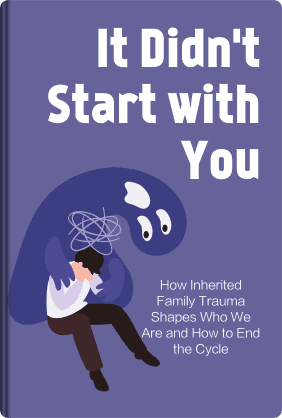
It Didn't Start with You
Mark Wolynn
 21 Duration
 8 Key Points
 4.8 Rate
The Self Discovery Journey: Finding Truth in the Archives
A major portion of the memoir details Tan's self discovery journey, specifically how she learned to understand her own brain. For years, Tan struggled with the lingering effects of Lyme disease, which caused hallucinations and cognitive impairment. This physical trauma forced her to undergo extensive neurological testing.
Instead of feeling broken, Tan used these tests to understand exactly how she processes language, music, and memory. She discovered that her brain thrives on drawing connections between seemingly unrelated emotional fragments. Music, particularly the piano, was her earliest sanctuary—a place where she could control the harmony when her home life was completely out of tune.
Your self discovery journey does not require a neurological workup, but it does require aggressive curiosity about yourself. Why do you react defensively to certain tones of voice? Why do you find peace in specific hobbies? Tan teaches us that self-discovery is not a passive event; it is an active investigation into your own internal wiring.

Investigating your own internal wiring is a profound step in any self-discovery journey, but it can be overwhelming to do alone. If you find yourself puzzled by your own intense reactions to certain triggers, it helps to shift the question from "What is wrong with me?" to a more compassionate inquiry. For anyone ready to understand the neurological and emotional impact of their past, this deeply empathetic read provides a powerful framework for making sense of how your brain adapted to survive.
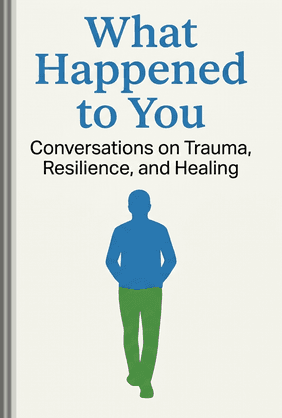
What Happened to You
Bruce D. Perry, M.D., Ph.D., and Oprah Winfrey
39 Duration8 Key Points4.5 RateBuilding Resilience in Amy Tan Books and Life
Readers familiar with The Joy Luck Club or The Kitchen God's Wife already know the recurring themes of mother-daughter conflict and survival. The resilience in Amy Tan books is not an accident—it is a direct translation of her survival mechanisms.
Fiction became Tan’s laboratory. When real life was too chaotic to manage, writing allowed her to assign meaning to suffering. She took the terrifying, unpredictable nature of her mother and channeled it into complex, multi-dimensional characters. By writing, she wasn't escaping her trauma; she was mastering it.
This complex mother-daughter dynamic is the heart of much of Tan's fiction, offering a powerful lens through which to understand the intricate and often painful bonds between generations.
Resilience is often misunderstood as bouncing back quickly from a disaster. Tan proves that true resilience is the ability to integrate your worst experiences into a meaningful life. You do not have to write a bestselling novel to do this. You simply need to reframe your pain from a "thing that ruined me" to a "thing that informed my strength."
This reframing is the essence of therapeutic storytelling. By giving structure and meaning to chaotic events, we can process trauma and cultivate a deeper sense of empathy for ourselves and others.

Reframing your pain into a source of enduring strength is a lot easier said than done, especially when trauma seems stubbornly locked inside your physical body. Sometimes, understanding the intellectual side of your history isn't enough; you also need to address how your nervous system is keeping score. If you're serious about taking your resilience to the next level and truly moving past the things that hurt you, this masterclass in trauma recovery is an absolute must-read.
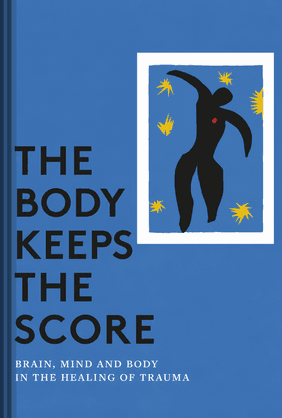
The Body Keeps The Score
Bessel Van Der Kolk
32 Duration10 Key Points4.5 RateActionable Amy Tan Memoir Lessons for Your Own Life
Extracting value from a memoir means applying the author's hard-won wisdom to your own current struggles. Here are the most critical Amy Tan memoir lessons you can start implementing immediately:
1. Audit Your Family Myths
Every family has stories they tell themselves to justify toxic behavior. Tan broke the cycle by reading actual letters and examining real photographs, tearing down the myths her mother built.
Action: Question the narratives you were handed as a child. Are you really "the lazy one," or was that just a label placed on you by a stressed parent? Look for the objective truth.
Every family has stories they tell themselves to justify toxic behavior. Tan broke the cycle by reading actual letters and examining real photographs, tearing down the myths her mother built.
Action: Question the narratives you were handed as a child. Are you really "the lazy one," or was that just a label placed on you by a stressed parent? Look for the objective truth.
2. Use Unfiltered Journaling as a Release Valve
Tan relied heavily on private journals. She didn't write for an audience; she wrote to get the poison out of her head.
Action: Write down your ugliest, most resentful thoughts about your past. Do not edit yourself for grammar or politeness. You can burn the paper afterward, but you must move the emotion out of your body and onto the page.
Tan relied heavily on private journals. She didn't write for an audience; she wrote to get the poison out of her head.
Action: Write down your ugliest, most resentful thoughts about your past. Do not edit yourself for grammar or politeness. You can burn the paper afterward, but you must move the emotion out of your body and onto the page.
3. Accept the Lack of Closure
If you are waiting for a toxic family member to apologize and suddenly understand your pain, you will be waiting forever. Tan's mother never became a perfectly healthy, adjusted parent.
Action: Stop seeking a Hollywood ending. Accept that closure is something you give yourself by deciding to move forward, regardless of whether the people who hurt you ever take accountability.
If you are waiting for a toxic family member to apologize and suddenly understand your pain, you will be waiting forever. Tan's mother never became a perfectly healthy, adjusted parent.
Action: Stop seeking a Hollywood ending. Accept that closure is something you give yourself by deciding to move forward, regardless of whether the people who hurt you ever take accountability.
4. Protect Your Creative Sanity
Tan had high-pressure editors, public expectations, and the looming shadow of her past. She survived by protecting her creative process.
Action: Build a sanctuary in your life. Whether it is a dedicated hour to read, a corner where you paint, or a daily walk without your phone—create a space where external demands cannot reach you.
Tan had high-pressure editors, public expectations, and the looming shadow of her past. She survived by protecting her creative process.
Action: Build a sanctuary in your life. Whether it is a dedicated hour to read, a corner where you paint, or a daily walk without your phone—create a space where external demands cannot reach you.
Accepting that a toxic family member may never apologize or understand your pain is often the hardest pill to swallow. Giving up the fantasy of that "Hollywood ending" requires immense courage, but it is also the key to your ultimate freedom. If you are struggling to set boundaries or constantly feel drained by parents who lack emotional awareness, you might find profound validation and actionable relief in this incredibly insightful guide to handling emotionally stunted relatives.
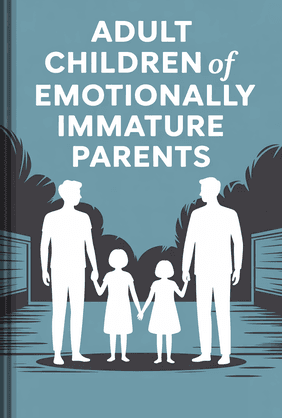
Adult Children of Emotionally Immature Parents
Lindsay C. Gibson, Psy.D.
39 Duration8 Key Points4.6 RateSeeing a list of transformative books like these can be both inspiring and overwhelming. If the thought of adding more dense reads to your plate feels impossible right now, you can start by exploring their core concepts first.

LeapAhead helps you digest the main ideas from heavy non-fiction books in 15-minute summaries, letting you absorb key psychological insights without the time commitment.

Download LeapAhead App now
Common Pitfalls in Processing the Past
When trying to navigate childhood trauma and personal growth, people often stumble into predictable traps. Avoid these common mistakes:
- Believing you must forgive to heal: The pressure to instantly forgive an abusive or neglectful parent is a massive barrier to healing. Tan’s relationship with her mother was complex and often angry. Healing comes from processing the pain, not from forced forgiveness.
- Assuming trauma makes you fundamentally broken: Tan’s brain was literally impacted by disease and extreme stress, yet she built a phenomenal career. Your trauma is a profound injury, not a life sentence.
- Relying on one source of truth: Do not rely solely on your own childhood memory. Children have limited perspectives. Talk to relatives, look at old records, and piece together the adult context of what was happening when you were a child.
If you apply these lessons, you stop being a passive victim of your history. You become the active editor of your own life.
Ultimately, applying these lessons means committing to a journey of continuous learning. But when you’re exhausted after a long day, picking up a heavy book on trauma is the last thing you feel like doing.
Fit self-improvement into your life with LeapAhead, which turns bestselling books into 15-minute audio summaries you can listen to during your commute, workout, or while doing chores.
Download LeapAhead App now
FAQ
What is the main message of Where the Past Begins?
The core message is that confronting the unvarnished, often ugly truth of your family history is the only way to free yourself from its control. It emphasizes that traumatic experiences, when examined honestly, can become the foundation of your personal strength and creative voice.
The core message is that confronting the unvarnished, often ugly truth of your family history is the only way to free yourself from its control. It emphasizes that traumatic experiences, when examined honestly, can become the foundation of your personal strength and creative voice.
Do I need to read Amy Tan's novels to understand this memoir?
No. While fans of her fiction will recognize the origins of her famous characters, the memoir stands completely on its own. It functions as a powerful guide to psychological resilience and understanding complex family dynamics, regardless of whether you have read her other works.
No. While fans of her fiction will recognize the origins of her famous characters, the memoir stands completely on its own. It functions as a powerful guide to psychological resilience and understanding complex family dynamics, regardless of whether you have read her other works.
How does Amy Tan deal with generational trauma?
She deals with it through investigation and documentation. Instead of running from the painful history of her mother and grandmother, she actively researched their lives, translated their letters, and sought to understand the cultural and personal terrors they faced. Empathy, built through facts, helped break the cycle.
She deals with it through investigation and documentation. Instead of running from the painful history of her mother and grandmother, she actively researched their lives, translated their letters, and sought to understand the cultural and personal terrors they faced. Empathy, built through facts, helped break the cycle.
What makes this summary different from the reviews I see on Goodreads or Barnes & Noble?
Standard reviews typically focus on the literary quality of the book or provide a basic plot outline. This breakdown specifically extracts the psychological frameworks and actionable life lessons regarding trauma and resilience, giving you the practical tools Tan used to rebuild her life.
Standard reviews typically focus on the literary quality of the book or provide a basic plot outline. This breakdown specifically extracts the psychological frameworks and actionable life lessons regarding trauma and resilience, giving you the practical tools Tan used to rebuild her life.