

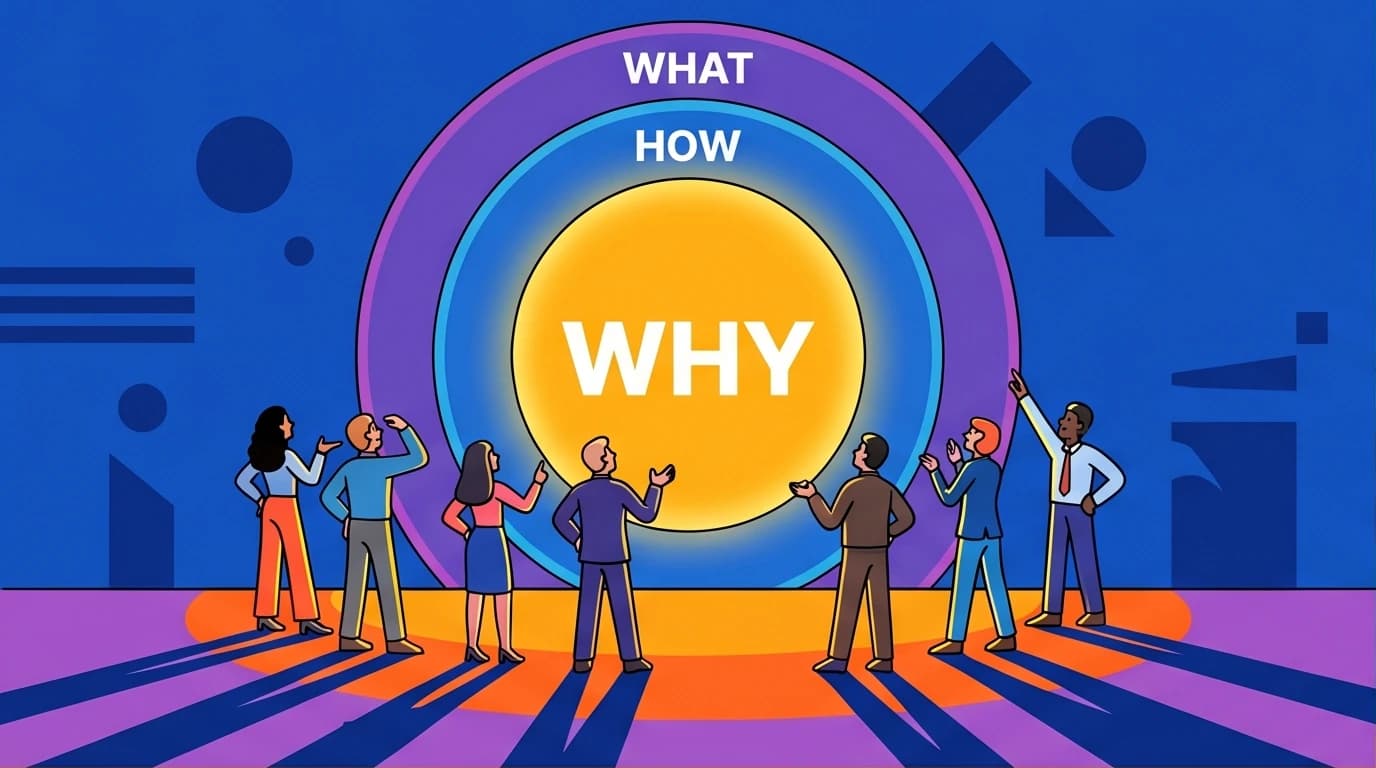
You already know the theory. You watched the famous TED Talk. You understand that people do not buy what you do; they buy why you do it. Yet, when you open a document to draft your own brand messaging, the screen stares back. Your executive team argues over semantics, and the resulting mission statement sounds exactly like every other company in your industry. You do not need another lecture on purpose. You need executable blueprints.
Here is exactly how top-tier organizations structure their messaging, and how you can reverse-engineer their success to build your own.
Decoding the Framework: Why Examples Matter More Than Theory
Most companies communicate from the outside in. They start with the What (we make software), move to the How (we use proprietary algorithms), and completely ignore the Why. This creates commodities.
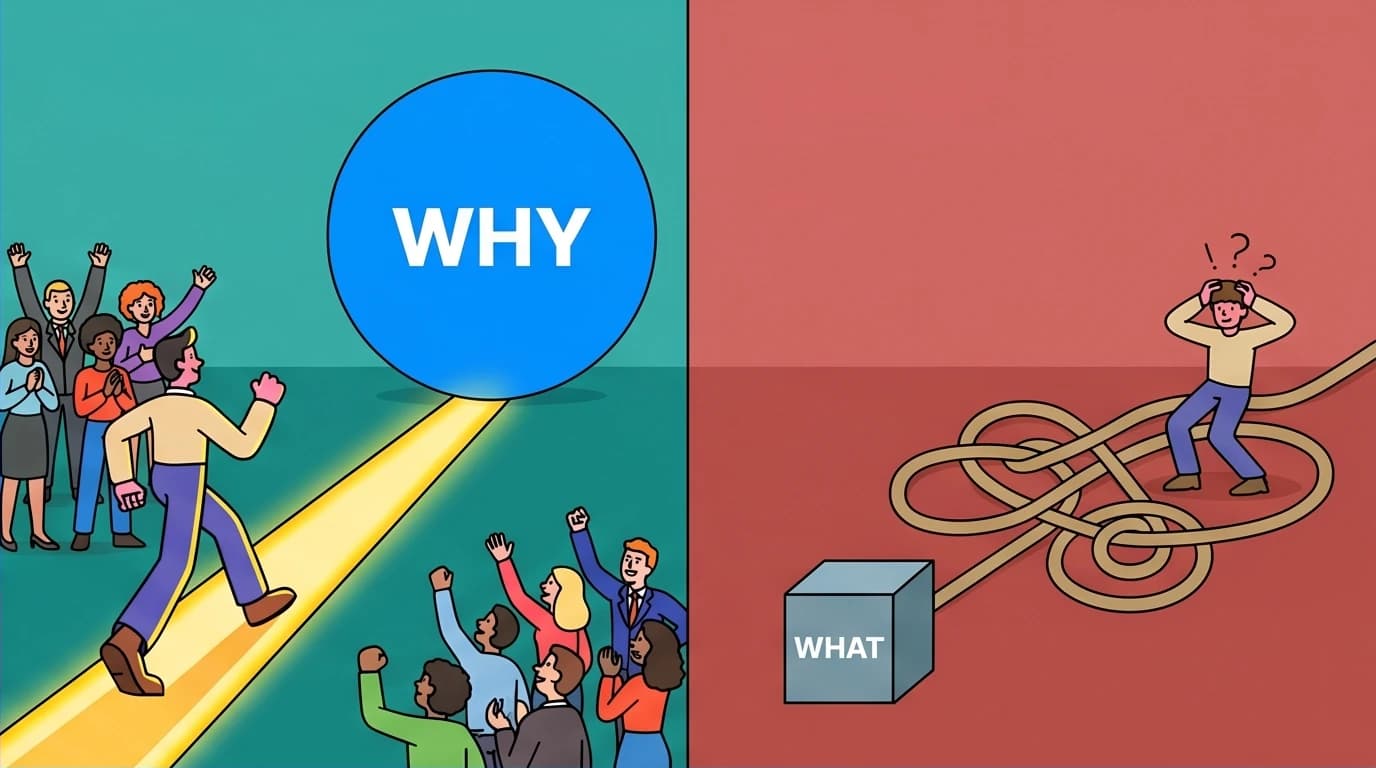
Brands that command premium pricing and cult-like followings communicate from the inside out. Analyzing real golden circle examples is the fastest way to understand how to operationalize this concept. It bridges the gap between a philosophical idea and a tangible marketing strategy you can launch on your website or use in a sales pitch.
Real-World Golden Circle Examples
To model your own strategy, we need to dissect how market leaders apply this framework across their product development, hiring, and marketing.
The Simon Sinek Apple Example (The Gold Standard)
You cannot discuss this framework without analyzing the baseline. The simon sinek apple example remains the clearest illustration of inside-out communication. If Apple communicated like a standard computer company, their message would be: "We make great computers. They are beautifully designed, simple to use, and user-friendly. Want to buy one?"
That is uninspiring. Instead, Apple communicates like this:
- Why (The Core Belief): Everything we do, we believe in challenging the status quo. We believe in thinking differently.
- How (The Process): The way we challenge the status quo is by making our products beautifully designed, simple to use, and user-friendly.
- What (The Result): We just happen to make great computers.
The Strategic Takeaway: Notice how the "What" is almost an afterthought. This exact structure allowed Apple to pivot from desktop computers to MP3 players (iPod), phones (iPhone), and wearables (Apple Watch). Because their "Why" was about challenging the status quo, consumers gave them permission to enter entirely new product categories. If their "Why" was just "making good computer hardware," the iPhone would have failed.
This "inside-out" communication is the core principle of Sinek's work. To fully appreciate how this concept can reshape an entire organization, it's helpful to explore its key takeaways in more detail.
Since we are breaking down the exact framework that popularized this entire movement, there is no better resource to dive into than the original text itself. If you want to fully grasp how inspiring leaders and organizations communicate from the inside out—and why some companies achieve phenomenal success while others with better products fail—you need to read the foundational book that started it all.
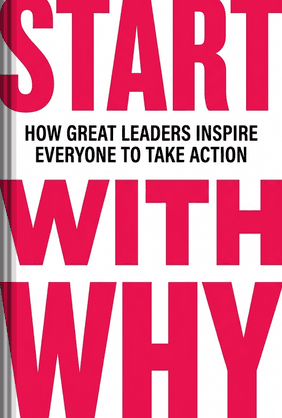
Start with Why
Simon Sinek
 45 Duration
 7 Key Points
 4.6 Rate
Reading foundational books like this is crucial, but it's a major time commitment. If you want to quickly absorb the core ideas from business classics and apply them faster, there's a more efficient way.

Grasp the key insights from bestselling business books like this one in just 15 minutes, making it easy to learn on a tight schedule.
Download LeapAhead App now
Patagonia: Saving the Home Planet
Patagonia provides one of the most aggressive and authentic golden circle examples in modern retail. They are not an apparel company; they are an environmental activism organization that funds itself through retail.
- Why: We are in business to save our home planet.
- How: By building the best product, causing no unnecessary harm, and using business to inspire and implement solutions to the environmental crisis.
- What: We make high-performance outdoor gear and clothing.
The Strategic Takeaway: Patagonia’s "Why" dictates extreme business decisions. It is the reason they ran a full-page ad in The New York Times reading "Don't Buy This Jacket" on Black Friday. It is the reason they offer a lifetime repair guarantee. Your "Why" must act as a filter for business operations, not just a tagline for your marketing department.
Patagonia’s radical approach to business is not just a clever marketing ploy; it is deeply woven into the company's DNA by its founder. If you are inspired by how a brand can successfully prioritize environmental activism without sacrificing profitability, the story behind Patagonia's unconventional corporate philosophy is an absolute masterclass in leading with unwavering purpose.
Let My People Go Surfing
Yvon Chouinard and Naomi Klein
23 Duration8 Key Points4.5 RateTesla: Accelerating the Future
Tesla did not set out to build a better car company. They set out to solve a specific global crisis.
- Why: To accelerate the world's transition to sustainable energy.
- How: By creating high-performance, zero-emission technologies that outpace legacy fossil-fuel alternatives in every metric.
- What: We build electric vehicles, solar panels, and battery storage systems.
The Strategic Takeaway: Tesla's open-source patent strategy makes zero sense for a traditional automotive manufacturer. It makes perfect sense for a company whose "Why" is accelerating a global transition. When your executives are aligned on the "Why," complex strategic decisions become obvious.
More Start With Why Company Examples
If you are a B2B organization or a service provider, you might think the framework only works for flashy consumer brands. Let's look at a few more start with why company examples across different sectors.
Stripe (Fintech/B2B)
- Why: To increase the GDP of the internet.
- How: By removing the financial complexity and geographic barriers for online businesses.
- What: We build payment processing software and APIs.
Southwest Airlines (Service/Transportation)
- Why: To democratize the skies and give everyone the freedom to fly.
- How: By keeping costs ruthlessly low, turning planes around fast, and hiring for humor and hospitality.
- What: We offer low-fare, reliable commercial flights.
Finding Your Why Business: The Discovery Process
Finding your why business strategy is not a creative writing exercise. It is a process of internal archaeology. You cannot invent a "Why" in a vacuum; you must excavate it from your company's history, the founder's original pain point, or the most passionate feedback from your best customers.
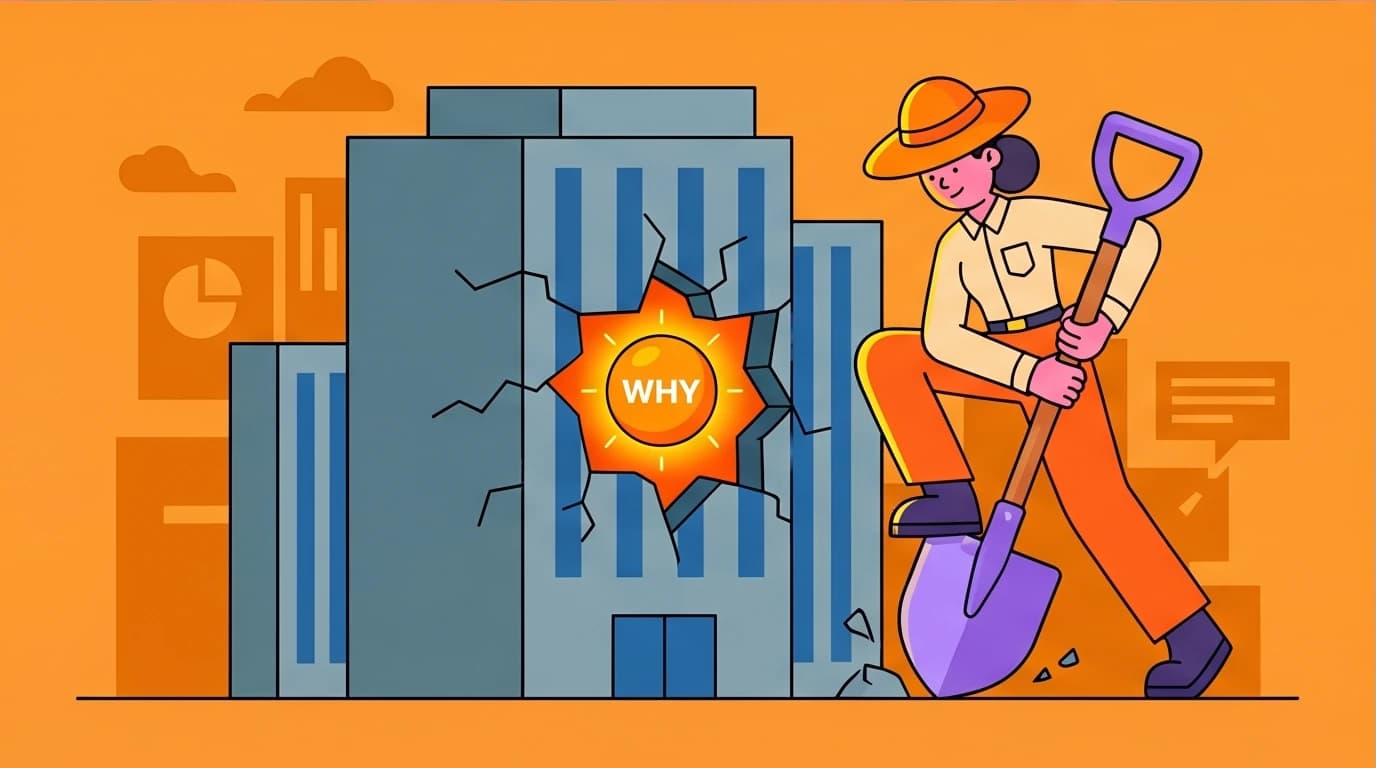
Here is the blueprint for running a "Why Discovery" session with your leadership team:
- Isolate the Origin Story: Force your founders or executive team to answer this: Before we made our first dollar, what pissed us off about this industry? The anger or frustration that sparked the company's creation usually points directly to the "Why."
- Analyze Your Outliers: Look at your absolute best customers. Not just the ones who pay the most, but the ones who advocate for you unconditionally. Ask them: If we closed our doors tomorrow, what exactly would you lose that you cannot get anywhere else? Their answers will highlight your core belief.
- The "Five Whys" Drill: Take your current value proposition and ask "Why does that matter?" five times.
- We build faster CRM software. (Why?)
- So sales teams save time. (Why?)
- So they can talk to more leads. (Why?)
- So they can build better relationships. (Why?)
- Because human connection drives commerce. (Boom. There is your potential Why).
How to Write a Why Statement That Actually Works
Once you uncover the raw material, you need to format it. Knowing how to write a why statement requires strict constraints. If it is longer than one sentence, it is too complicated. If it relies on industry jargon like "synergy," "optimization," or "best-in-class," it is garbage.
Simon Sinek provides a very specific formula for this:
TO [Contribution] SO THAT [Impact]
TO [Contribution] SO THAT [Impact]
- Contribution: The action you take, the thing you give to the world.
- Impact: The result of your contribution, the change you want to see.
Step-by-Step Drafting Process
Step 1: Draft the Contribution (The "TO")
Start with an action verb. Make it definitive.
Weak: To provide software solutions.
Strong: To empower independent creators.
Start with an action verb. Make it definitive.
Weak: To provide software solutions.
Strong: To empower independent creators.
Step 2: Draft the Impact (The "SO THAT")
Define the utopian state you are trying to achieve for your customers.
Weak: So that they can increase revenue by 20%.
Strong: So that they can make a living doing what they love.
Define the utopian state you are trying to achieve for your customers.
Weak: So that they can increase revenue by 20%.
Strong: So that they can make a living doing what they love.
Step 3: Combine and Refine
Draft Statement: To empower independent creators so that they can make a living doing what they love. (This is exactly what a platform like Patreon or Substack operates on).
Draft Statement: To empower independent creators so that they can make a living doing what they love. (This is exactly what a platform like Patreon or Substack operates on).
Stress-Testing Your Statement
Before you finalize your statement, run it through this three-point checklist:
- The Competitor Test: Could your biggest rival claim the exact same statement? If yes, it is too generic.
- The Action Test: Can your HR department use this to fire someone who violates it? Can your product team use this to kill a profitable but misaligned feature?
- The Barbecue Test: If you say this statement to a stranger at a backyard barbecue, will they understand it immediately, or will their eyes glaze over?
While this framework is incredibly powerful for achieving clarity, it's also worth acknowledging the discussions around its real-world application. For a balanced perspective, some leaders explore common critiques to ensure their strategy is robust.
Crafting a clear, compelling message that passes the "barbecue test" is notoriously difficult, especially when you are too close to your own products. If your team is still struggling to simplify your brand messaging and eliminate industry jargon, you might need a proven structural framework to clarify your message so customers actually listen and engage.
Building a StoryBrand
Donald Miller
25 Duration11 Key Points4.5 RateOperationalizing the Golden Circle
A great "Why" is completely useless if it only lives on an "About Us" page. To emulate the golden circle examples we reviewed, you must weave the framework into your operational reality.
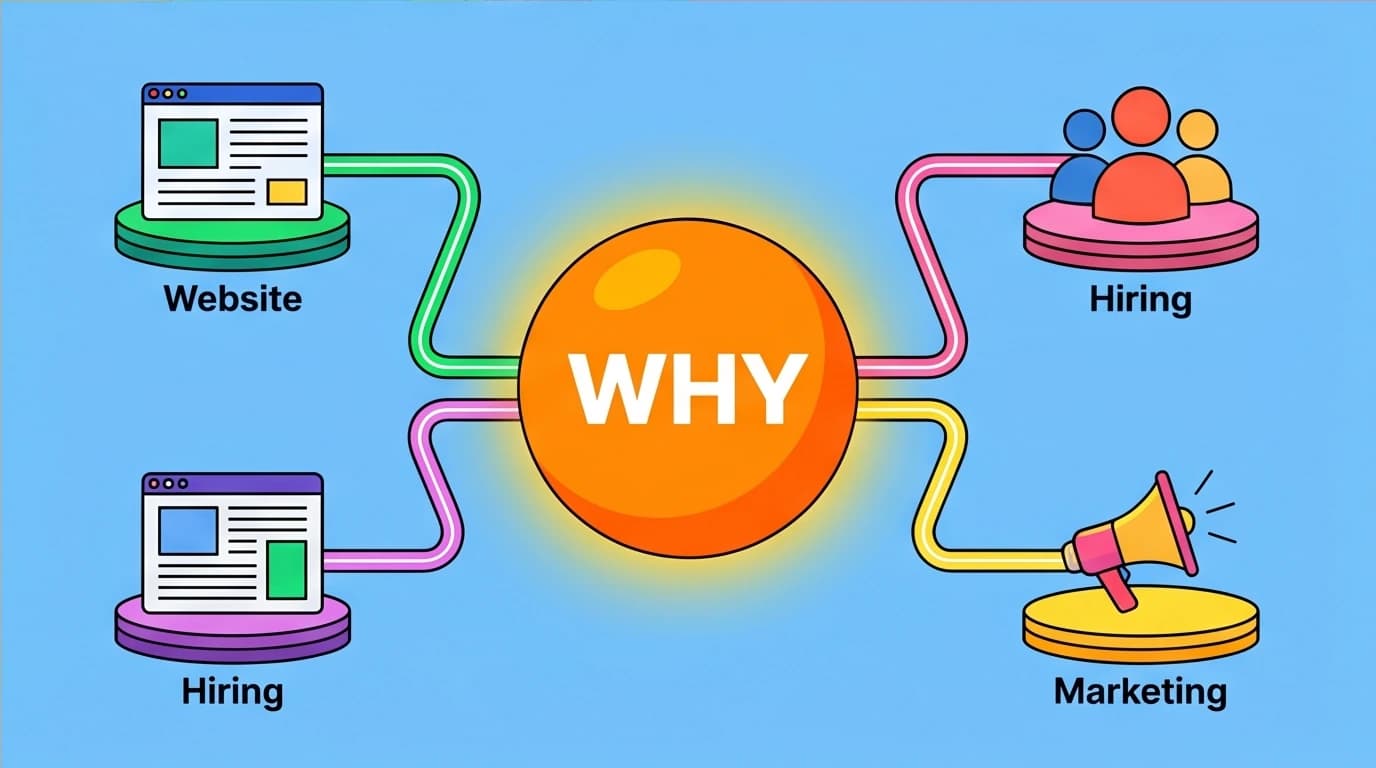
1. Website Architecture
Your homepage above-the-fold real estate must lead with the "Why." Do not start with a screenshot of your dashboard and a list of features. Lead with the core belief.
Example: Instead of "The Best Email Marketing Tool" (What), use "Build Deeper Relationships With Your Audience" (Why), followed by "Through intelligent, automated email sequencing" (How).
Example: Instead of "The Best Email Marketing Tool" (What), use "Build Deeper Relationships With Your Audience" (Why), followed by "Through intelligent, automated email sequencing" (How).
2. Hiring and Onboarding
Skills can be taught; beliefs cannot. During interviews, ask situational questions that test alignment with your "Why." If your "Why" is about challenging the status quo, ask a candidate to describe a time they broke a company rule to achieve a better result for a client.
This approach to hiring builds a culture of trust and psychological safety, which is another cornerstone of Sinek's leadership philosophy.
3. Content Marketing and SEO
Stop creating content solely around product features. Build topical authority around the themes of your "Why." If your goal is to accelerate sustainable energy, your blog should cover policy changes, urban planning, and climate science—not just the specs of your solar panels. This naturally attracts an audience that shares your worldview, making the eventual conversion to a sale completely frictionless.
When you successfully operationalize your "Why" across your content marketing, sales processes, and hiring, you stop just selling to customers and start building a loyal community. People inherently want to belong to a group that shares their exact worldview. If you are ready to transform your brand from a simple vendor into a movement that customers fiercely advocate for, learning how to lead and nurture that community is an essential next step.
Tribes
Seth Godin
19 Duration8 Key Points4.9 RateWith so many powerful books recommended in this article, it can feel like you're building a 'reading debt'. For those who want to internalize these key lessons without the months-long commitment, a summary app can be a great tool.
Digest the main ideas from these influential business books during your commute, turning downtime into productive learning sessions.
Download LeapAhead App now
FAQ
Can a company's "Why" change over time?
Your core "Why" rarely changes; it is the fundamental DNA of your brand. However, your "How" and "What" will constantly evolve. Apple’s "What" changed from desktops to iPhones, but their "Why" (challenging the status quo) remained identical. If your "Why" feels obsolete, it was likely just a marketing slogan, not a true core belief.
Your core "Why" rarely changes; it is the fundamental DNA of your brand. However, your "How" and "What" will constantly evolve. Apple’s "What" changed from desktops to iPhones, but their "Why" (challenging the status quo) remained identical. If your "Why" feels obsolete, it was likely just a marketing slogan, not a true core belief.
How do you measure the ROI of a "Why" statement?
You measure it through secondary metrics: employee retention rates, cost of customer acquisition (CAC), and customer lifetime value (LTV). Brands with a clearly articulated "Why" see lower turnover because employees are mission-driven, and lower CAC because customers organically refer the brand to peers who share the same beliefs.
You measure it through secondary metrics: employee retention rates, cost of customer acquisition (CAC), and customer lifetime value (LTV). Brands with a clearly articulated "Why" see lower turnover because employees are mission-driven, and lower CAC because customers organically refer the brand to peers who share the same beliefs.
Does every small business need a profound "Why"?
Yes, but "profound" does not mean "saving the world." A local plumbing company's "Why" does not need to be about global peace. It can simply be: "To restore comfort and safety to our neighbors' homes, so they can focus on their families." That is highly effective, profoundly human, and immediately sets them apart from the commodity plumber who just advertises "$50 off your next repair."
Yes, but "profound" does not mean "saving the world." A local plumbing company's "Why" does not need to be about global peace. It can simply be: "To restore comfort and safety to our neighbors' homes, so they can focus on their families." That is highly effective, profoundly human, and immediately sets them apart from the commodity plumber who just advertises "$50 off your next repair."