

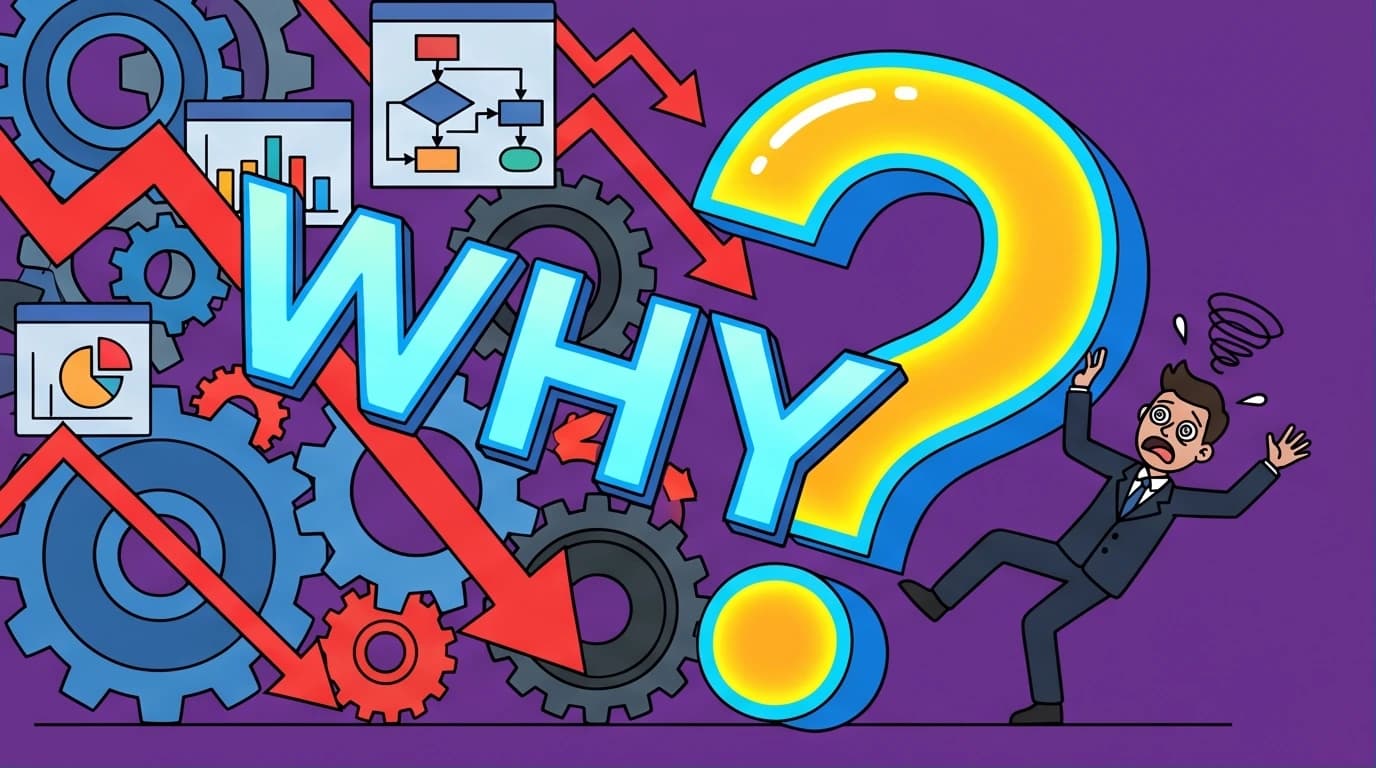
Boardrooms across corporate America have spent the last decade obsessed with finding their "Why." You sit through a multi-day executive retreat, watch Sinek’s famous 2009 TED Talk, and map out your company’s purpose on a whiteboard. Yet, when Monday morning arrives, knowing your core belief does nothing to solve supply chain bottlenecks, shrinking profit margins, or aggressive price wars.
The transition from a motivational concept to an operational strategy is where the framework frequently breaks down. To build a resilient business, executives must look past the charisma of the presentation and critically examine the Simon Sinek Golden Circle criticism.
Before diving deep into the operational critiques of this popular framework, it is genuinely helpful to experience Simon Sinek’s original arguments firsthand. If you want to understand the pure marketing power of the Golden Circle and why it has captivated corporate America, reading his foundational book is the best place to start. It will give you the necessary context to separate the inspiring messaging from the complex reality of execution.
Start with Why
Simon Sinek
 45 Duration
 7 Key Points
 4.6 Rate
To fully appreciate the nuances of these criticisms, it helps to have a clear understanding of the original framework and its core tenets.
The Core Flaws in Simon Sinek Theory
Sinek’s premise is straightforward: people don't buy what you do; they buy why you do it. He diagrams this with three concentric circles—Why at the center, How in the middle, and What on the outside. While brilliant for marketing copy, applying this as a foundational business strategy exposes several critical flaws in Simon Sinek theory.
Survivorship Bias and the Apple Fallacy
Sinek leans heavily on Apple to prove his point. He argues that Apple dominates because they challenge the status quo (the Why), make beautifully designed products (the How), and happen to sell computers and phones (the What).
This narrative ignores the brutal realities of Apple's success. Apple does not just win on purpose; it wins on operational supremacy. Tim Cook built arguably the most efficient, lock-tight supply chain in the world. Furthermore, Apple relies heavily on switching costs. Once a consumer buys an iPhone, an Apple Watch, and subscribes to Apple Music, leaving the ecosystem is painful and expensive.

Highlighting Apple's marketing brilliance while ignoring its aggressive patent litigation, massive capital moats, and vendor negotiation tactics is a textbook example of survivorship bias. You are looking at the winner and attributing their success entirely to their narrative, ignoring the thousands of failed startups that had a profound "Why" but ran out of cash.
The Apple case study is central to Sinek's argument. To see how he applies this theory to other well-known brands, it's worth examining his other go-to case studies.
The Misunderstanding of Consumer Behavior
The assertion that "people don't buy what you do, they buy why you do it" falls apart in routine consumer scenarios.
Consider Amazon. When you buy a pack of batteries or a new router on Amazon, you are not buying into Jeff Bezos's core beliefs. You are buying the "What" and the "How"—cheap products delivered to your door in two days. Price, convenience, and distribution networks drive the majority of consumer purchasing decisions. If a competitor offers a comparable product at half the price with better functionality, most consumers will abandon the "purpose-driven" brand without hesitation.
Is Start With Why Realistic for Corporate America?
Executives frequently ask: is start with why realistic for an established business, or is it just startup mythology?
For a founder raising seed capital, a compelling "Why" is a requirement. Investors buy into the founder's vision before the product exists. However, for a Fortune 500 company, a mid-market logistics firm, or a regional B2B distributor, hyper-focusing on the "Why" can become a dangerous distraction.
Ignoring Unit Economics
A company can possess a world-changing purpose, but if customer acquisition costs (CAC) exceed lifetime value (LTV), the business will fail. One of the primary limitations of the Golden Circle is its total disregard for unit economics. The framework provides zero guidance on resource allocation, competitive analysis, or risk management. It operates in a vacuum where inspiration trumps mathematics.

The Commoditization Trap
In highly commoditized industries—such as raw material manufacturing, standard accounting services, or freight trucking—differentiation rarely comes from a philosophical belief. It comes from marginal gains in efficiency. A freight company's survival depends on fuel hedging, route optimization, and fleet maintenance. Imposing a philosophical "Why" on a purchasing manager who just needs a ton of steel at the lowest possible price per pound is out of touch with market mechanics.
When you find yourself stuck in the commoditization trap, philosophical branding will not save your profit margins—but a rigorous understanding of market forces will. If you want to learn how to truly differentiate your business and build defensive moats against aggressive rivals, Michael E. Porter’s seminal work is an invaluable resource. It remains the absolute gold standard for executives who need to understand supplier power, buyer leverage, and competitive positioning in the real world.
Competitive Strategy
Michael E. Porter
37 Duration8 Key Points4.7 RateStart With Why vs Good to Great: Inspiration vs Empirical Data
To fully grasp the criticism of Sinek's work, it helps to compare it against rigorous, data-driven management research. The contrast of Start With Why vs Good to Great by Jim Collins highlights the difference between anecdotal inspiration and empirical business strategy.
Jim Collins and his research team spent five years analyzing thousands of companies to find those that made the leap from average to exceptional. They used matched pairs, comparing successful companies with direct competitors that failed under similar market conditions.
Collins found that long-term success rarely starts with a charismatic leader preaching a grand vision. Instead, it starts with getting the right people on the bus (First Who, Then What) and confronting the brutal facts of your current reality (The Stockdale Paradox).
Where Sinek argues you must start with the vision, Collins' data proves that exceptional companies often secure top-tier talent and operational discipline before they fully define their ultimate direction. Collins advocates for the Hedgehog Concept—the intersection of what you are deeply passionate about, what drives your economic engine, and what you can be the best in the world at. Sinek entirely ignores the "economic engine" piece, which is the exact component that keeps a company alive.
If you are ready to pivot your leadership team's focus from anecdotal inspiration to rigorous, data-backed strategy, Jim Collins’ benchmark study is absolutely essential reading. This book is the perfect antidote to the Golden Circle's oversimplifications. It provides a heavily researched roadmap for identifying what drives your specific economic engine and outlines the strict operational discipline required to take an organization from average to exceptional.
Good to Great
Jim Collins
45 Duration7 Key Points4.6 RateIf you're a busy executive looking to absorb the core lessons from all these foundational business books but don't have months to spare for reading, there are ways to get the key insights faster.

Get the main ideas from essential business books like Good to Great and Start with Why in 15-minute summaries, perfect for learning on your commute.
Download LeapAhead App now
Navigating the Limitations of the Golden Circle
Criticizing Sinek’s model does not mean you should discard it completely. It means you must categorize it correctly. The Golden Circle is not a comprehensive business strategy; it is a communication and alignment tool.
Here is how seasoned executives navigate the limitations of the Golden Circle in practice:
1. Use it for Talent Acquisition and Retention
While consumers might not care about your "Why," your employees absolutely do. The Golden Circle is a powerful tool for HR and internal leadership. A clear mission helps retain top talent when the work gets difficult. Use it to build corporate culture, not to project next quarter's earnings.
While consumers might not care about your "Why," your employees absolutely do. The Golden Circle is a powerful tool for HR and internal leadership. A clear mission helps retain top talent when the work gets difficult. Use it to build corporate culture, not to project next quarter's earnings.
2. Confine it to Top-of-Funnel Marketing
Brand narrative matters. If you are selling a premium consumer product (like outdoor gear or organic coffee), leading with your core beliefs can help differentiate you in a crowded market. But once the customer is engaged, the "What" and "How" (product quality and customer service) must take over immediately.
Brand narrative matters. If you are selling a premium consumer product (like outdoor gear or organic coffee), leading with your core beliefs can help differentiate you in a crowded market. But once the customer is engaged, the "What" and "How" (product quality and customer service) must take over immediately.
3. Pair it with Hard-Skill Frameworks
Never use the Golden Circle in isolation. If you define your "Why" during a strategic retreat, immediately follow it up with Porter’s Five Forces to analyze market competition, or use Objectives and Key Results (OKRs) to ensure the vision translates into measurable execution.
Never use the Golden Circle in isolation. If you define your "Why" during a strategic retreat, immediately follow it up with Porter’s Five Forces to analyze market competition, or use Objectives and Key Results (OKRs) to ensure the vision translates into measurable execution.
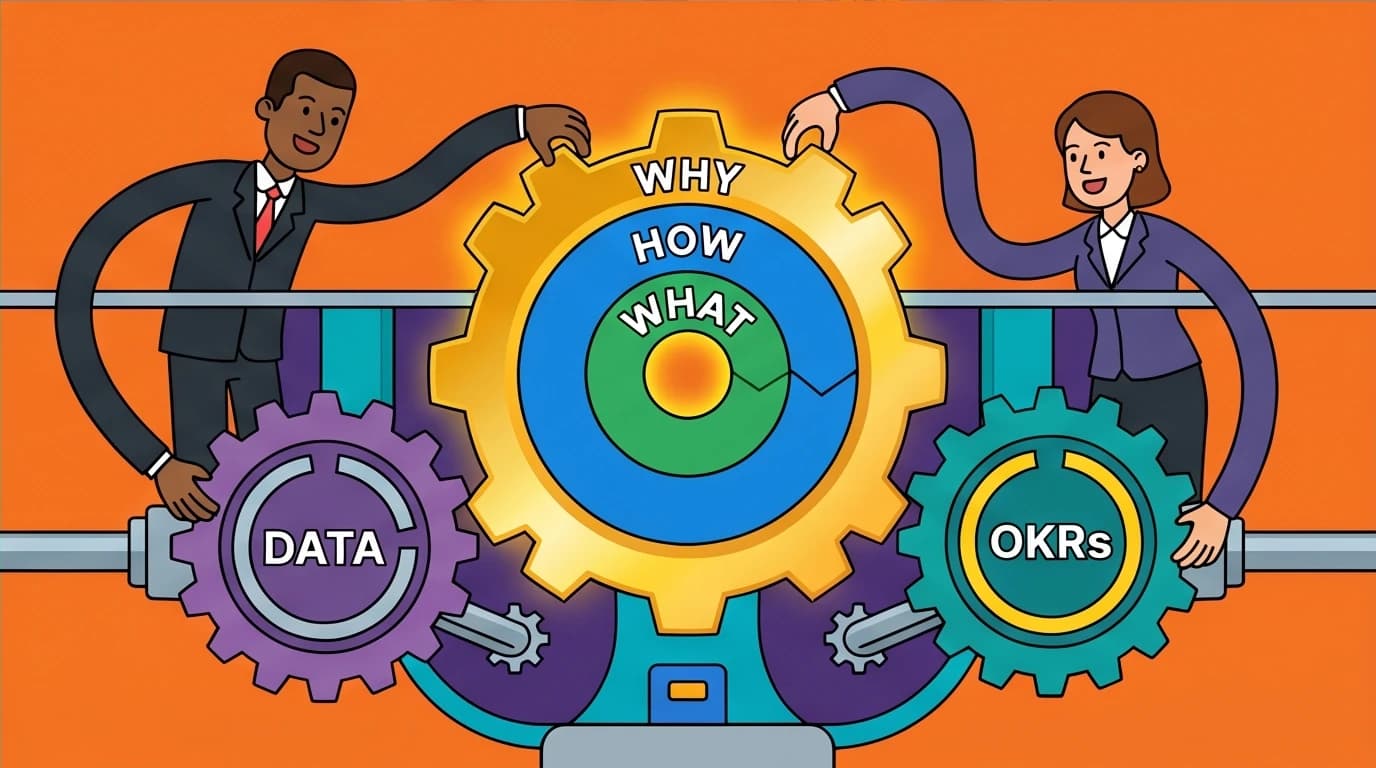
A great vision without execution is just an hallucination. Sinek provides the vision; it is up to the executive team to build the operational machinery that makes that vision survive contact with the real world.
Speaking of building the operational machinery needed to execute a grand vision, there is no better system for aligning your entire organization than Objectives and Key Results (OKRs). If you are looking for a practical, step-by-step framework to bridge the gap between your company's overarching purpose and the daily metrics that drive revenue, John Doerr’s guide to OKRs is a must-read. It is the perfect strategic companion to keep your team focused, accountable, and grounded in reality.

Measure What Matters
John Doerr
47 Duration9 Key Points4.5 RateWhile the Golden Circle focuses on external messaging and purpose, Sinek's other major work shifts focus to internal team dynamics and trust.
FAQ
Does Simon Sinek have practical business management experience?
Sinek's background is primarily in advertising and strategic communications. He did not build a Fortune 500 company or run a massive supply chain before writing Start With Why. This background explains why his framework is exceptional for messaging, branding, and communication, but lacks the structural depth required for operations, finance, and logistics.
Sinek's background is primarily in advertising and strategic communications. He did not build a Fortune 500 company or run a massive supply chain before writing Start With Why. This background explains why his framework is exceptional for messaging, branding, and communication, but lacks the structural depth required for operations, finance, and logistics.
Can a company succeed without a clearly defined "Why"?
Yes. Countless companies achieve massive financial success by simply being first to market, holding a patent monopoly, or executing a low-cost leadership strategy perfectly. While having a "Why" can boost brand loyalty and employee morale, strict operational excellence and aggressive pricing are often enough to secure market dominance.
Yes. Countless companies achieve massive financial success by simply being first to market, holding a patent monopoly, or executing a low-cost leadership strategy perfectly. While having a "Why" can boost brand loyalty and employee morale, strict operational excellence and aggressive pricing are often enough to secure market dominance.
Is the Golden Circle actually backed by neuroscience?
Sinek claims his model corresponds to human brain anatomy—mapping the "Why" to the limbic brain (feelings, decision-making) and the "What" to the neocortex (rational thought, language). Many neuroscientists consider this a gross oversimplification. Human decision-making is incredibly complex, involving constant interplay across multiple brain regions. Reducing it to a three-ring circle is a helpful metaphor, but it is not scientifically rigorous.
Sinek claims his model corresponds to human brain anatomy—mapping the "Why" to the limbic brain (feelings, decision-making) and the "What" to the neocortex (rational thought, language). Many neuroscientists consider this a gross oversimplification. Human decision-making is incredibly complex, involving constant interplay across multiple brain regions. Reducing it to a three-ring circle is a helpful metaphor, but it is not scientifically rigorous.
Should startups completely ignore "Start With Why"?
No. Startups should leverage the framework to attract early adopters, pitch venture capitalists, and recruit early-stage employees who are willing to work for equity and a dream. However, as the startup scales, founders must shift their focus toward unit economics, standard operating procedures, and product-market fit to survive.
No. Startups should leverage the framework to attract early adopters, pitch venture capitalists, and recruit early-stage employees who are willing to work for equity and a dream. However, as the startup scales, founders must shift their focus toward unit economics, standard operating procedures, and product-market fit to survive.