

Your best employees are quiet quitting, turnover is accelerating, and the daily atmosphere feels more like a battlefield than a collaborative environment. Standard HR retention programs fall flat because they address symptoms rather than the root disease: a fundamental lack of trust. When office politics, fear of layoffs, and internal competition replace mutual support, productivity collapses. If you are searching for a functional leaders eat last summary, you already know traditional management tactics are failing. You need a psychological reset.
Sinek's book provides the blueprint, but finding the time and energy to absorb these deep concepts can be a challenge, especially when you're already managing a stressed team.


LeapAhead

Learn the core principles of servant leadership from books like Leaders Eat Last in 15-minute audio summaries during your commute or break.

Simon Sinek wrote this book after observing the United States Marine Corps. He noticed a simple but profound tradition: junior Marines eat first, and senior officers eat last. It is not a rule written in a manual; it is a manifestation of deep-seated servant leadership.
For modern HR professionals and managers battling toxic corporate environments, Sinek provides a biological blueprint for fixing broken teams. Here is how you can translate these concepts into your daily management playbook.
While Leaders Eat Last focuses on how to build a trusting team, it's equally important to understand the foundational "why" that inspires action in the first place. Sinek's other groundbreaking work explains the framework great leaders use to create purpose and loyalty.
The Core Concept: The Circle of Safety
At the heart of the book is the concept of the circle of safety simon sinek popularized to explain human group dynamics.
Imagine a tribe living in a harsh environment. Outside the tribe, there are predators, extreme weather, and scarce resources. These are external threats. Inside the tribe, individuals should feel safe. If members constantly worry about being stabbed in the back by their peers while sleeping, the tribe will eventually be destroyed by the external predators because all their energy is wasted on internal defense.
Modern businesses operate the same way. The "outside" is filled with competitors, market fluctuations, and economic downturns. The "inside" should be a sanctuary. However, in toxic cultures, the primary threats come from within: micromanaging bosses, backstabbing colleagues, and arbitrary performance improvement plans.
When leaders establish a rigid Circle of Safety, employees stop wasting energy protecting themselves from each other. They redirect that energy outward toward innovation, solving complex problems, and supporting the organization’s goals.
While Sinek introduces the incredible power of the Circle of Safety, diving deeper into how psychological safety practically transforms daily team dynamics is essential. If you want to learn more about creating a work environment where employees feel secure enough to take risks, share ideas, and speak up without fear of corporate retaliation, there is another phenomenal resource you should explore. This foundational guide provides real-world examples of how eliminating internal fear leads directly to exceptional innovation and performance.
The Fearless Organization
Amy C. Edmondson
 53 Duration
 10 Key Points
 4.6 Rate
The Biology of Leadership: Hacking Workplace Chemistry
Sinek argues that human behavior in the workplace is heavily dictated by four primary neurochemicals. Understanding these chemicals is not just biology; it is the ultimate tool for building trust in teams simon sinek style.
The "Selfish" Chemicals: Driving Individual Action
These chemicals are designed to get things done, but without proper leadership, they create highly toxic, cutthroat environments.
- Endorphins: The "runner's high." They mask physical pain to help us push through difficult tasks. In a corporate setting, endorphins mask the exhaustion of pulling an all-nighter to finish a massive project.
- Dopamine: The "goal-achieving" chemical. You feel a hit of dopamine when you cross a task off your to-do list, hit a sales quota, or get a notification on your phone. Highly metric-driven companies run entirely on dopamine. The danger? Dopamine is highly addictive. Chasing short-term metrics at the expense of long-term stability leads to corporate fraud, burnout, and toxic behavior.
The "Selfless" Chemicals: Building the Circle of Safety
These are the chemicals managers must cultivate to cure high turnover and build loyalty.
- Serotonin: The "leadership" chemical. It provides the feeling of pride and status when we receive public recognition or make our mentors proud. Serotonin reinforces the bond between leader and follower. When you hand out an award or publicly praise an employee for saving a project, serotonin floods both of your systems.
- Oxytocin: The "love and trust" chemical. This is what creates deep psychological safety. Oxytocin is released through physical touch (a handshake, a high-five), acts of genuine empathy, and shared vulnerability over time. Unlike the quick hit of dopamine, oxytocin takes time to build, but it forms the foundation of a resilient team.
The Enemy: Cortisol
When the Circle of Safety is broken, the brain releases cortisol—the stress hormone. Cortisol is designed to keep us alert to immediate danger (fight or flight). If your employees fear for their job security, cortisol constantly courses through their veins.
Cortisol actively suppresses oxytocin (destroying empathy) and shuts down the immune system. This is why toxic workplaces literally make people sick. Chronic stress leads to burnout, sick leave, and eventually, a resignation letter.
Understanding the neurochemicals that drive human behavior at work is just the first step in hacking your team's productivity and morale. If you are fascinated by how trust and psychological safety are systematically built within highly successful groups, exploring the broader mechanics of culture can give you a massive advantage. For a deeply researched look at how the world's highest-performing organizations combine safety, shared vulnerability, and purpose to create unbreakable team chemistry, you will want to add this read to your shelf.
The Culture Code
Daniel Coyle
41 Duration8 Key Points4.5 Rate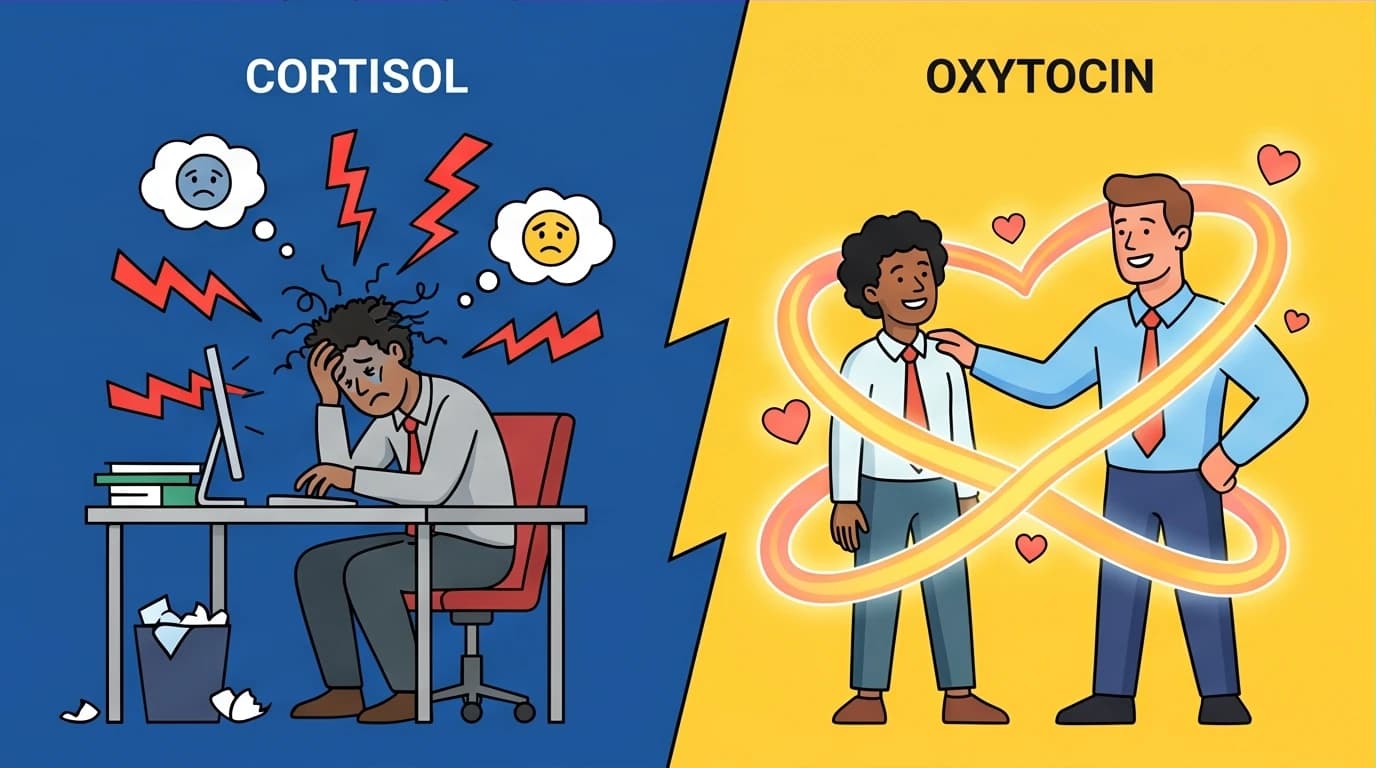
Leaders Eat Last Key Takeaways for Managers and HR
If you want to stop the bleeding in a toxic department, you need to change the daily inputs. Here are the leaders eat last key takeaways that provide immediate value to modern leaders:
1. Leadership is a Choice, Not a Rank
Authority gives you the power to tell people what to do. Leadership is the choice to care for the people you have authority over. Titles on an org chart mean nothing if the team does not feel protected by you. You must willingly sacrifice your comfort—your time, your energy, and sometimes your ego—for the benefit of your team.
2. Beware of "Abstraction"
As organizations grow, humans become numbers on a spreadsheet. Sinek calls this abstraction. It is much easier to lay off 500 "FTEs" (Full-Time Equivalents) to satisfy Wall Street than it is to fire 500 human beings with mortgages and families. Mid-level managers must fight abstraction. You must know the names, struggles, and motivations of your team members. When distance increases, empathy decreases.
3. Empathy is the Ultimate Retention Tool
When performance drops, a poor manager asks, "What is wrong with you?" A leader asks, "Are you okay?" Shifting from judgment to curiosity instantly lowers cortisol levels. Employees who feel their boss genuinely cares about their personal well-being will run through brick walls for the company.
These takeaways form the core of Sinek's philosophy. To keep these principles top of mind and find daily inspiration, it can be helpful to revisit the powerful words that define this approach to leadership.
Embracing Simon Sinek Servant Leadership in the Modern Workplace
Applying simon sinek servant leadership means flipping the traditional corporate pyramid upside down. The CEO does not sit at the top extracting value from the bottom. Instead, the CEO supports the senior managers, the senior managers support the team leads, and the team leads support the front-line employees who do the actual work.
Putting servant leadership into practice and flipping the corporate pyramid inevitably comes down to one core workplace currency: trust. When you actively shield your team from bureaucracy and sacrifice your own comfort for their success, you dramatically accelerate how quickly that trust forms. If you want to master the art of building and maintaining this critical component—and see exactly how it improves your department's speed of execution and bottom-line results—this next recommendation is an absolute must-read for any modern manager.
The Speed of Trust
Stephen M. R. Covey, Rebecca R. Merrill
20 Duration7 Key Points4.7 Rate
How do you implement this today?
- Protect them from the bureaucracy: A great manager acts as an umbrella, shielding the team from unnecessary executive demands, changing directives, and corporate politics, allowing the team to focus on their actual jobs.
- Give them control: Micromanagement signals a lack of trust. Give your team the intent, provide the resources, and step back. Let them figure out the execution.
- Sacrifice first: If budgets are tight, cut your own perks before taking away team resources. If a project fails, take the blame publicly. If a project succeeds, give all the credit to the team.
Seeing how these principles translate into real-world success can provide a clear roadmap. The world’s most admired companies often build their entire culture around a strong sense of purpose, which is the engine that drives servant leadership.
Practical Steps to Repair a Toxic Culture
Knowledge without execution is useless. If your team is currently experiencing high burnout and low morale, take these steps right now:
- Redefine One-on-Ones: Stop using 1-on-1 meetings purely for status updates. You can track progress on software. Use this time exclusively to check on the human being. Ask what roadblocks you can remove for them.
- Audit Your Metric Systems: Are you over-indexing on dopamine? If you only reward individual aggressive sales targets, you will breed a cutthroat culture. Start rewarding collaborative behaviors. Praise the senior engineer who spent three hours mentoring a junior employee, even if it meant their own output dipped slightly that day.
- Establish "No-Device" Zones: Oxytocin requires human connection. Encourage teams to close their laptops and put away their phones during collaborative meetings. Eye contact and undivided attention build trust faster than any team-building retreat.
- Acknowledge the Reality: If the company is going through a tough time—like a poor financial quarter—do not lie or use corporate spin. Be honest. Transparency reduces the unknown, which immediately lowers cortisol.
Putting these principles into practice requires consistent learning, but a busy schedule can make it hard to get through all the recommended leadership books.
LeapAhead
Quickly get the main takeaways from the books mentioned in this article and other business bestsellers to turn your reading list into immediate action.
The ultimate message of this book is empowering. You cannot always control the macro-economy, market shifts, or even the decisions made by the board of directors. But you have absolute control over the micro-environment you create for your direct reports. By deciding to "eat last," you build an unbreakable Circle of Safety.
These practical steps offer a fantastic starting point for repairing a toxic work environment, but nothing compares to absorbing Sinek's groundbreaking framework in its entirety. If this summary resonated with your current leadership challenges and you are ready to fully commit to the principles of servant management, reading the complete text is one of the best investments you can make in your career. Grab a copy of the original source material to dive much deeper into his military case studies and the fascinating science of human cooperation.

Leaders Eat Last
Simon Sinek
47 Duration9 Key Points4.7 RateFAQ
What is the core message of Leaders Eat Last?
The core message is that true leadership is about creating a secure environment—a Circle of Safety—where employees feel protected from internal threats and corporate politics. When leaders sacrifice their own comfort for the well-being of their team, employees respond with deep trust, loyalty, and peak performance.
The core message is that true leadership is about creating a secure environment—a Circle of Safety—where employees feel protected from internal threats and corporate politics. When leaders sacrifice their own comfort for the well-being of their team, employees respond with deep trust, loyalty, and peak performance.
How do you apply the Circle of Safety in a remote or hybrid team?
Distance breeds abstraction, so you must manufacture intentional connection. Replace casual watercooler chats with dedicated time for non-work conversations at the start of video calls. Ensure complete transparency regarding company decisions, and proactively check in on your remote team members' mental bandwidth, not just their project status.
Distance breeds abstraction, so you must manufacture intentional connection. Replace casual watercooler chats with dedicated time for non-work conversations at the start of video calls. Ensure complete transparency regarding company decisions, and proactively check in on your remote team members' mental bandwidth, not just their project status.
How does this approach solve employee burnout?
Burnout is rarely caused by hard work alone; it is caused by high stress coupled with a lack of support. By lowering cortisol (stress) and increasing oxytocin (trust and safety) through empathetic leadership, employees feel valued. They gain the psychological resilience needed to handle heavy workloads without burning out.
Burnout is rarely caused by hard work alone; it is caused by high stress coupled with a lack of support. By lowering cortisol (stress) and increasing oxytocin (trust and safety) through empathetic leadership, employees feel valued. They gain the psychological resilience needed to handle heavy workloads without burning out.
What is the difference between Start With Why and Leaders Eat Last?
Start With Why is about discovering the purpose and direction of an organization or individual to inspire action. Leaders Eat Last focuses on the execution of that vision through people. It details the biological and cultural frameworks necessary to build a team capable of surviving the journey toward that "Why."
Start With Why is about discovering the purpose and direction of an organization or individual to inspire action. Leaders Eat Last focuses on the execution of that vision through people. It details the biological and cultural frameworks necessary to build a team capable of surviving the journey toward that "Why."