

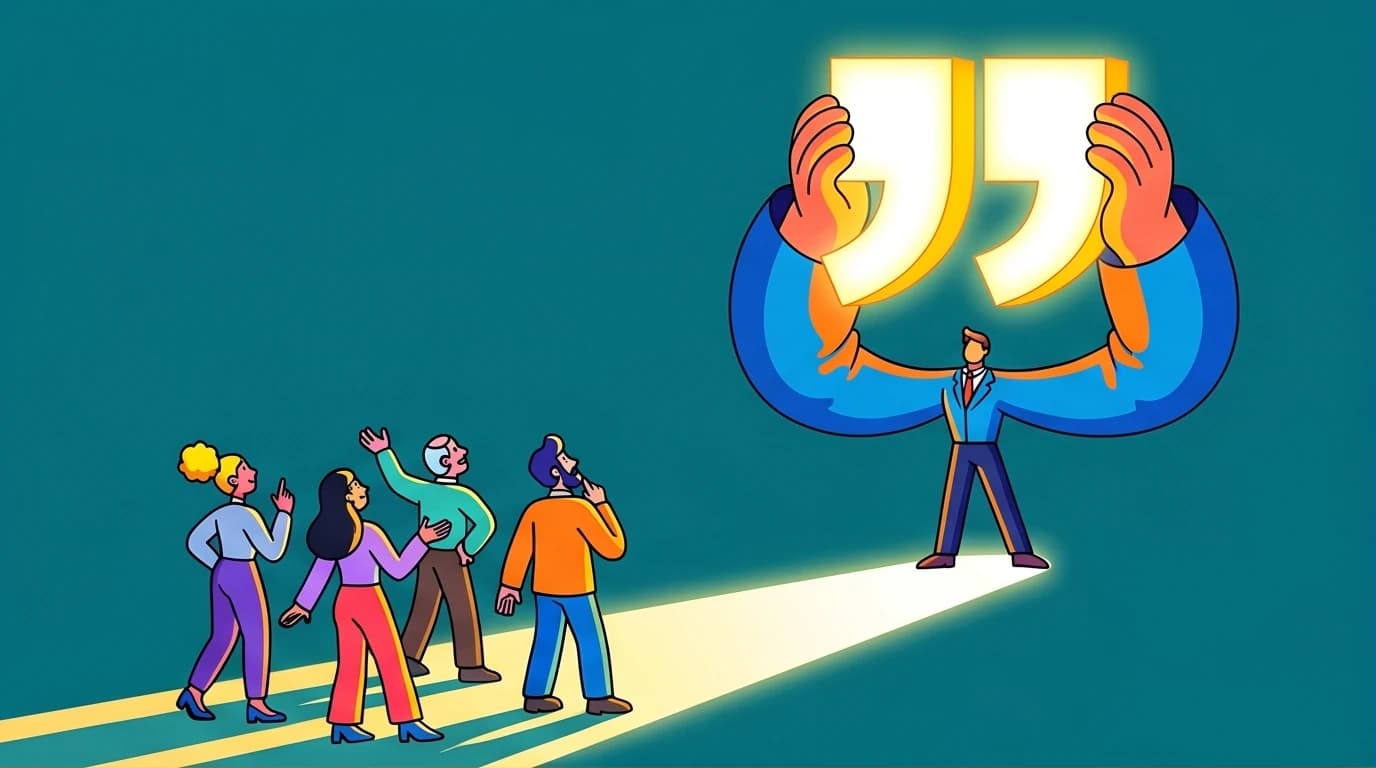
You are staring at a blank presentation slide or drafting a team-wide email, searching for the right words to inspire action. Corporate jargon falls flat, and recycled motivational posters do not work anymore. Your team is navigating tight deadlines, budget cuts, or the friction of remote work. You need a message that cuts through the noise, commands attention, and reminds your people why their daily output actually matters.
Borrowing insight from a recognized authority is the fastest way to frame a complex cultural problem. Simon Sinek has spent his career breaking down the anatomy of great organizations, from the military to Fortune 500 tech giants. Below is a curated framework of his best insights, categorized entirely by the specific leadership challenge you need to solve today.

Aligning Team Purpose: Essential Start With Why Quotes
When a team loses its drive, they have usually forgotten the reason behind their work. Pushing harder on metrics only creates more burnout. You must realign them with the core mission. Using start with why quotes serves as a hard reset for team alignment, perfect for quarterly kick-offs or major strategic pivots.
"People don't buy what you do; they buy why you do it. And what you do simply proves what you believe."
This is the foundational pillar of Sinek’s philosophy. It applies perfectly to sales teams struggling to pitch a product or marketing departments building a brand narrative.
- Where to use it: The opening slide of a product launch or a sales training workshop.
- How to frame it: Ask your team to stop listing features and start explaining the customer's problem you are uniquely positioned to solve.
This idea is the foundation of Sinek's "Golden Circle." To see how leading companies have successfully applied this model to create intense customer loyalty, it's worth studying the brands that get it right.
"Working hard for something we don't care about is called stress. Working hard for something we love is called passion."
Burnout is rampant in modern corporate culture. This quote distinguishes between toxic hustle culture and genuine engagement.
- Where to use it: Town hall meetings or Slack announcements regarding high-pressure project deadlines.
- How to frame it: Acknowledge the heavy workload. Use this quote to bridge the gap between the long hours and the meaningful outcome the team is driving toward.
"If you hire people just because they can do a job, they’ll work for your money. But if you hire people who believe what you believe, they’ll work for you with blood and sweat and tears."
- Where to use it: Hiring committee briefings and onboarding documents.
- How to frame it: Remind your HR and recruitment teams to filter for cultural alignment and shared values, not just raw resume skills.
These quotes offer a glimpse into Sinek's most influential work. For a more detailed look at his framework for purpose-driven leadership, a full summary is invaluable.
If you want to truly master the art of inspiring your team, you have to dig deeper into the core principles of purpose-driven leadership. Sinek’s foundational book is a must-read for any manager, founder, or team leader who wants to move past manipulative tactics and build genuine, lasting loyalty. It provides the full framework for discovering your organization's core mission and communicating it in a way that resonates with both employees and customers alike.
Start with Why
Simon Sinek
 45 Duration
 7 Key Points
 4.6 Rate
For busy leaders who want to absorb the core principles from Sinek's work but struggle to find the time for a full book, there are new ways to learn on the go.


Listen to the key ideas from "Start with Why" and other essential leadership books in just 15-minute audio summaries during your commute.
 LeapAhead
Building Psychological Safety: Simon Sinek Quotes on Trust
A high-performing team cannot exist without psychological safety. If your employees are hiding mistakes, pointing fingers, or operating in silos, your core issue is a lack of trust. Injecting simon sinek quotes on trust into your communication helps dismantle defensive barriers and encourages vulnerability from the top down.
"A team is not a group of people that work together. A team is a group of people that trust each other."
Proximity does not equal teamwork. Sitting in the same office or being on the same Zoom call means nothing if there is no underlying safety.
- Where to use it: Conflict resolution meetings or post-mortem discussions following a failed project.
- How to frame it: Stop talking about the logistical failures of the project. Put this quote on the screen and address the communication breakdowns head-on.
"Leadership is not an expertise. Leadership is a constant education."
Many young managers suffer from imposter syndrome, feeling they must have every answer. This insight relieves that pressure and normalizes continuous learning.
- Where to use it: Leadership development programs or mentoring sessions with first-time managers.
- How to frame it: Encourage your new leaders to ask their teams for feedback rather than pretending to be flawless.
"Trust is maintained when values and beliefs are actively managed. If companies do not actively work to keep clarity, discipline and consistency in balance, then trust starts to break down."
- Where to use it: Executive off-sites or board meetings.
- How to frame it: Use this when advocating for budget allocation toward employee well-being, culture initiatives, or off-site retreats.
Trust and psychological safety aren't just buzzwords; they are the bedrock of innovation and high performance in any modern United States corporation. If you're looking for a practical, evidence-based guide to fostering a fearless culture where employees feel secure enough to speak up, share ideas, and admit mistakes, exploring the science behind workplace safety is essential. It completely redefines how managers should handle failure and cultivate open communication without fear of retaliation.
The Fearless Organization
Amy C. Edmondson
53 Duration10 Key Points4.6 Rate
Fostering Empathy: Leaders Eat Last Quotes
The concept that leaders must sacrifice their own comfort for the safety of the group comes directly from Marine Corps culture. When your team feels like they are just cogs in a machine, you need to remind them—and yourself—that leadership is a service, not a privilege. Utilizing leaders eat last quotes helps rebuild morale during layoffs, budget freezes, or organizational restructuring.
"Leaders are the ones who are willing to give up something of their own for us. Their time, their energy, their money, maybe even the food off their plate."
True authority comes from sacrifice. When employees see a manager taking the hit for a team failure, loyalty skyrockets.
- Where to use it: End-of-year reviews or challenging transitional periods.
- How to frame it: Share a brief story about a time you made a mistake as a leader. Use this quote to demonstrate that you prioritize their security over your own ego.
"The true price of leadership is the willingness to place the needs of others above your own. Great leaders truly care about those they are privileged to lead."
- Where to use it: Internal newsletters or LinkedIn posts discussing servant leadership.
- How to frame it: Contrast the traditional "boss" mentality with the modern "facilitator" mentality.
"Let us all be the leaders we wish we had."
This is a powerful call to action for individual contributors. You do not need a C-suite title to change the culture around you.
- Where to use it: Employee resource group (ERG) meetings or all-hands company updates.
- How to frame it: Empower junior staff to take ownership of their immediate environment. Challenge them to mentor a peer or step up during a crisis.
These quotes capture the essence of servant leadership. To fully understand Sinek's framework for building trust, particularly his "Circle of Safety" concept, it is helpful to review the core ideas of his work on the topic.
The concept of leaders taking the hit for their team has deep roots in military leadership, where taking ultimate accountability can be a matter of life and death. If you want to understand how to apply this level of extreme responsibility to the corporate battlefield, you need insights from those who have led in the most high-stakes environments imaginable. Translating Navy SEAL principles to business management is one of the most effective ways to build unbreakable team cohesion and drive extraordinary results.

Extreme Ownership
Jocko Willink, Leif Babin
45 Duration7 Key Points4.6 RateDriving Action: Motivational Leadership Quotes
Sometimes, you do not need a deep philosophical discussion. You just need a spark. These motivational leadership quotes are short, punchy, and designed to generate immediate momentum. They work exceptionally well as quick reinforcements.
"Dream big. Start small. But most of all, start."
Analysis paralysis kills more projects than poor execution.
- Where to use it: Project kick-off meetings where the scope feels overwhelming.
- How to frame it: Break down a massive quarterly goal into a single actionable step for the current week.
"Words may inspire, but only action creates change."
- Where to use it: The final slide of a strategy presentation.
- How to frame it: Transition the room from passive listening to active task assignment. Outline exactly who is doing what by tomorrow morning.
"Direction is more important than speed. Many are going nowhere fast."
- Where to use it: Mid-quarter check-ins when the team is rushing to meet arbitrary deadlines and sacrificing quality.
- How to frame it: Give your team permission to slow down, review the data, and ensure they are actually solving the right problem.
Translating all this inspiration into tangible, day-to-day action often requires a shift in how you delegate and communicate. If you want to empower your team to take the wheel rather than waiting for top-down orders, you have to rewrite the traditional leadership playbook. Moving from a "leader-follower" model to a "leader-leader" dynamic ensures that every person in your organization takes ownership of their work, making your operations faster, smarter, and infinitely more resilient.
Turn The Ship Around
L. David Marquet
23 Duration10 Key Points4.6 RateHow to Execute: Turning Quotes into Leadership Assets
Having the right simon sinek leadership quotes is only half the battle. The delivery dictates the outcome. Do not just slap a paragraph of text onto a busy slide and read it out loud. Follow these execution rules to maximize their impact.
For Slide Decks:
- High Contrast, Low Clutter: Put the quote on a solid background (dark blue or black). Use a clean, bold font. The quote should be the only text on the slide.
- The Power Pause: Read the quote aloud. Then, pause for exactly three seconds before speaking again. Let the words settle in the room.
- Anchor with a Metric: Pair the philosophical quote with a hard business metric on the next slide. For example, follow a quote about trust with data on employee retention rates.
For LinkedIn and Internal Blogs:
- Start with the Trenches: Do not start the post with the quote. Start with a real, raw problem you faced this week (e.g., "Yesterday, my team missed a major launch deadline.").
- Drop the Quote as the Pivot: Use the Sinek quote as the turning point of your story, showing how it shifted your perspective.
- End with a Question: Drive engagement by asking your network how they handle similar cultural friction.
Consistently absorbing insights from thought leaders like Sinek is the best way to keep your leadership skills sharp, but it can be tough to fit dedicated reading time into a packed schedule.
Build a powerful learning habit by getting key takeaways from the world's best business and leadership books in just 15 minutes a day.
LeapAheadFAQ
What makes Simon Sinek's approach to leadership different from traditional management?
Traditional management focuses heavily on metrics, compliance, and top-down authority. Sinek's framework prioritizes biology and anthropology—specifically how human beings require psychological safety, clear purpose, and mutual trust to operate at their highest potential over the long term.
Traditional management focuses heavily on metrics, compliance, and top-down authority. Sinek's framework prioritizes biology and anthropology—specifically how human beings require psychological safety, clear purpose, and mutual trust to operate at their highest potential over the long term.
Can I use these quotes if I am not a manager or executive?
Absolutely. One of Sinek’s core principles is that leadership is a behavior, not a rank. Individual contributors can use these quotes to influence peers, manage up, and shape the micro-culture of their immediate project teams.
Absolutely. One of Sinek’s core principles is that leadership is a behavior, not a rank. Individual contributors can use these quotes to influence peers, manage up, and shape the micro-culture of their immediate project teams.
How do I use a quote in a meeting without sounding cliché or inauthentic?
Context is everything. Never use a quote just to sound smart. Always connect the quote directly to a specific, current problem your team is actively facing. Share a brief personal anecdote about why that specific quote challenged your own thinking. Vulnerability removes the cliché.
Context is everything. Never use a quote just to sound smart. Always connect the quote directly to a specific, current problem your team is actively facing. Share a brief personal anecdote about why that specific quote challenged your own thinking. Vulnerability removes the cliché.
Which Sinek book should I reference if my team wants to learn more?
If your team is struggling with purpose and direction, reference Start With Why. If your team is dealing with internal conflict, burnout, or lack of trust, point them toward Leaders Eat Last. Both provide excellent frameworks for the quotes listed above.
If your team is struggling with purpose and direction, reference Start With Why. If your team is dealing with internal conflict, burnout, or lack of trust, point them toward Leaders Eat Last. Both provide excellent frameworks for the quotes listed above.