


You’ve probably heard these buzzwords tossed around in performance reviews or spotted them on the covers of bestsellers at Barnes & Noble. But when a major project fails or a peer gets a promotion, your internal reaction exposes how your brain actually operates. Pinpointing your default thinking pattern is the only way to stop self-sabotage and start adapting.
The Foundation: Understanding the Two Mindsets
Before you can change how you process failure and success, you have to understand the mechanics of your beliefs.
The terms were popularized by Stanford University psychologist Carol Dweck. After decades of studying human motivation, the Carol Dweck growth mindset research revealed that the view you adopt for yourself profoundly affects the way you lead your life. It determines whether you become the person you want to be and whether you accomplish the things you value. For readers considering the original book, it's helpful to understand its main arguments and modern critiques.
The Fixed Mindset: Proving Over Improving
In a fixed mindset, you believe your basic qualities—like your intelligence, your athletic ability, or your talent—are fixed traits. You have a certain amount, and that's that.
Because of this belief, people with a fixed mindset spend their time documenting their intelligence or talent instead of developing them. They believe that talent alone creates success, without effort. This creates a constant need for validation. Every situation is evaluated by a single metric: Will I succeed or fail? Will I look smart or dumb?
The Growth Mindset Definition
The growth mindset definition is the belief that your basic abilities can be cultivated through dedication and hard work. Brains and talent are just the starting point.
This view creates a love of learning and a resilience that is essential for great accomplishment. When you operate from this space, a failure is not a permanent reflection of your intellect or worth. It is simply data. It is a signal that you need to adjust your strategy, ask for help, or apply more effort.
If you want to dive straight into the source material that started this entire conversation, you owe it to yourself to read the foundational text by the Stanford psychologist who coined these terms. Carol S. Dweck’s groundbreaking book breaks down decades of research into accessible, life-changing insights. It will show you exactly how your beliefs about your own capabilities shape everything from your career trajectory to your relationships, making it a must-read for anyone serious about personal development.

Mindset
Carol S. Dweck
 51 Duration
 8 Key Points
 4.6 Rate
How to Tell Which One You Have
Most people like to assume they naturally lean toward growth. However, Dweck's research warns against the "false growth mindset"—saying you have one just because it sounds open-minded, without actually doing the work.
To find out where you actually stand, look at the specific characteristics of a growth mindset compared to a fixed one across everyday scenarios.
1. How You Handle Challenges
- Fixed: You avoid them. A challenge is a risk. If you try something hard and fail, it proves you lack ability. You stick to what you know so you can guarantee a win.
- Growth: You embrace them. You recognize that stretching yourself past your current abilities is exactly how you build new neural pathways.

2. How You Respond to Obstacles
- Fixed: You give up easily. The moment a project gets difficult, the internal dialogue says, "I'm just not cut out for this."
- Growth: You persist. You view setbacks as part of the process. You pivot, try a different angle, and view the obstacle as a puzzle to be solved.
3. How You View Effort
- Fixed: You see effort as fruitless or worse—a sign of weakness. If you were truly a genius, you wouldn't have to try so hard.
- Growth: You see effort as the path to mastery. You know that even the most talented athletes or executives put in thousands of hours of unseen work.
Shifting your perspective on effort is incredibly challenging, especially in a culture that idolizes "natural" talent. If you struggle with giving up when things get hard, Angela Duckworth’s research perfectly complements the growth mindset philosophy. Her work proves that passion and sustained persistence outscore raw intelligence every single time. Reading about the mechanics of perseverance might be exactly the push you need to start seeing your daily grind as the ultimate path to mastery.

Grit
Angela Duckworth
18 Duration8 Key Points4.6 RateAll these book recommendations are fantastic, but building a growth mindset also means being realistic about your time and energy. If your reading list is starting to feel overwhelming, you can use a more modern approach to absorb these core ideas.

Grasp the key lessons from books like "Mindset" and "Grit" in 15-minute summaries, making it easy to learn without the pressure of a huge reading list.

Download LeapAhead App now
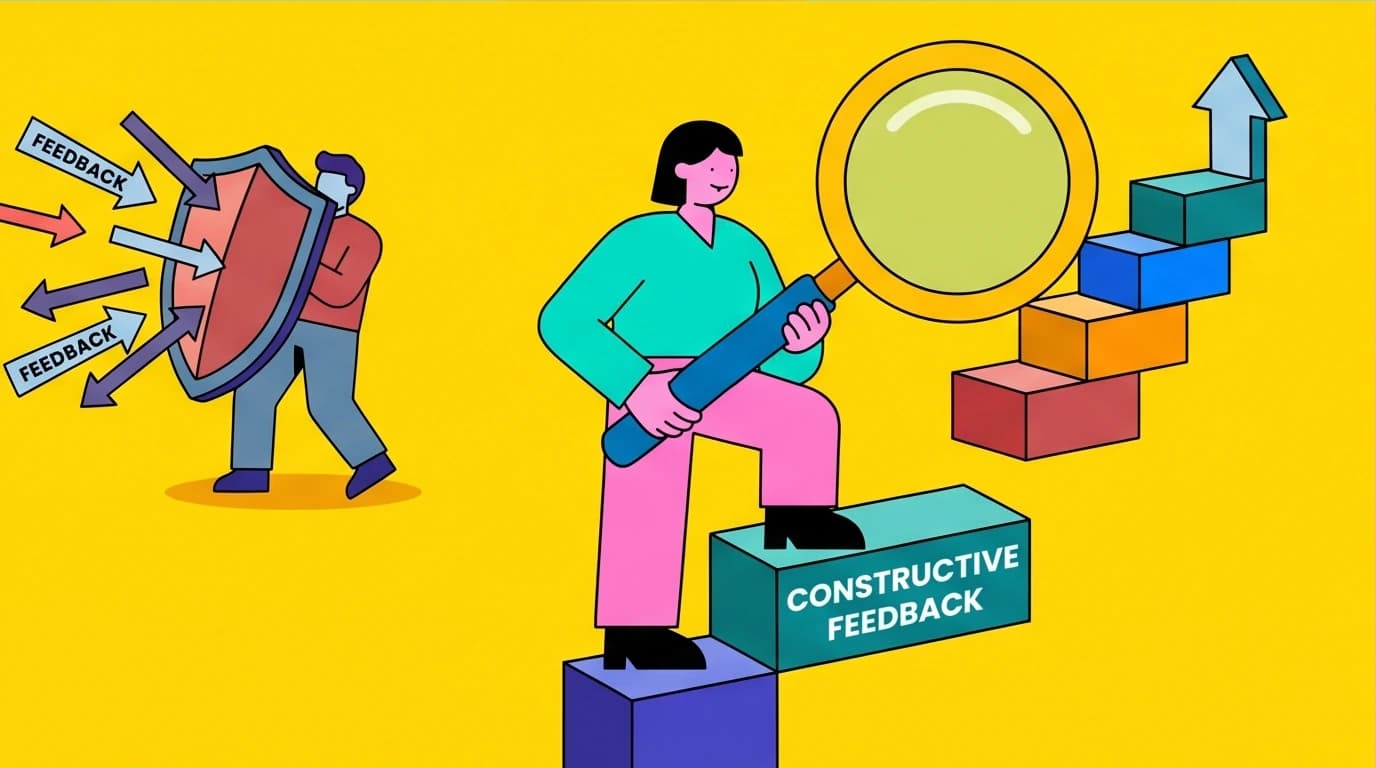
4. How You Process Criticism
- Fixed: You ignore useful negative feedback. You treat constructive criticism as a personal attack on your identity. You get defensive.
- Growth: You learn from criticism. You separate your ego from your work. You take the feedback, extract the value, and use it to refine your output.
Taking criticism gracefully is a skill that requires you to completely rewire how you view failure. If you tend to get defensive when your mistakes are pointed out, exploring how top-tier organizations handle errors can be incredibly eye-opening. Matthew Syed explores the psychology of failure and reveals how reframing our relationship with mistakes is the hidden secret behind the world's most successful teams and industries. It’s a brilliant read for learning how to extract data from your missteps instead of letting them bruise your ego.

Black Box Thinking
Matthew Syed
23 Duration8 Key Points4.8 Rate5. How You React to the Success of Others
- Fixed: You feel threatened. If a coworker lands a massive client, you feel like their success somehow diminishes your own.
- Growth: You find lessons and inspiration. You ask them about their strategy. You study their success to see what you can apply to your own workflow.
Real-World Fixed Mindset Examples
To make this concrete, let's look at common fixed mindset examples in the workplace and daily life. Recognizing these in yourself is the first step toward change.
Scenario A: The New Software Rollout
Your company switches from its legacy system to a new enterprise software.
Your company switches from its legacy system to a new enterprise software.
- Fixed Reaction: "I’m not a tech person. I’m too old to learn this entirely new system. This is going to ruin my productivity." You complain and avoid using it until management forces your hand.
Scenario B: The Botched Presentation
You deliver a pitch to a client, and it falls flat. They pass on the deal.
You deliver a pitch to a client, and it falls flat. They pass on the deal.
- Fixed Reaction: "I am terrible at public speaking. I shouldn't be in sales." You avoid taking the lead on the next pitch and let a colleague do it.
Scenario C: Feedback from a Manager
Your boss reviews your quarterly report and points out two areas where your data analysis was flawed.
Your boss reviews your quarterly report and points out two areas where your data analysis was flawed.
- Fixed Reaction: You immediately make excuses. "The marketing team didn't give me the right numbers in time." You leave the meeting feeling resentful and undervalued, rather than asking your boss to show you how they prefer the data modeled.
How to Shift Your Internal Dialogue
You are not locked into one way of thinking. Your mindset is entirely malleable. If you recognized yourself in the fixed examples above, here is how you force a shift. To get started with actionable techniques, there are specific activities that can help you begin this process.
Acknowledge Your Fixed Mindset Triggers
We all have both mindsets. You might have a growth mindset when it comes to learning a new sport, but a rigid fixed mindset regarding your math skills or public speaking. Identify what triggers your defensive, fixed reactions. Is it high-stakes presentations? Is it when you are around a specific hyper-competitive colleague?
We all have both mindsets. You might have a growth mindset when it comes to learning a new sport, but a rigid fixed mindset regarding your math skills or public speaking. Identify what triggers your defensive, fixed reactions. Is it high-stakes presentations? Is it when you are around a specific hyper-competitive colleague?
Add "Yet" to Your Vocabulary
This is a core strategy from Dweck's research. When you hit a wall, your brain says, "I can't do this." Force yourself to append the word "yet."
This is a core strategy from Dweck's research. When you hit a wall, your brain says, "I can't do this." Force yourself to append the word "yet."
- Instead of: "I don't know how to run this pivot table."
- Say: "I don't know how to run this pivot table yet."
It instantly reframes an absolute endpoint into a learning curve.

Praise Process Over Inherent Traits
This applies to how you talk to yourself, your kids, and your employees. Applying these principles in parenting and education is especially powerful for long-term development.
This applies to how you talk to yourself, your kids, and your employees. Applying these principles in parenting and education is especially powerful for long-term development.
Stop praising intelligence. If you tell your team, "You guys are so smart," you condition them to fear looking dumb. Instead, praise the strategy: "I really respect the way you structured that workflow and pushed through the bugs."
Redefine "Genius"
Look at the people you admire. Read their biographies. Whether it is a business leader or an artist, you will find that their overnight success usually took a decade of grinding, failing, and recalibrating. Normalize the struggle.
Look at the people you admire. Read their biographies. Whether it is a business leader or an artist, you will find that their overnight success usually took a decade of grinding, failing, and recalibrating. Normalize the struggle.
It’s easy to look at prodigies and assume they were simply born with a special gift, but the science of human potential tells a completely different story. If you're ready to shatter the illusion of innate genius once and for all, understanding the concept of "deliberate practice" is your next logical step. Anders Ericsson’s fascinating research proves that top performers aren't born—they are built through highly specific, focused effort. It’s the perfect roadmap for applying a growth mindset to any new skill you want to master.

Peak
Anders Ericsson and Robert Pool
48 Duration10 Key Points4.5 RateRedefining your mindset is a long-term project, not a one-time fix. The key is to consistently expose yourself to these powerful ideas, even when you're too tired for a full chapter after work.
With LeapAhead, you can listen to the big ideas from personal development books during your commute or workout, turning small pockets of time into consistent growth.
Download LeapAhead App now
FAQ
Can you have both a growth and fixed mindset at the same time?
Yes. Nobody has a 100% growth mindset all the time. Mindset is a spectrum and is highly context-dependent. You might embrace challenges in your hobbies (growth) but fear failure and avoid feedback in your professional career (fixed).
Yes. Nobody has a 100% growth mindset all the time. Mindset is a spectrum and is highly context-dependent. You might embrace challenges in your hobbies (growth) but fear failure and avoid feedback in your professional career (fixed).
Is a fixed mindset always bad?
While a growth mindset is vastly superior for learning and development, a fixed mindset is a natural human defense mechanism. It protects our ego from the sting of failure. The goal isn't to feel guilty about having fixed mindset thoughts; the goal is to recognize them quickly and consciously choose not to act on them.
While a growth mindset is vastly superior for learning and development, a fixed mindset is a natural human defense mechanism. It protects our ego from the sting of failure. The goal isn't to feel guilty about having fixed mindset thoughts; the goal is to recognize them quickly and consciously choose not to act on them.
How do you manage an employee who has a fixed mindset?
Change the way you evaluate them. If you only reward flawless execution, you breed a fixed mindset. Start rewarding intelligent risk-taking and transparency about mistakes. When giving feedback, focus heavily on their strategies and effort rather than their natural talent, and make it clear that you expect them to learn and adapt, not to be perfect from day one.
Change the way you evaluate them. If you only reward flawless execution, you breed a fixed mindset. Start rewarding intelligent risk-taking and transparency about mistakes. When giving feedback, focus heavily on their strategies and effort rather than their natural talent, and make it clear that you expect them to learn and adapt, not to be perfect from day one.
Are people born with a specific mindset?
No. Mindsets are beliefs shaped by your environment, the way your parents praised you, your early schooling, and your workplace culture. Because they are learned beliefs, they can be unlearned and rewired at any stage of life through consistent self-awareness and practice.
No. Mindsets are beliefs shaped by your environment, the way your parents praised you, your early schooling, and your workplace culture. Because they are learned beliefs, they can be unlearned and rewired at any stage of life through consistent self-awareness and practice.