

You hear the phrase "growth mindset" everywhere. It is painted on elementary school walls, preached in corporate boardrooms, and heavily pushed by self-improvement influencers on YouTube and podcasts. When a psychological concept reaches this level of cultural saturation, it is entirely natural to step back and ask if the source material actually holds up. You are likely staring at the book on Amazon or Audible right now, trying to figure out if you should invest ten hours of your life into reading it, or if it is just another over-padded pop-psychology fad.

This analytical Mindset Carol Dweck review strips away the marketing hype to examine the actual value of the book, the science behind it, and the recent controversies surrounding its claims.
The Core Premise: What Are We Actually Talking About?
Before tearing into the criticisms, you need a baseline understanding of what Dweck, a Stanford psychologist, is actually proposing. She divides human belief systems about intelligence and ability into two distinct camps:
- The Fixed Mindset: The belief that your intelligence, talents, and personality are static traits. You are dealt a hand at birth, and you have to live with it. People with a fixed mindset avoid challenges because failing means they are inherently "not smart." They take feedback as a personal attack.
- The Growth Mindset: The belief that your basic qualities are things you can cultivate through effort, good strategies, and input from others. People with a growth mindset embrace challenges, push through obstacles, and see effort as the path to mastery.

That is the entire premise of the book. It is a powerful, paradigm-shifting idea. It changes how you praise your children (praising effort rather than natural intelligence) and how you approach your own failures.
This fundamental distinction is the engine of Dweck's entire theory. For a detailed comparison with real-world examples, it's helpful to explore the key differences between a growth mindset vs. a fixed mindset.
However, understanding the concept takes about five minutes. The book itself is nearly 300 pages long. This brings us to the most common frustration readers have.
Is Mindset Worth Reading Cover to Cover?
If you are asking is Mindset worth reading in its entirety, the honest answer for the vast majority of people is no.
The traditional American publishing industry has a strict formula for non-fiction: take a brilliant academic paper or a fascinating 20-minute TED Talk, and stretch it into a 70,000-word book so it can be sold in hardcover at Barnes & Noble. Mindset is one of the most notorious examples of this format.
Dweck explains the core theory brilliantly in the first three chapters. Once the foundation is laid, the rest of the book applies this exact same binary lens to different areas of life:
- Mindset in Sports (featuring endless anecdotes about John McEnroe and Michael Jordan).
- Mindset in Business (analyzing the fall of Enron through the lens of fixed mindset).
- Mindset in Relationships.
- Mindset in Parenting and Teaching.
If you are a CEO, the business chapter might be interesting. If you are a parent, the parenting chapter is highly actionable. But reading every single chapter feels like getting hit over the head with the same hammer. Every success in history is attributed to a growth mindset; every failure is blamed on a fixed mindset. This leads directly to the primary criticisms of her work.
While the book covers these topics broadly, parents and educators often look for more targeted strategies. Applying these concepts effectively with children requires specific language and activities. For practical tips, explore our guide on fostering a growth mindset for kids.
For readers who want the powerful core concept of Mindset without committing to 300 pages of repetitive examples, an app that summarizes key ideas can be a more efficient path to learning.


Absorb the core principles of influential books like *Mindset* in just 15 minutes, skipping the filler to get straight to the actionable ideas.
 LeapAhead
Mindset Book Criticism: The "Everything is a Mindset" Trap
When you read a book that tries to explain the entire human experience through a single variable, your skeptical alarms should go off. The primary Mindset book criticism centers on its oversimplification of complex realities.
1. Ignoring Systemic and Environmental Factors
The most glaring issue with the book is that it borders on toxic individualism. Dweck’s narrative often implies that if you simply change your attitude, you can achieve anything. This heavily downplays systemic inequality, poverty, lack of resources, and genuine biological limitations. A child in an underfunded school facing food insecurity needs more than just a "growth mindset" to succeed. Framing failure simply as a lack of the right mindset can lead to victim-blaming.
If you find yourself frustrated by self-help books that ignore the very real impacts of poverty, environment, and systemic inequality, you might appreciate a more grounded perspective. Paul Tough’s exploration of childhood development looks beyond simple attitudes to examine how character is actually formed in the face of real-world adversity. It provides a heavily researched, nuanced look at what disadvantaged kids genuinely need to thrive—proving that success requires much more than just a positive outlook.

How Children Succeed
Paul Tough
 46 Duration
 9 Key Points
 4.6 Rate
2. The Survivorship Bias
Dweck relies heavily on retrospective storytelling. She looks at highly successful people (like Tiger Woods or Thomas Edison) and highlights their growth mindset. She looks at failures (like Enron executives) and highlights their fixed mindset. This is classic survivorship bias. There are thousands of people with incredible growth mindsets who start businesses that fail, and there are plenty of highly arrogant people with fixed mindsets who succeed purely through sheer raw talent or luck. The book rarely acknowledges these nuances.
The Science: Carol Dweck Mindset Controversy Explained
The most critical question for any analytical reader is whether the science actually holds up today. The psychological landscape has changed drastically since the book was first published in 2006.
Over the last decade, psychology has undergone a massive "replication crisis," where classic studies were re-tested by independent researchers and failed to produce the original results. The Carol Dweck mindset controversy revolves precisely around this issue.
Mindset Psychology Replication: Did the Science Fail?
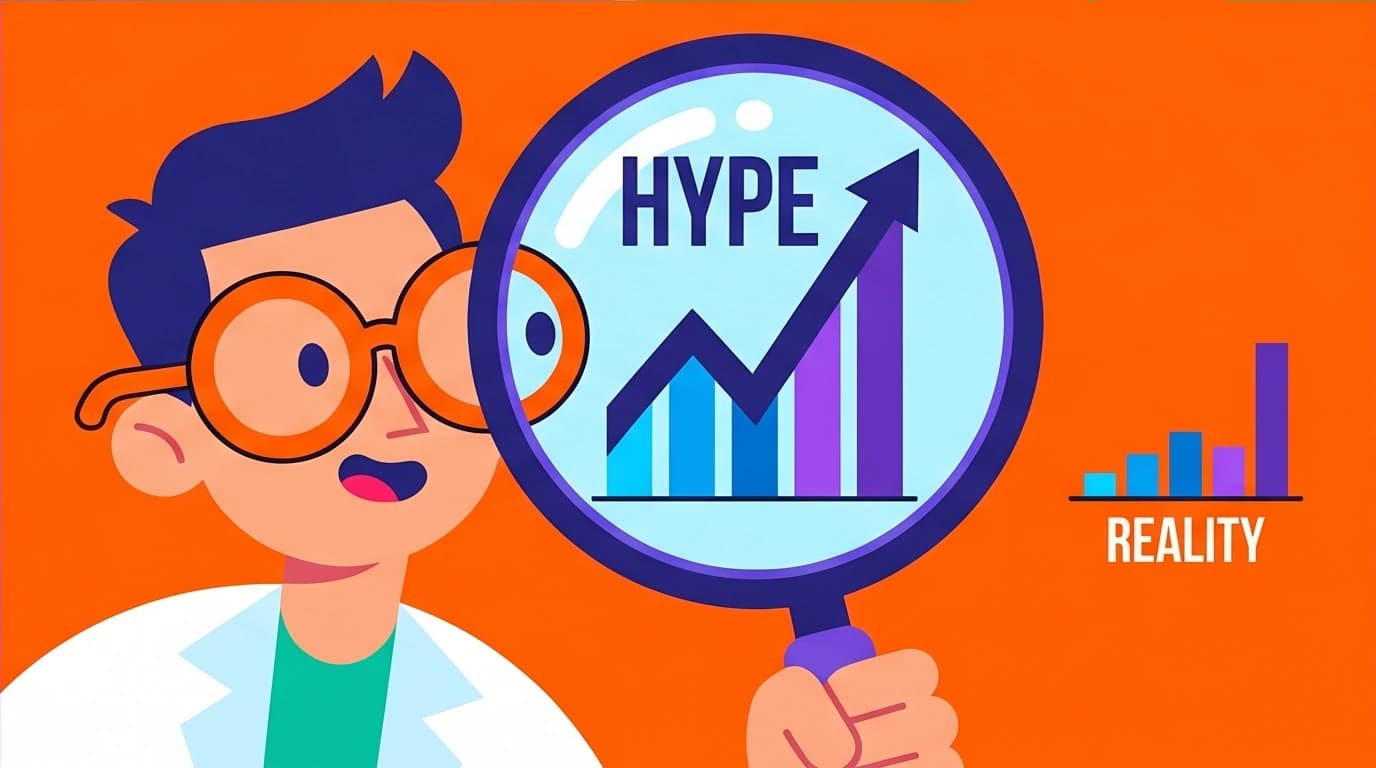
When independent researchers tried to replicate Dweck’s earlier, highly dramatic findings—where brief mindset interventions supposedly caused massive spikes in student grades—they hit a wall.
A massive meta-analysis conducted in 2018 by researchers Sisk, Burgoyne, Sun, Taylor, and Macnamara reviewed 138 studies on mindset. Their findings were a cold shower for the self-help industry:
- The correlation between a growth mindset and academic achievement was very weak.
- Mindset interventions (teaching students about the growth mindset) had almost no effect on the general student population.
Does this mean the book is a fraud? Absolutely not.
In 2019, a massive, rigorously designed National Study of Learning Mindsets was conducted. It found that a short growth mindset intervention did improve the grades of lower-achieving students, but the effect size was relatively small (around a 0.10 grade point average increase).
The scientific consensus today is clear: The growth mindset is real, and it is beneficial. However, the effect sizes are small, and it is not a magic bullet. It helps students who are struggling and at-risk, but it will not magically turn an average student into an Einstein, nor will it single-handedly save a failing corporation. The controversy stems mostly from how the concept was over-commercialized and exaggerated by schools and corporate HR departments, rather than malicious intent from Dweck herself.
Dweck’s Response: The "False Growth Mindset"
To her credit, Carol Dweck has addressed many of these controversies directly in updated editions of the book. She introduced the concept of the "false growth mindset." She realized that parents and teachers were misinterpreting her work—praising kids for trying hard even when they were failing, without offering new strategies.
Dweck clarified that a true growth mindset isn't just about empty effort or toxic positivity; it is about tying effort to actual progress, seeking help, and trying new strategies when the current ones are not working.
Dweck's clarification highlights that a mindset is not a passive belief but an active process. If you're ready to move from theory to practice, there are specific exercises and activities you can use. Learn how to develop a growth mindset with our actionable guide.
Understanding that you need a new strategy is only half the battle; actually building the daily systems to execute that strategy is where most people fail. While Dweck provides the psychological foundation for why you should embrace challenges, you still need a practical playbook for changing your behavior. Focusing on small, incremental changes rather than massive leaps of faith is often the most reliable way to turn a growth mindset from a theoretical concept into tangible, real-world results.

Atomic Habits
James Clear
26 Duration8 Key Points4.7 RateThe Final Verdict: Actionable Advice for Your Decision
So, knowing the science, the controversies, and the repetitive nature of the writing, how should you proceed? Here is a strict, no-nonsense guide based on who you are.
1. If you are a Parent or an Educator: BUY IT (But only read specific parts)
How you praise a child permanently wires how they view challenges. For you, this book is practically mandatory. Buy the physical copy. Read Chapters 1, 2, 3, and Chapter 7 (Parents, Teachers, and Coaches). You can safely skip the sports and business chapters. Applying these principles to how you speak to children is worth the price of the book tenfold.
How you praise a child permanently wires how they view challenges. For you, this book is practically mandatory. Buy the physical copy. Read Chapters 1, 2, 3, and Chapter 7 (Parents, Teachers, and Coaches). You can safely skip the sports and business chapters. Applying these principles to how you speak to children is worth the price of the book tenfold.
2. If you are a Manager or Business Leader: SKIM IT
If you are trying to build a resilient team culture, the vocabulary in this book is useful. Borrow it from the library or read a detailed summary online. You do not need to read the entire book to understand how to foster a culture that rewards intelligent risk-taking rather than just natural talent.
If you are trying to build a resilient team culture, the vocabulary in this book is useful. Borrow it from the library or read a detailed summary online. You do not need to read the entire book to understand how to foster a culture that rewards intelligent risk-taking rather than just natural talent.
3. If you are a Casual Self-Improvement Reader: SKIP IT (Watch the TED Talk)
If you are just looking to improve your own mental models, spending 10 hours on the audiobook is an inefficient use of your time. Go to YouTube, search for Carol Dweck’s TED Talk "The power of believing that you can improve." In 10 minutes, you will get 95% of the actionable value of the book without the repetitive filler.
If you are just looking to improve your own mental models, spending 10 hours on the audiobook is an inefficient use of your time. Go to YouTube, search for Carol Dweck’s TED Talk "The power of believing that you can improve." In 10 minutes, you will get 95% of the actionable value of the book without the repetitive filler.
And if this idea of learning key concepts from popular books in minutes—rather than hours—appeals to you, dedicated apps can help make it a consistent habit.
Turn your commute or break into a learning opportunity by listening to key insights from bestselling nonfiction books in under 30 minutes.
LeapAheadWhether you plan to read the entire volume or just stick to the highly recommended first few chapters, having a physical copy of the original text is a worthwhile investment for any parent or educator. If you are ready to dig into the science of praise and rethink how you approach both your children's development and your own personal roadblocks, picking up the foundational book that started this massive cultural conversation is exactly where you should begin.

Mindset
Carol S. Dweck
51 Duration8 Key Points4.6 RateFAQ
What is the difference between a growth mindset and toxic positivity?
Toxic positivity demands that you remain happy and optimistic regardless of the situation, ignoring genuine pain or insurmountable obstacles. A growth mindset does not require you to be happy about failure; it simply requires you to view failure as a data point for learning rather than a permanent indictment of your identity.
Toxic positivity demands that you remain happy and optimistic regardless of the situation, ignoring genuine pain or insurmountable obstacles. A growth mindset does not require you to be happy about failure; it simply requires you to view failure as a data point for learning rather than a permanent indictment of your identity.
Can you have a growth mindset in some areas and a fixed mindset in others?
Yes. Dweck explicitly states that everyone is a mixture of both. You might have a growth mindset regarding your professional skills (believing you can learn new software or management techniques) but hold a fixed mindset about your artistic abilities (believing you just "aren't a creative person").
Yes. Dweck explicitly states that everyone is a mixture of both. You might have a growth mindset regarding your professional skills (believing you can learn new software or management techniques) but hold a fixed mindset about your artistic abilities (believing you just "aren't a creative person").
Does the growth mindset ignore systemic inequality?
This is a major valid criticism. While the framework is excellent for internal psychological resilience, critics argue it places the burden of success entirely on the individual. Believing you can improve is necessary, but it does not magically fix underfunded schools, poverty, or discrimination. The mindset is a psychological tool, not a substitute for structural resources.
This is a major valid criticism. While the framework is excellent for internal psychological resilience, critics argue it places the burden of success entirely on the individual. Believing you can improve is necessary, but it does not magically fix underfunded schools, poverty, or discrimination. The mindset is a psychological tool, not a substitute for structural resources.
What is the "False Growth Mindset"?
The false growth mindset is a term Dweck coined after seeing her work misinterpreted. It happens when people equate a growth mindset purely with "effort" rather than "learning." Praising someone for trying hard when they are repeatedly failing using the exact same flawed strategy is a false growth mindset. True growth requires trying new strategies and asking for help, not just banging your head against a wall.
The false growth mindset is a term Dweck coined after seeing her work misinterpreted. It happens when people equate a growth mindset purely with "effort" rather than "learning." Praising someone for trying hard when they are repeatedly failing using the exact same flawed strategy is a false growth mindset. True growth requires trying new strategies and asking for help, not just banging your head against a wall.