

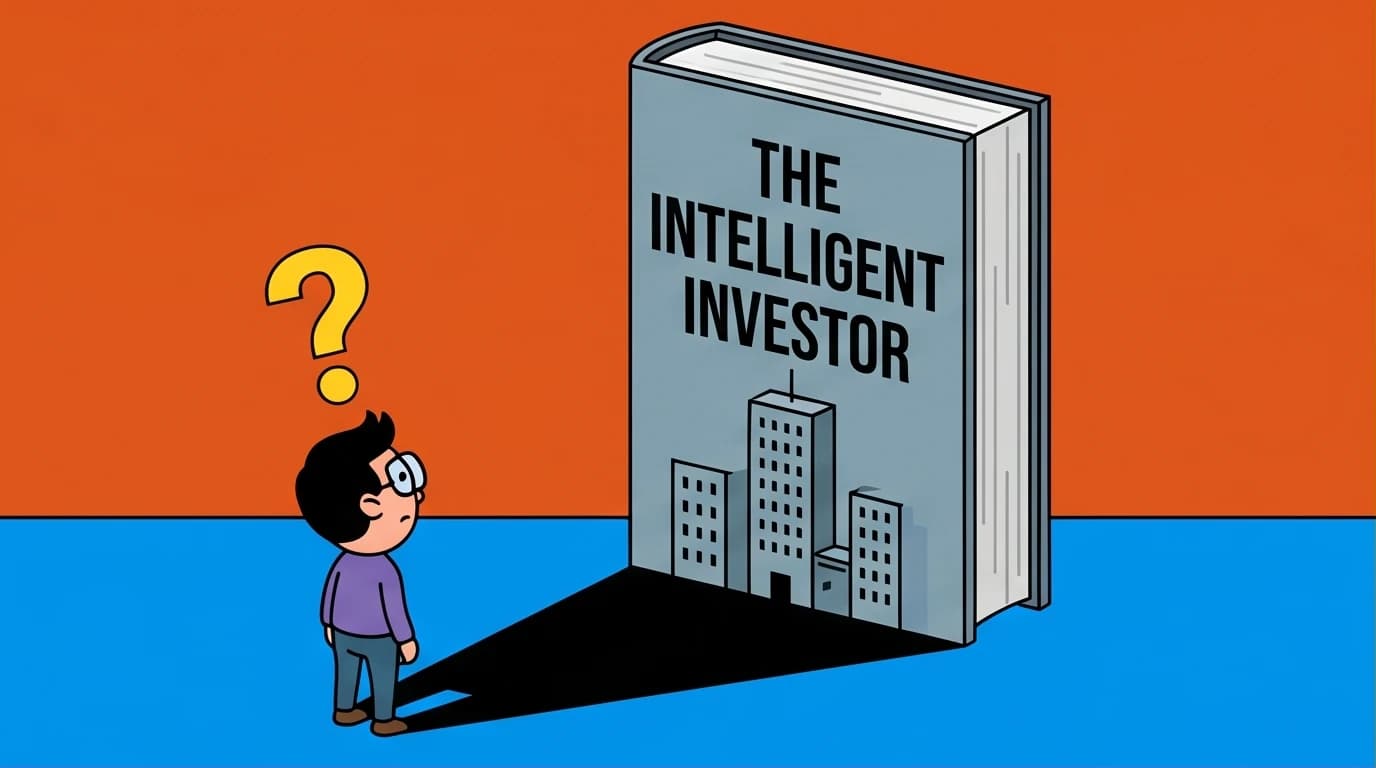
You decide it is time to take control of your financial future. You go online, search for advice, and every Wall Street guru, Reddit thread, and financial blogger points you toward Benjamin Graham’s The Intelligent Investor. Warren Buffett himself calls it the greatest book on investing ever written.
So, you order a copy on Amazon. A massive, 600-page brick arrives. You open it up, ready to learn how to pick winning stocks, only to hit a brick wall of 1970s railroad bond yields, complex accounting jargon, and incredibly dry historical data. You feel entirely lost, wondering if you are simply not smart enough to invest.
Let’s get this out of the way immediately: It is not your fault.
If you find yourself asking, "should I read The Intelligent Investor right now?", the honest answer for an absolute novice is no. Before you force yourself through hundreds of pages of outdated financial reporting, you need to understand what this book actually does, why it frustrates newcomers, and how to eventually tackle it.
Why This Book Frustrates New Investors

Benjamin Graham wrote the first edition of this book in 1949. The most popular version available today (the revised edition) was updated in 1973. While financial journalist Jason Zweig added brilliant modern commentary in 2003, the core text remains over half a century old.
Absolute beginners struggle with this book for three specific reasons:
- Assumed Foundational Knowledge: Graham does not teach you what a stock is, how a dividend works, or how to open a brokerage account. He assumes you already know the mechanics of the market.
- Outdated Examples: The text relies heavily on historical comparisons of companies like A&P or obscure mid-century railroads. Without historical context, these examples feel irrelevant to someone trying to decide between buying Apple stock or an S&P 500 index fund today.
- Defense Over Offense: Beginners usually want to learn how to make money. Graham spends a massive portion of the book teaching you how to not lose money through bond allocations and defensive strategies. It is crucial knowledge, but it is deeply unexciting when you are just starting out.


Overwhelmed by dense financial books? LeapAhead delivers key ideas from investing classics in 15-minute summaries you can read or listen to.
 LeapAhead
How to Read The Intelligent Investor (Without Quitting)
Eventually, you will want to read this book. The psychological frameworks Graham outlines are the bedrock of modern value investing. When you are ready, you need a strategy. Do not treat it like a novel. Treat it like a reference manual.
Here is exactly how to read The Intelligent Investor efficiently:
1. Read Jason Zweig’s Commentary First
If you bought the revised edition (and you absolutely should), Jason Zweig provides a commentary chapter after every single one of Graham's chapters. Zweig translates Graham’s 1970s principles into modern scenarios, using the dot-com bubble and modern corporate scandals as examples. Many readers find it easier to read Zweig’s commentary first to understand the theme, then go back to read Graham’s original text.
2. Skip the Financial History (For Now)
Unless you are a financial history buff, skip the chapters comparing the performance of random companies from 1952 to 1969. Focus entirely on the behavioral and philosophical chapters.
3. Master Chapter 8: "The Investor and Market Fluctuations"
If you only read one chapter in the entire book, make it Chapter 8. This is where Graham introduces Mr. Market.

Imagine you own a share in a business with a manic-depressive partner named Mr. Market. Every day, he comes to your door and offers to buy your share or sell you his. Some days he is wildly optimistic and asks for a ridiculously high price. Other days he is depressed and willing to sell for pennies.
Graham teaches you that you do not have to listen to Mr. Market. You can ignore him when he is irrational and take advantage of him when he is desperate. This single concept will stop you from panic-selling when the stock market dips.
Graham teaches you that you do not have to listen to Mr. Market. You can ignore him when he is irrational and take advantage of him when he is desperate. This single concept will stop you from panic-selling when the stock market dips.
4. Internalize Chapter 20: "Margin of Safety"
This is the second most critical chapter. The "Margin of Safety" is about never overpaying for an asset, no matter how exciting the company seems. If a bridge is built to hold 30,000 pounds, you only drive a 10,000-pound truck across it. That 20,000-pound gap is your margin of safety. In investing, it means buying a stock for less than its true intrinsic value so that if your math is slightly wrong, you still will not lose your shirt.
If you feel ready to tackle this foundational text, grabbing the revised edition with Jason Zweig's commentary is practically non-negotiable. It perfectly bridges the gap between Benjamin Graham's mid-century examples and today's fast-paced stock market. While it demands a bit of patience and a trusty highlighter, mastering the concept of a "margin of safety" will protect your hard-earned dollars for decades. For anyone serious about long-term wealth building in the United States or abroad, having this comprehensive manual on your desk is an absolute must.
The Intelligent Investor
Benjamin Graham, Jason Zweig
 41 Duration
 8 Key Points
 4.7 Rate
The Intelligent Investor vs One Up On Wall Street
If Graham's book feels too heavy, you might be looking for an alternative. This brings up a classic debate: The Intelligent Investor vs One Up On Wall Street by Peter Lynch.
Which one should a beginner pick up? Peter Lynch wins, hands down.

Peter Lynch managed the Magellan Fund at Fidelity and achieved legendary returns, yet his writing style is incredibly conversational, engaging, and directly applicable to the modern consumer.
- The Approach: Graham teaches you to stare at balance sheets, calculate asset values, and buy decent companies at bargain prices. Lynch teaches you to walk into a shopping mall, notice that a specific coffee shop has a massive line every morning, and research that company.
- The Mindset: Graham is highly defensive, focusing on protecting your downside. Lynch is fundamentally optimistic, teaching you how to spot "tenbaggers" (stocks that grow tenfold in value) by paying attention to everyday trends before Wall Street analysts notice them.
- Readability: You can read One Up On Wall Street on a weekend flight and walk off the plane feeling excited and capable. The Intelligent Investor requires a highlighter, a notepad, and plenty of strong coffee.
Start with Lynch to build enthusiasm and understand market growth. Move to Graham later to build discipline and protect the wealth you generate.
Ready to start noticing the incredible investment opportunities hiding in plain sight at your local shopping mall or grocery store? Peter Lynch's conversational classic is the perfect starting line before you attempt to conquer denser financial textbooks. His approach is highly readable, wonderfully optimistic, and will completely change how you look at the everyday American brands you already buy from. It is a fantastic confidence-builder that proves everyday consumers often have a distinct edge over Wall Street analysts.
One Up On Wall Street
Peter Lynch
16 Duration7 Key Points4.6 RateA Better Path: Best Investing Books for Beginners
If Benjamin Graham is the final boss of value investing, you need to level up before facing him. Here is a proven, step-by-step reading progression that ranks among the best investing books for beginners.
Step 1: The Psychology of Money by Morgan Housel
Before you look at a single stock chart, you need to fix your relationship with money. Housel explains that investing is not about how smart you are; it is about how you behave. This book is a fast, fascinating read filled with short stories about greed, patience, and risk.
Before you look at a single stock chart, you need to fix your relationship with money. Housel explains that investing is not about how smart you are; it is about how you behave. This book is a fast, fascinating read filled with short stories about greed, patience, and risk.
Before you even think about funding a brokerage account or analyzing a stock chart, you need to understand your own behavioral biases. Morgan Housel's brilliantly written guide proves that doing well with money has less to do with your math skills and everything to do with your personal temperament. Packed with fascinating stories about greed, risk, and patience, it is arguably one of the most important personal finance books of the modern era and a remarkably quick read.
The Psychology of Money
Morgan Housel
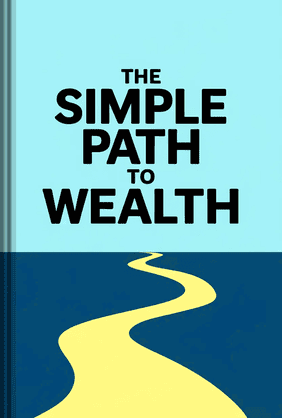
48 Duration7 Key Points4.6 RateStep 2: The Simple Path to Wealth by J.L. Collins
This is the ultimate practical guide for absolute beginners. Collins breaks down exactly why trying to pick individual stocks is a losing game for most people. He introduces you to the power of low-cost broad market index funds (specifically Vanguard's VTSAX). If you want a "set it and forget it" strategy that requires zero math, start here.
This is the ultimate practical guide for absolute beginners. Collins breaks down exactly why trying to pick individual stocks is a losing game for most people. He introduces you to the power of low-cost broad market index funds (specifically Vanguard's VTSAX). If you want a "set it and forget it" strategy that requires zero math, start here.
If you want to bypass the stress of picking individual stocks or tracking daily market fluctuations entirely, this is your ultimate blueprint. Originally born from a series of letters the author wrote to his teenage daughter, J.L. Collins provides a remarkably approachable guide to the power of low-cost Vanguard index funds. It demystifies the stock market and lays out a straightforward, “set it and forget it” strategy that virtually any busy American can use to achieve financial independence.
The Simple Path to Wealth
J.L. Collins
41 Duration9 Key Points4.6 RateStep 3: Use an App like LeapAhead to Accelerate Learning
Before tackling more advanced books, it's crucial to build a broad base of knowledge quickly and consistently. This is where microlearning apps like LeapAhead shine. The app distills key ideas from thousands of bestselling nonfiction books—including many finance and investing classics—into 15-minute text or audio summaries. For a beginner feeling overwhelmed by a 600-page text, it’s a powerful way to absorb core concepts during a commute or workout. While a summary can't replace the deep, nuanced arguments of the full book, it’s an excellent tool for building a daily learning habit and deciding which books deserve a full read.
Before tackling more advanced books, it's crucial to build a broad base of knowledge quickly and consistently. This is where microlearning apps like LeapAhead shine. The app distills key ideas from thousands of bestselling nonfiction books—including many finance and investing classics—into 15-minute text or audio summaries. For a beginner feeling overwhelmed by a 600-page text, it’s a powerful way to absorb core concepts during a commute or workout. While a summary can't replace the deep, nuanced arguments of the full book, it’s an excellent tool for building a daily learning habit and deciding which books deserve a full read.
Step 4: One Up On Wall Street by Peter Lynch
Once you have your core portfolio in index funds, you might want to dedicate a small percentage of your money to picking individual stocks. Lynch will teach you how to analyze the companies you interact with every day and categorize them into understandable buckets (fast growers, stalwarts, turnarounds).
Once you have your core portfolio in index funds, you might want to dedicate a small percentage of your money to picking individual stocks. Lynch will teach you how to analyze the companies you interact with every day and categorize them into understandable buckets (fast growers, stalwarts, turnarounds).
Step 5: The Intelligent Investor by Benjamin Graham
Now you are ready. You understand index funds, you know how the market moves, and your psychology is dialed in. Read Graham to cement your defensive strategy and master the concept of intrinsic value.
Now you are ready. You understand index funds, you know how the market moves, and your psychology is dialed in. Read Graham to cement your defensive strategy and master the concept of intrinsic value.
Build a powerful reading habit. Use LeapAhead to absorb the core lessons from these investing books and more, turning your commute into learning time.
LeapAheadFAQ
Do I need to understand all the math and formulas in The Intelligent Investor?
No. The exact formulas Graham used to calculate intrinsic value in the 1970s are largely outdated in today's digital, service-based economy. Modern tech companies like Apple or Microsoft do not have the massive physical factories and railroad cars that Graham was valuing. Focus on the core philosophy: buy things for less than they are worth, and protect your downside.
Is the Jason Zweig revised edition the only one I should buy?
Absolutely. Do not buy the original 1949 edition unless you are an academic. Zweig’s footnotes and chapter summaries act as a necessary bridge between Graham’s post-WWII economy and the modern stock market.
Is value investing dead in the age of AI and tech stocks?
People declare value investing "dead" every time there is a massive bull market in technology. While traditional metrics (like low Price-to-Book ratios) have evolved, the underlying principle of value investing—paying less for an asset than its future cash flows are worth—will never die. Graham's rules prevent you from buying into extreme market hype, which saves you from devastating losses when bubbles inevitably burst.
Can I just buy index funds and ignore stock picking entirely?
Yes. Interestingly enough, Benjamin Graham was one of the earliest advocates for what we now call index investing. In The Intelligent Investor, he explicitly states that a "defensive investor" who does not have the time to research individual companies should just buy a diversified basket of prominent stocks. Buying an S&P 500 index fund perfectly aligns with Graham’s philosophy for the average person.