

You keep seeing Daniel Kahneman’s masterpiece on your favorite podcasts, Amazon recommended lists, and CEO bookshelves. But at nearly 500 pages of behavioral economics and cognitive psychology, staring at it on your desk feels intimidating. You are busy. You need to know if pushing through this massive book is actually going to improve your decision-making, or if it will just gather dust on your nightstand.
Let us break down exactly what makes this book a heavy lift, what parts hold up today, and how you should actually consume it without wasting your time.
Why Does This Book Feel So Dense?
Any honest Thinking Fast and Slow review has to acknowledge one simple fact: Daniel Kahneman is a Nobel Prize-winning academic, and he writes like one. This is not a breezy airport paperback you can skim while waiting for your flight.
The book is challenging for three specific reasons:
It demands "System 2" thinking.
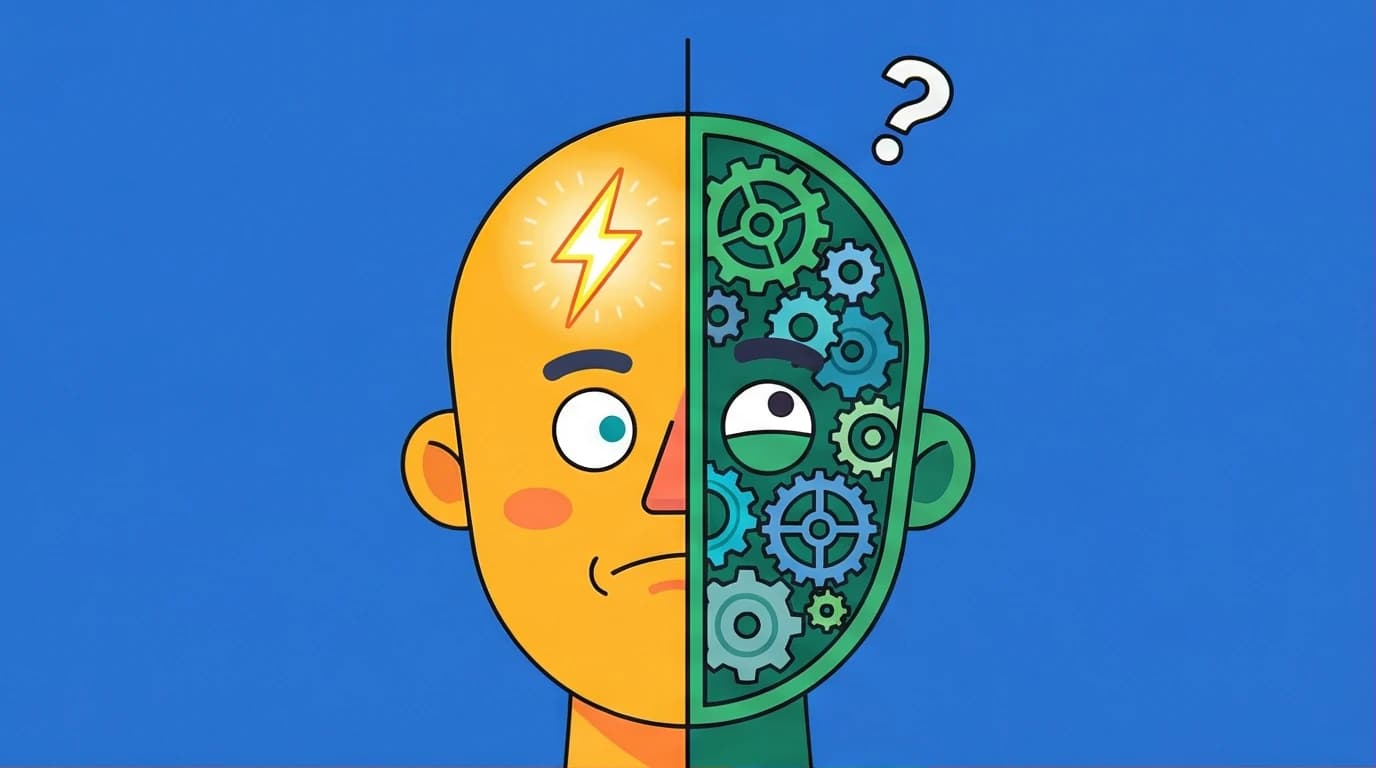
Kahneman’s core premise is that our brains operate on two systems. System 1 is fast, intuitive, and automatic. System 2 is slow, analytical, and lazy. To understand the book, you have to constantly engage your System 2. You will be reading about statistical probabilities, base-rate neglect, and complex mental heuristics. The book literally forces your brain to work hard while reading about why your brain hates working hard.
Kahneman’s core premise is that our brains operate on two systems. System 1 is fast, intuitive, and automatic. System 2 is slow, analytical, and lazy. To understand the book, you have to constantly engage your System 2. You will be reading about statistical probabilities, base-rate neglect, and complex mental heuristics. The book literally forces your brain to work hard while reading about why your brain hates working hard.

Heavy use of math and statistics.
You do not need a degree in advanced calculus, but Kahneman frequently uses mathematical puzzles and statistical examples to prove how irrational our choices are. If looking at fractions or probability scenarios makes your eyes glaze over, you will struggle through the middle sections of the book.
You do not need a degree in advanced calculus, but Kahneman frequently uses mathematical puzzles and statistical examples to prove how irrational our choices are. If looking at fractions or probability scenarios makes your eyes glaze over, you will struggle through the middle sections of the book.
Slow pacing and exhaustive detail.
Academics love to prove their point from every possible angle. Instead of giving you one clear example of a cognitive bias and moving on, Kahneman will often provide three different studies that all point to the same conclusion. This makes the text incredibly thorough, but it drastically slows down the reading pace.
Academics love to prove their point from every possible angle. Instead of giving you one clear example of a cognitive bias and moving on, Kahneman will often provide three different studies that all point to the same conclusion. This makes the text incredibly thorough, but it drastically slows down the reading pace.
The Elephant in the Room: The Replication Crisis
If you hang around psychology or science forums, you might have heard some noise about the Thinking Fast and Slow replication crisis. You might be wondering if the book is even accurate anymore.
Here is what happened:
Around the mid-2010s, psychology faced a massive "replication crisis." Researchers tried to recreate famous studies and found they could not get the same results. Chapter 4 of Kahneman's book focuses heavily on "priming"—the idea that subtle cues can unconsciously influence our behavior. One famous example cited in the book claimed that reading words related to old age made college students physically walk slower down a hallway.
Around the mid-2010s, psychology faced a massive "replication crisis." Researchers tried to recreate famous studies and found they could not get the same results. Chapter 4 of Kahneman's book focuses heavily on "priming"—the idea that subtle cues can unconsciously influence our behavior. One famous example cited in the book claimed that reading words related to old age made college students physically walk slower down a hallway.
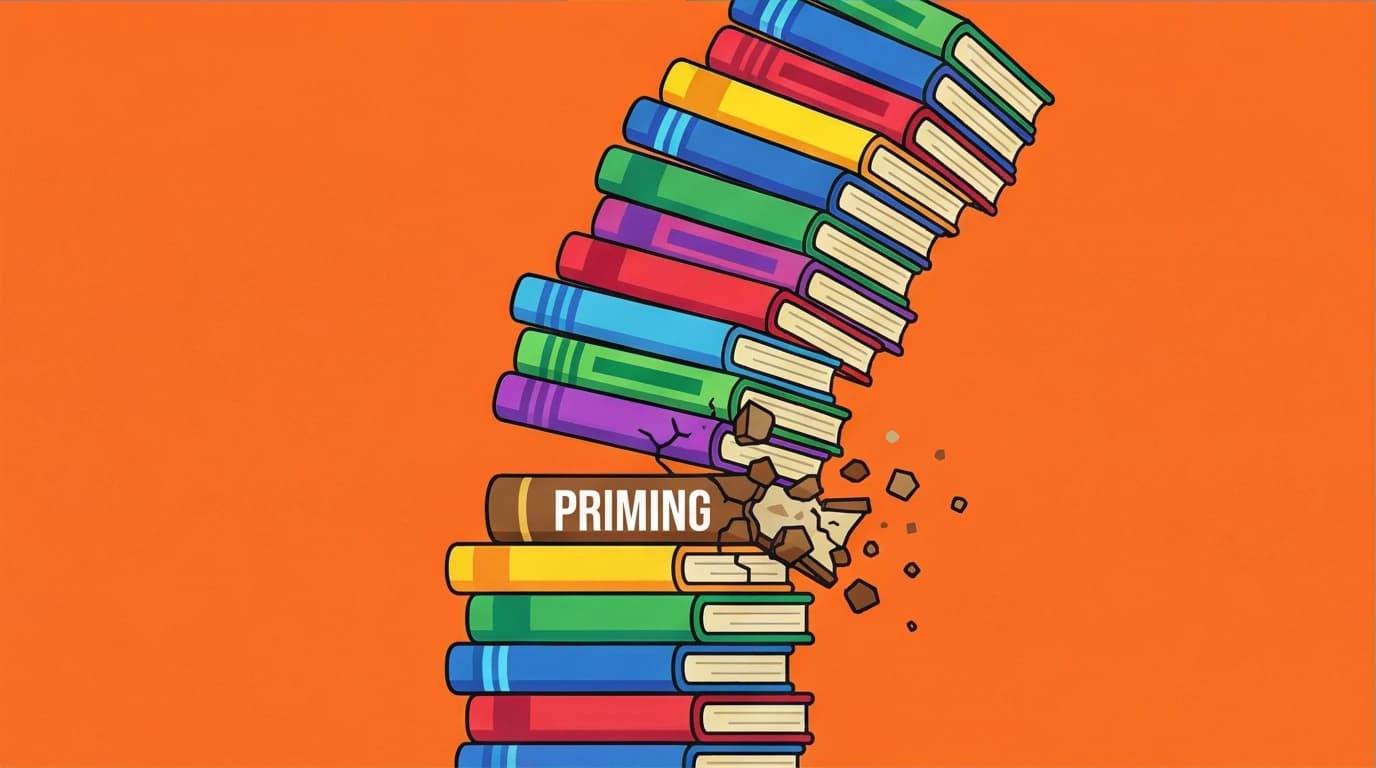
That study, along with several others in the priming chapter, completely failed to replicate. Kahneman himself posted a public comment on a blog acknowledging that he placed too much faith in underpowered studies and that the priming chapter was highly flawed.
Does this ruin the entire book?
Absolutely not. The flawed chapters represent a small fraction of the text. The core foundation of the book—the interplay between System 1 and System 2, loss aversion, and Prospect Theory (which won him the Nobel Prize)—remains completely intact and highly respected.
Absolutely not. The flawed chapters represent a small fraction of the text. The core foundation of the book—the interplay between System 1 and System 2, loss aversion, and Prospect Theory (which won him the Nobel Prize)—remains completely intact and highly respected.
Is Thinking Fast and Slow Worth Reading Today?
Given the density and the minor scientific hiccups, is Thinking Fast and Slow worth reading end-to-end?
For the average reader looking to get better at daily decision-making, the answer is usually no—do not read it cover to cover. The return on investment for your time drops significantly after the first 150 pages.
However, the core concepts are mandatory knowledge for anyone interested in business, investing, marketing, or human behavior. You just need to choose the right medium based on your goals.
Who Should Buy the Paperback or Hardcover
Buy the physical book at Barnes & Noble or Amazon only if you are an academic, a hardcore psychology enthusiast, or someone who loves taking extensive margin notes. Having the physical copy allows you to easily flip back and forth to reference the statistical tables and logic puzzles.
If you've weighed the pros and cons and decided you're ready to tackle this foundational text, grabbing a physical copy is definitely the way to go. Having the book in your hands lets you easily bookmark key psychological models, highlight important definitions, and work through the behavioral puzzles at your own pace. It is a genuine staple for anyone serious about understanding the human mind. Ready to challenge your System 2? Grab the hardcover and dive in.
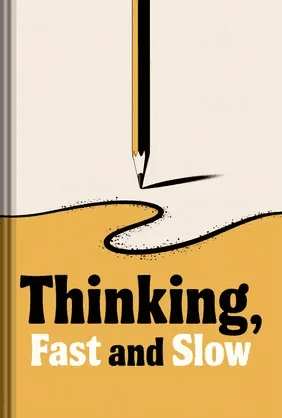
Thinking, Fast and Slow
Daniel Kahneman
 53 Duration
 9 Key Points
 4.5 Rate
Who Should Use Audible
Listening to the audiobook is a solid middle ground, but it comes with a warning. When Kahneman starts listing out statistical probabilities or long word problems, it is incredibly difficult to track the math while driving down the highway or running on a treadmill. If you choose audio, be prepared to hit the 15-second rewind button frequently.
Who Should Use Summary Apps (The Smartest Route)
For 80% of readers, using an app like Blinkist, Shortform, or simply reading a high-quality, free summary online is the best choice. The 80/20 rule heavily applies here. A good summary will teach you about System 1 and System 2, the anchoring effect, the sunk cost fallacy, and loss aversion without forcing you to slog through hundreds of pages of repetitive academic proof.

LeapAhead

Grasp the core ideas of dense books like *Thinking, Fast and Slow* in just 15 minutes a day with LeapAhead.
Books Similar to Thinking Fast and Slow (But Easier to Read)
If you love the idea of understanding human irrationality but want something more accessible, check out these excellent alternatives:
- Predictably Irrational by Dan Ariely
If Kahneman is the strict professor, Ariely is the fun guest lecturer. This book covers very similar ground—how humans make stupid decisions regarding money, dating, and work—but it relies on highly entertaining, easy-to-understand behavioral experiments.
Dan Ariely's approachable tone makes this an excellent alternative if you want the practical benefits of behavioral economics without feeling like you are back in a college lecture hall. It is packed with relatable, eye-opening examples that reveal just how predictably illogical we are when we shop, date, and negotiate. If you are looking for a fun, conversational entry point into the psychology of decision-making, this is an absolute must-read that you'll breeze right through.
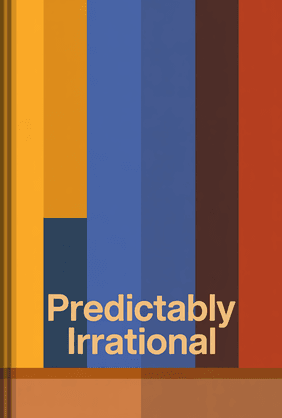
Predictably Irrational
Dan Ariely
23 Duration10 Key Points4.6 Rate- Nudge by Richard Thaler and Cass Sunstein
Thaler, another Nobel laureate who worked closely with Kahneman, focuses on "choice architecture." This book explores how small tweaks in our environment can drastically change our behavior. It is much more practical if you are trying to apply behavioral economics to marketing or policy.
While Kahneman focuses on explaining how our brains misfire, Thaler and Sunstein focus on how we can design environments that help people make better choices. Whether you are a marketer trying to optimize a sales funnel, a manager organizing a team workflow, or just someone trying to build healthier personal habits, understanding choice architecture is incredibly powerful. This fascinating read shows you exactly how to guide behavior using subtle, ethical pushes.
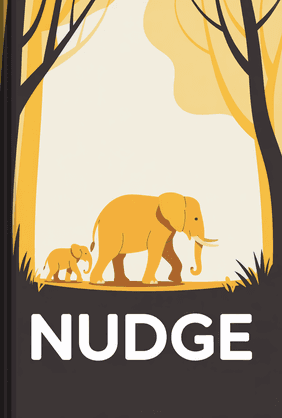
Nudge
Richard H. Thaler, Cass R. Sunstein
45 Duration8 Key Points4.6 Rate3. LeapAhead (For Micro-Learning)
If your primary obstacle is simply a lack of time and energy, then a micro-learning app like LeapAhead is an ideal solution. It is built for busy people who want to absorb the core ideas of books like Thinking, Fast and Slow without committing 15+ hours. LeapAhead breaks down bestselling nonfiction into 15-minute summaries available in both audio and text, perfect for a commute or workout. Features like personalized learning plans and daily goal tracking help you build a consistent habit instead of letting another book collect dust. While you won’t get the full academic nuance of Kahneman's original work, you will master the key takeaways—like System 1 vs. System 2 thinking and loss aversion—in a way that’s fast, memorable, and practical.
LeapAhead
Ready to learn from the world's best books without the heavy time commitment? Try LeapAhead's 15-minute summaries.
4. The Undoing Project by Michael Lewis
If you prefer a gripping story over a textbook, read this. Michael Lewis (author of The Big Short) wrote a fascinating biography about the intense, brilliant partnership between Daniel Kahneman and his research partner Amos Tversky. It sneaks all the core concepts of Thinking, Fast and Slow into a highly readable narrative.
Michael Lewis has an unmatched talent for taking complex, deeply intellectual subjects and turning them into compelling page-turners. By framing the birth of behavioral economics through the lens of Kahneman and Tversky’s complicated friendship, he manages to teach you the science while keeping you invested in the human drama. If you want to absorb the genius of Thinking, Fast and Slow but prefer reading engaging biographies over scientific textbooks, this is the perfect compromise.

The Undoing Project
Michael Lewis
19 Duration8 Key Points3.9 RateFAQ
Should I read Thinking Fast and Slow if I am bad at math?
You can read it, but you will need to skim the middle sections. Kahneman uses a lot of probability puzzles to illustrate cognitive biases. If you hate math, you can usually skip the numbers and just read his final paragraph explaining the takeaway.
You can read it, but you will need to skim the middle sections. Kahneman uses a lot of probability puzzles to illustrate cognitive biases. If you hate math, you can usually skip the numbers and just read his final paragraph explaining the takeaway.
Are the chapters on priming completely useless now?
Mostly, yes. Kahneman himself admitted that the research backing Chapter 4 on "The Marvels of Priming" is weak. You can safely skip that chapter without losing the core value of the book.
Mostly, yes. Kahneman himself admitted that the research backing Chapter 4 on "The Marvels of Priming" is weak. You can safely skip that chapter without losing the core value of the book.
How long does it actually take to read?
The average reading speed is about 250 words per minute. Given the book's dense 499 pages, it takes most people roughly 15 to 18 hours to read cover to cover. Because of the heavy subject matter, most readers can only digest it in short 30-minute chunks.
The average reading speed is about 250 words per minute. Given the book's dense 499 pages, it takes most people roughly 15 to 18 hours to read cover to cover. Because of the heavy subject matter, most readers can only digest it in short 30-minute chunks.
Is the audiobook version better than the paperback?
It depends on your learning style. The audiobook makes the text feel a bit more conversational, but it makes the statistical puzzles much harder to follow. If you are reading to study and learn, get the paperback. If you just want the general concepts while commuting, go with the audiobook.
It depends on your learning style. The audiobook makes the text feel a bit more conversational, but it makes the statistical puzzles much harder to follow. If you are reading to study and learn, get the paperback. If you just want the general concepts while commuting, go with the audiobook.