

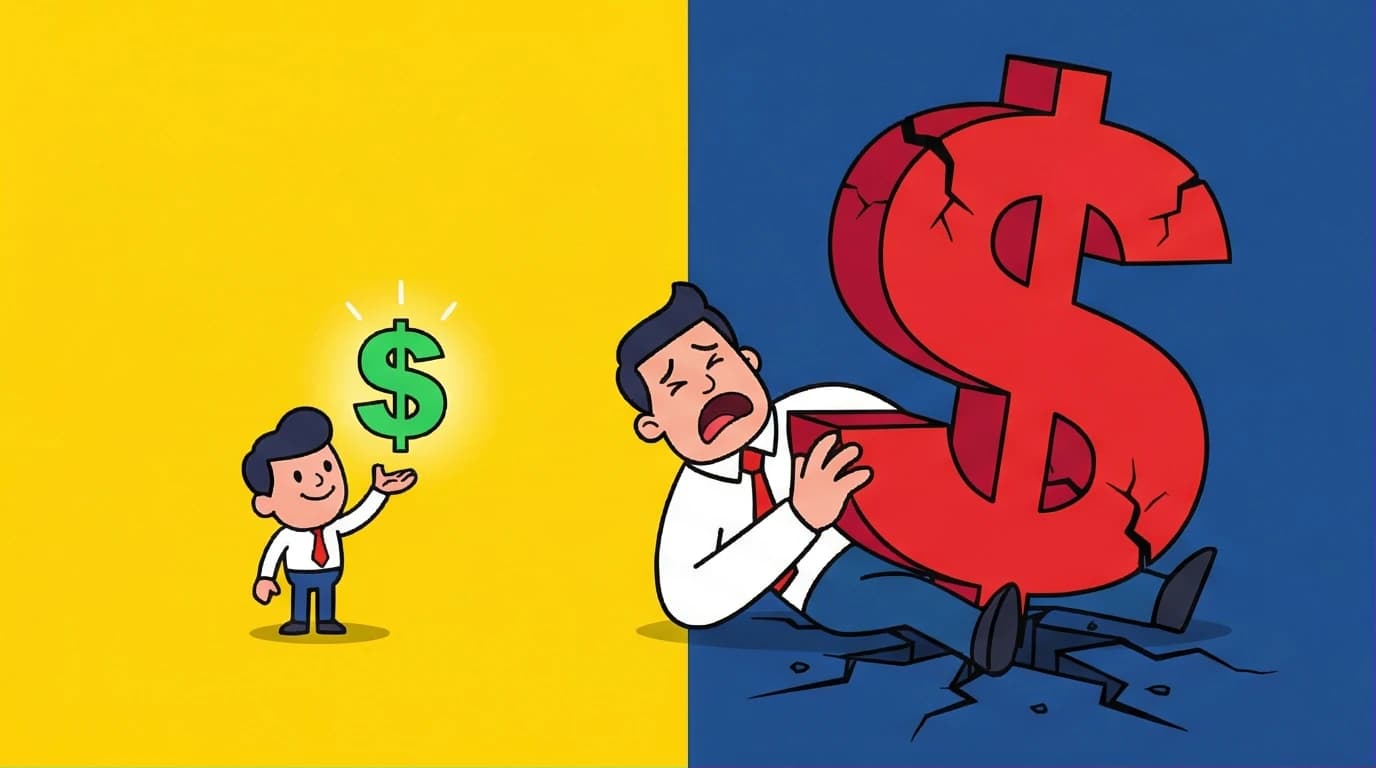
You buy a stock on your Robinhood or Charles Schwab app, and almost immediately, it drops 20%. The fundamentals of the company have changed for the worse. Logic dictates you should cut your losses and reallocate that capital. Instead, you hold onto the shares, praying they bounce back to exactly what you paid for them. This is not a long-term investment strategy; it is emotional paralysis. You are letting the fear of realizing a red number dictate your financial future.
To stop bleeding money in the market, you have to understand the cognitive wiring that drives these poor choices.
The Psychology of Loss Aversion: Kahneman and Behavioral Finance
At the core of this emotional paralysis is loss aversion. Kahneman and his late research partner Amos Tversky introduced this concept to explain why human beings consistently make irrational financial choices. As a foundational pillar of loss aversion behavioral economics, the rule is straightforward: losses hurt more than gains feel good.
If you find a $100 bill on the sidewalk, you experience a quick burst of joy. But if you drop $100 from your wallet, the frustration and anger linger for days. Empirical studies show that the psychological impact of a loss is roughly 2.25 times more powerful than the satisfaction of an equivalent gain.
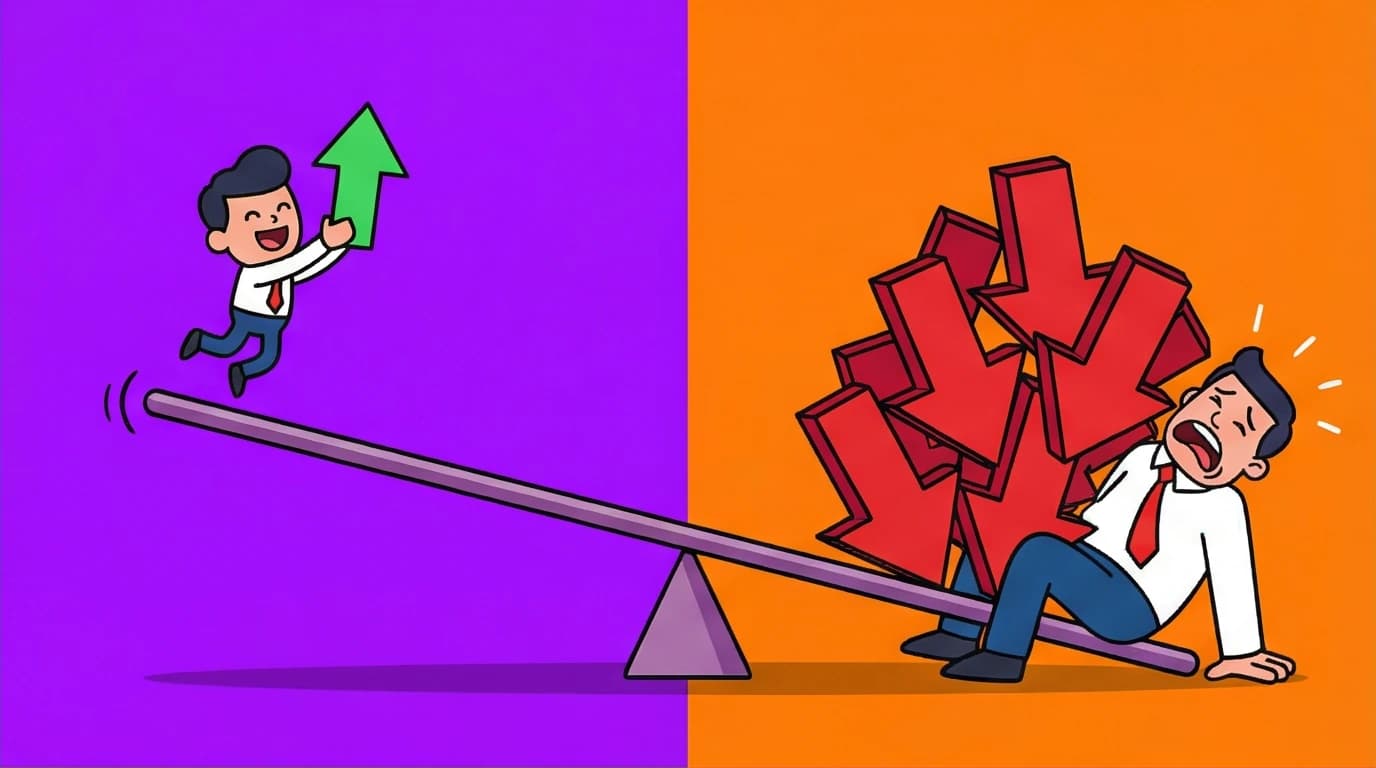
On Wall Street, this asymmetry wreaks havoc on portfolios. It means an everyday investor will bend over backward, taking on massive and unwarranted risks, just to avoid locking in a loss. They will watch a position bleed out from a 10% loss to a 50% loss simply because clicking "sell" makes the failure real.
If you want to truly understand the mental frameworks that govern these self-sabotaging financial behaviors, there is no better starting point than the groundbreaking work of Daniel Kahneman himself. His Nobel Prize-winning research fundamentally changed how we view human rationality in economics. For anyone looking to dive deeper into why our brains prioritize fear over logic—and how to recognize those cognitive biases before they wreck your portfolio—this definitive book is an absolute must-read.
Before you dive into the full text, it helps to understand the scope of his work. Loss aversion is just one of many mental shortcuts and errors in judgment he identified that affect our choices.
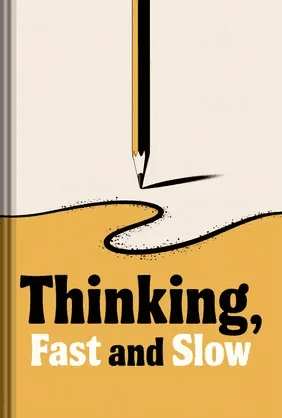
Thinking, Fast and Slow
Daniel Kahneman
 53 Duration
 9 Key Points
 4.5 Rate
If diving into Kahneman’s dense research feels intimidating, you can get the core ideas in a more accessible format.
Many readers wonder about the book's difficulty and whether its insights, some of which have faced academic scrutiny, are still relevant today.


LeapAhead

Grasp the key ideas from essential but complex books like "Thinking, Fast and Slow" in just 15-minute audio or text summaries to help you make smarter financial decisions.
Prospect Theory Explained Simply
To understand why we behave this way, we have to look at the broader framework Kahneman developed. For anyone needing prospect theory explained simply, it boils down to how we frame financial outcomes based on a specific reference point, rather than total wealth.
For centuries, economists relied on expected utility theory. The traditional Kahneman utility theory critiques point out a major flaw in those old models: standard economics assumed people were perfectly rational agents who calculated the absolute final outcome of their net worth.
Kahneman proved this false. People do not evaluate their financial status based on their total wealth. They evaluate it based on gains and losses relative to a baseline—usually the exact price they paid for an asset.
Prospect theory outlines two distinct behaviors that destroy retail investor returns:
1. Risk Aversion in Gains (Selling Winners Too Early)
When your Vanguard index fund or Apple stock is up 15%, you feel an overwhelming urge to sell immediately to lock in the profit. Even if the market is trending upward and the company is thriving, the fear of losing that newly acquired 15% gain overrides logic. You become risk-averse to protect a guaranteed win, capping your upside potential. This is widely known as the disposition effect.
2. Risk Seeking in Losses (Holding Losers Too Long)
When a speculative tech stock plummets 40%, you refuse to sell. Instead of taking the safe route and cutting the loss, you become risk-seeking. You hold on, or worse, "buy the dip" on a fundamentally broken company. You are gambling your remaining capital purely on the hope of getting back to your break-even point.
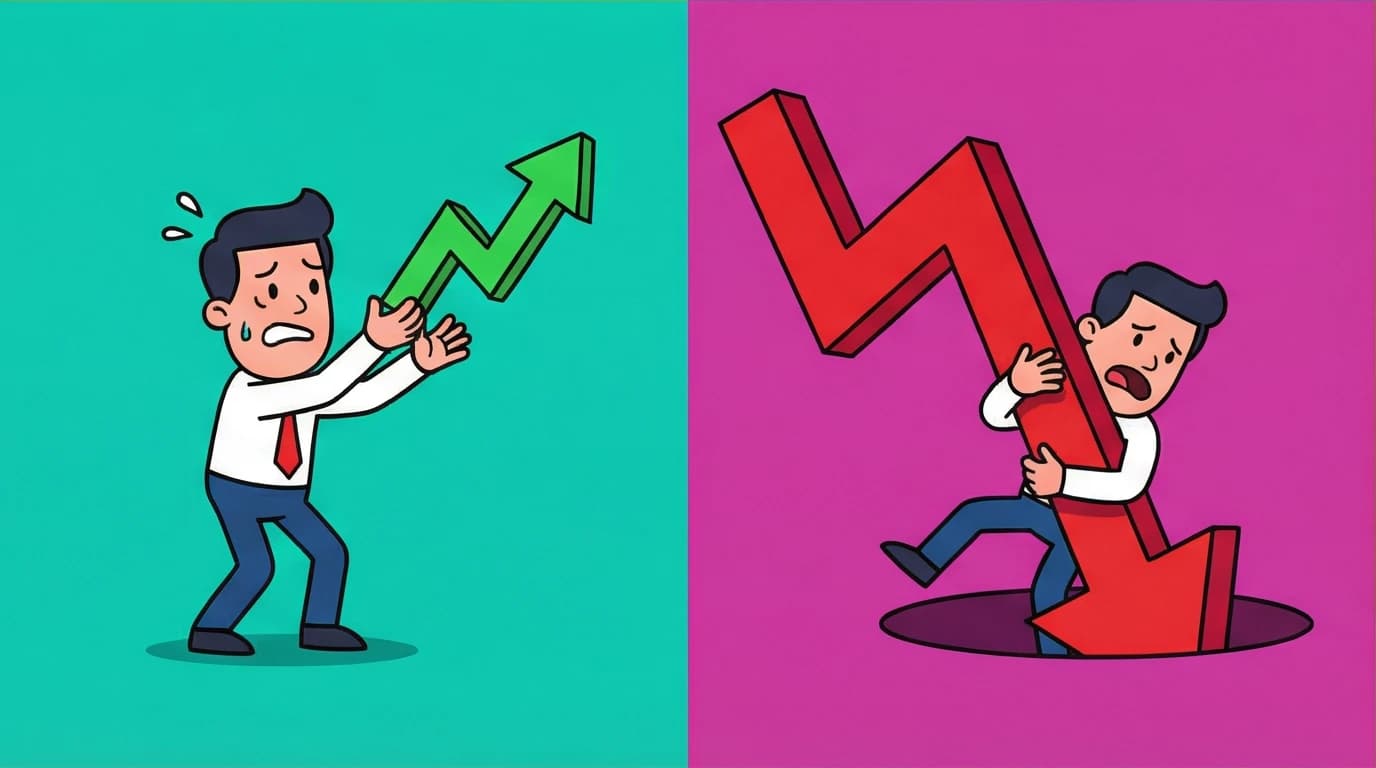
Grasping the math behind these losing trades is easy, but mastering the mindset required to let go of a bad investment is an entirely different challenge. Many everyday investors fail to realize that wealth accumulation has less to do with intelligence and more to do with managing your own behavior. To explore how your personal relationship with money, greed, and fear dictates your financial success, this insightful read offers invaluable lessons on making smarter, more objective decisions in the stock market.
Prospect theory is just one of the major concepts Kahneman introduced. His work also details the two modes of thought that drive these behaviors: the fast, intuitive System 1 and the slow, deliberate System 2.
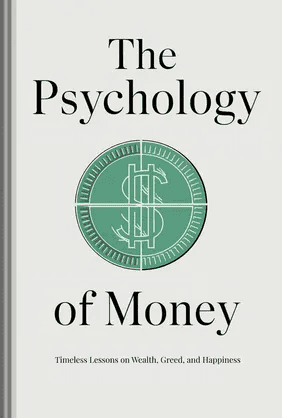
The Psychology of Money
Morgan Housel
48 Duration7 Key Points4.6 RateReal-World Sunk Cost Fallacy Examples
Loss aversion frequently traps investors into another devastating psychological blind spot: the sunk cost fallacy. This is the tendency to continue investing time, money, or effort into a losing proposition simply because you have already invested so much.
Let's look at practical sunk cost fallacy examples that drain American bank accounts daily:
- The Zombie Stock: You invest $5,000 in a retail company that is rapidly losing market share to Amazon. The stock drops, and your position is now worth $2,000. You tell yourself, "I can't sell now, I've already lost $3,000." The reality is your current portfolio value is $2,000. The past $3,000 is a sunk cost. It is gone. Holding the zombie stock will not magically bring it back.
- The Sinking Real Estate Flip: You buy a fixer-upper house, but structural issues quickly push you $50,000 over budget. Instead of selling the property at a slight loss to a developer and moving on, you keep pouring money into it. You are convinced you have to finish the project to justify the initial expense, ultimately ruining your cash flow.
- The Unused Subscription: You prepay $1,200 for an annual, non-refundable gym membership. After two months, you stop going. You refuse to admit defeat, so you keep telling yourself you will go next week. You let the guilt weigh on you rather than accepting the money is a sunk cost.
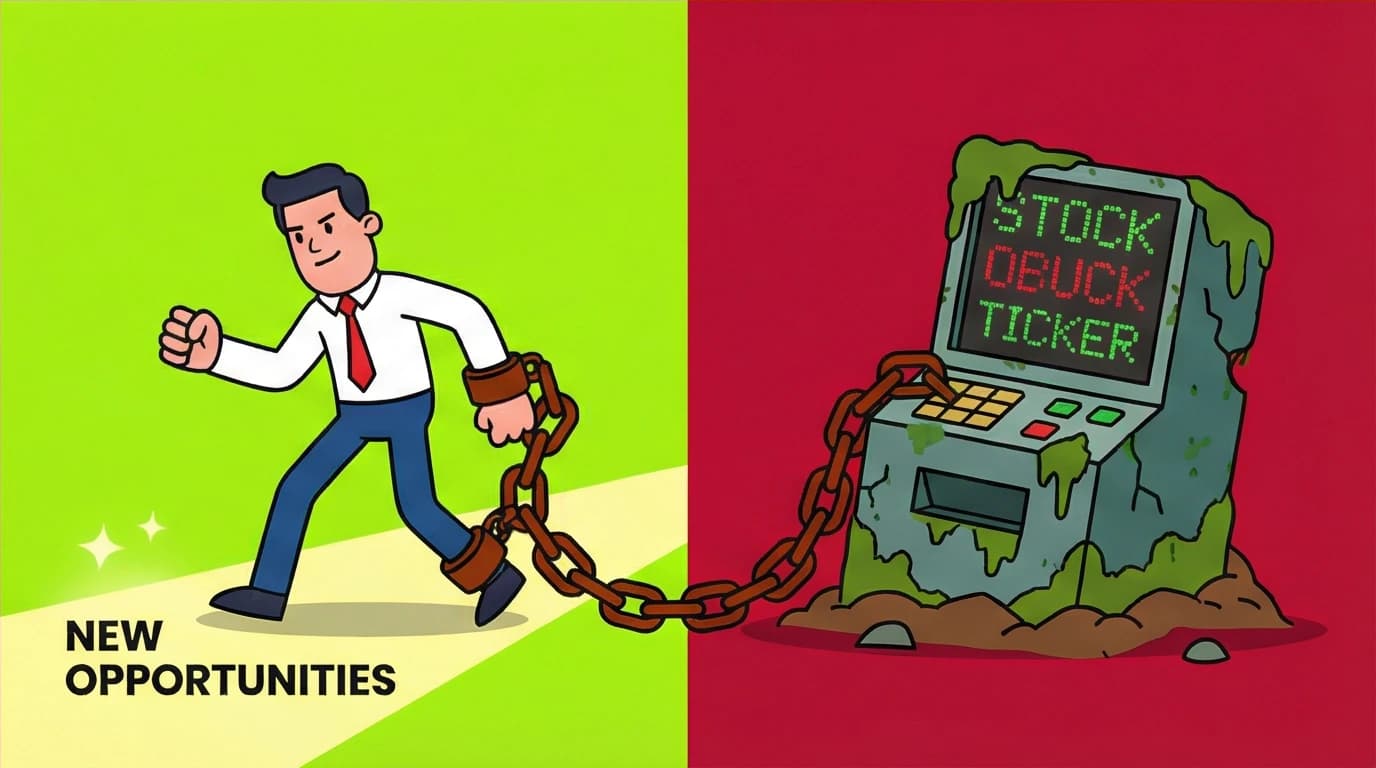
It is fascinating—and a little terrifying—how consistently we fall into traps like the sunk cost fallacy, whether we are managing a stock portfolio or a simple gym membership. We like to think we are acting in our best financial interests, but we are actually driven by invisible emotional forces. If you are curious about the hidden forces that shape our everyday decisions and want to learn how to spot your own illogical patterns before they cost you money, consider exploring this brilliant exploration of behavioral economics.

Predictably Irrational
Dan Ariely
23 Duration10 Key Points4.6 RateHow to Protect Your Portfolio from Your own Brain
Knowing about behavioral biases is only half the battle. You need mechanical rules to prevent your emotions from hijacking your brokerage account. Here is how you bypass your own loss aversion.
Use Automated Stop-Loss Orders
Remove human hesitation. Set a hard, unbreakable rule that you will sell any individual stock if it drops 15% from your purchase price (or whatever threshold fits your risk tolerance). A stop-loss order executes this automatically. It takes the emotional burden of clicking "sell" out of your hands. You define the maximum loss before the trade even begins.
Execute the "Overnight Test"
Open your portfolio, look at a losing stock, and ask yourself a simple question: "If I woke up tomorrow with this amount in cash instead of this stock, would I buy this exact stock today at its current price?"
If the answer is no, sell it immediately. You are only holding it because of loss aversion.
If the answer is no, sell it immediately. You are only holding it because of loss aversion.
Stop Checking Your Accounts Daily
The stock market is incredibly volatile on a day-to-day basis. If you log into your Fidelity or Robinhood account every afternoon, you will experience a constant, exhausting rollercoaster of micro-losses. Because losses hurt twice as much as gains feel good, a perfectly normal flat market week will feel emotionally devastating. Check your long-term 401(k) and retirement accounts quarterly.
Reframe the Loss as an Opportunity Cost
Stop viewing a sold losing stock as a personal failure. View it as paying a small fee to free up capital. Money tied up in a dying company is dead money. Taking a 15% loss allows you to deploy that remaining 85% of capital into a much better, faster-growing asset that can actually compound over time.
Reframing losses and establishing mechanical trading rules can feel daunting, but treating your investments as calculated wagers rather than emotional attachments is the key to long-term profitability. Learning to detach from the outcome of a single trade helps you focus on making sound, probability-based decisions over time. If you want to master the art of navigating uncertainty and develop a professional framework for cutting your losses early, this strategic guide from a former professional poker player will completely transform your approach to risk.
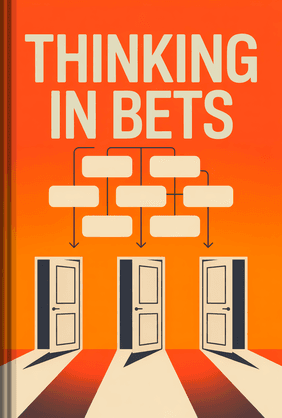
Thinking in Bets
Annie Duke
36 Duration8 Key Points4.6 RateBuilding the right mindset takes consistent learning, but it's hard to find the time to read all these essential books. If you want to absorb these lessons on behavioral finance efficiently, there's a smarter way to learn on the go.
LeapAhead
Turn your commute or workout into a powerful learning session by listening to the key insights from all the recommended books on investment psychology in 15-minute summaries.
FAQ
Why is loss aversion considered irrational in finance?
It is irrational because it causes people to make decisions based on past, unchangeable events (the price they initially paid) rather than future probabilities. Holding a dying stock just to avoid realizing a loss ignores the fundamental reality of the current market, often leading to larger financial destruction.
It is irrational because it causes people to make decisions based on past, unchangeable events (the price they initially paid) rather than future probabilities. Holding a dying stock just to avoid realizing a loss ignores the fundamental reality of the current market, often leading to larger financial destruction.
Did Daniel Kahneman win a Nobel Prize for this?
Yes. Daniel Kahneman won the Nobel Memorial Prize in Economic Sciences in 2002. He was recognized for integrating psychological research into economic science, particularly concerning human judgment and decision-making under uncertainty.
Yes. Daniel Kahneman won the Nobel Memorial Prize in Economic Sciences in 2002. He was recognized for integrating psychological research into economic science, particularly concerning human judgment and decision-making under uncertainty.
Can loss aversion ever be a good thing?
Yes. In evolutionary terms, it kept early humans alive by making them overly cautious of deadly risks. In modern personal finance, a healthy dose of loss aversion can prevent you from throwing your entire life savings into highly volatile meme stocks or speculative cryptocurrencies. It acts as a natural brake on extreme recklessness.
Yes. In evolutionary terms, it kept early humans alive by making them overly cautious of deadly risks. In modern personal finance, a healthy dose of loss aversion can prevent you from throwing your entire life savings into highly volatile meme stocks or speculative cryptocurrencies. It acts as a natural brake on extreme recklessness.
How do I differentiate between holding for the long term and falling for the sunk cost fallacy?
Look entirely at the underlying fundamentals of the asset. If a solid, highly profitable company dips due to broad macroeconomic conditions (like an S&P 500 ETF dropping during a routine market correction), holding is historically the correct move. However, if the specific company's revenue is shrinking, leadership is failing, and the industry is leaving them behind, you are dealing with a sunk cost. Cut it loose.
Look entirely at the underlying fundamentals of the asset. If a solid, highly profitable company dips due to broad macroeconomic conditions (like an S&P 500 ETF dropping during a routine market correction), holding is historically the correct move. However, if the specific company's revenue is shrinking, leadership is failing, and the industry is leaving them behind, you are dealing with a sunk cost. Cut it loose.