

That thick copy of Daniel Kahneman’s masterpiece is probably sitting on your nightstand right now. You picked it up at Barnes & Noble or ordered it on Amazon because every CEO and business leader recommends it. But let us face reality: it is a 500-page book packed with dense behavioral economics and decades of psychological research. You have a busy job, a packed schedule, and simply do not have the time to read it cover to cover.
You need the actionable insights without the academic heavy lifting. You want to understand why humans make irrational choices and how you can avoid those same traps in your own life and career.
This guide is designed for exactly that. We will distill the complex research into practical, everyday language. But what if you want to tackle other dense masterpieces without spending weeks on them? For those with a packed schedule, a book summary app can be a powerful tool.


Get the core insights from dense reads like Thinking, Fast and Slow in just 15 minutes, perfect for when you're too busy to tackle the full 500 pages.
 LeapAhead
The Core Concept: System 1 and System 2 Thinking
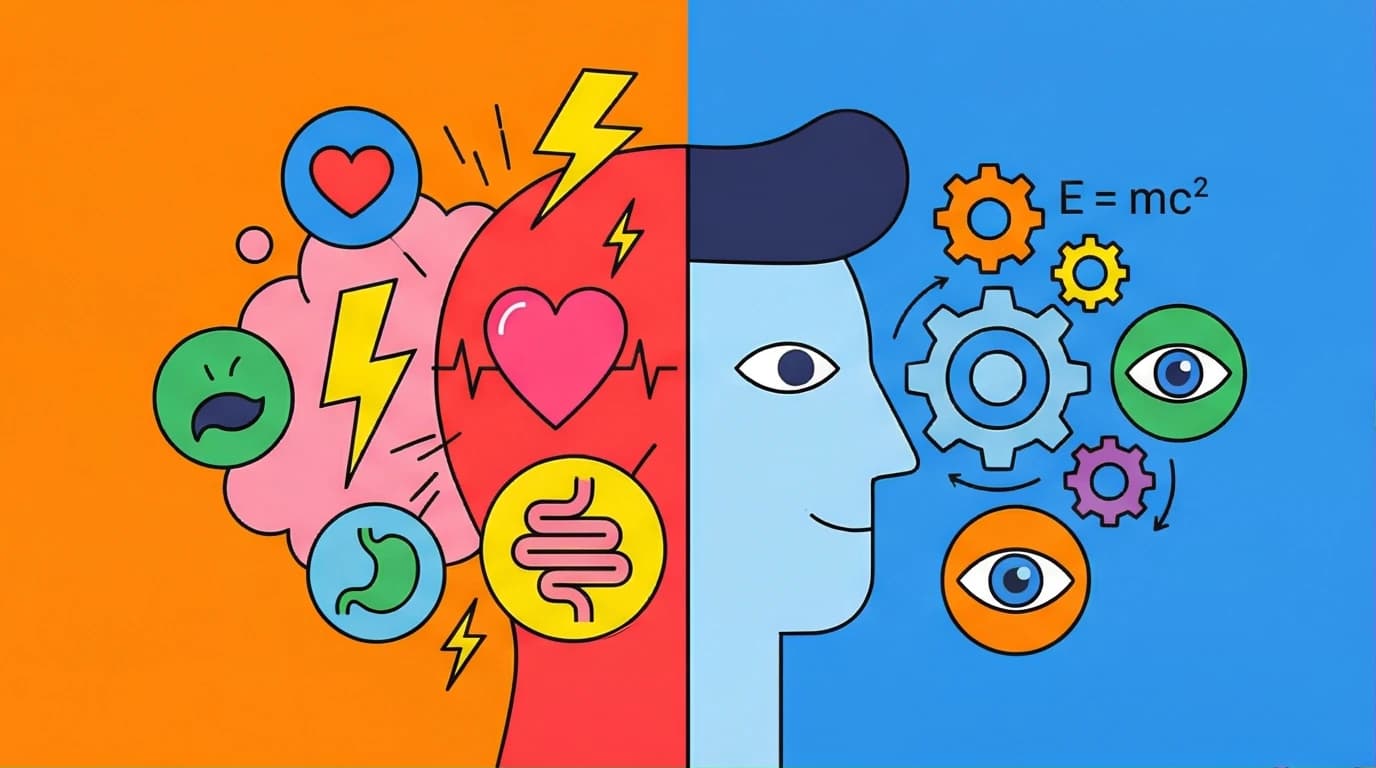
At the heart of this entire framework is a simple but profound premise: your brain operates using two entirely different systems. They dictate how you process information, form judgments, and ultimately act. Understanding System 1 and System 2 thinking is the key to unlocking the rest of the book.

System 1: The Autopilot
System 1 operates automatically, quickly, and with little or no effort. It relies on intuition, emotion, and instinct. You do not consciously decide to use System 1; it is always running in the background.
- Examples of System 1 in action:
- Reading a large billboard while driving down the highway at 65 miles per hour.
- Instinctively jumping back when you hear a loud, unexpected noise.
- Knowing immediately that 2 + 2 = 4.
- Sensing hostility in a colleague's voice during a Zoom meeting.
System 1 is highly efficient and necessary for survival. If you had to consciously analyze every single stimulus around you, your brain would overload instantly. However, because it favors speed over accuracy, System 1 is highly prone to errors, biases, and jumping to conclusions.
System 2: The Pilot
System 2 allocates attention to effortful mental activities. It is slow, analytical, conscious, and logical. When you think of your "self," you are identifying with System 2—the conscious, reasoning self that makes deliberate choices.
- Examples of System 2 in action:
- Parallel parking in a tight space on a busy street.
- Calculating a 20% tip on a restaurant bill.
- Comparing two complex mortgage rates before buying a house.
- Filling out your annual tax return forms.
System 2 is lazy. It requires a lot of energy (glucose) to operate. Because of this, it usually defers to System 1 to save effort. When System 1 encounters a problem it cannot solve, it wakes up System 2 to handle the heavy lifting. The danger occurs when System 1 feeds false information or biased judgments to System 2, and System 2 accepts them without checking.
If reading this breakdown has you intrigued about the deeper mechanics of your own mind, you might want to consider picking up the original masterpiece. While it is certainly a dense read, the full text offers fascinating psychological experiments and deeper nuances that a short summary just cannot cover. If you commute or prefer listening while you work out, grabbing the audiobook version is a fantastic way to digest Kahneman's groundbreaking behavioral research without having to sit down with a 500-page hardcover.
Thinking, Fast and Slow
Daniel Kahneman
 53 Duration
 9 Key Points
 4.5 Rate
Thinking Fast and Slow Key Takeaways
Kahneman’s research won a Nobel Prize because it shattered the traditional economic theory that humans are perfectly rational actors. We are not. We rely on mental shortcuts—known as heuristics—which often lead to predictable mistakes.

These shortcuts are essential for navigating daily life, but they also create systematic errors in judgment. Understanding the most common ones is the first step toward making better, more rational choices.
Here are the most critical Thinking Fast and Slow key takeaways you can apply immediately to your business and personal decisions.
1. Anchoring Effect: The Power of First Impressions
When people consider a particular value for an unknown quantity before estimating that quantity, they experience the anchoring effect. Your brain latches onto the first piece of information it receives, even if it is completely irrelevant.
- The Trap: You walk into a car dealership, and the sticker price on the windshield is $45,000. You negotiate it down to $40,000 and feel like a winner. You anchored on the $45,000. If the initial sticker price had been $38,000, you would never have paid $40,000.
- The Fix: In negotiations or major purchases, recognize the anchor and deliberately force your System 2 to search for arguments against the anchor. Bring your own data.
2. Loss Aversion and Prospect Theory
This is arguably Kahneman's most famous contribution to behavioral economics. Humans are naturally loss-averse. The psychological pain of losing $100 is about twice as intense as the joy of winning $100.
- The Trap: Investors often hold onto losing stocks way too long hoping they will bounce back, simply to avoid the pain of realizing a loss. Meanwhile, they sell winning stocks too early to lock in the feeling of success.
- The Fix: Frame your decisions differently. Instead of asking, "What will I lose if I sell this now?" ask yourself, "If I had cash right now, would I buy this exact same asset at today's price?"
This concept is the cornerstone of prospect theory, which revolutionized our understanding of risk and choice in behavioral economics.
3. The Availability Heuristic
We judge the frequency or likelihood of an event by how easily examples come to mind.
- The Trap: If you watch a documentary about shark attacks, you might refuse to swim at the beach in Florida. Statistically, driving your car to the beach is infinitely more dangerous than the water, but car crashes do not make national news the way shark attacks do. The dramatic images are "available" in your memory, skewing your judgment.
- The Fix: Never base business or personal risk assessments on what is trending on the news or social media. Look at raw statistics and base rates.
4. The Sunk Cost Fallacy
We tend to continue investing time, money, or effort into a losing endeavor simply because we have already invested in it.
- The Trap: You stay at a terrible movie theater for two hours just because you paid $15 for the ticket. Or, a company keeps pouring millions of dollars into a failing software project because "we've already spent so much, we can't quit now."
- The Fix: Realize that past costs are unrecoverable. The money is gone. Make decisions based solely on future value. If the movie is bad, leave and reclaim your time.
5. WYSIATI (What You See Is All There Is)
System 1 is a machine for jumping to conclusions. It creates a coherent story based only on the information it has at that exact moment, ignoring the vast amount of information it does not have.
- The Trap: You hear a rumor about a coworker making a major mistake. Your brain immediately constructs a narrative that they are incompetent, without ever asking for their side of the story or considering the context.
- The Fix: Before making a judgment, ask yourself: "What information am I missing right now?" Force System 2 to gather the unseen evidence.
6. The Halo Effect
Our tendency to like (or dislike) everything about a person—including things we have not observed—based on one single trait.
- The Trap: You meet a well-dressed, highly charismatic job candidate. Because they speak well, your brain automatically assumes they are also organized, punctual, and highly skilled at software development, even without seeing their code.
- The Fix: Evaluate people and projects using independent, objective metrics rather than general impressions.
Kahneman’s work is just the tip of the iceberg when it comes to understanding our cognitive blind spots. If you are fascinated by the ways our brains trick us into making irrational choices, there are other incredible resources that explore this topic with a slightly lighter, more humorous touch. Learning about your own mental fallacies does not have to feel like reading a college textbook; some authors have brilliantly translated these complex psychological quirks into highly entertaining, eye-opening reads that will fundamentally change how you view your daily interactions.

You Are Not So Smart
David McRaney
51 Duration9 Key Points4.3 RateThinking Fast and Slow Chapter Summary
To truly grasp the architecture of this book, it helps to see how Kahneman structured his arguments. This Thinking Fast and Slow chapter summary breaks down the book's five main sections.
Part 1: Two Systems
This section establishes the foundation of the entire book. Kahneman introduces the characters of our mental story: the automatic System 1 and the effortful System 2. He explains how System 1 generates impressions, feelings, and inclinations, which System 2 typically endorses without much scrutiny. He also introduces the concept of "Ego Depletion"—when you perform a lot of difficult mental tasks, your System 2 gets tired, making you more likely to give in to to impulsive System 1 urges later in the day (like eating junk food after a stressful day at the office).
Part 2: Heuristics and Biases
Kahneman dives deep into the specific shortcuts our brains take. He explores why we struggle to think statistically. Instead of doing the hard math (System 2), we substitute difficult questions with easier ones. If someone asks, "How happy are you with your life these days?" (hard question), your System 1 substitutes it with, "What is my mood right now?" (easy question). This section covers the anchoring effect, availability bias, and the law of small numbers.
Part 3: Overconfidence
This part exposes the illusion of understanding. We believe we understand the world much better than we actually do. Kahneman uses the "Narrative Fallacy" to explain how we create flawed historical narratives to make sense of the past, which gives us false confidence in predicting the future. This is a crucial section for investors, business leaders, and entrepreneurs who rely heavily on expert intuition, which is often severely flawed.
Part 4: Choices
Here, Kahneman outlines Prospect Theory, the work that won him the Nobel Prize. He dismantles the traditional economic view that humans are "Econs" (perfectly rational beings who always maximize utility). Instead, he proves we are emotional humans who evaluate outcomes based on reference points and harbor a deep-seated hatred for losses.
Part 5: Two Selves
The final section introduces a fascinating distinction between the "Experiencing Self" and the "Remembering Self."
- The Experiencing Self answers the question: "Does it hurt right now?"
- The Remembering Self answers the question: "How was it, on the whole?"
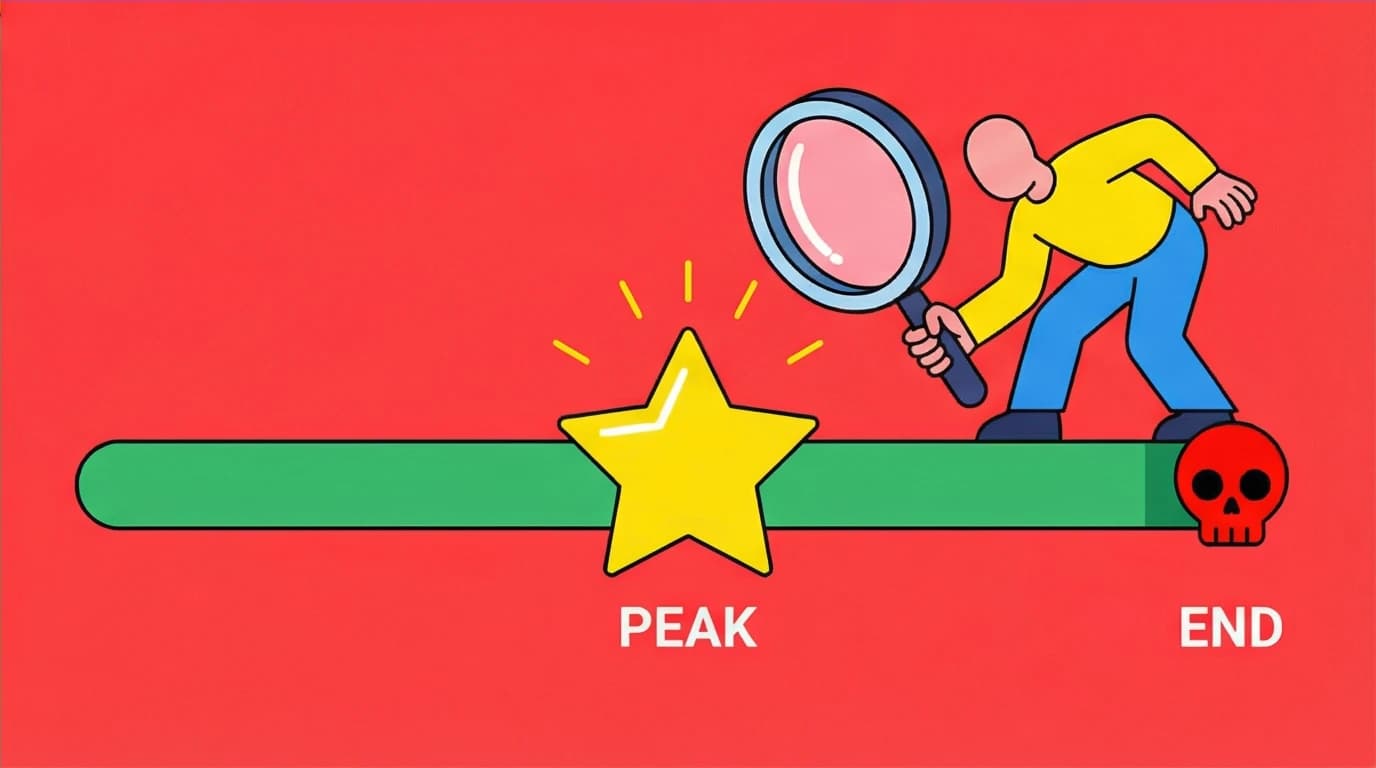
Kahneman reveals the "Peak-End Rule." Our memory of an event is shaped almost entirely by the peak (the most intense moment) and the end of the experience. The duration of the experience barely matters. If you go on a two-week vacation to Hawaii and have an amazing time, but lose your wallet on the very last day at the airport, your Remembering Self will categorize the entire trip as a disaster, even though your Experiencing Self enjoyed 13 perfect days.
Understanding how your mind works is incredibly powerful, but applying these behavioral economics principles to broader societal issues takes it to another level. If you are interested in how governments and organizations use these exact same psychological triggers—like the anchoring effect and loss aversion—to influence public policy, health, and wealth, there is another Nobel Prize-winning book you absolutely need to read. It beautifully complements Kahneman’s theories by showing how slight tweaks in the way choices are presented can dramatically improve decision-making on a massive scale.

Nudge
Richard H. Thaler, Cass R. Sunstein
45 Duration8 Key Points4.6 RateHow to Put This Daniel Kahneman Book Summary into Practice
Reading a summary is only valuable if you change your behavior. Here is how you can practically apply this Daniel Kahneman book summary to your daily routine:
- Recognize when you are in a minefield. You cannot rely on System 2 all the time; it is too exhausting. Instead, learn to recognize situations where mistakes are costly (signing a contract, hiring a manager, making an investment). When the stakes are high, deliberately slow down.
- Use checklists. The aviation and medical industries use checklists to bypass the flaws of human memory and intuition. When making a major business decision, have a standard checklist of criteria to evaluate. This forces System 2 to engage and minimizes the Halo Effect.
- Perform a "Premortem." Before finalizing a big project, gather your team and say: "Imagine it is a year from now, and this project has been a complete disaster. Write down exactly why it failed." This technique breaks the WYSIATI trap and curbs overconfidence.
- Protect your mental energy. Do not make critical decisions late in the afternoon when your System 2 is depleted. Organize your day so that high-stakes choices are made in the morning after a cup of coffee when your analytical brain is fully fueled.
Beyond just personal improvement, these principles are a goldmine for professionals seeking to understand consumer behavior and influence choices ethically.
Consistently applying these ideas is how you make real change. If finding the time to read other groundbreaking books on psychology and business feels like a challenge, a learning app can help you stay consistent.
Continuously sharpen your decision-making skills by listening to key ideas from bestselling books on business and psychology, even when you're too busy to read.
LeapAheadBy understanding the tug-of-war between System 1 and System 2, you gain a massive advantage in a world where most people operate on blind autopilot. You can anticipate your own mental blunders and spot them in your competitors.
The concepts in Kahneman's work did not develop in a vacuum. Behind the groundbreaking research into human irrationality lies a deeply moving, real-life story about the partnership between Daniel Kahneman and his close friend, Amos Tversky. If you want to step away from the academic frameworks and dive into a compelling narrative about the two brilliant men who revolutionized our understanding of the human mind, there is a masterfully written biography that reads like a fast-paced novel. It is the perfect follow-up for anyone who wants to know the history behind the science.

The Undoing Project
Michael Lewis
19 Duration8 Key Points3.9 RateFAQ
What is the main difference between System 1 and System 2 thinking?
System 1 is fast, unconscious, and emotional. It operates on autopilot and handles everyday habits and immediate reactions. System 2 is slow, conscious, and logical. It handles complex problem-solving, math, and critical decisions, but it requires effort and focus to engage.
System 1 is fast, unconscious, and emotional. It operates on autopilot and handles everyday habits and immediate reactions. System 2 is slow, conscious, and logical. It handles complex problem-solving, math, and critical decisions, but it requires effort and focus to engage.
Is Thinking Fast and Slow a difficult book to read?
It can be challenging for the average reader because it is extremely dense and packed with detailed psychological experiments and statistical data. While the writing is clear, the sheer volume of information requires a significant time commitment, which is why summary guides are highly recommended to grasp the core concepts first.
It can be challenging for the average reader because it is extremely dense and packed with detailed psychological experiments and statistical data. While the writing is clear, the sheer volume of information requires a significant time commitment, which is why summary guides are highly recommended to grasp the core concepts first.
How can I improve my System 2 thinking?
You cannot eliminate System 1, but you can train yourself to pause before making big decisions. To improve System 2, remove distractions, ensure you are well-rested (System 2 requires physical energy), and actively ask yourself, "What data am I missing right now?" before finalizing a choice.
You cannot eliminate System 1, but you can train yourself to pause before making big decisions. To improve System 2, remove distractions, ensure you are well-rested (System 2 requires physical energy), and actively ask yourself, "What data am I missing right now?" before finalizing a choice.
Are Daniel Kahneman's theories still relevant today?
Absolutely. Kahneman's work, along with his late research partner Amos Tversky, forms the foundation of modern behavioral economics. His insights into cognitive biases, loss aversion, and decision-making are actively used today in marketing, public policy, finance, and product design worldwide.
Absolutely. Kahneman's work, along with his late research partner Amos Tversky, forms the foundation of modern behavioral economics. His insights into cognitive biases, loss aversion, and decision-making are actively used today in marketing, public policy, finance, and product design worldwide.