

You spent weeks perfecting a landing page. You listed every technical specification, highlighted your superior features, and built a bulletproof, logical case for why your product is the best on the market. Yet, conversion rates remain flat. The harsh reality is that consumers rarely make buying decisions based on pure logic. They buy on instinct and justify with facts later. If your marketing only speaks to logic, you are ignoring how the human brain actually works.
To fix this, you do not need more features. You need a better understanding of cognitive psychology. By applying Daniel Kahneman's Nobel Prize-winning framework to your growth models, you can fundamentally change how customers interact with your brand.
The Framework: Understanding Kahneman Consumer Behavior
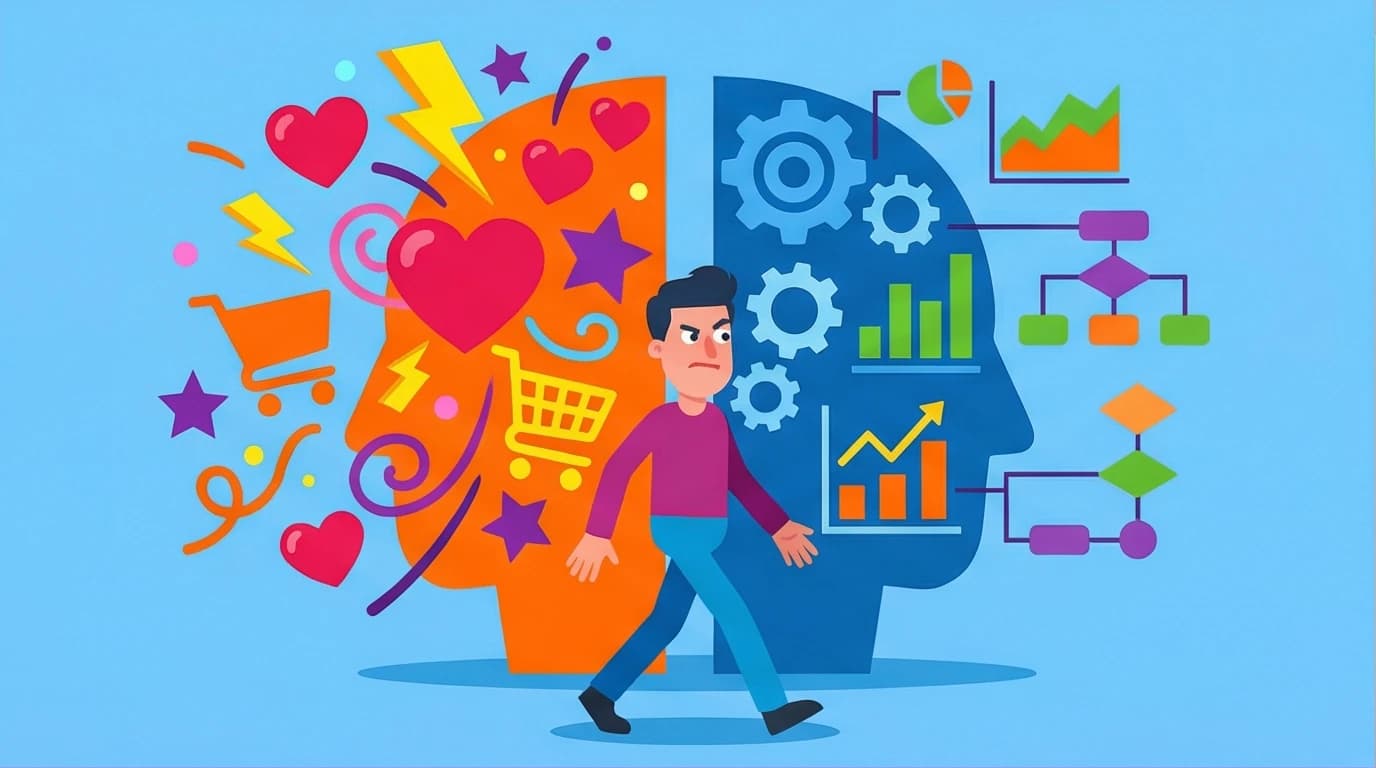
Before you can optimize your funnels, you must understand the two operating systems of the human brain outlined by Daniel Kahneman. Master this, and the foundation of your entire marketing strategy shifts.
- System 1 (The Autopilot): Fast, automatic, emotional, stereotypic, and subconscious. It requires almost no energy. It tells you that a smiling face is friendly, that a $99 price tag is cheaper than $100, and that a red notification badge requires immediate attention.
- System 2 (The Pilot): Slow, effortful, logical, calculating, and conscious. It requires massive energy. It calculates ROI, reads terms and conditions, and compares the battery life of three different smartphones.
Here is the secret to Kahneman consumer behavior: Human beings are fundamentally lazy. The brain consumes about 20% of the body's energy, so it constantly seeks ways to conserve power. Consequently, consumers spend about 95% of their daily lives operating strictly in System 1. System 2 only wakes up when it encounters friction, confusion, or a complex problem.
Your goal as a marketer is simple. Keep the user in System 1. The moment your user interface, ad copy, or pricing model confuses a potential buyer, System 2 wakes up. Once System 2 engages, the customer starts asking questions: Do I really need this? Is there a cheaper option? Should I wait until next week?
When System 2 wakes up, conversions drop.
If you want to dive deeper into the exact science behind these operating systems, you should read the book that started it all. Kahneman's groundbreaking work explores how human beings make decisions and why we are so prone to cognitive biases. It is an essential read for any marketer who wants to truly understand the psychology behind consumer choices.
Thinking, Fast and Slow
Daniel Kahneman
 53 Duration
 9 Key Points
 4.5 Rate
If you’re a busy marketer who wants to absorb these powerful ideas but doesn't have the time for a 400-page read, you can get the key takeaways in a more efficient format.

Absorb the core principles from dense but crucial books like Kahneman's in just 15 minutes, perfect for busy marketers who need to learn on the go.
Download LeapAhead App now
System 1 Thinking in Advertising: Winning the First 3 Seconds
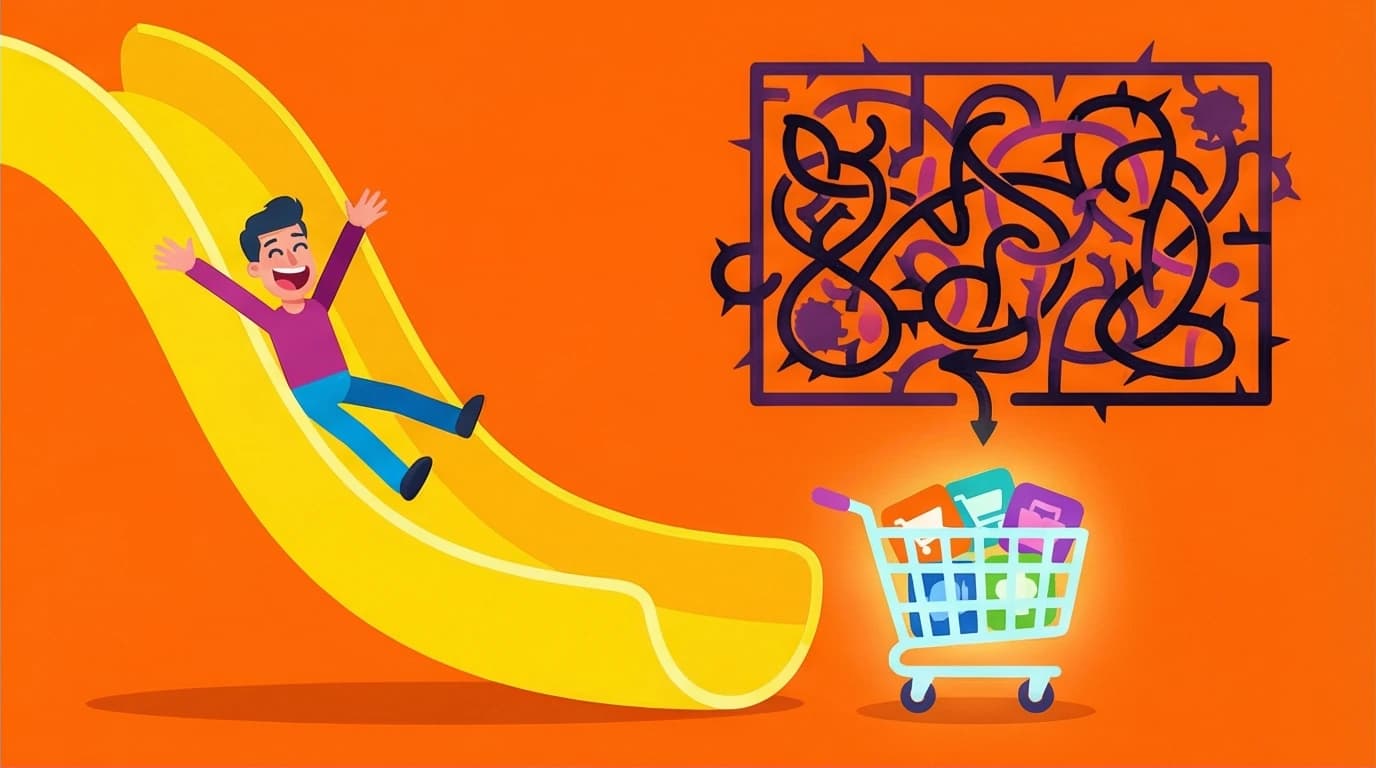
Advertising is a battle for attention in a noisy world. If you require a consumer to stop and analyze your ad to understand the value proposition, you have already lost them. Effective System 1 thinking in advertising relies on immediate, frictionless comprehension.
1. Maximize Cognitive Ease
Cognitive ease is the measure of how hard the brain has to work to process information. High cognitive ease feels good, true, and safe. Low cognitive ease (cognitive strain) feels suspicious and difficult.
To achieve cognitive ease in your ad creatives:
- Use simple, bold typography. If a font is hard to read, the brain subconsciously associates the product itself as difficult to use.
- Rely on high-contrast colors. Make the call-to-action (CTA) button impossible to miss.
- Rhyming equals truth. A famous psychological phenomenon known as the Keats heuristic proves that statements that rhyme are judged as more accurate and truthful than those that do not. ("Click it or ticket" is far more effective than "Fasten your seatbelt or face a fine.")
2. The Halo Effect
System 1 struggles with nuance. It prefers to judge a whole based on a single prominent part. This is the Halo Effect. If a consumer likes one aspect of your brand, they will project positive attributes onto everything else you do.
Apple masters this. Because consumers love the sleek design of the iPhone, System 1 automatically assumes Apple's privacy policies, cloud storage, and customer service are equally superior, without ever reading a white paper on data encryption.
In advertising, borrow a halo. Use recognizable influencers, partner with trusted charities, or display security badges (like Norton or McAfee) right next to your checkout button. The brain quickly associates the trust of the known entity with your brand.
Building a Behavioral Economics Marketing Strategy
Understanding the theory is only half the battle. Transforming these psychological quirks into a behavioral economics marketing strategy requires targeted adjustments to your product positioning and pricing architecture.
The Power of Anchoring in Pricing Strategy
System 1 does not know the absolute value of anything. It only knows relative value. To determine if a price is fair, the brain desperately searches for an anchor—the first number it sees.
If you sell SaaS software for $50 a month, presenting only the $50 option forces the user to decide if $50 is a lot of money. However, if you place a $200 "Enterprise Plan" right next to it, the $50 plan suddenly looks like an incredible bargain. The $200 anchor skewed the user's perception of value.
Actionable Execution:
- Always display the highest-priced option first or prominently alongside standard tiers.
- Use "MSRP" or "Compare at" pricing for retail goods. Showing a $150 crossed-out price next to a $79 sale price triggers System 1 to recognize a massive win, bypassing the System 2 question of whether the item actually costs $79 to manufacture.
Pricing is rarely about math; it is almost entirely about perception. If the idea of pricing anchors and relative value fascinates you, you might want to explore more about why consumers act in ways that defy traditional economic logic. Dan Ariely's brilliant exploration of irrational behavior provides countless examples of how subtle changes in presentation can completely alter what a buyer is willing to pay. It will change the way you look at pricing models forever.

Predictably Irrational
Dan Ariely
23 Duration10 Key Points4.6 RateLoss Aversion: The Ultimate Conversion Trigger
Kahneman's research revealed a profound truth: The pain of losing is psychologically twice as powerful as the pleasure of gaining. Losing a $100 bill ruins your day far more than finding a $100 bill makes it.
Most marketing copy focuses entirely on gains: “Save time with our software!” or “Increase your revenue today!”
Flip the script. Highlight what the customer loses by inaction.
- Instead of: "Upgrade to Premium to get access to 10 new features."
- Try: "Don't lose your data. Upgrade to Premium to secure your hard work before your trial expires."
Combine loss aversion with scarcity. Amazon’s Lightning Deals are the perfect execution of this. A ticking timer combined with a visual progress bar showing "85% claimed" triggers immediate panic in System 1. The consumer feels the pain of missing out on the deal, entirely bypassing the logical evaluation of whether they actually need another bluetooth speaker.
Scarcity and loss aversion are just the tip of the iceberg when it comes to psychological triggers. If you are looking to master the art of ethical persuasion, you need to understand the universal principles that drive people to say "yes." Robert Cialdini’s classic work on influence details exactly how concepts like scarcity, social proof, and authority can be woven into your marketing copy to drive massive action without feeling overly salesy.
Influence
Robert Cialdini, Ph.D.
50 Duration9 Key Points4.5 Rate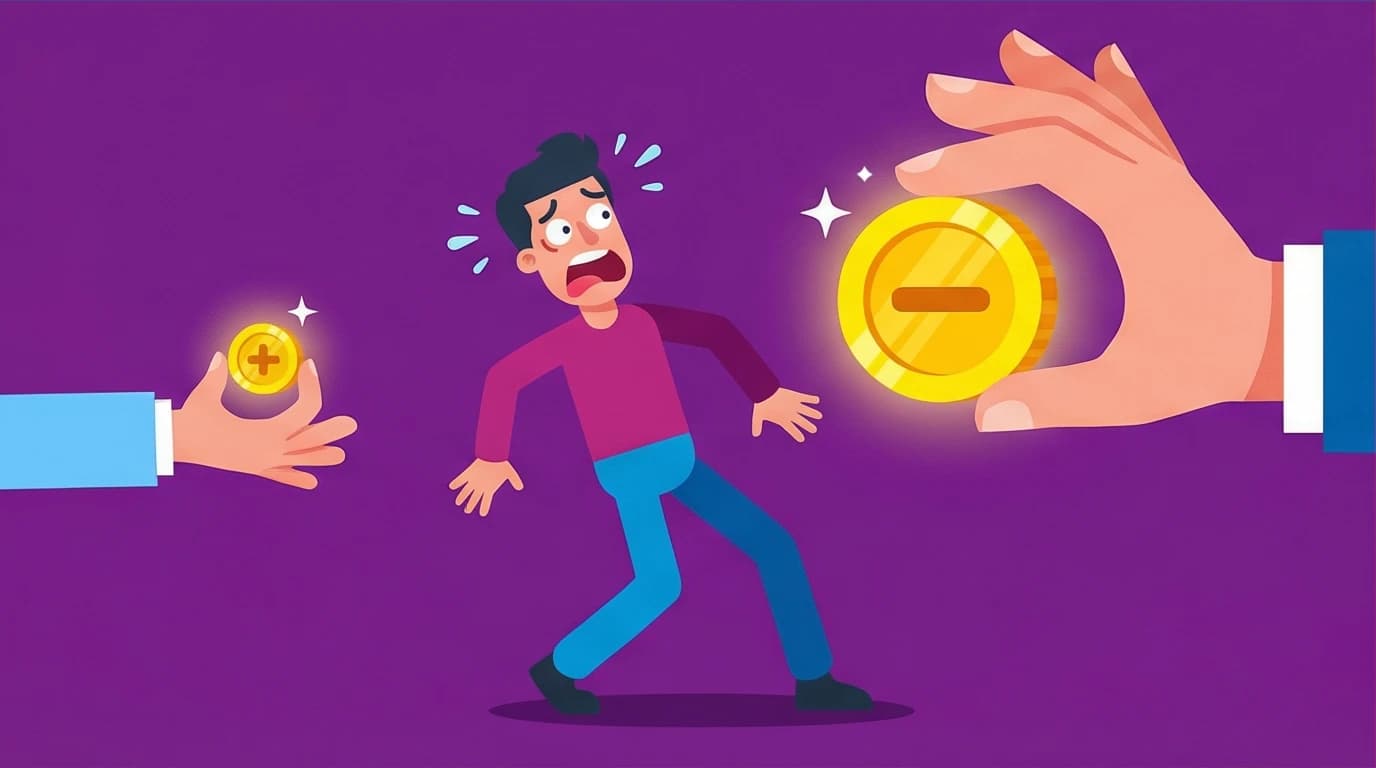
Framing Effects: Words Dictate Reality
System 1 reacts to how information is presented, not just what the information is. Consider you are marketing ground beef at a grocery store. Which label performs better?
- "80% Lean"
- "20% Fat"
Logically, they mean the exact same thing. But System 1 reacts viscerally to the word "Fat."
Audit your marketing copy for framing. If you sell a medical procedure, frame it as a "95% success rate" rather than a "5% failure rate." If you charge a credit card processing fee, do not call it a "surcharge." Instead, set the baseline price slightly higher and offer a "cash discount." Consumers hate surcharges (loss) but love discounts (gain).
Applying Thinking Fast and Slow to Business Operations
Beyond marketing copy and ad creatives, applying Thinking Fast and Slow to business operations impacts product development, user experience (UX), and retention strategies.
Frictionless UX and the Power of Defaults
Every extra click, every unnecessary form field, and every slow-loading page is a shot of adrenaline to System 2. If a customer decides to buy, you must pave a frictionless highway to the checkout button.
Leverage the status quo bias. System 1 loves the default option because making a choice requires energy. If you want a specific outcome, make it the default.
- Auto-renewals: Subscription services make recurring billing the default. Forcing users to manually pay every month guarantees churn.
- Pre-selected tipping: Square and other point-of-sale systems present default tip options (15%, 20%, 25%). Choosing "Custom Tip" requires math (System 2). Most people simply tap the middle option.
- Newsletter opt-ins: Having an unchecked box that says "Check here to receive our newsletter" gets low conversion. A pre-checked box that says "Uncheck here to opt-out" yields exponentially higher subscriber rates.
Setting up defaults is a powerful way to guide user behavior without forcing their hand. This concept of "choice architecture" is a cornerstone of behavioral economics. If you want to learn how to subtly design environments—whether it is a checkout page or a subscription form—that naturally steer people toward better decisions, Richard Thaler and Cass Sunstein’s work is an absolute must-read. It will show you exactly how small design tweaks can yield massive improvements in your conversion rates.

Nudge
Richard H. Thaler, Cass R. Sunstein
45 Duration8 Key Points4.6 RateIf your to-read list is suddenly feeling a bit long, there's a way to get the key insights from all these game-changing books without spending months trying to get through them all.
Tackle your growing business reading list by listening to the main ideas from books like *Nudge* and *Influence* during your commute or workout.
Download LeapAhead App now
Mitigating the Peak-End Rule in Customer Experience
How do customers remember their experience with your brand? They do not average out the entire experience. According to the Peak-End Rule, people judge an experience based almost entirely on two moments: the peak (the most intense emotional point, positive or negative) and the end.
If you run an e-commerce brand, a customer might have a seamless browsing experience. But if the checkout crashes (a negative peak) or the shipping is delayed with no communication (a negative end), they will remember the brand as terrible.
Actionable Execution:
- Engineer a positive peak. Surprise a loyal customer with an unexpected discount code in their inbox. Include a high-quality free sample in their shipment.
- Nail the ending. The unboxing experience is the physical "end" of the digital purchase journey. Apple's packaging is famously deliberate. A premium unboxing experience leaves System 1 with a lasting impression of quality, ensuring brand loyalty.

Escaping the System 2 Trap in B2B Marketing
A common misconception is that B2B marketing relies entirely on System 2 because purchases involve committees, strict budgets, and high stakes. This is dangerously false.
The buyer on the other side of a B2B transaction is still a human being. They are stressed, overworked, and tired. They are reading your white paper at 4:00 PM on a Thursday.
While B2B requires robust logical arguments to get final approval from procurement, the initial hook still happens in System 1. If your software saves them time, frame it emotionally: Get your weekends back. Reduce cognitive load by turning complex data into clear, colorful infographics. Establish a strong Halo Effect through case studies with major brands. Hook their System 1 to get the meeting, then hand them the System 2 data they need to justify the purchase to their boss.
Marketing is not about outsmarting your customers. It is about aligning your business with human nature. By designing strategies that cater to the fast, intuitive, and emotional side of the brain, you stop fighting human psychology and start leveraging it for scalable growth.
FAQ
How do I know if my marketing is triggering System 1 or System 2?
Look at your bounce rates and time-on-page metrics. If users are abandoning your landing page within 3 seconds, your design is too cluttered, or your headline is too complex—triggering System 2 strain. A successful System 1 design yields high click-through rates and rapid progression through the initial stages of your funnel. If it requires a user to pause and think, you are in System 2 territory.
Look at your bounce rates and time-on-page metrics. If users are abandoning your landing page within 3 seconds, your design is too cluttered, or your headline is too complex—triggering System 2 strain. A successful System 1 design yields high click-through rates and rapid progression through the initial stages of your funnel. If it requires a user to pause and think, you are in System 2 territory.
Is it manipulative to target System 1 thinking?
Using behavioral economics is a tool, much like a hammer. It can build a house or break a window. Reducing friction, providing clear pricing anchors, and making your copy easy to read are simply ways to improve the user experience. However, using "dark patterns" (like hiding the cancel button or creating fake scarcity timers for inventory that never runs out) is unethical and will ultimately destroy brand trust. Aim for cognitive ease, not deception.
Using behavioral economics is a tool, much like a hammer. It can build a house or break a window. Reducing friction, providing clear pricing anchors, and making your copy easy to read are simply ways to improve the user experience. However, using "dark patterns" (like hiding the cancel button or creating fake scarcity timers for inventory that never runs out) is unethical and will ultimately destroy brand trust. Aim for cognitive ease, not deception.
Can B2B marketing rely on System 1, or is it strictly System 2?
B2B buyers are still human beings operating primarily in System 1. The initial discovery phase—clicking an ad, reading a headline, or deciding to book a demo—is driven by emotion, brand affinity, and cognitive ease. B2B marketing must hook the buyer's System 1 first to gain their attention, and then provide the detailed System 2 data (ROI calculators, security specs, case studies) they need to justify the purchase to their procurement team.
B2B buyers are still human beings operating primarily in System 1. The initial discovery phase—clicking an ad, reading a headline, or deciding to book a demo—is driven by emotion, brand affinity, and cognitive ease. B2B marketing must hook the buyer's System 1 first to gain their attention, and then provide the detailed System 2 data (ROI calculators, security specs, case studies) they need to justify the purchase to their procurement team.