


You keep hearing high-performers, CEOs, and athletes credit this ancient Roman emperor for their mental toughness, but staring down a dense, archaic text feels like a massive chore. You do not have time to decode old-world philosophy when you have a modern career to manage, endless emails to answer, and real-world stress to navigate. You need the actionable wisdom of this foundational text without the academic friction.
If even a modern translation feels like too much of a time commitment, you can get the core principles of Stoicism and other philosophies in a much faster format.


LeapAhead

Grasp the core ideas from dense philosophical texts like Meditations in just 15-minute audio or text summaries, perfect for busy professionals.
The Context Behind the Marcus Aurelius Book
Before breaking down the philosophy, you have to understand what this text actually is. Marcus Aurelius was the Roman Emperor from 161 to 180 AD, making him arguably the most powerful man on the planet during his lifetime. He faced devastating plagues, endless frontier wars, political betrayal, and the deaths of multiple children.
Through all of this, he wrote notes to himself in Greek. He never intended for anyone else to read them. This specific Marcus Aurelius book is not a published manual trying to sell you a framework; it is the private diary of a man fighting to keep his sanity, focus, and moral compass intact under unimaginable pressure. Because he was writing strictly for his own self-improvement, the text is blunt, repetitive, and incredibly direct.
Because the book is a private journal, it's less of a step-by-step manual and more of a series of personal reminders. To better understand the foundational principles he was drawing from, it's helpful to get a broader overview of the philosophy.
Marcus Aurelius Meditations Summary: The 3 Disciplines
A thorough Marcus Aurelius Meditations summary can be categorized into three major Stoic disciplines. These are the mental frameworks he used to process reality, make decisions, and accept his circumstances.
1. The Discipline of Perception (How You See the World)
Marcus repeatedly reminds himself that external events cannot harm him; only his opinion of those events can. If a supplier backs out of a deal or you sit in bumper-to-bumper traffic on the interstate, those are neutral facts. Your anger or frustration is a layer you add on top of the facts.
To master perception, Marcus practiced "objective representation." He stripped away emotional language to view things exactly as they were. He famously reduced expensive vintage wine to "fermented grape juice" and purple royal robes to "sheep wool dyed with shellfish blood." By removing the emotional color from an event, you remove its power over you.

2. The Discipline of Action (How You Act in the World)
Stoicism is often misunderstood as a passive philosophy. In reality, it is aggressively active. Marcus believed humans are social animals designed to work together for the common good. Your job is to act with virtue, integrity, and effort, regardless of how other people behave.
He wrote extensively about waking up and doing the work of a human being, even when his body was tired and his bed was warm. The focus is entirely on your own effort. You cannot control if a client signs a contract, but you have 100 percent control over the quality of the pitch you deliver. You focus entirely on the input and detach completely from the outcome.
3. The Discipline of Will (How You Accept Your Fate)
The third pillar involves how you handle the things completely outside your control. Marcus practiced Amor Fati—a love of fate. He trained himself not just to tolerate bad luck, but to embrace it.
If it rains on your outdoor event, or if the temperature drops to 10 degrees Fahrenheit and your car battery dies, complaining is entirely useless. The Stoic will dictates that you accept the reality of the situation immediately. More than that, you use the obstacle as a way to practice patience, resilience, and creative problem-solving. The obstacle literally becomes the way forward.

When Marcus Aurelius wrote about turning impediments into fuel for his own fire, he laid the groundwork for one of the most powerful mindsets in modern productivity. If you want to dive deeper into exactly how history’s greatest leaders transformed their biggest disasters into their greatest advantages, there is a fantastic modern expansion on this exact Stoic concept. It breaks down the ancient idea that the obstacle isn't blocking your path—it is your path, providing a highly actionable framework for navigating today's high-stakes corporate and personal challenges.
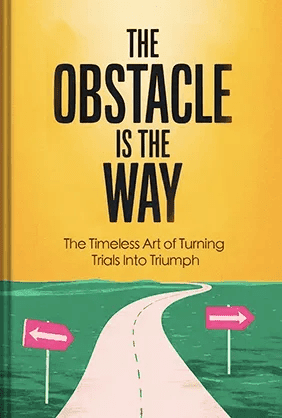
The Obstacle Is the Way
Ryan Holiday
 44 Duration
 7 Key Points
 4.6 Rate
Meditations Key Takeaways for Daily Execution
Understanding the theory is useless if you do not apply it. When you extract the Meditations key takeaways, you are left with a highly effective operating system for your daily routine. Here is how you can implement his specific mental exercises immediately.
The Morning Preparation (Premeditatio Malorum)
In Book 2 of Meditations, Marcus writes a specific prompt he used every single morning to prepare for difficult people. Before leaving his tent, he reminded himself that he would encounter people who were selfish, jealous, arrogant, and dishonest.
By anticipating bad behavior before it happens, you remove the element of surprise. When a coworker tries to throw you under the bus in a meeting, your heart rate does not spike. You expected this. You are prepared to handle it with grace and logic because you already rehearsed it in your head.
This practice of mental rehearsal is just one part of a structured start to the day designed to build resilience and focus.
The View from Above
When you are overwhelmed by a looming project deadline or a financial stressor, your world shrinks. Your problem feels massive. Marcus used an exercise called the "View from Above" to regain perspective.
He would mentally zoom out from his current location, picturing the Roman Empire, then the entire globe, then the vastness of the cosmos. He reminded himself of the billions of people who lived before him and the billions who would live after him. This is not meant to make you feel insignificant; it is meant to rapidly deflate your current anxiety. Your immediate stressor is incredibly small in the grand scheme of things, allowing you to breathe, reset, and tackle it logically.

Remembering Mortality (Memento Mori)
Death is a constant theme in the book. Marcus reminded himself daily that he could leave life right now. Let that determine what you do, say, and think. Memento Mori forces radical prioritization. If you realize your time is strictly limited, you stop wasting energy arguing with strangers on the internet, holding grudges against family members, or procrastinating on your core goals.
This intense focus on the brevity of life wasn't unique to Marcus Aurelius; it was a cornerstone of the entire Stoic movement. If you find yourself constantly battling distractions or feeling like your days are slipping away on trivial matters, exploring the writings of other prominent Stoics can be incredibly grounding. Another ancient Roman power player wrote extensively to his friends about how to guard your time, manage your temper, and focus only on what truly matters. It serves as a brilliant companion piece for mastering your daily focus.
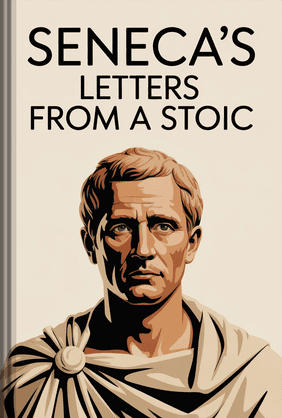
Seneca's Letters from a Stoic
Lucius Annaeus Seneca, Classics HQ
38 Duration8 Key Points4.7 RateReal-World Scenarios: Lessons from Meditations
To make these ancient concepts stick, let us apply specific lessons from Meditations to modern, high-stress scenarios you likely face.
Scenario 1: You receive harsh, unfair criticism at work.
The Stoic Response: Separate the facts from your ego. Did they point out a legitimate flaw you can fix? If yes, thank them and fix it. Are they just venting their own insecurities and acting in bad faith? If yes, their opinion has zero actual bearing on your character. As Marcus wrote, "Choose not to be harmed, and you won't feel harmed. Don't feel harmed, and you haven't been."
The Stoic Response: Separate the facts from your ego. Did they point out a legitimate flaw you can fix? If yes, thank them and fix it. Are they just venting their own insecurities and acting in bad faith? If yes, their opinion has zero actual bearing on your character. As Marcus wrote, "Choose not to be harmed, and you won't feel harmed. Don't feel harmed, and you haven't been."
Scenario 2: Your flight is canceled, causing you to miss an important event.
The Stoic Response: Getting angry at the airline gate agent changes nothing and destroys your own peace of mind. The Stoic accepts the cancellation instantly. You immediately pivot your energy to the things you still control: rebooking the flight, calling the event organizers to apologize, or pulling out your laptop to get ahead on deep work while sitting in the terminal.
The Stoic Response: Getting angry at the airline gate agent changes nothing and destroys your own peace of mind. The Stoic accepts the cancellation instantly. You immediately pivot your energy to the things you still control: rebooking the flight, calling the event organizers to apologize, or pulling out your laptop to get ahead on deep work while sitting in the terminal.
This ability to reframe stressful events is a cornerstone of Stoic practice for mental well-being.
Scenario 3: You are struggling with a lack of motivation.
The Stoic Response: Motivation is a fleeting emotion; duty is a constant. Marcus did not want to rule Rome. He wanted to be a philosopher. But he was called to a specific duty, and he executed it. When you do not feel like working out or organizing your finances, rely on discipline and your role in life rather than waiting for inspiration to strike.
The Stoic Response: Motivation is a fleeting emotion; duty is a constant. Marcus did not want to rule Rome. He wanted to be a philosopher. But he was called to a specific duty, and he executed it. When you do not feel like working out or organizing your finances, rely on discipline and your role in life rather than waiting for inspiration to strike.
The Stoic idea of choosing your internal response regardless of external circumstances has been tested in some of the most horrific environments in human history. If you are looking to understand the absolute extreme limits of this psychological resilience, there is one modern classic that perfectly illustrates this concept. Written by a psychiatrist who survived the unimaginable horrors of a concentration camp, this profound work demonstrates how finding a deeper purpose and maintaining your inner freedom can carry you through the absolute darkest periods of your life.
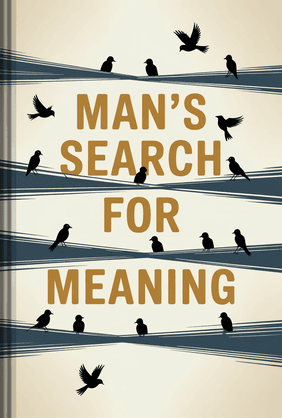
Man's Search for Meaning
Viktor E. Frankl
44 Duration8 Key Points4.6 RateFinding the Best Translation of Meditations
One of the biggest roadblocks to reading this text is buying the wrong edition. If you buy a public domain copy printed a hundred years ago, you will be hit with archaic language full of "thee," "thou," and twisted syntax that makes it impossible to read casually.
If you want to read the primary text, choosing the best translation of Meditations is the most important decision you will make.
The Gregory Hays Translation (Modern Library Edition)
For the vast majority of modern readers, the Gregory Hays translation is the absolute gold standard. Hays modernized the text, removing the formal academic tone and returning it to what it originally was: a private, punchy, and direct journal. The sentences are sharp and hit hard. You can easily find this version on Amazon or walking into any local Barnes & Noble.
For the vast majority of modern readers, the Gregory Hays translation is the absolute gold standard. Hays modernized the text, removing the formal academic tone and returning it to what it originally was: a private, punchy, and direct journal. The sentences are sharp and hit hard. You can easily find this version on Amazon or walking into any local Barnes & Noble.
The Audio Experience
If you commute heavily or prefer listening, grab the Gregory Hays translation on Audible. Listening to these short, potent journal entries on a 30-minute drive is an incredible way to center your mind before walking into the office.
If you commute heavily or prefer listening, grab the Gregory Hays translation on Audible. Listening to these short, potent journal entries on a 30-minute drive is an incredible way to center your mind before walking into the office.
And if you want to expand your listening habit beyond a single book, there are apps designed to turn your commute into a consistent source of new ideas from thousands of nonfiction titles.
LeapAhead
Turn your daily commute into a powerhouse of learning by listening to key insights from thousands of bestselling books in 15-minute audio sessions.
Translations to Avoid
Avoid the George Long or Meric Casaubon translations unless you are a literature student analyzing historical texts. They are accurate to the era they were translated in, but they turn a highly practical self-improvement journal into a grueling academic chore.
Avoid the George Long or Meric Casaubon translations unless you are a literature student analyzing historical texts. They are accurate to the era they were translated in, but they turn a highly practical self-improvement journal into a grueling academic chore.
Once you know which translation to look for, the next logical step is simply to start reading. You do not need to tackle it all in one weekend. Keep a copy on your nightstand or your desk, and commit to reading just one or two passages every morning with your coffee. If you are ready to stop letting external stress dictate your mood and want to learn directly from the private journal of a Roman emperor, you can grab a copy of this foundational text and begin building your own mental fortress today.
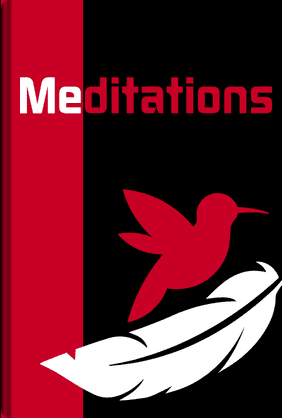
Meditations
Marcus Aurelius
34 Duration7 Key Points4.6 RateFAQ
Should I read the book sequentially from cover to cover?
No. Because Meditations is a personal diary, it does not have a chronological narrative or a building argument. You can open the book to a random page, read three distinct passages, and walk away with a profound lesson. It is best used as a daily reference guide rather than a traditional front-to-back read.
No. Because Meditations is a personal diary, it does not have a chronological narrative or a building argument. You can open the book to a random page, read three distinct passages, and walk away with a profound lesson. It is best used as a daily reference guide rather than a traditional front-to-back read.
Is Stoicism about suppressing your emotions?
This is the most common misconception about Stoicism. Marcus Aurelius did not suppress his emotions; he managed them. The goal is not to become a cold, unfeeling robot. The goal is to ensure your emotions do not hijack your logic and force you into making destructive decisions. You still feel anger or grief, but you choose how to respond to those feelings objectively.
This is the most common misconception about Stoicism. Marcus Aurelius did not suppress his emotions; he managed them. The goal is not to become a cold, unfeeling robot. The goal is to ensure your emotions do not hijack your logic and force you into making destructive decisions. You still feel anger or grief, but you choose how to respond to those feelings objectively.
I have zero background in philosophy. Will I understand this book?
Absolutely. Unlike theoretical philosophers who wrote complex treatises on the nature of reality, Marcus wrote about getting out of bed, dealing with annoying people, handling anxiety, and facing death. It is arguably the most accessible and highly practical philosophy book ever written, provided you pick up a modern translation like the Gregory Hays edition.
Absolutely. Unlike theoretical philosophers who wrote complex treatises on the nature of reality, Marcus wrote about getting out of bed, dealing with annoying people, handling anxiety, and facing death. It is arguably the most accessible and highly practical philosophy book ever written, provided you pick up a modern translation like the Gregory Hays edition.
What makes this different from modern self-help books?
Modern self-help often relies on toxic positivity, telling you that you can manifest anything you want if you just think happy thoughts. Meditations is the exact opposite. It forces you to look directly at the worst-case scenarios, accept that life is difficult and unfair, and build an internal fortress of character that allows you to thrive regardless of your external circumstances.
Modern self-help often relies on toxic positivity, telling you that you can manifest anything you want if you just think happy thoughts. Meditations is the exact opposite. It forces you to look directly at the worst-case scenarios, accept that life is difficult and unfair, and build an internal fortress of character that allows you to thrive regardless of your external circumstances.