


You wake up, grab your phone, and immediately face a barrage of anxiety. A flooded inbox, rising inflation, news of another round of corporate layoffs, and a calendar packed with meetings. You feel reactive, exhausted, and entirely out of control before you even brew your morning coffee.
Over 1,800 years ago, Marcus Aurelius faced a similar morning routine. As the emperor of the Roman Empire, he dealt with the Antonine Plague, invading barbarian armies, massive economic crises, and betrayal by his closest generals. Yet, he did not crumble. He relied on a specific mental operating system to stay grounded, lead effectively, and maintain his sanity.
That operating system is what we now call Marcus Aurelius Stoicism. It is not an abstract academic theory. It is a gritty, boots-on-the-ground toolkit designed for the hardest days of your life.
What is Stoicism?
Before diving into the emperor’s specific habits, you need to understand the foundation. If you ask the average person what is stoicism, they will likely describe someone who suppresses their emotions, acts like a robot, and grits their teeth through the pain.
That is a modern distortion.
True Stoicism is not about eliminating your emotions; it is about domesticating them. It is the understanding that you do not control the world around you, but you maintain absolute authority over how you respond to it. Founded in ancient Greece by Zeno of Citium and later refined in Rome, Stoicism teaches that destructive emotions are the result of errors in judgment.
If a flight out of JFK is delayed by three hours, the delay is not what makes you angry. Your judgment that the delay is a catastrophic injustice is what makes you angry. Stoicism trains you to strip away the emotional narrative and look at the objective reality. The plane is late. You have three extra hours. What will you do with them?
The Core of Marcus Aurelius Philosophy
Marcus Aurelius never intended to publish a book or start a movement. His famous work, Meditations, was actually his private journal. He wrote it in military tents on the freezing front lines of Germania, entirely for his own self-improvement.
When you read Meditations today—whether you pick up a paperback at Barnes & Noble or listen to it on Audible during your commute—you are reading the private pep talks of the most powerful man in the world trying to hold himself together.
The Marcus Aurelius philosophy revolves around a few strict parameters:
- Strict accountability: He constantly reminded himself not to blame others.
- Transience: He focused heavily on how brief life is, using it as a tool to ignore trivial annoyances.
- Duty: He believed humans were made to work together and help one another, even when people act poorly.
His writing proves that wealth, power, and status do not protect you from stress, grief, or frustration. Mental toughness must be cultivated from the inside out.
And while diving into foundational texts is powerful, it can also be demanding on a modern schedule. If you struggle to find the time or energy for deep reading after a long day, there are ways to absorb these essential lessons in a more digestible format.

Get the core wisdom from Stoic classics and modern self-improvement books in just 15 minutes, turning your commute or workout into a powerful learning session.

Download LeapAhead App now
If you're ready to dive directly into the mind of the emperor himself, there is no better starting point than his original journal. This isn't just a book; it's a historical blueprint for resilience that has guided leaders, generals, and thinkers for centuries. Reading it feels like having a private mentor in your corner, showing you exactly how to navigate stress, anxiety, and the heavy burdens of modern life with a calm and clear mind.

Meditations
Marcus Aurelius
 34 Duration
 7 Key Points
 4.6 Rate
Foundational Stoic Beliefs You Can Apply Today
To adopt this emperor's mindset, you do not need to memorize Latin phrases or study ancient history. You just need to apply these four core stoic beliefs to your daily modern struggles.
The Dichotomy of Control
This is the bedrock of all Stoic practice. The Greek slave-turned-philosopher Epictetus heavily influenced Marcus Aurelius with this concept. You must violently separate the world into two categories: things you control and things you do not.

You control your effort, your attitude, your judgments, and your actions.
You do not control the stock market, your boss's mood, the traffic on the 405 freeway, or what strangers think of you.
You do not control the stock market, your boss's mood, the traffic on the 405 freeway, or what strangers think of you.
When you waste energy raging at things outside your control, you suffer voluntarily. Marcus Aurelius trained himself to instantly recognize when he was worrying about external events and snap his attention back to his own choices. Next time your company announces a structural change, do not panic about the unknown. Ask yourself: What is my exact next move? Focus only on that.
Amor Fati (Love Your Fate)
Accepting reality is good, but Marcus Aurelius pushed it further. He embraced everything that happened to him as if he had specifically asked for it. This concept, later coined as Amor Fati by Friedrich Nietzsche, is deeply rooted in Stoicism.
When a project fails, a relationship ends, or your car breaks down miles from home, the Stoic response is not just acceptance. It is a pivot to finding the utility in the disaster. Marcus Aurelius wrote, "The impediment to action advances action. What stands in the way becomes the way."

If you get passed over for a promotion, that obstacle becomes the new path. It forces you to build new skills, seek a better job, or start your own business. The fire needs oxygen to burn; use the obstacle as your fuel.
To truly master the concept of turning your biggest roadblocks into your greatest advantages, you might want to look at how history's most successful figures applied this exact Stoic framework. Modern author Ryan Holiday took Marcus Aurelius's famous maxim about the "impediment to action" and turned it into an actionable, real-world playbook. It is a fantastic read if you are currently facing a major career setback, personal struggle, or just need the motivation to flip your perspective and keep pushing forward.
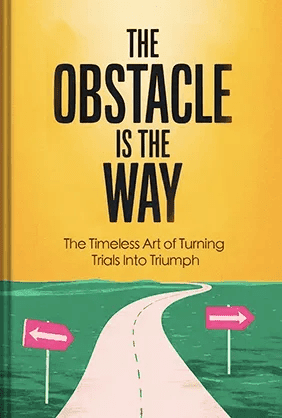
The Obstacle Is the Way
Ryan Holiday
44 Duration7 Key Points4.6 RateMemento Mori (Remember You Will Die)
This sounds morbid to the modern ear, but for the Stoics, it was the ultimate clarity tool. Marcus Aurelius constantly reminded himself that he could leave life right now.
He used death as a filter. When you remember that your time is incredibly limited, you stop caring about office gossip. You stop holding grudges over trivial misunderstandings. You stop scrolling mindlessly for hours. Memento Mori creates a fierce sense of urgency to do the right thing, right now, and to appreciate the people you love before they are gone.
Objective Representation
We make our lives miserable by adding colorful adjectives to objective facts.
Reality: "My manager pointed out a flaw in my presentation."
Our narrative: "My manager hates me, I am terrible at my job, and I am going to get fired."
Reality: "My manager pointed out a flaw in my presentation."
Our narrative: "My manager hates me, I am terrible at my job, and I am going to get fired."
Marcus Aurelius practiced stripping away the narrative. He described roasted meat as simply a dead bird, and vintage wine as just fermented grape juice. When you face a crisis, strip away the catastrophic language. Look at the raw facts. It instantly lowers your heart rate and allows your logical brain to take over.
Stoicism for Beginners: How to Start Your Practice
Philosophy is useless if it stays on a page. Stoicism is a practice, much like lifting weights. If you want to build this mental muscle, here is a pragmatic guide to stoicism for beginners.
1. The Morning Preparation (Premeditatio Malorum)
Do not start your day hoping everything goes perfectly. That is a recipe for frustration. Instead, practice the "premeditation of evils."
Marcus Aurelius started his mornings by telling himself: "Today I shall be meeting with interference, ingratitude, insolence, disloyalty, ill-will, and selfishness."
He wasn't being a pessimist. He was putting on his mental armor. If you expect a smooth drive, a traffic jam ruins your day. If you expect that your coworkers might drop the ball, your clients might complain, and your Wi-Fi might drop out, you are mentally prepared. When the inevitable friction happens, you remain calm because you already anticipated it.
2. The Evening Review
At the end of the day, open a notebook. You don't need anything fancy—a simple journal from Amazon works perfectly. Review your actions with ruthless honesty, just like the emperor did.
Ask yourself three questions:
- What did I do poorly today? (Did I lose my temper? Did I complain?)
- What did I do well? (Did I pause before reacting to a rude email?)
- What could I do better tomorrow?
This daily audit prevents you from running on autopilot. It turns your daily experiences into raw data for personal growth.
3. The Sacred Pause
Viktor Frankl famously noted that between stimulus and response, there is a space. In that space is our power to choose our response.
The next time you feel a surge of anger, anxiety, or panic, refuse to act immediately. Take a physical step back. Breathe. Count to ten. By simply delaying your reaction, you allow your rational mind to override your primal emotional response. You take the power back from the external event.
Understanding that space between stimulus and response is a lifelong practice, and no one illustrates this better than Viktor Frankl. While Frankl wasn't a Roman Stoic, his groundbreaking psychological insights completely align with the Marcus Aurelius philosophy. In his landmark book, Frankl explores how we can find profound purpose even in the most horrific, unimaginable circumstances. It's a deeply moving, perspective-shifting read that proves you always retain the ultimate freedom: the ability to choose your own attitude.
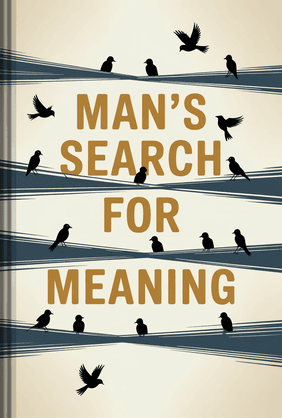
Man's Search for Meaning
Viktor E. Frankl
44 Duration8 Key Points4.6 Rate4. Cultivate Sympathy for "Fools"
Marcus Aurelius dealt with constant betrayal. Yet, he reminded himself that people do bad things out of ignorance of what is truly good and evil. They are acting on their own flawed programming.
When someone cuts you off in traffic or insults you online, realize that their behavior is a reflection of their own chaotic internal state, not your worth. They are harming their own character. You do not need to let their internal chaos infect your peace of mind.
Building Your Own Inner Citadel
The genius of Marcus Aurelius Stoicism is that it strips away our favorite excuses. You can no longer blame the economy, your upbringing, or your environment for your state of mind. You take absolute ownership of your mental space.
Marcus called this building your "inner citadel"—a fortress inside your mind that no external event can breach. Prices will rise and fall, politicians will argue, people will let you down, and unexpected storms will hit. But inside the citadel, you are untouchable.

Start small. Stop complaining about the weather. Delete the app that makes you angry. Forgive the coworker who annoyed you yesterday. Read Meditations, highlight the passages that hit you hard, and put them into practice today. Mental toughness isn't inherited; it is built, one choice at a time.
Once you have started building your inner citadel, expanding your Stoic toolkit can help reinforce those walls. While Marcus Aurelius wrote for himself, his predecessor Seneca wrote specifically to advise others on how to handle grief, wealth, poverty, and success. His timeless letters read like advice from a wise, pragmatic friend who has seen it all. Adding this classic to your nightstand is an excellent way to keep these grounding, logic-based principles top of mind as you tackle each new day.
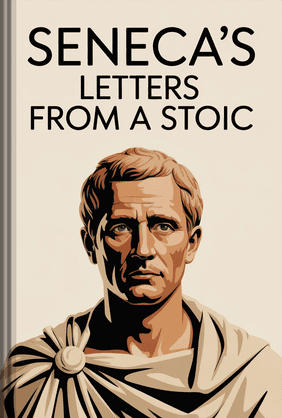
Seneca's Letters from a Stoic
Lucius Annaeus Seneca, Classics HQ
38 Duration8 Key Points4.7 RateIf you're inspired to absorb all this wisdom but feel daunted by a growing reading list, an app can help you consistently engage with these powerful ideas without the pressure.
Clear your "reading debt" by listening to the key insights from these Stoic masters and more, helping you build your inner citadel one summary at a time.
Download LeapAhead App now
FAQ
Is Stoicism just about suppressing your emotions?
No. Stoicism is about experiencing emotions but refusing to let them control your actions. A Stoic still feels grief, anger, and fear. However, instead of acting out destructively, a Stoic processes the emotion logically, understands its root cause, and decides on a rational course of action.
No. Stoicism is about experiencing emotions but refusing to let them control your actions. A Stoic still feels grief, anger, and fear. However, instead of acting out destructively, a Stoic processes the emotion logically, understands its root cause, and decides on a rational course of action.
What is the best translation of Marcus Aurelius's "Meditations" for a beginner?
For modern American readers, the translation by Gregory Hays (published by Modern Library) is widely considered the best starting point. It removes the archaic, biblical-sounding language (like "thee" and "thou") and presents his thoughts in clear, punchy, and highly readable English. You can easily find it highly rated on Goodreads or available on Apple Books.
For modern American readers, the translation by Gregory Hays (published by Modern Library) is widely considered the best starting point. It removes the archaic, biblical-sounding language (like "thee" and "thou") and presents his thoughts in clear, punchy, and highly readable English. You can easily find it highly rated on Goodreads or available on Apple Books.
Can Stoicism help with anxiety?
Yes. Modern Cognitive Behavioral Therapy (CBT), which is the leading psychological treatment for anxiety, was heavily based on Stoic principles. By teaching you to separate objective reality from your catastrophic thoughts, and forcing you to focus strictly on what is within your control, Stoicism acts as a powerful, practical tool for reducing chronic anxiety.
Yes. Modern Cognitive Behavioral Therapy (CBT), which is the leading psychological treatment for anxiety, was heavily based on Stoic principles. By teaching you to separate objective reality from your catastrophic thoughts, and forcing you to focus strictly on what is within your control, Stoicism acts as a powerful, practical tool for reducing chronic anxiety.
Did Marcus Aurelius always succeed in acting like a Stoic?
Not at all. Meditations is full of entries where Marcus is clearly frustrated with himself for losing his temper, feeling tired, or being annoyed by the people around him. He wasn't perfect. Stoicism is an ongoing practice of correcting your course, not a state of permanent perfection.
Not at all. Meditations is full of entries where Marcus is clearly frustrated with himself for losing his temper, feeling tired, or being annoyed by the people around him. He wasn't perfect. Stoicism is an ongoing practice of correcting your course, not a state of permanent perfection.