

You wake up, grab your phone, and let urgent emails dictate your mood before your feet even hit the floor. This reactive start leaves you scattered, drained, and emotionally hijacked by noon. You need a system to anchor your day, and the most powerful emperor in Roman history built exactly that.

Marcus Aurelius did not have it easy. He managed a massive empire, fought constant border wars, faced a deadly plague, and dealt with treacherous political rivals. Yet, he remained focused, calm, and highly effective. His secret weapon was his morning routine. He used the first hours of the day to armor his mind. His approach was deeply rooted in a practical philosophy for life, and to fully appreciate his methods, it's helpful to understand the foundational beliefs he lived by.
Here is exactly how you can implement the Marcus Aurelius morning routine to reclaim your focus, master your emotions, and dominate your daily work.
Win the Battle of the Bed
Marcus Aurelius struggled to get out of bed. He was not naturally a morning person. We know this because he wrote extensively in his private journal—now published as Meditations—about the internal argument he had with himself every morning.

When your alarm goes off, your brain will beg for another five minutes. It will rationalize staying under the warm covers. Marcus fought this exact urge with a brutal reality check. He reminded himself of his core purpose.
He wrote: "At dawn, when you have trouble getting out of bed, tell yourself: 'I have to go to work—as a human being. What do I have to complain of, if I'm going to do what I was born for—the things I was brought into the world to do? Or is this what I was created for? To huddle under the blankets and stay warm?'"
How to Apply It
Stop negotiating with your alarm clock. The longer you lie in bed debating whether to get up, the more mental energy you drain.
- Move the alarm: Put your phone or alarm clock across the room. Force your physical body to stand up.
- Define your "Why": Before you go to sleep, write down the single most important task you need to attack the next morning. When you wake up, you aren't just getting up to an empty day; you are rising to execute a specific mission.
- Drop the excuses: A stoic morning routine starts with strict physical discipline. Cold floors, dark rooms, or feeling groggy are not valid reasons to abandon your duty. You are rising to do the work of a human being.
If you find yourself hitting the snooze button and dreading the early hours, you are certainly not alone. Mastering your morning requires more than just sheer willpower; it takes a proven, actionable framework to transform how you start your day. For those looking to build a structured, energizing morning routine that goes hand-in-hand with Stoic discipline, there is an incredible resource that breaks down exactly how to conquer the dawn. This guide will help you stop negotiating with your alarm clock and start waking up with genuine purpose and relentless drive.

The Miracle Morning
Hal Elrod
 41 Duration
 10 Key Points
 4.6 Rate
Practice Premeditatio Malorum (Negative Visualization)
Modern self-help gurus tell you to start the day with toxic positivity. They tell you to look in the mirror and manifest a perfect day. Marcus Aurelius did the exact opposite. He started his day by actively visualizing everything that could go wrong.
This Stoic psychological tool is called Premeditatio Malorum, or the premeditation of evils.

Marcus prepared his mind for the worst interactions of the day. He wrote: "Today I shall be meeting with interference, ingratitude, insolence, disloyalty, ill-will, and selfishness... But for my part I have long perceived the nature of good and its nobility... and therefore none of those things can injure me."
If you expect everyone to be polite, traffic to flow perfectly, and your projects to launch without a glitch, you will be constantly angry and frustrated. If you anticipate the chaos, you neutralize its emotional impact.
How to Apply It
Take two minutes every morning to mentally rehearse the friction you will face.
- Identify the stressor: Are you pitching a difficult client today? Is your boss known for throwing tantrums? Is your commute a 20-mile parking lot?
- Visualize the breakdown: Picture the client rejecting your proposal. Picture your boss yelling. Picture the tire blowing out on the highway.
- Script your response: Decide exactly how you will react before it happens. "If the client says no, I will remain calm, take a breath, and ask for specific feedback."
When the disaster actually strikes, your heart rate won't spike. You won't act impulsively. You have already experienced this moment in your mind, and you are completely prepared to handle it with grace. This is just one of the many Stoic techniques for managing the worries that can disrupt your peace.
Write Your Morning Reflections
Journaling is not a new productivity hack. It is the core of Marcus Aurelius daily habits. Meditations was never meant to be published. It was his personal morning diary. He did not write about what he ate for breakfast; he wrote to untangle his thoughts, check his ego, and remind himself of his principles.
Writing things down physically externalizes your anxiety. It moves the swirling, chaotic thoughts from your brain onto a tangible piece of paper where you can evaluate them logically.
How to Apply It
You don't need a fancy leather-bound book or a complicated 50-question template. Grab a simple dotted notebook from Amazon or Barnes & Noble. Keep a pen right next to it. Before you check your email, sit down and write.
Focus your morning reflections on these specific Stoic prompts:
- What is outside of my control today? (List the economic conditions, other people's opinions, the weather). Cross them out. Do not spend an ounce of energy on them.
- What is entirely within my control today? (My effort, my reactions, my focus, my integrity). Circle these. This is your battlefield.
- What vice am I most vulnerable to right now? Be brutally honest. Are you feeling lazy? Vain? Angry? Call it out. Naming the weakness strips it of its power over you.
This journaling practice is a direct application of the self-reflection Marcus Aurelius performed daily. While his original text is invaluable, a summary can provide a quick, powerful overview of its core wisdom.
Of course, the ultimate way to understand this practice is to read the emperor’s private journal for yourself. If you want to see exactly how the most powerful man in the world coached himself through stress, betrayal, and exhaustion, reading his original words is an absolute must. It is less of a traditional philosophical text and more of a practical survival guide for the human mind. Having a copy on your nightstand to read a few passages from each morning is one of the best ways to ground your thoughts before the daily chaos begins.

Meditations
Marcus Aurelius
34 Duration7 Key Points4.6 RateDiving into dense philosophical texts like Meditations can be tough when you're short on time. If you want to absorb the core principles of Stoicism from this and other great books without the heavy time commitment, an app designed for modern schedules can help.

Quickly absorb the key lessons from Meditations and other essential Stoic texts in 15-minute summaries, perfect for reinforcing your morning discipline.

Download LeapAhead App now
Cultivate the "View From Above"
As an Emperor, Marcus dealt with immense pressure. Financial crises, plague outbreaks, and military invasions crossed his desk daily. To prevent himself from being crushed by the weight of these problems, he practiced a mental exercise known as the "View From Above."
He would mentally zoom out. He would imagine looking down at the Roman Empire, then the entire earth, and finally the vastness of the cosmos. He realized that human lives are tiny, and our daily problems are incredibly brief in the grand timeline of the universe.

"Think of substance in its entirety, of which you have the smallest of shares; and of time in its entirety, of which a brief and momentary span has been assigned to you; and of the works of destiny, and how very small is your part in them."
How to Apply It
When you wake up feeling overwhelmed by a massive to-do list, pause. Step outside or look out a window.
Realize that the project deadline causing your chest to tighten is completely insignificant in the grand scheme of things. This doesn't mean your work doesn't matter. It means your work is not worth destroying your peace of mind over. This shift in perspective instantly kills morning anxiety and replaces it with cold, calm clarity.
Focus on the Essential Action
If you want to know how to be like Marcus Aurelius, you must master the art of aggressive elimination. He did not believe in multitasking. He did not busy himself with trivial matters just to look productive.
He asked himself one vital question: "Ask yourself at every moment, 'Is this necessary?'"
He understood that doing less, but doing it with absolute focus, was the key to high performance. A proper stoic morning routine clears away the noise and zeroes in on the vital few actions that actually move the needle.
How to Apply It
Protect your morning hours aggressively.
- No inputs: Do not open Audible, Apple Books, or your favorite news app until you have completed your core morning routine. Let your own thoughts form before you flood your brain with other people's content.
- The Rule of One: Pick the single most demanding, difficult task of the day. The one you are dreading. The one that requires the most cognitive horsepower.
- Attack immediately: Do that task first. Dedicate 90 minutes of deep, uninterrupted work to it before the rest of the world wakes up and demands your attention.
Marcus Aurelius recognized that much of what we do every day is completely unnecessary, a truth that feels even more relevant in our hyper-connected modern world. If you constantly feel busy but never truly productive, you might be spreading your energy too thin across meaningless tasks. To truly master the art of aggressive elimination and reclaim your time, it helps to adopt a disciplined approach to choosing what actually matters. Learning how to say no to the trivial noise allows you to channel your absolute best effort into the few projects that genuinely move the needle.
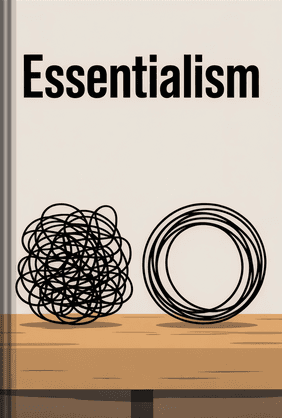
Essentialism
Greg McKeown
32 Duration10 Key Points4.6 RateIntegrating Stoic Daily Practices into Your Modern Life
You are not commanding Roman legions, but the psychological warfare of the modern world is just as draining. To make these habits stick, you need to structure your environment for success.
Prepare the night before. Marcus believed in order. You cannot have a calm morning if you go to sleep in chaos. Lay out your clothes. Clean your workspace. Set your journal on the desk.
Embrace voluntary discomfort. Stoicism is built on resilience. Modern biohackers love cold plunges and fasting. These perfectly align with Stoic philosophy. Taking a cold shower or skipping breakfast (intermittent fasting) trains your brain to endure discomfort without panicking. It proves to your subconscious that you are in charge of your body, not the other way around.
Review in the evening. A routine is only effective if you measure it. At the end of the day, do a quick audit. Did you lose your temper? Did you get distracted by useless tasks? Did you complain? Forgive yourself quickly, adjust the strategy, and prepare to try again tomorrow.
Applying ancient philosophy to a twenty-first-century lifestyle can feel a bit overwhelming at first, especially when you are juggling a demanding career, family obligations, and an endless stream of notifications. If you want to integrate these timeless principles into your busy schedule without getting bogged down in heavy academic texts, having a bite-sized daily guide can make all the difference. Reading just one short, actionable lesson each morning is a brilliant way to build resilience, maintain your emotional control, and keep your mindset sharp throughout the entire year.

The Daily Stoic
Ryan Holiday & Stephen Hanselman
48 Duration9 Key Points4.6 RateAvoid These Common Traps
When trying to adopt these habits, many people make critical mistakes that defeat the entire purpose.
Mistake 1: Mistaking Stoicism for emotionless suppression.
Being Stoic does not mean acting like a robot. Marcus loved his children and cared deeply for his friends. The goal of this routine is not to kill your emotions; it is to prevent your emotions from controlling your actions. You are allowed to feel anger or frustration in the morning. You are just not allowed to act on it destructively.
Being Stoic does not mean acting like a robot. Marcus loved his children and cared deeply for his friends. The goal of this routine is not to kill your emotions; it is to prevent your emotions from controlling your actions. You are allowed to feel anger or frustration in the morning. You are just not allowed to act on it destructively.
Mistake 2: Overcomplicating the routine.
Do not try to stack 15 different habits into a 3-hour morning marathon. You will burn out in a week. Marcus was a busy man. His routine was pragmatic. Wake up, reorient the mind, write the truth, and get to work. Keep it under 30 minutes.
Do not try to stack 15 different habits into a 3-hour morning marathon. You will burn out in a week. Marcus was a busy man. His routine was pragmatic. Wake up, reorient the mind, write the truth, and get to work. Keep it under 30 minutes.
Mistake 3: Seeking perfection.
You will fail. You will sleep in. You will lose your temper at traffic. Marcus constantly fell short of his own ideals, which is why his journal is filled with reminders to try again. When you fail, simply restart the next morning.
You will fail. You will sleep in. You will lose your temper at traffic. Marcus constantly fell short of his own ideals, which is why his journal is filled with reminders to try again. When you fail, simply restart the next morning.
The principles of Stoicism are timeless, but finding the time to study them in our modern, fast-paced world is a real challenge. For those who want to continue learning from Marcus Aurelius and other great thinkers but struggle to fit reading into their day, there's a more efficient way to gain wisdom.
Continue your Stoic journey by listening to key insights from bestselling philosophy and personal discipline books, turning your commute or workout into learning time.
Download LeapAhead App now
FAQ
What time did Marcus Aurelius wake up?
While there is no exact timestamp recorded, historical accounts and his own writings indicate he woke up at dawn or just before sunrise. This allowed him quiet time to write and reflect before the heavy demands of the Roman court began.
While there is no exact timestamp recorded, historical accounts and his own writings indicate he woke up at dawn or just before sunrise. This allowed him quiet time to write and reflect before the heavy demands of the Roman court began.
Did Marcus Aurelius take cold showers?
The modern concept of a cold shower didn't exist, but Romans regularly used the frigidarium (a cold pool) in the bathhouses. Stoics like Seneca actively advocated for cold baths to build mental toughness, and Marcus embraced similar voluntary discomforts, including sleeping on the floor and wearing rough clothing to harden his resilience.
The modern concept of a cold shower didn't exist, but Romans regularly used the frigidarium (a cold pool) in the bathhouses. Stoics like Seneca actively advocated for cold baths to build mental toughness, and Marcus embraced similar voluntary discomforts, including sleeping on the floor and wearing rough clothing to harden his resilience.
How long should a Stoic morning routine take?
It should take exactly as long as you need to center your mind, usually between 15 and 30 minutes. The goal is efficiency, not creating a massive delay before you start your work. Five minutes of journaling and two minutes of negative visualization are far more effective than a bloated two-hour routine.
It should take exactly as long as you need to center your mind, usually between 15 and 30 minutes. The goal is efficiency, not creating a massive delay before you start your work. Five minutes of journaling and two minutes of negative visualization are far more effective than a bloated two-hour routine.
Can I use a digital journal for my morning reflections?
You can, but a physical pen and paper is highly recommended. Screens introduce the temptation of notifications, internet browsing, and immediate distraction. Writing by hand forces you to slow down, disconnects you from the digital noise, and connects you more deeply with your own thoughts.
You can, but a physical pen and paper is highly recommended. Screens introduce the temptation of notifications, internet browsing, and immediate distraction. Writing by hand forces you to slow down, disconnects you from the digital noise, and connects you more deeply with your own thoughts.