

You hear the term "growth mindset" thrown around constantly in corporate boardrooms, Silicon Valley startups, and college classrooms. You know the concept is critical for leadership and personal development. But finding the time to sit down with a 300-page psychology book between meetings, emails, and daily responsibilities is tough. You do not need to read dozens of repetitive case studies to grasp the fundamental mechanics of the book. You need the blueprint.
And if you want to apply this efficient, blueprint-focused approach to learning beyond just this one book, there are tools designed to help you do just that.


LeapAhead

Absorb the core lessons from Mindset and hundreds of other non-fiction bestsellers in just 15 minutes, perfect for busy professionals who want to keep learning.
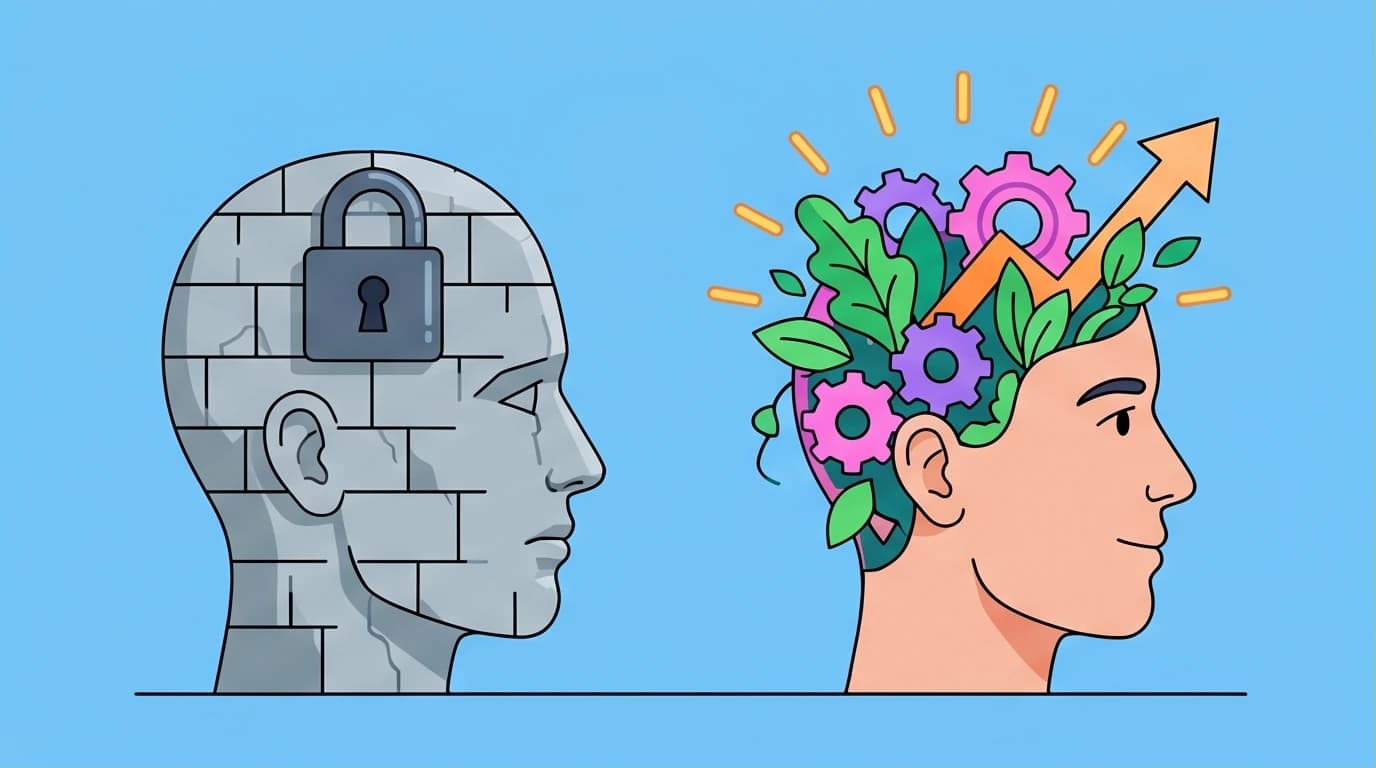
This comprehensive Mindset book summary strips away the fluff. We break down the exact differences between the two mindsets, provide a structured chapter-by-chapter overview, and deliver the actionable strategies you can implement right now.
The Core Concept: Fixed vs. Growth
Before diving into the specific applications, you must understand the foundation of Dweck’s research. Every person operates heavily out of one of two mindsets, which colors how they view risk, effort, and failure.

The Fixed Mindset
If you have a fixed mindset, you believe your traits are carved in stone. You are born with a certain amount of intelligence, a specific personality, and a set moral character. Because these traits are perceived as unchangeable, your primary goal becomes proving that you have them.
If you have a fixed mindset, you believe your traits are carved in stone. You are born with a certain amount of intelligence, a specific personality, and a set moral character. Because these traits are perceived as unchangeable, your primary goal becomes proving that you have them.
- Challenges: Avoided. They might reveal your flaws.
- Obstacles: Cause you to give up easily.
- Effort: Viewed as fruitless. If you are smart, you should not have to try hard.
- Criticism: Taken as a personal attack.
- Success of others: Viewed as a threat.
The Growth Mindset
If you have a growth mindset, you believe your basic qualities are things you can cultivate through your efforts, your strategies, and help from others. Everyone can change and grow through application and experience.
If you have a growth mindset, you believe your basic qualities are things you can cultivate through your efforts, your strategies, and help from others. Everyone can change and grow through application and experience.
- Challenges: Embraced as opportunities to learn.
- Obstacles: Met with persistence.
- Effort: Seen as the path to mastery.
- Criticism: Used as constructive feedback.
- Success of others: Viewed as a source of inspiration and learning.
For a deeper dive into these two frameworks, check out our complete guide on the growth mindset vs. the fixed mindset.
Mindset Chapter Summary: A Breakdown of the Book
To save you hours of reading, here is a structured Mindset chapter summary covering the eight chapters of Dweck's book.
Chapters 1-3: The Framework of the Mind
Dweck opens the book by establishing the stark contrast between the two mindsets. She explains that the fixed mindset creates an internal monologue focused purely on judging: “This means I’m a loser. This means I’m a better person than they are.”
The growth mindset creates an internal monologue focused on learning: “What can I learn from this? How can I improve?” Dweck dismantles the myth of "natural talent." Using examples from prodigies and average students alike, she proves that early achievement is a terrible predictor of long-term success. It is the ability to sustain effort and bounce back from failure that dictates actual accomplishment.
Chapter 4: Sports – The Mindset of a Champion
Dweck applies her theory to the athletic world. We love the idea of the "natural," the athlete who effortlessly dominates. But Dweck highlights athletes like Michael Jordan and Muhammad Ali. Neither was considered the most physically gifted at the start of their careers. Jordan was cut from his high school varsity team. What made them legends was their relentless growth mindset—their obsessive work ethic and ability to use failure as fuel. Fixed mindset athletes, on the other hand, often crumble when their raw talent is no longer enough to win.
If you are fascinated by the idea that sustained effort trumps natural talent in sports and life, there is another psychological framework you need to explore. While Dweck focuses on the underlying belief in your abilities, understanding how to harness that belief into long-term perseverance is the next logical step. For anyone looking to cultivate that relentless work ethic—often referred to as passion and perseverance—diving into the science of true tenacity is highly recommended. It is the perfect companion to the growth mindset.

Grit
Angela Duckworth
 18 Duration
 8 Key Points
 4.6 Rate
Chapter 5: Business – Mindset and Leadership
This chapter is crucial for managers and founders. A fixed mindset in a corporate environment leads to disastrous leadership. Dweck points to Enron as the ultimate fixed mindset culture. Enron hired based purely on "talent" and fired those who didn't immediately perform. This created a culture where employees were terrified to admit mistakes, leading to massive fraud.
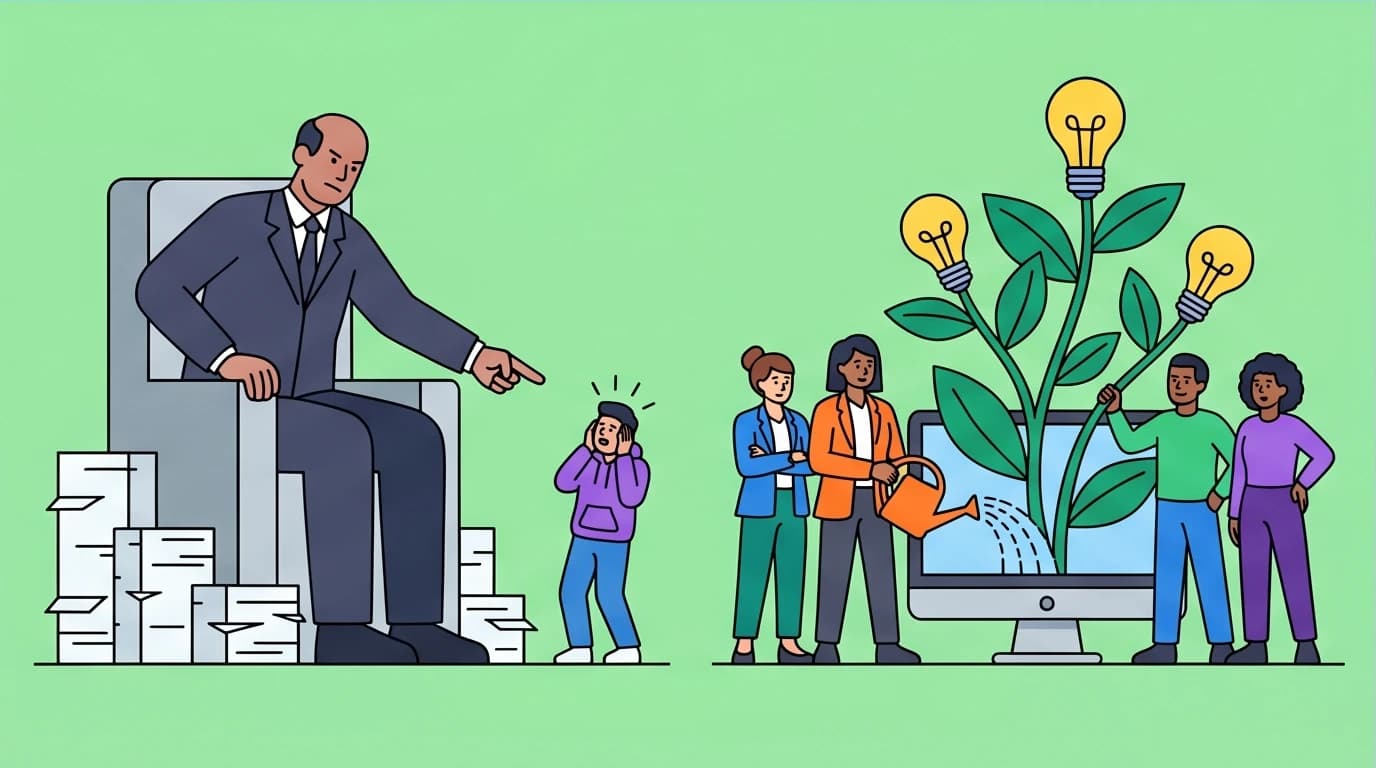
In contrast, growth mindset leaders like Jack Welch (during his time at GE) focused on developing their people. They do not need to be the smartest person in the room. They hire people who know more than them and foster an environment where team members can experiment, fail, and iterate.
Chapter 6: Relationships – Mindsets in Love (or Not)
Mindsets dictate how you handle personal and romantic relationships. A fixed mindset tells you that if a relationship requires hard work, it means you are not meant for each other. People with a fixed mindset expect their partners to read their minds and share their exact views. When conflicts arise, they assign permanent blame to their partner's character.
A growth mindset recognizes that a lasting relationship is a constantly evolving dynamic that requires immense effort, communication, and compromise. Problems are seen as hurdles to jump together, not fatal flaws in the relationship.
Applying a growth mindset to your romantic life is incredibly powerful, but you might still wonder exactly how to navigate those inevitable conflicts. Recognizing that a relationship requires work is the first step; having the right tools to do that work is the second. If you want a scientifically proven roadmap to improve your communication and foster a deeper, more resilient connection with your partner, looking into research-backed relationship strategies will help you put Dweck’s theories into daily practice.

The Seven Principles for Making Marriage Work
John Gottman, Ph.D., Silver Nan
17 Duration7 Key Points4.3 RateChapter 7: Parents, Teachers, and Coaches
Where do mindsets come from? Often, they are passed down by the adults in our lives. Dweck highlights a massive cultural error: praising children for their intelligence.
When you tell a child, "You got an A without even studying, you are so smart!" you are pushing them into a fixed mindset. You are teaching them that their worth is tied to their natural ability. When they eventually face a hard test, they will quit or cheat rather than risk losing the "smart" label. Instead, parents and teachers must praise the process: "You got an A because you organized your study time perfectly and worked incredibly hard."
For more specific strategies tailored to parents and educators, explore our guide to fostering a growth mindset for kids.
Transitioning from praising traits to praising the process can fundamentally change a child's development. But helping kids navigate their emotions when they face failures or frustrations requires even more intentional parenting. If you are a parent or educator striving to raise resilient, well-adjusted children who embrace learning, understanding how a child's brain is wired can be a game-changer. Exploring how to turn everyday emotional meltdowns into opportunities for intellectual growth is a brilliant next step on your parenting journey.

The Whole-Brain Child
Daniel J. Siegel, M.D., Tina Payne Bryson, Ph.D.
41 Duration7 Key Points4.6 RateChapter 8: Changing Mindsets
The final chapter provides the actionable blueprint for moving from a fixed to a growth mindset. Dweck stresses that change is not about suppressing the fixed mindset—it is about recognizing it and talking back to it. (We cover these exact steps in the takeaways section below).
For a more detailed look at the practical steps you can take, read our guide on how to develop a growth mindset.
Top Mindset Book Takeaways for Daily Life
If you want to apply Dweck’s research immediately, focus on these core Mindset book takeaways.
1. Praise the Process, Never the Trait
Whether you are a manager giving a performance review or a parent helping with homework, completely eliminate trait-based praise. Stop saying, "You are a natural salesperson" or "You are a math genius." Replace it with, "Your preparation for that client pitch was excellent" or "Your persistence on that math problem really paid off." Rewarding effort wires the brain to embrace hard work.
Whether you are a manager giving a performance review or a parent helping with homework, completely eliminate trait-based praise. Stop saying, "You are a natural salesperson" or "You are a math genius." Replace it with, "Your preparation for that client pitch was excellent" or "Your persistence on that math problem really paid off." Rewarding effort wires the brain to embrace hard work.
2. Harness the Power of "Yet"
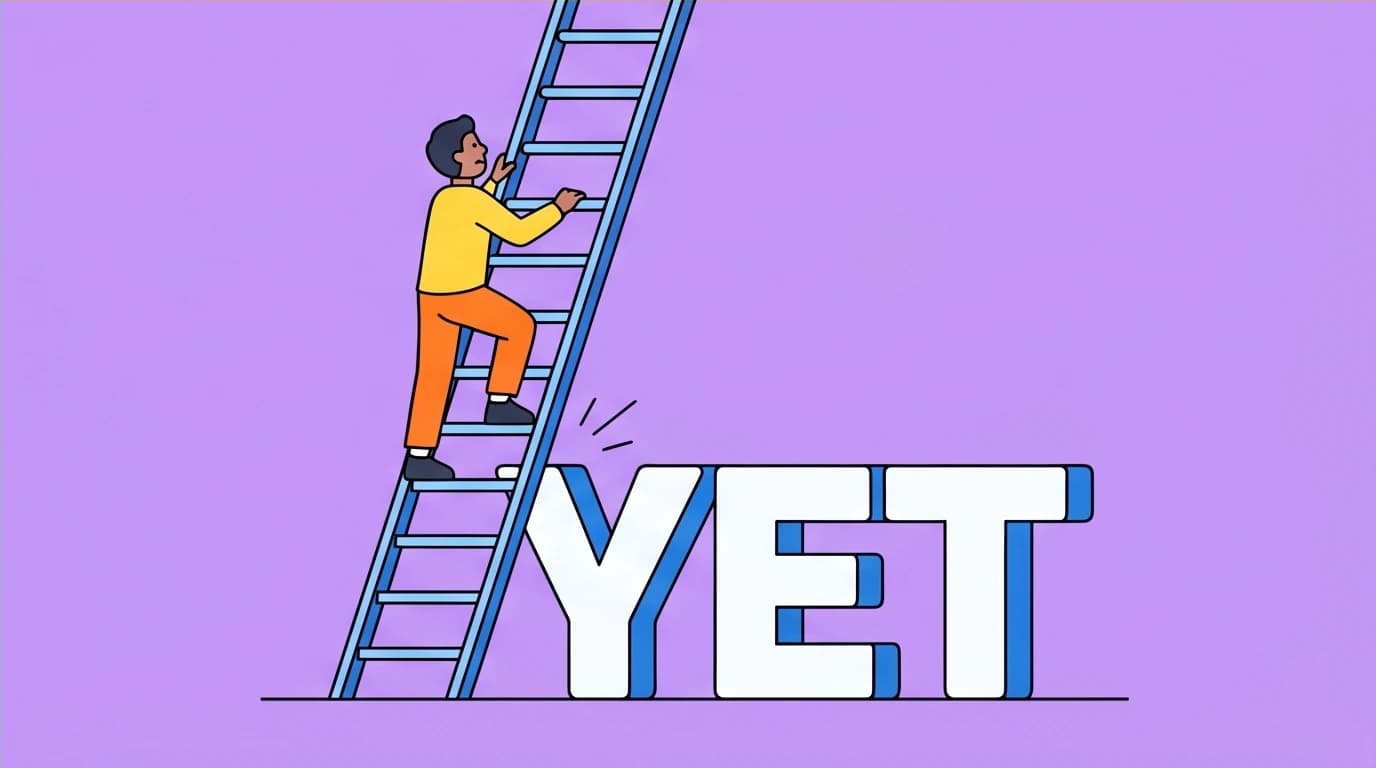
Dweck discovered a high school in Chicago where students who failed a course did not receive an "F". Instead, they received a grade of "Not Yet." This subtle semantic shift is incredibly powerful. When you face a roadblock, do not say, "I am not good at coding." Say, "I am not good at coding yet." This frames the limitation as a temporary location, not a permanent identity.
Dweck discovered a high school in Chicago where students who failed a course did not receive an "F". Instead, they received a grade of "Not Yet." This subtle semantic shift is incredibly powerful. When you face a roadblock, do not say, "I am not good at coding." Say, "I am not good at coding yet." This frames the limitation as a temporary location, not a permanent identity.
3. Recognize Your Fixed Mindset Triggers
Nobody operates with a growth mindset 100% of the time. We all have triggers. Maybe you get defensive when a specific coworker critiques your project. Maybe you feel intimidated when you meet someone more successful than you in your industry. Identify what triggers your fixed mindset persona. Once you recognize the trigger, you can consciously choose to shift your reaction.
Nobody operates with a growth mindset 100% of the time. We all have triggers. Maybe you get defensive when a specific coworker critiques your project. Maybe you feel intimidated when you meet someone more successful than you in your industry. Identify what triggers your fixed mindset persona. Once you recognize the trigger, you can consciously choose to shift your reaction.
4. Treat Failure as an Action, Not an Identity
In a fixed mindset, failing a test means you are a failure. In a growth mindset, failing a test means you failed a test. Separate your self-worth from the outcome of a specific event. Look at failure simply as data collection. It tells you exactly what strategy did not work so you can adjust your approach for the next attempt.
In a fixed mindset, failing a test means you are a failure. In a growth mindset, failing a test means you failed a test. Separate your self-worth from the outcome of a specific event. Look at failure simply as data collection. It tells you exactly what strategy did not work so you can adjust your approach for the next attempt.
Knowing that you need to shift your mindset is one thing; actually doing it in your day-to-day routine is another challenge entirely. Transforming a fixed mindset into a growth mindset doesn't happen overnight—it requires building new, sustainable routines. If you are ready to put Dweck’s principles into action, learning how to construct small, actionable behaviors can help you rewire your brain for success. Mastering the art of tiny, incremental changes is the ultimate way to make your new growth mindset permanent.

Atomic Habits
James Clear
26 Duration8 Key Points4.7 RateStandout Mindset Book Quotes
Sometimes a single sentence can reframe your entire perspective. Here are the most impactful Mindset book quotes from Carol Dweck to keep visible on your desk or digital workspace:
- "Becoming is better than being."
- "The passion for stretching yourself and sticking to it, even (or especially) when it’s not going well, is the hallmark of the growth mindset."
- "Why waste time proving over and over how great you are, when you could be getting better? Why hide deficiencies instead of overcoming them?"
- "Picture your brain forming new connections as you meet the challenge and learn. Keep on going."
- "Effort is one of those things that gives meaning to life. Effort means you care about something, that something is important to you and you are willing to work for it."
How to Get the Most Out of This Book (and Finding a Mindset Carol Dweck PDF)
Many busy professionals search for a Mindset Carol Dweck pdf online to bypass the lengthy anecdotes and get straight to the methodology. While pirating the full copyrighted book is not the right move, you do not necessarily need to read all 300 pages to benefit from her research.
Here is the most efficient way to consume this content:
- Use this summary as your daily cheat sheet. You can easily save this article as a PDF document to keep on your computer or share with your team during your next management meeting.
- Listen on the go. If you commute or travel frequently, grabbing the audiobook version on Audible allows you to absorb Dweck’s specific case studies at 1.5x speed.
- Use it as a reference manual. If you buy a physical copy from Amazon or Barnes & Noble, do not feel obligated to read it cover to cover. Read Chapters 1 through 3 to understand the mechanics, then skip directly to the application chapter that fits your current life stage (e.g., Chapter 5 for business leaders, Chapter 7 for parents).
Changing your mindset is not a one-time event; it is a lifelong practice. By understanding the core differences between fixed and growth frameworks, recognizing your triggers, and praising the process, you can dramatically alter the trajectory of your career and personal life.
To make this lifelong practice of learning more manageable, especially when you're short on time, you can use tools that distill the key ideas from influential books into quick, digestible formats.
LeapAhead
Continue building your growth mindset by absorbing key insights from hundreds of non-fiction bestsellers on psychology and personal development in 15-minute listens.
FAQ
Is Carol Dweck’s Mindset worth reading in full?
Yes, but it depends on your learning style. If you grasp concepts quickly and just want the actionable steps, a comprehensive summary is often enough. If you learn best through detailed stories and historical case studies (spanning sports, business, and education), purchasing the full book on Amazon or Apple Books is a worthwhile investment.
Yes, but it depends on your learning style. If you grasp concepts quickly and just want the actionable steps, a comprehensive summary is often enough. If you learn best through detailed stories and historical case studies (spanning sports, business, and education), purchasing the full book on Amazon or Apple Books is a worthwhile investment.
Can a person have both a fixed and a growth mindset?
Absolutely. Dweck notes that nobody has a pure growth mindset. Everyone is a mixture of both. You might have a growth mindset regarding your physical fitness but a fixed mindset regarding your artistic abilities. The goal is to identify the areas where your fixed mindset holds you back and actively work to reframe your thinking in those specific domains.
Absolutely. Dweck notes that nobody has a pure growth mindset. Everyone is a mixture of both. You might have a growth mindset regarding your physical fitness but a fixed mindset regarding your artistic abilities. The goal is to identify the areas where your fixed mindset holds you back and actively work to reframe your thinking in those specific domains.
What is a "false growth mindset"?
A false growth mindset occurs when people misunderstand the concept and equate it purely with being open-minded or optimistic. It also happens when people praise effort that doesn't yield results without analyzing why it failed. True growth mindset is about rewarding the process, the strategies used, and the resilience shown, not just handing out participation trophies for empty effort.
A false growth mindset occurs when people misunderstand the concept and equate it purely with being open-minded or optimistic. It also happens when people praise effort that doesn't yield results without analyzing why it failed. True growth mindset is about rewarding the process, the strategies used, and the resilience shown, not just handing out participation trophies for empty effort.
How long does it take to read the Mindset book?
The average reader will take about 7 to 9 hours to read the entire 300-page book. If you are strapped for time, reviewing a detailed chapter summary and focusing on the core takeaways can reduce that time investment to less than 15 minutes, allowing you to immediately start applying the principles.
The average reader will take about 7 to 9 hours to read the entire 300-page book. If you are strapped for time, reviewing a detailed chapter summary and focusing on the core takeaways can reduce that time investment to less than 15 minutes, allowing you to immediately start applying the principles.