


Your heart is hammering against your ribs. Your palms are sweating, your chest feels uncomfortably tight, and a sense of impending panic is rushing over you. When a wave of severe anxiety strikes, your body's fight-or-flight alarm gets stuck on high alert. Your brain genuinely believes you are in immediate physical danger. You cannot simply think your way out of this physical reaction. You need concrete, physical actions to force your nervous system back into balance right now.
Here are the most effective, science-backed methods to regain control of your body and mind.
Quick Ways to Calm Anxiety Under 60 Seconds
When panic peaks, you do not have the patience for a 20-minute meditation session. You need tools that shock your nervous system out of its spiral immediately.
The Temperature Shock (Mammalian Dive Reflex)
Cold temperature is one of the most reliable quick ways to calm anxiety. Sudden exposure to cold water activates the vagus nerve and triggers the "mammalian dive reflex." This physiological response instantly forces your heart rate to slow down and redirects blood flow from your limbs back to your vital organs, breaking the panic cycle.

- Splash ice-cold water directly onto your face.
- Hold an ice cube tightly in your bare hand until it melts. The intense cold forces your brain to process the physical sensation instead of racing thoughts.
- Grab an ice pack (or a bag of frozen vegetables from the freezer) and press it against the back of your neck or directly on your chest for 30 seconds.
The physiological Sigh
Neuroscientist Andrew Huberman popularized this technique because it is the fastest way to eliminate carbon dioxide from your bloodstream, which instantly reduces feelings of agitation.
- Take one deep inhale through your nose.
- At the top of that breath, take a second, sharp inhale to fill your lungs completely.
- Exhale slowly and fully through your mouth with a prolonged sigh.
- Repeat this just two or three times.
Breathing Exercises for Anxiety That Actually Work
Many people say "just take a deep breath" during a panic attack. But taking rapid, shallow breaths into your upper chest actually makes anxiety worse by causing hyperventilation. Effective breathing exercises for anxiety rely on expanding your diaphragm (belly breathing) and making your exhales longer than your inhales.
The 4-7-8 Breathing Technique
Dr. Andrew Weil developed this technique as a natural tranquilizer for the nervous system. The prolonged exhale signals to your brain that the immediate threat has passed.
- Empty your lungs of air completely.
- Breathe in quietly through your nose for 4 seconds.
- Hold your breath for 7 seconds.
- Exhale forcefully through your mouth, pursing your lips and making a "whoosh" sound, for 8 seconds.
- Repeat this cycle up to four times.
Box Breathing (Tactical Breathing)
Used by US Navy SEALs to stay calm in high-stress situations, this method brings your heart rate back to a normal baseline by enforcing a rigid rhythm.
- Inhale deeply for 4 seconds.
- Hold your breath in for 4 seconds.
- Exhale completely for 4 seconds.
- Hold your lungs empty for 4 seconds.
- Visualize tracing the four edges of a square in your mind as you do this.
Mastering these breathing exercises provides a powerful tool for relief, day or night. If you find that racing thoughts and anxiety often spike when you are trying to wind down, creating a specific evening routine is crucial.
If you find these controlled breathing techniques helpful and want to understand exactly why they have such a profound effect on your nervous system, you might want to explore the biological science of respiration. How we breathe impacts everything from our heart rate to our brain function, yet most of us unconsciously breathe in ways that actually induce stress. For a fascinating, research-backed look at how to optimize your lung capacity, lower your blood pressure, and reduce chronic anxiety through better daily breathing habits, this deep dive is an absolute must-read.
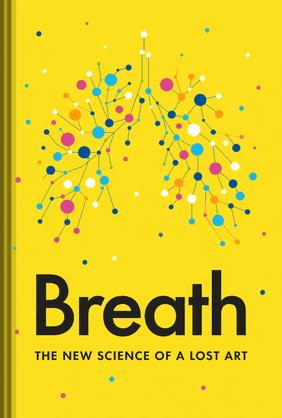
Breath
James Nestor
 40 Duration
 7 Key Points
 4.6 Rate
If diving into a dense science book feels daunting when you're already stressed, you can still learn the key lessons in a more digestible format.


Grasp the core science from books like *Breath* in 15-minute summaries, helping you learn powerful techniques without getting bogged down in complex details.
 LeapAhead
The 54321 Grounding Method: Stop the Downward Spiral
Panic attacks pull your mind into a terrifying future or a catastrophic "what if" scenario. You need to anchor yourself back into the present reality. The 54321 grounding method acts as a circuit breaker for your racing thoughts by systematically engaging all five of your senses.

Look around your current environment and identify the following out loud:
- 5 things you can see. Do not just list them. Describe them. "I see a blue coffee mug on the desk. I see the green leaves on the houseplant. I see a crack in the drywall."
- 4 things you can physically feel. Focus on texture and temperature. "I feel the rough denim jeans against my legs. I feel the cold metal of my watch band. I feel my bare feet pressing against the hardwood floor."
- 3 things you can hear. Filter out your own thoughts and listen to the room. "I hear the hum of the refrigerator. I hear traffic moving outside. I hear the air conditioner kicking on."
- 2 things you can smell. If you are at home, grab a candle, a bottle of essential oil, or some coffee beans. If you are outside, focus on the scent of the air or your own deodorant.
- 1 thing you can taste. Pop a strong mint into your mouth, take a sip of cold water, or bite into a lemon slice. Strong, sharp flavors work best to snap your attention back to the present.
Sensory grounding exercises are incredibly effective, but sometimes you need a broader arsenal of tools to manage unexpected spikes in panic throughout your day. Building a personalized strategy for those moments when you feel completely overwhelmed can make a world of difference. If you are looking for more evidence-based, easy-to-remember techniques to instantly soothe your nervous system and regain your center in high-stress situations, this practical guide offers fantastic, actionable advice that you can use anywhere.
Be Calm
Jill Weber
20 Duration8 Key Points4.5 RateProgressive Muscle Relaxation: Releasing Trapped Tension
During a period of high anxiety, your body acts like a coiled spring. You unconsciously clench your jaw, hike your shoulders up to your ears, and tighten your stomach. This physical tightness constantly sends feedback to your brain that danger is present.

Progressive muscle relaxation (PMR) is a two-step technique that involves intentionally tensing specific muscle groups and then abruptly releasing them. The contrast forces the muscles to relax more deeply than if you simply tried to "let go."
Here is how to perform a rapid PMR sequence:
- Start at your feet: Curl your toes tightly downward and tense your calf muscles. Squeeze as hard as you can for 5 seconds. Now, abruptly release the tension. Feel the wave of relaxation.
- Move to your legs: Tense your thighs and glutes. Hold for 5 seconds. Release completely.
- Core and back: Suck your stomach in tightly and arch your back slightly. Hold the tension. Release and let your posture soften.
- Arms and hands: Clench your hands into tight fists. Flex your biceps. Hold for 5 seconds until they shake slightly. Drop your arms limply to your sides.
- Shoulders and neck: Shrug your shoulders aggressively up toward your ears. Hold them there. Drop them completely.
- Face: Scrunch up your entire face—tighten your jaw, close your eyes tightly, and wrinkle your forehead. Hold for 5 seconds. Release and let your jaw hang slightly open.
By the time you reach your face, your body will have processed the excess adrenaline, leaving you in a much calmer physical state.
Common Mistakes That Fuel the Panic
When applying relaxation techniques for anxiety, avoid these common traps that inadvertently make the situation worse.
Mistake 1: Fighting the anxiety. Telling yourself "I need to stop feeling this right now" creates secondary anxiety. You become anxious about being anxious. Instead, label the physical sensation neutrally. Tell yourself: "I am having a massive adrenaline dump right now. It is uncomfortable, but it is not dangerous."
Mistake 2: Fleeing safe environments. If you have a panic attack in a grocery store, your instinct is to drop your basket and run to your car. While getting fresh air is fine, immediately fleeing reinforces to your brain that the grocery store was an actual threat. Try to stay in the environment, use the 54321 method, and let the panic peak and subside while you remain there.
Mistake 3: Breathing from your chest. Place one hand on your chest and one on your belly. If only the hand on your chest is moving when you breathe, you are signaling stress to your body. Force the hand on your belly to push outward on every inhale.
It is completely natural to want to fight off panic or run away from it, but as you now know, that resistance often makes the anxiety much stronger. Learning how to accept the physical sensations without feeding the mental spiral is a skill that takes patience and practice. If you find yourself constantly battling catastrophic thoughts or getting stuck in a loop of endless worry, this insightful workbook provides brilliant cognitive behavioral therapy tools to help you short-circuit that anxiety cycle for good.
Don't Feed the Monkey Mind
Jennifer Shannon
21 Duration8 Key Points4.4 RateBuilding Your Daily Anti-Anxiety Toolkit
The best time to learn these techniques is not during a full-blown panic attack. You need muscle memory. Practice these interventions when you are completely relaxed.
Set a timer for three minutes every morning to practice box breathing. Run through progressive muscle relaxation before you fall asleep at night. When you actively train your nervous system to recognize these cues, they will work much faster and more effectively when a real crisis hits. Keep an ice pack in your freezer specifically for this purpose. Pin the 54321 steps to the notes app on your phone so you do not have to rely on your memory when your brain is foggy from stress.
Anxiety is an overwhelming physical event, but your body responds to direction. Take control of your breathing, change your physical temperature, and demand your brain's attention back to the present moment.
While these techniques offer immediate relief, building a foundation of resilience is key to long-term well-being. By proactively managing stress, you can reduce the frequency and intensity of acute anxiety in the first place.
Creating your daily anti-anxiety toolkit is all about finding the small, manageable habits that work specifically for your brain and body. Think of it as preventative maintenance for your mental health. If you are eager to stock your mental toolkit with even more psychological strategies—ranging from managing everyday stress to dealing with intense emotional waves—having a comprehensive, reliable resource on hand is invaluable. This highly acclaimed book packs years of clinical therapy insights into practical, bite-sized lessons you can apply to your life every single day.
Why Has Nobody Told Me This Before?
Dr. Julie Smith
23 Duration8 Key Points4.6 RateBuilding a robust mental toolkit is a journey, but finding the time to read through all these great resources can be a challenge in itself. For a more flexible way to consistently learn new coping strategies, an app can be a great addition to your routine.
Turn your commute or a short break into learning time with 15-minute audio summaries of top books on psychology, stress management, and personal growth.
LeapAheadFAQ
Can a panic attack happen without a specific trigger?
Yes. Many panic attacks occur completely out of the blue, even when you are relaxed or sleeping. This happens when your brain misinterprets normal bodily sensations (like a skipped heartbeat or indigestion) as a sign of catastrophic danger, triggering an immediate adrenaline response without any external threat.
Yes. Many panic attacks occur completely out of the blue, even when you are relaxed or sleeping. This happens when your brain misinterprets normal bodily sensations (like a skipped heartbeat or indigestion) as a sign of catastrophic danger, triggering an immediate adrenaline response without any external threat.
How long does an acute anxiety attack usually last?
A typical panic attack hits its peak intensity within 10 minutes and then gradually subsides. Your body simply cannot sustain that level of extreme fight-or-flight adrenaline indefinitely. While you might feel exhausted or jittery for hours afterward, the acute panic phase is temporary.
A typical panic attack hits its peak intensity within 10 minutes and then gradually subsides. Your body simply cannot sustain that level of extreme fight-or-flight adrenaline indefinitely. While you might feel exhausted or jittery for hours afterward, the acute panic phase is temporary.
What should I do if focusing on my breathing makes me more anxious?
This is very common. If breathing exercises for anxiety make you hyper-fixate on your heart rate and increase your panic, abandon them immediately. Shift entirely to external grounding techniques. Use the temperature shock method (like splashing ice water on your face) or the 54321 grounding method to direct your attention outward rather than inward.
This is very common. If breathing exercises for anxiety make you hyper-fixate on your heart rate and increase your panic, abandon them immediately. Shift entirely to external grounding techniques. Use the temperature shock method (like splashing ice water on your face) or the 54321 grounding method to direct your attention outward rather than inward.
Is it safe to do progressive muscle relaxation if I have high blood pressure?
While progressive muscle relaxation is generally safe, the tensing phase can temporarily raise blood pressure. If you have a history of severe hypertension or cardiovascular issues, skip the intense muscle tightening. Instead, use a passive relaxation technique where you mentally scan your body and visualize each muscle group softening without physically clenching them first.
While progressive muscle relaxation is generally safe, the tensing phase can temporarily raise blood pressure. If you have a history of severe hypertension or cardiovascular issues, skip the intense muscle tightening. Instead, use a passive relaxation technique where you mentally scan your body and visualize each muscle group softening without physically clenching them first.