

You have a 50-page textbook chapter due tomorrow, three dense industry reports to review before a morning meeting, and barely enough time to grab a coffee. Reading every single word from start to finish isn't just exhausting—it is an inefficient use of your time. If you want to conquer a massive reading list without burning out, you need to stop reading like a machine and start reading strategically.
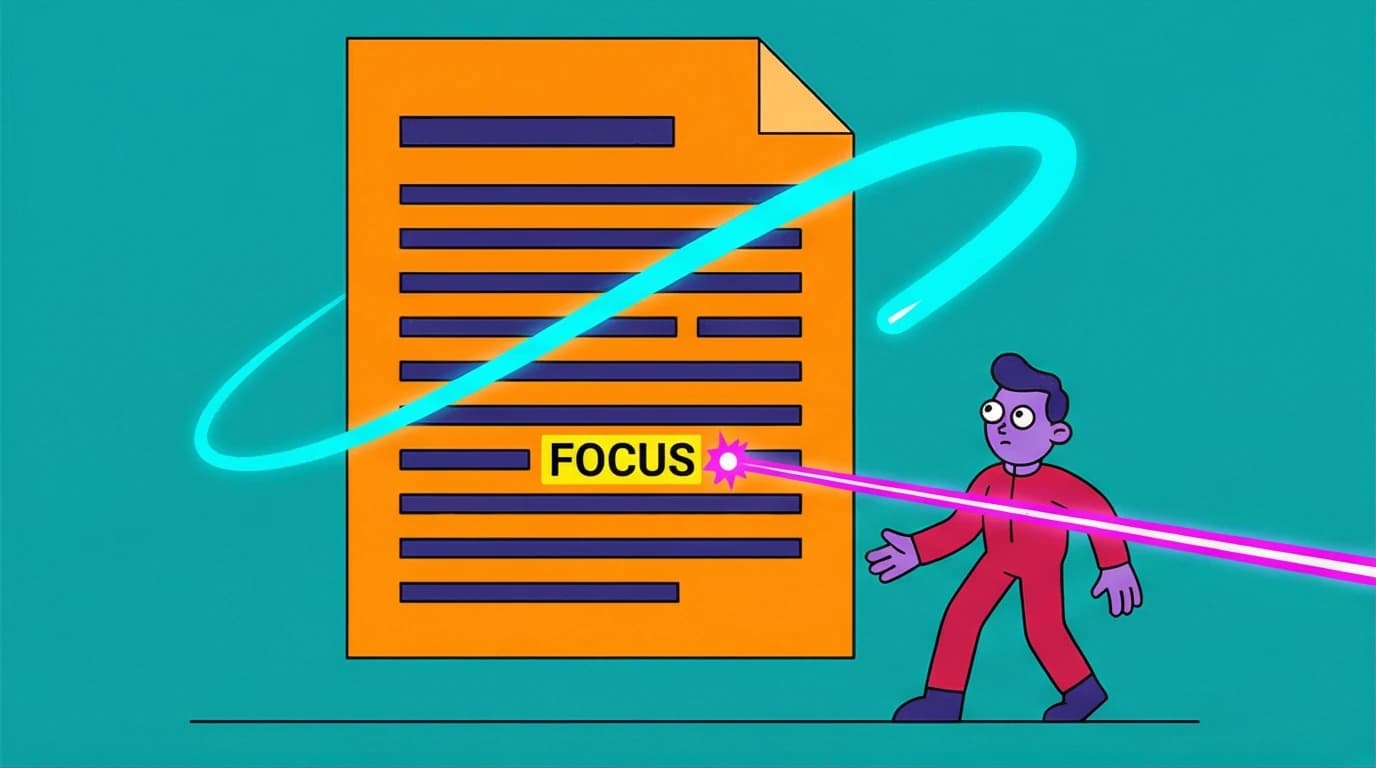
Many people get stuck reading at a slow, linear pace because they treat every word with equal importance. They don't. Knowing when to speed up, when to search, and when to slow down is what separates struggling readers from highly efficient learners. The secret lies in mastering two fundamental strategies: skimming and scanning.
Many people get stuck reading at a slow, linear pace because they treat every word with equal importance. They don't. Knowing when to speed up, when to search, and when to slow down is what separates struggling readers from highly efficient learners. The secret lies in mastering two fundamental strategies: skimming and scanning.
What is Skimming in Reading?
When people ask what is skimming in reading, they are usually looking for a way to read faster. But skimming is not just speed reading. It is a highly selective reading process where you look for the main ideas and the general overview of a text while deliberately skipping the supporting details, stories, and data.
Think of skimming as flying over a city in a helicopter. You can see the major highways, the skyscrapers, and the layout of the neighborhoods, but you cannot read the street signs.
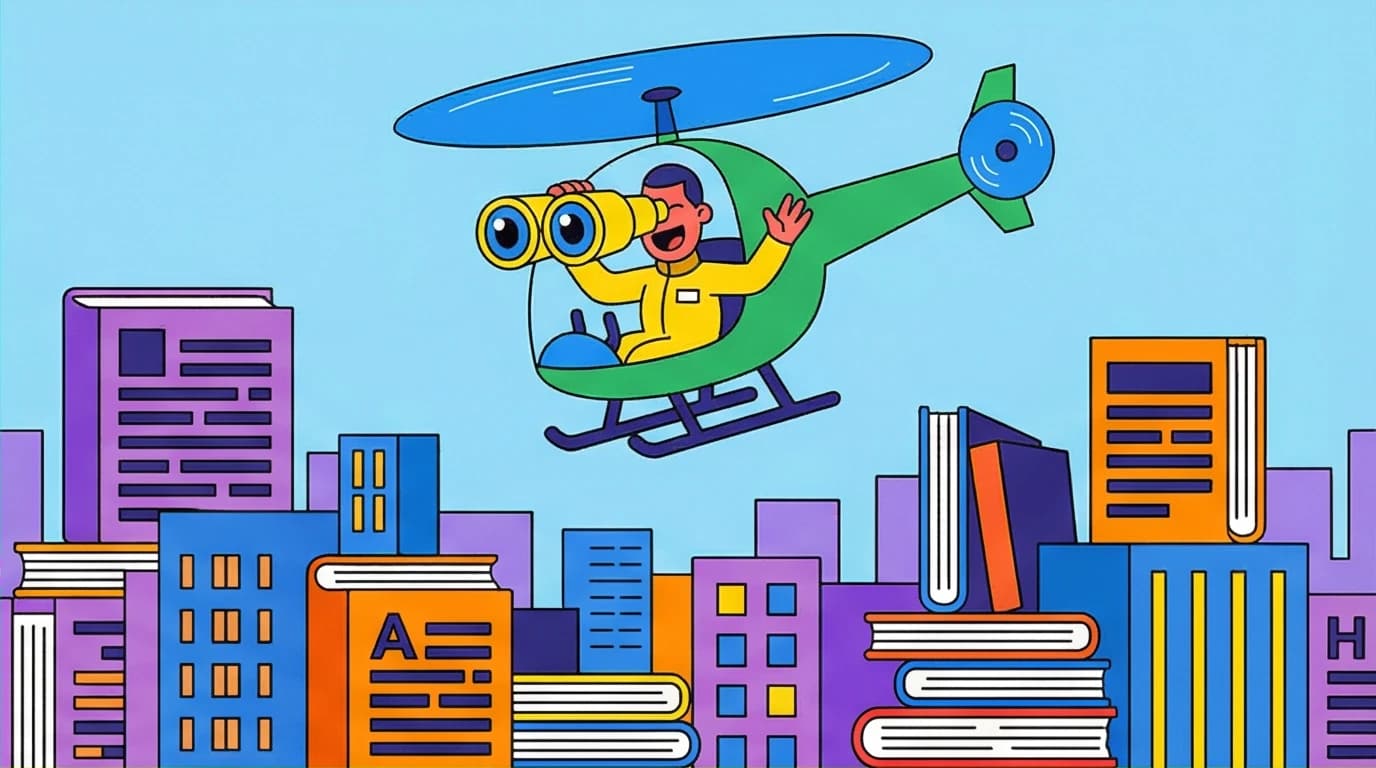
You skim when you need the "gist" of a document. You are trying to figure out what the author is arguing, what the structure of the piece looks like, and whether the material is worth reading in depth later.
How to Skim Effectively
Skimming requires active brain engagement. You cannot just let your eyes glaze over the page. Here is a proven framework to skim any document:
- Read the Title and Subtitle: This sets the context.
- Review the Table of Contents or Headings: Headings act as a roadmap.
- Read the First Paragraph Completely: The introduction usually states the core thesis.
- Read the First Sentence of Every Paragraph: In American English writing, the first sentence is typically the topic sentence. It tells you what the entire paragraph is about.
- Look for Typographical Cues: Notice bold words, italics, bullet points, or charts.
- Read the Last Paragraph Completely: The conclusion summarizes the main takeaways.
If you apply this to a chapter in a textbook, you can process a 30-minute reading assignment in about five minutes, walking away with a solid understanding of the core concepts.
Once you get the hang of looking for topic sentences and structural clues, you will naturally start processing pages much faster. But if you truly want to supercharge your reading rate without sacrificing comprehension, you might want to explore dedicated speed-reading frameworks. Kam Knight’s book breaks down the mechanics of how our eyes and brain process words. It is packed with practical exercises to help you eliminate subvocalization—that little voice in your head reading every single word—so you can fly through textbooks and industry reports with ease.
Speed Reading
Kam Knight
 44 Duration
 8 Key Points
 4.5 Rate
What is Scanning?
Scanning is the opposite of seeking the big picture. When you scan, you do not care about the main idea, the author's tone, or the overarching narrative. You are on a tactical mission to find a specific piece of information.
Think of scanning like looking for a friend in a crowded room. You ignore everyone else's faces and zero in only on the person you are looking for.
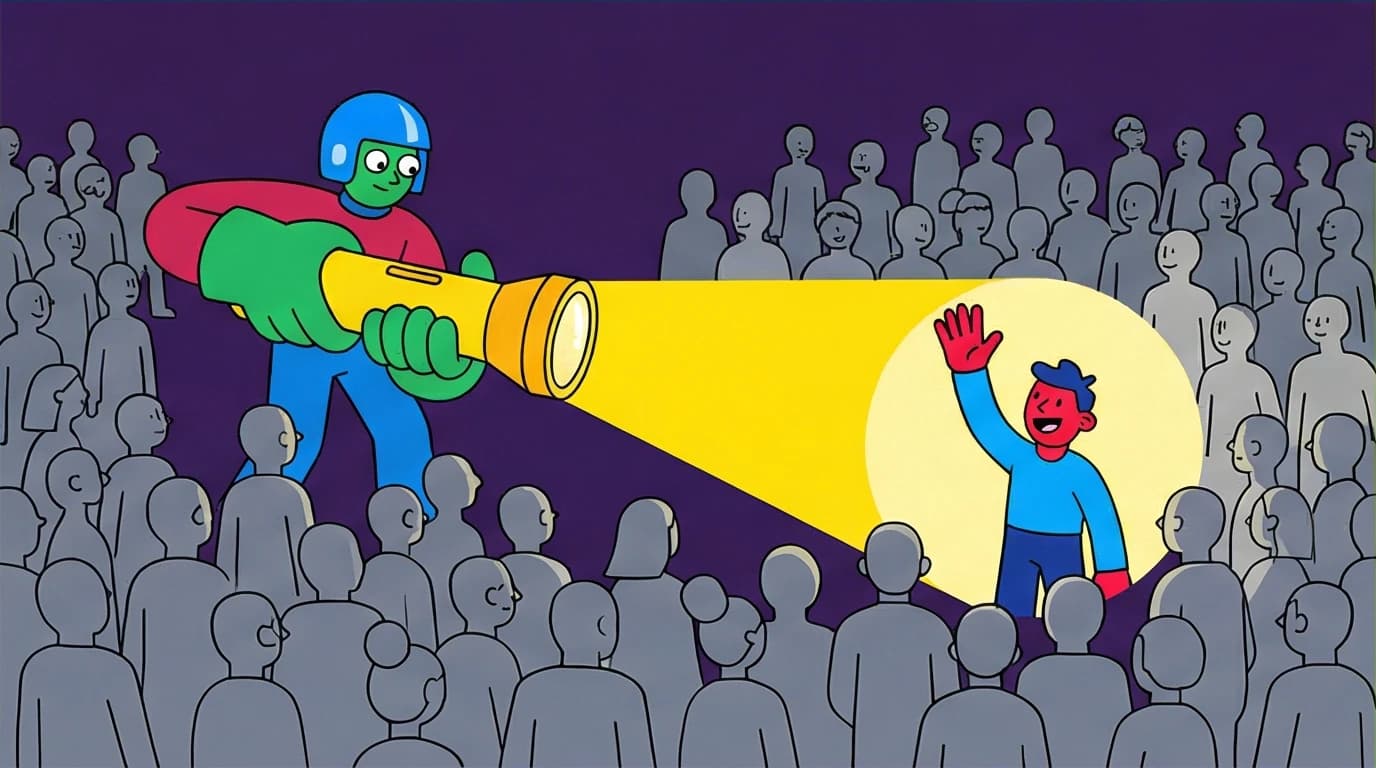
You scan when you already know what you need. You have a specific question in mind—a date, a name, a statistic, a specific vocabulary word—and you run your eyes over the text rapidly until that specific piece of data jumps out at you.
How to Scan Effectively
Scanning is all about visual recognition. To do it well, you must discipline your eyes to ignore the surrounding text.
- Fix the Target in Your Mind: Know exactly what you are looking for. Is it a number? A capitalized name? A specific phrase?
- Use Peripheral Vision: Do not read left to right. Let your eyes move quickly down the center of the page.
- Look for Visual Triggers: If you are looking for a date, scan for numbers. If you are looking for a person, scan for capital letters.
- Stop and Read the Context: Once you spot your target word, stop scanning. Read the sentence before and after it to ensure you have the correct information.
Scanning effectively is ultimately an exercise in pure concentration. You have to train your brain to ignore everything except the exact data point you need, which can be surprisingly difficult in our distraction-heavy world. If you find your eyes wandering or your mind drifting while trying to locate specific information, learning to manage your attention is the next logical step. Chris Bailey explores how to harness your brain’s ability to hone in on a single task, offering actionable advice on how to block out the noise and maintain laser-sharp concentration when you need it most.
Hyperfocus
Chris Bailey
17 Duration7 Key Points4.6 RateThe Exact Difference Between Skimming and Scanning
The difference between skimming and scanning comes down to your primary goal before you even look at the page.
- Your Goal: Are you trying to understand the text (skimming), or are you trying to locate a fact (scanning)?
- What You Read: Skimming involves reading full sentences strategically (like topic sentences). Scanning involves reading almost nothing until you spot your target word.
- The Result: After skimming, you can summarize the article. After scanning, you can answer one specific question, but you might have no idea what the rest of the article was about.
To make the comparison perfectly clear, look at this breakdown:
| Feature | Skimming | Scanning |
| :--- | :--- | :--- |
| Primary Intent | To get the general idea or "gist" | To find a specific fact or detail |
| Eye Movement | Top-to-bottom, jumping between key structural elements | Rapid, erratic, sweeping across text looking for a visual match |
| Comprehension | Broad but shallow understanding | Zero broad understanding; high accuracy on one specific point |
| Best Used For | Deciding if a book is worth buying, reviewing before a test | Finding a stat for a paper, checking a schedule |
| :--- | :--- | :--- |
| Primary Intent | To get the general idea or "gist" | To find a specific fact or detail |
| Eye Movement | Top-to-bottom, jumping between key structural elements | Rapid, erratic, sweeping across text looking for a visual match |
| Comprehension | Broad but shallow understanding | Zero broad understanding; high accuracy on one specific point |
| Best Used For | Deciding if a book is worth buying, reviewing before a test | Finding a stat for a paper, checking a schedule |
Understanding these different approaches fundamentally changes how you interact with written information. You stop treating every text the same and start matching your reading style to your goals. This concept of adjusting your reading gears was famously pioneered by Mortimer J. Adler. His timeless guide remains the gold standard for anyone who wants to become a more demanding, analytical reader. It breaks down the distinct levels of reading—from basic comprehension to deep, critical analysis—and teaches you exactly how to dismantle a tough book to extract its core arguments efficiently.
How to Read a Book
Mortimer J. Adler, Charles Van Doren
18 Duration8 Key Points4.7 RateWhile Adler's classic is the ultimate guide to deep reading, sometimes you first need to decide which books are even worth that level of effort.

This app provides 15-minute summaries of bestselling books, helping you quickly grasp the core arguments and decide which titles deserve a deeper dive.
Download LeapAhead App now
Skimming and Scanning Examples in Real Life
We actually use these techniques naturally in our daily routines. Let’s look at some practical skimming and scanning examples to anchor these concepts.
Examples of Skimming
- Browsing at Barnes & Noble: You pick up a book, read the back cover, flip through the table of contents, and read the first paragraph of chapter one to see if you like the author's style before buying it.
- Checking the Morning News: You scroll through the homepage of the Wall Street Journal or the New York Times, reading only the headlines and the short summary sentences underneath to know what is happening in the world today.
- Sorting Email: You quickly open a long email from your boss, check the first line, glance at the bullet points, and read the final sentence to figure out if you need to take action right now.
Examples of Scanning
- Shopping on Amazon: You are looking at a product page for a new coffee maker, but you only care about one thing: the dimensions. You ignore the marketing copy and sweep your eyes down the page until you see "inches" or "dimensions."
- Checking a Flight Board: You stand in the airport looking at a massive screen of flights. You do not read every city. You look only for "Chicago" and the gate number next to it.
- Finding a Recipe Temperature: You are baking cookies and forgot the oven temperature. You grab the cookbook and drag your finger down the page until you see the word "Fahrenheit" or the degree symbol.
How These Techniques Build Better Reading Comprehension Skills
Many students feel guilty when they skim or scan. They think they are "cheating" the reading process. In reality, knowing when to deploy these tactics is a cornerstone of advanced reading comprehension skills.
Reading word-for-word without a strategy often leads to cognitive overload. Your brain tries to remember every minor detail, and as a result, you forget the main point. By separating the reading process into stages, you take control of how information enters your brain.
The most effective readers do not choose one technique over the other. They combine them.
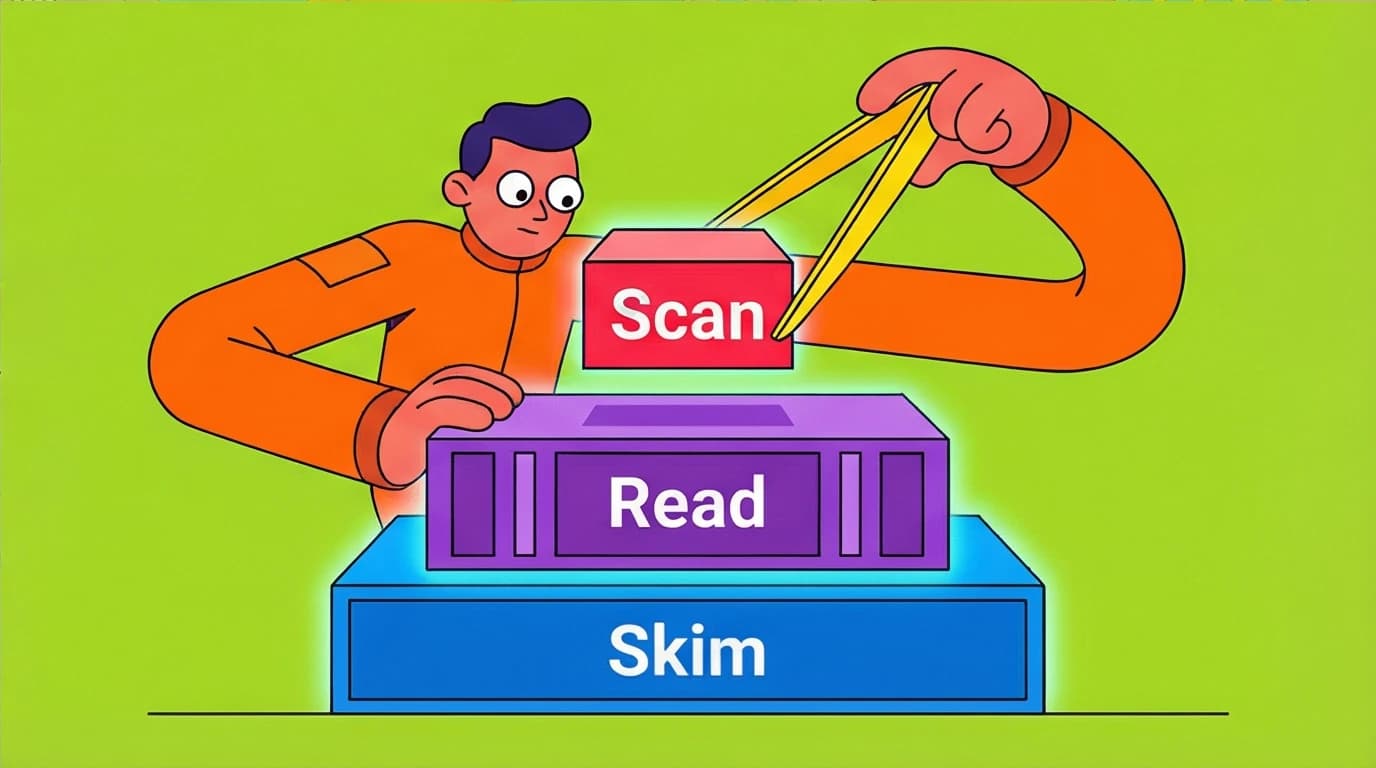
The Strategic Reading Workflow
If you want to master a difficult text, use a layered approach:
- Skim First (The Foundation): Before you read a textbook chapter, spend three minutes skimming it. Look at the headers, the bold terms, and the summary. This primes your brain. You now have a mental folder ready to hold the details.
- Read Carefully (The Fill-in): Now, go back and read the sections that matter at a normal pace. Because you already skimmed, you won't get bogged down in confusing parts—you already know where the chapter is going.
- Scan Later (The Review): A week later, when you are writing an essay and need that specific quote or statistic you remember seeing, you scan the pages to find it quickly.
This workflow transforms you from a passive reader who just absorbs words into an active reader who extracts exactly what they need, exactly when they need it.
Using a layered approach to reading not only saves you hours of time but also significantly boosts how much information you actually remember. By skimming first to build a mental framework and scanning later to review, you are utilizing active recall. If you are a student or professional who needs to retain complex information for the long haul, diving into the science of learning can be a game-changer. This fascinating read debunks common study myths and outlines scientifically proven strategies for locking new knowledge into your long-term memory.
Make It Stick
Peter C. Brown, Mark A. McDaniel, Ph.D., Henry L. Roediger III, Ph.D.
18 Duration8 Key Points4.6 RateBy combining these techniques, you can master any text that comes your way. But for those days when you're too exhausted to even skim a dense report, you can still keep your learning goals on track.
If you want to keep learning on low-energy days, LeapAhead offers 15-minute audio summaries of nonfiction books you can listen to during your commute or while doing chores.
Download LeapAhead App now
FAQ
Can skimming ruin my reading comprehension?
If you only skim and never read deeply, yes. Skimming gives you a superficial understanding. It is excellent for deciding what to read or getting a quick overview, but it cannot replace deep, focused reading when you need to understand complex arguments or learn a completely new subject.
If you only skim and never read deeply, yes. Skimming gives you a superficial understanding. It is excellent for deciding what to read or getting a quick overview, but it cannot replace deep, focused reading when you need to understand complex arguments or learn a completely new subject.
How fast should I be able to skim?
While normal reading speeds hover around 200 to 300 words per minute, a good skimmer can cover 700 to 1,000 words per minute. Remember, you aren't actually reading all 1,000 words; you are processing a 1,000-word page by reading only the structural anchors.
While normal reading speeds hover around 200 to 300 words per minute, a good skimmer can cover 700 to 1,000 words per minute. Remember, you aren't actually reading all 1,000 words; you are processing a 1,000-word page by reading only the structural anchors.
Is it harder to skim and scan on a screen than on paper?
For most people, yes. Digital screens often lead to the "F-pattern" reading behavior, where we read the top line and then just look down the left side of the screen. To combat this, use your mouse cursor to guide your eyes when scanning, and actively use the scroll bar to jump to subheadings when skimming.
For most people, yes. Digital screens often lead to the "F-pattern" reading behavior, where we read the top line and then just look down the left side of the screen. To combat this, use your mouse cursor to guide your eyes when scanning, and actively use the scroll bar to jump to subheadings when skimming.
Do these techniques work for fiction books?
Scanning works well in fiction if you are trying to find where a specific character was introduced or trying to locate a specific piece of dialogue. Skimming is generally not recommended for fiction, as the value of a novel lies in the narrative progression, character development, and the author's prose, all of which are lost when you skip paragraphs.
Scanning works well in fiction if you are trying to find where a specific character was introduced or trying to locate a specific piece of dialogue. Skimming is generally not recommended for fiction, as the value of a novel lies in the narrative progression, character development, and the author's prose, all of which are lost when you skip paragraphs.