


You stare at the ceiling at 2 AM, replaying a minor conversation from three days ago. Your mind runs a marathon of worst-case scenarios, leaving you exhausted before the alarm clock even rings. Overthinking paralyzes your decision-making, drains your energy, and steals your focus. You know you need to stop, but telling an overthinker to "just stop thinking" is like trying to put out a fire with gasoline.
This nighttime struggle is particularly challenging, as the lack of distractions can amplify racing thoughts.
To actually rewire your thought patterns, you need structured, proven methods. The market is flooded with vague motivational content, but true relief comes from understanding the mechanics of your brain. We organized this guide to highlight the absolute standout books about overthinking. These titles offer concrete frameworks, psychological insights, and daily exercises to help you regain mental clarity.

The Top Choices: Books to Stop Overthinking and Reclaim Your Focus
Different types of overthinking require different solutions. Some people need a quick mental reset, while others need deep-dive neuroscience to understand their anxiety. Here is the curated breakdown of the best non-fiction frameworks available today.
1. Stop Overthinking by Nick Trenton
Best for: Immediate, actionable stress relief.
Nick Trenton skips the lengthy psychological background and cuts straight to the tactical execution. If you are actively spiraling and need a way to hit the brakes right now, this is your manual. Trenton breaks down the physiological responses to stress and provides immediate exercises to ground yourself in the present moment.
The Core Framework:
The book leans heavily into the 5-4-3-2-1 grounding technique and the 4 A’s of stress management (Avoid, Alter, Accept, Adapt). It acts as a cognitive first-aid kit.
The book leans heavily into the 5-4-3-2-1 grounding technique and the 4 A’s of stress management (Avoid, Alter, Accept, Adapt). It acts as a cognitive first-aid kit.
Why You Should Read It:
It refuses to waste your time. You will not find endless chapters of theory here. Instead, you get specific journaling prompts, breathing techniques, and time-management strategies designed to eliminate the mental clutter that triggers your over-analysis.
It refuses to waste your time. You will not find endless chapters of theory here. Instead, you get specific journaling prompts, breathing techniques, and time-management strategies designed to eliminate the mental clutter that triggers your over-analysis.
If you are tired of lying awake at 2 AM with a racing heart, this is your immediate action plan. Trenton's approach is perfect for readers who need rapid, practical tools rather than deep psychological theories. Ready to stop the endless mental loop and finally get some peace? Grab a copy of this guide and start applying these grounding techniques tonight to regain control of your stress levels.
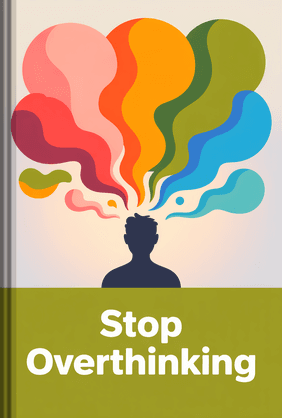
Stop Overthinking
Nick Trenton
 17 Min
 7 Key Points
 4.5 Rate
2. Chatter by Ethan Kross
Best for: Science-minded readers who want to understand their inner voice.
Ethan Kross, an award-winning psychologist, dives into the science of the conversations we have with ourselves. He explains why our inner voice acts as both our greatest coach and our harshest critic. Chatter reveals how exactly the brain gets stuck in negative loops and offers science-backed tools to change the channel.
The Core Framework:
Kross champions "distanced self-talk." He proves through data that simply shifting your internal monologue from first-person ("Why am I so nervous?") to third-person ("Why is John so nervous?") instantly lowers emotional reactivity and helps you process situations logically.
Kross champions "distanced self-talk." He proves through data that simply shifting your internal monologue from first-person ("Why am I so nervous?") to third-person ("Why is John so nervous?") instantly lowers emotional reactivity and helps you process situations logically.
Why You Should Read It:
If you need empirical evidence before you try a mental exercise, Kross delivers. He uses examples from professional athletes, CIA operatives, and top executives to show how high performers manage their mental chatter.
If you need empirical evidence before you try a mental exercise, Kross delivers. He uses examples from professional athletes, CIA operatives, and top executives to show how high performers manage their mental chatter.
For those who love digging into the "why" behind their habits, Kross provides a fascinating look at the neuroscience of our inner voice. If you want to harness your internal monologue like a top-tier athlete or executive, rather than letting it run you ragged, this deep dive is a fantastic addition to your nightstand. Check out his research-backed strategies to turn your biggest critic into your best coach.
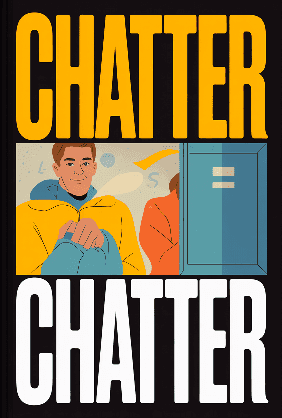
Chatter
Ethan Kross, Ph.D.
23 Min10 Key Points4.2 Rate3. Soundtracks by Jon Acuff
Best for: Career-driven individuals and chronic perfectionists.
Jon Acuff defines overthinking as "a soundtrack that plays in the background of your mind." The problem is not that you think too much; the problem is that you are listening to broken, negative soundtracks. Instead of trying to empty your mind, Acuff teaches you how to replace the bad music with empowering, action-oriented tracks.
The Core Framework:
Acuff forces you to ask three simple questions about your recurring thoughts: Is it true? Is it helpful? Is it kind? If a thought fails this test, you actively retire that soundtrack and consciously write a new one.
Acuff forces you to ask three simple questions about your recurring thoughts: Is it true? Is it helpful? Is it kind? If a thought fails this test, you actively retire that soundtrack and consciously write a new one.
Why You Should Read It:
Acuff’s tone is highly conversational and genuinely funny. It is one of the most engaging books to stop overthinking because it frames your busy mind as a superpower. You just need to point that immense brainpower in a productive direction.
Acuff’s tone is highly conversational and genuinely funny. It is one of the most engaging books to stop overthinking because it frames your busy mind as a superpower. You just need to point that immense brainpower in a productive direction.
Acuff’s relatable humor makes tackling a heavy topic like overthinking feel incredibly doable. If you find yourself paralyzed by perfectionism or constantly replaying negative scenarios at work, this book is a must-read. It gives you permission to use your active mind as an asset rather than a liability. Dive into his actionable framework to start writing new, empowering tracks for your brain today.

Soundtracks
Jon Acuff
20 Min7 Key Points4.3 Rate
4. Unwinding Anxiety by Judson Brewer
Best for: Breaking deep-rooted habits of worry and fear.
Anxiety and overthinking feed off each other. Judson Brewer, an addiction psychiatrist and neuroscientist, approaches anxiety not as an emotion, but as a habit. This is widely considered one of the most effective self help books for anxiety because it maps out exactly how your brain gets addicted to worrying.
The Core Framework:
Brewer breaks down the Habit Loop: Trigger, Behavior, Reward. He demonstrates that your brain uses overthinking as a false sense of control (the reward) to soothe uncertainty (the trigger). By applying mindfulness and mapping these loops, you strip the reward away and break the cycle.
Brewer breaks down the Habit Loop: Trigger, Behavior, Reward. He demonstrates that your brain uses overthinking as a false sense of control (the reward) to soothe uncertainty (the trigger). By applying mindfulness and mapping these loops, you strip the reward away and break the cycle.
Why You Should Read It:
If your overthinking feels compulsive—like an itch you have to scratch—Brewer’s addiction-based framework will completely change your perspective. It gives you a clinical but accessible way to map out your specific anxiety triggers.
If your overthinking feels compulsive—like an itch you have to scratch—Brewer’s addiction-based framework will completely change your perspective. It gives you a clinical but accessible way to map out your specific anxiety triggers.
5. Declutter Your Mind by S.J. Scott and Barrie Davenport
Best for: Minimalists and those overwhelmed by modern distractions.
A messy physical environment and a calendar packed with useless obligations directly contribute to a chaotic mind. Scott and Davenport tackle overthinking from a lifestyle design perspective. They argue that you cannot stop overthinking if your life is fundamentally designed to cause you stress.
The Core Framework:
The book divides your life into four quadrants: thoughts, life obligations, relationships, and surroundings. You systematically audit each area, ruthlessly eliminating the things that do not align with your core values.
The book divides your life into four quadrants: thoughts, life obligations, relationships, and surroundings. You systematically audit each area, ruthlessly eliminating the things that do not align with your core values.
Why You Should Read It:
It makes abstract mental health concepts tangible. You will literally organize your workspace, clean out your digital life, and learn how to say "no" to draining social events. It is a highly practical, lifestyle-first approach.
It makes abstract mental health concepts tangible. You will literally organize your workspace, clean out your digital life, and learn how to say "no" to draining social events. It is a highly practical, lifestyle-first approach.
You simply cannot out-think a lifestyle that is fundamentally chaotic. If your physical space is overflowing and your calendar is packed with obligations that drain your energy, this guide is your blueprint for a reset. Ready to clear out the digital and physical junk so your brain finally has room to breathe? Pick up this actionable workbook and start auditing your life one quadrant at a time.
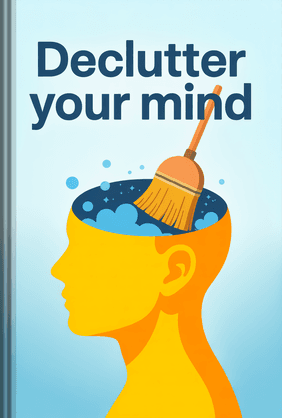
Declutter Your Mind
S. J. Scott & Barrie Davenport
23 Min9 Key Points4.6 Rate6. Clear Thinking by Shane Parrish
Best for: Decision-makers struggling with analysis paralysis.
Shane Parrish, the mind behind Farnam Street, focuses on how overthinking ruins our ability to make good choices. When you over-analyze a business decision, an investment, or a career move, you often miss the window of opportunity. Clear Thinking is about setting up systems so you do not have to rely on willpower or endless deliberation in the moment.
The Core Framework:
Parrish introduces the concept of "Standard Operating Procedures" (SOPs) for your personal life. By pre-deciding how you will handle specific situations, you remove the burden of choice.
Parrish introduces the concept of "Standard Operating Procedures" (SOPs) for your personal life. By pre-deciding how you will handle specific situations, you remove the burden of choice.
Why You Should Read It:
If overthinking is actively hurting your career or financial choices, this book provides the mental models necessary to act swiftly and decisively.
If overthinking is actively hurting your career or financial choices, this book provides the mental models necessary to act swiftly and decisively.
Recognizing when deep thought crosses the line into analysis paralysis is a skill in itself.
7. The Untethered Soul by Michael A. Singer
Best for: Readers open to mindfulness and a spiritual approach.
While the previous books focus on cognitive tactics, Michael Singer takes a step back to observe consciousness itself. He teaches you how to detach your identity from the voice inside your head. You are not the frantic thoughts; you are the awareness observing them.
The Core Framework:
Singer uses the analogy of "the roommate in your head." If a real person walked around with you all day complaining, obsessing, and panicking the way your inner voice does, you would kick them out. Recognizing this absurd relationship is the first step to distancing yourself from it.
Singer uses the analogy of "the roommate in your head." If a real person walked around with you all day complaining, obsessing, and panicking the way your inner voice does, you would kick them out. Recognizing this absurd relationship is the first step to distancing yourself from it.
Why You Should Read It:
It offers a profound paradigm shift. It is less about fighting your thoughts and more about letting them pass through you without attaching meaning to them.
It offers a profound paradigm shift. It is less about fighting your thoughts and more about letting them pass through you without attaching meaning to them.
Singer’s transformative approach offers profound relief for anyone exhausted by the constant chatter of their own mind. By learning to step back and simply observe your thoughts without getting tangled up in them, you can find a deep sense of inner peace. If you are ready to finally evict that noisy "roommate" in your head and experience true mental freedom, this spiritual classic is essential reading.
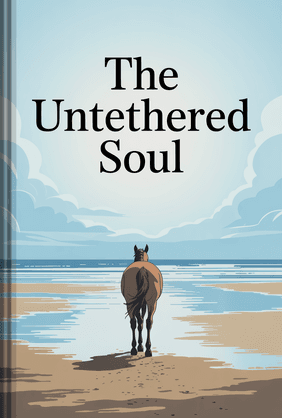
The Untethered Soul
Michael A. Singer
26 Min9 Key Points4.6 RateThe Case for Overthinking Audiobooks
Sitting down in a quiet room to read a physical book can sometimes trigger more overthinking. The silence allows the mind to wander right back to your anxieties. This is where overthinking audiobooks become a massive advantage.
Listening to an audiobook on Audible or Apple Books while physically moving—whether you are walking three miles, lifting weights, or driving down the highway—occupies just enough of your brain's processing power to keep your internal monologue quiet.
For those who want to get the key takeaways from these books but are short on time, a book summary app can be an even more efficient option.

LeapAhead offers 15-minute audio summaries of books like these, perfect for listening during a walk or commute when you need to quiet your mind but don't have time for a full audiobook.
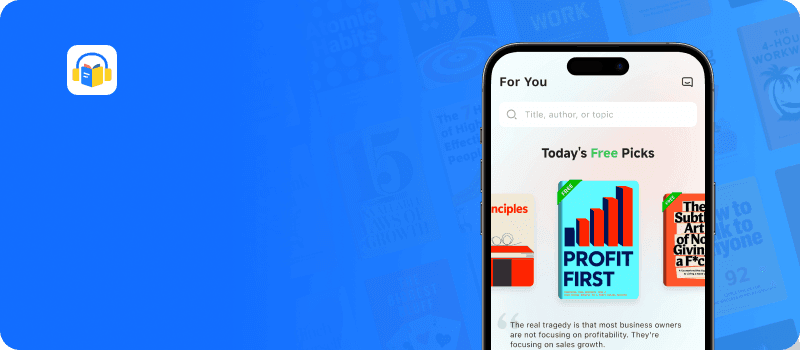
Download LeapAhead App now
How to optimize the audiobook experience:
- Pair it with a physical task: Do the dishes, fold laundry, or organize your garage while listening. The physical engagement keeps you grounded.
- Use bookmarks: When you hear an exercise that resonates, use the app's bookmark feature. Write it down in a notebook later.
- Adjust the speed: Many overthinkers actually prefer listening at 1.2x or 1.5x speed. The faster pace forces your brain to pay closer attention, leaving zero room for background anxiety.
Jon Acuff’s Soundtracks and Ethan Kross’s Chatter are exceptional in audio format, as both authors narrate their own work with a cadence that keeps you entirely engaged.
How to Execute: Don't Just Read, Apply

A major trap for the overactive mind is reading five self-improvement books back-to-back without changing a single habit. This is just another form of overthinking disguised as productivity. To actually get value from the primary keyword topics we just covered, you must enforce execution.
If the thought of adding even one more full book to your to-do list feels overwhelming, you can start by absorbing the key ideas from these titles in a more manageable format.
LeapAhead helps you grasp the core frameworks from books on overthinking in just 15-minute audio or text summaries, so you can apply the lessons without the reading-list pressure.
Download LeapAhead App now
- Pick one book only. Do not buy three books at Barnes & Noble today. Buy one. If you are paralyzed by the choice, start with Stop Overthinking by Nick Trenton.
- Read with a pen. Treat the book like a workbook. Highlight the frameworks.
- Test one framework for 48 hours. If the book suggests a brain-dump journal before bed, do not analyze whether it will work. Just grab a notebook and do it for two nights. Evaluate the results based on action, not theory.
FAQ
Q: Are these books a substitute for professional therapy?
No. While the best books for overthinking provide excellent daily management tools and cognitive frameworks, they are not a replacement for a licensed therapist. If your overthinking involves severe trauma, clinical OCD, or crippling panic attacks, use these books as a supplement to professional psychological help.
No. While the best books for overthinking provide excellent daily management tools and cognitive frameworks, they are not a replacement for a licensed therapist. If your overthinking involves severe trauma, clinical OCD, or crippling panic attacks, use these books as a supplement to professional psychological help.
Q: I buy self-help books but overthink the exercises so much I never finish them. What do I do?
You are experiencing analysis paralysis on the cure itself. Stop trying to do every exercise perfectly. Choose one single exercise—like the 5-4-3-2-1 grounding method—and commit to doing it poorly. Lower the stakes. Action cures fear; perfectionism fuels it.
You are experiencing analysis paralysis on the cure itself. Stop trying to do every exercise perfectly. Choose one single exercise—like the 5-4-3-2-1 grounding method—and commit to doing it poorly. Lower the stakes. Action cures fear; perfectionism fuels it.
Q: Do self help books for anxiety actually work for chronic overthinkers?
They work exactly as well as you apply them. Passive reading provides a temporary dopamine hit of feeling "productive." The actual neurological change happens when you close the book and aggressively apply the habit loops or cognitive restructuring techniques in your real-life stress moments.
They work exactly as well as you apply them. Passive reading provides a temporary dopamine hit of feeling "productive." The actual neurological change happens when you close the book and aggressively apply the habit loops or cognitive restructuring techniques in your real-life stress moments.
Q: Physical books, Kindle, or Audiobooks—which is best?
If you have trouble focusing, start with an audiobook during a walk. If you want to actively study the frameworks and take notes, a physical paperback from Amazon or a local bookstore is best because it forces you off your digital devices, which are often the source of mental clutter.
If you have trouble focusing, start with an audiobook during a walk. If you want to actively study the frameworks and take notes, a physical paperback from Amazon or a local bookstore is best because it forces you off your digital devices, which are often the source of mental clutter.