

You know exactly what you need to do. You have the apps, the expensive planners, and the color-coded calendars synced across all your devices. Yet, you still find yourself staring at a blank screen, endlessly scrolling, or reorganizing your desk for the fourth time this week. This is the frustrating reality of chronic delay. Procrastination is not a time management problem; it is an emotion regulation problem.
To break the cycle, you need more than a motivational YouTube video. You need proven, scientifically backed frameworks. This guide breaks down the absolute top books to overcome procrastination, categorized by the specific psychological hurdles holding you back.
Why Most Productivity Advice Fails You
Before adding a dozen items to your Amazon cart, you need to realize why standard advice falls flat. Most self help books for productivity treat procrastination as a simple deficit of willpower. They tell you to "just do it" or push harder.
This fundamentally misreads human behavior. When you procrastinate, your brain is actually successfully executing a defense mechanism. It is protecting you from negative emotions associated with a task: fear of failure, confusion, boredom, or resentment. The literature that actually works will teach you how to bypass this emotional threat response, rather than trying to fight your own neurobiology with sheer force.
Understanding this emotional core is the first step. For a deeper dive into the specific psychological patterns that drive this behavior, from fear of failure to issues with emotional regulation, consider reading our comprehensive guide.



Feeling overwhelmed by long reading lists? Get the core ideas from bestselling books on productivity and focus in just 15 minutes.
 LeapAhead
The Definitive Reading List: Books to Overcome Procrastination
Here are the masterclasses in behavioral change. Choose the one that directly targets your specific flavor of delay.
1. For the Perfectionist: The Now Habit by Neil Fiore
Perfectionists are often the worst procrastinators. When your standard for success is flawlessness, the safest way to avoid failure is to never start. Neil Fiore radically shifts this paradigm.
- The Core Premise: Procrastination is a coping mechanism for anxiety. We delay tasks because we view them as massive, unending obligations that threaten our self-worth.
- The Paradigm Shift: Shift your internal dialogue from "I have to finish" to "I choose to start." Fiore introduces the concept of the "Unschedule," where you schedule your guilt-free play, meals, and rest first, and only fit work into the remaining slots.
- Immediate Action Step: Look at your calendar for tomorrow. Block out 30 minutes for a hobby, an hour for a workout, and 45 minutes for lunch. Commit to these rigidly. Notice how limiting your work window forces your brain to prioritize.
- Format Note: This is highly conceptual but practical. It works wonderfully as a physical copy you can highlight, easily found at any Barnes & Noble.
If you recognize yourself in this cycle of perfectionism and anxiety, diving into the complete text of The Now Habit is a game-changer. Dr. Neil Fiore provides a wealth of practical exercises beyond the Unschedule to help you rewrite your internal script. Grabbing a copy of this classic will give you the exact tools you need to stop beating yourself up and finally start making meaningful progress on your most intimidating projects.
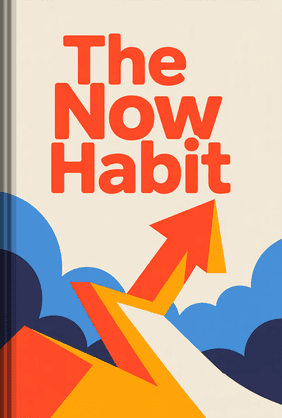
The Now Habit
Neil Fiore, Ph.D.
 26 Min
 8 Key Points
 4.6 Rate
2. For the System Builder: Atomic Habits by James Clear
While not strictly labeled as a procrastination manual, this is the reigning champion among habit building books. James Clear argues that you do not rise to the level of your goals; you fall to the level of your systems.
- The Core Premise: Motivation is fleeting. Environment and friction dictate your actions. If you procrastinate, your environment is likely designed for distraction rather than execution.
- The Paradigm Shift: The 2-Minute Rule. Scale any massive project down into a two-minute action. You aren't writing a 50-page report; you are opening your laptop and writing one single sentence.
- Immediate Action Step: Redesign your workspace tonight. If you want to read more, put a book directly on your pillow. If you want to stop scrolling your phone in the morning, plug your charger in another room.
- Format Note: Highly rated on Goodreads for a reason. Clear's narration makes this one of the best audiobooks for focus and habit installation during a morning commute.
While the 2-Minute Rule is a fantastic starting point, James Clear's full framework goes much deeper into the psychology of identity-based habits. Atomic Habits is essentially the ultimate blueprint for redesigning your environment so that productivity becomes frictionless. If you want to permanently overhaul your daily routines without relying on sheer willpower, adding this international bestseller to your library is an absolute must.
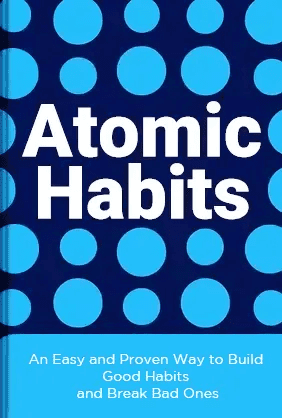
Atomic Habits
James Clear
26 Min7 Key Points4.7 Rate
3. For the Emotionally Overwhelmed: Solving the Procrastination Puzzle by Timothy A. Pychyl
Dr. Timothy Pychyl is a leading researcher on the psychology of procrastination. This book is exceptionally short, incredibly dense, and directly translates academic research into practical advice.
- The Core Premise: We put things off to repair our short-term mood. We feel bad about a task, so we watch a video to feel better. Pychyl calls this "giving in to feel good."
- The Paradigm Shift: You do not need to feel in the mood to do a task. Your emotional state does not need to match your physical action.
- Immediate Action Step: The next time you feel the urge to click away from a hard task, recognize the emotion. Say out loud, "I am feeling frustrated by this spreadsheet, and I want to quit. But I am going to just prep the first column anyway."
- Format Note: At just under 120 pages, this is a perfect, punchy read for your Kindle or Apple Books app.
4. For the Time-Crunched Learner: The LeapAhead App
Sometimes, the biggest barrier to starting is the format itself. The thought of a 300-page book can create enough friction to cause endless delay. This is where a microlearning approach can act as a powerful catalyst to break the cycle of "reading debt"—the guilt of having a pile of unread books.
- The Core Premise: If your attention is fragmented, your learning method should adapt. Overwhelming tasks fuel procrastination, but absorbing the key ideas from a book in 15 minutes makes knowledge acquisition feel achievable.
- The Paradigm Shift: Move from "I have to finish this entire book" to "I can learn the core concepts right now." By lowering the activation energy, you build momentum and create a consistent learning habit instead of putting it off indefinitely.
- Immediate Action Step: Instead of adding another book to your to-do list, download the app and listen to one 15-minute summary during your lunch break. Your goal isn't to master a book, but to absorb one useful idea without pressure.
- Format Note: As a mobile-first app with both audio and text summaries, LeapAhead is designed for on-the-go learning. While this is ideal for commutes and workouts, users who prefer long-form study on a desktop may find the experience limiting. Similarly, those seeking deep academic nuance will find the summaries are a starting point, not a full replacement for dense texts.
5. For the Task-Paralyzed: Eat That Frog! by Brian Tracy
Sometimes you just need a tactical, ruthless prioritization system. If your procrastination stems from simply having too many things to do and not knowing where to start, Brian Tracy delivers.
- The Core Premise: If the first thing you do each morning is eat a live frog, you can go through the rest of the day knowing the worst is behind you. Your "frog" is your biggest, most important task.
- The Paradigm Shift: Activity does not equal accomplishment. Clearing 50 minor emails feels productive but is actually a form of procrastination if your main project remains untouched.
- Immediate Action Step: Write down your top three tasks for tomorrow. Identify the absolute ugliest, most difficult one. Do it the moment you sit at your desk tomorrow morning, before checking a single email.
Identifying your "frog" is only the first step in Brian Tracy's legendary productivity system. If you constantly feel bogged down by endless to-do lists, Eat That Frog! outlines twenty-one specific, actionable principles to help you tackle your most critical tasks first. It is a quick, high-impact read that will teach you exactly how to ruthlessly prioritize your workday and maximize your personal efficiency.
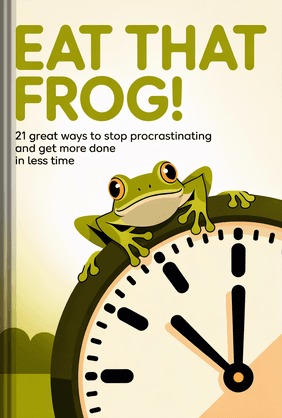
Eat That Frog! 21 Great Ways to Stop Procrastinating and Get More Done in Less Time
Brian Tracy
20 Min9 Key Points4.8 Rate6. For the Deep Thinker: Procrastination: Why You Do It, What to Do About It Now by Jane B. Burka and Lenora M. Yuen
Written by two psychologists, this is the deepest psychoanalytical dive into the roots of procrastination.
- The Core Premise: Procrastination is a deeply ingrained psychological issue rooted in our relationship with success, failure, control, and time.
- The Paradigm Shift: Uncovering the "hidden" reasons you delay. Are you rebelling against authority? Are you afraid that if you try your best and fail, you are fundamentally flawed?
- Immediate Action Step: Track your excuses for one week. Write down the exact lies you tell yourself ("I work better under pressure," "I'll feel more like it tomorrow"). Recognizing your specific brand of self-deception strips it of its power.
7. For the Distracted Mind: Deep Work by Cal Newport
Distraction and procrastination are two sides of the same coin. Cal Newport addresses the modern necessity of focusing without distraction in a cognitively demanding world.
- The Core Premise: The ability to perform deep, uninterrupted work is becoming increasingly rare and simultaneously more valuable in our economy.
- The Paradigm Shift: Willpower is finite. Relying on self-control to avoid checking social media while doing hard work is a losing battle. You must engineer isolation.
- Immediate Action Step: Schedule a 90-minute block of deep work tomorrow. Turn your phone completely off and put it in a drawer. Disconnect your computer from the Wi-Fi if your task allows it.
- Format Note: Newport’s structured, logical delivery makes this a top contender if you are seeking the best audiobooks for focus.
Engineering isolation for 90 minutes takes practice, but mastering this skill can completely transform your career trajectory. In Deep Work, Cal Newport explores exactly how to cultivate intense focus and produce high-level results in a world optimized for constant distraction. If you are tired of losing hours to your smartphone and want to reclaim your cognitive bandwidth, this book provides a rigorous but highly rewarding training plan.
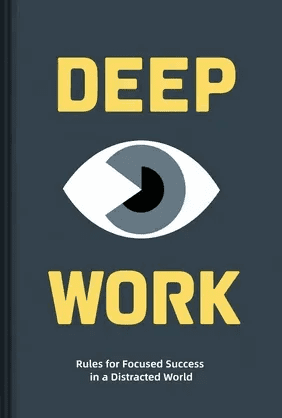
Deep Work
Cal Newport
47 Min8 Key Points4.6 RateHow to Choose Your Next Read
Do not fall into the trap of buying all seven recommendations right now. That is just another form of procrastination. Use this diagnostic matrix:
- If you feel intense guilt and anxiety when trying to relax: Read The Now Habit.
- If your desk is a mess and you rely purely on motivation: Read Atomic Habits.
- If you feel physically repulsed by boring or hard tasks: Read Solving the Procrastination Puzzle.
- If the thought of starting a full book feels too overwhelming: Try the LeapAhead app.
- If your to-do list is 40 items long and you are paralyzed: Read Eat That Frog!.
- If you literally cannot stop checking your phone: Read Deep Work.
Ready to turn learning into a simple daily habit? Try LeapAhead to absorb key insights from top books without the time commitment.
LeapAheadThe "Productivity Porn" Trap: A Crucial Warning
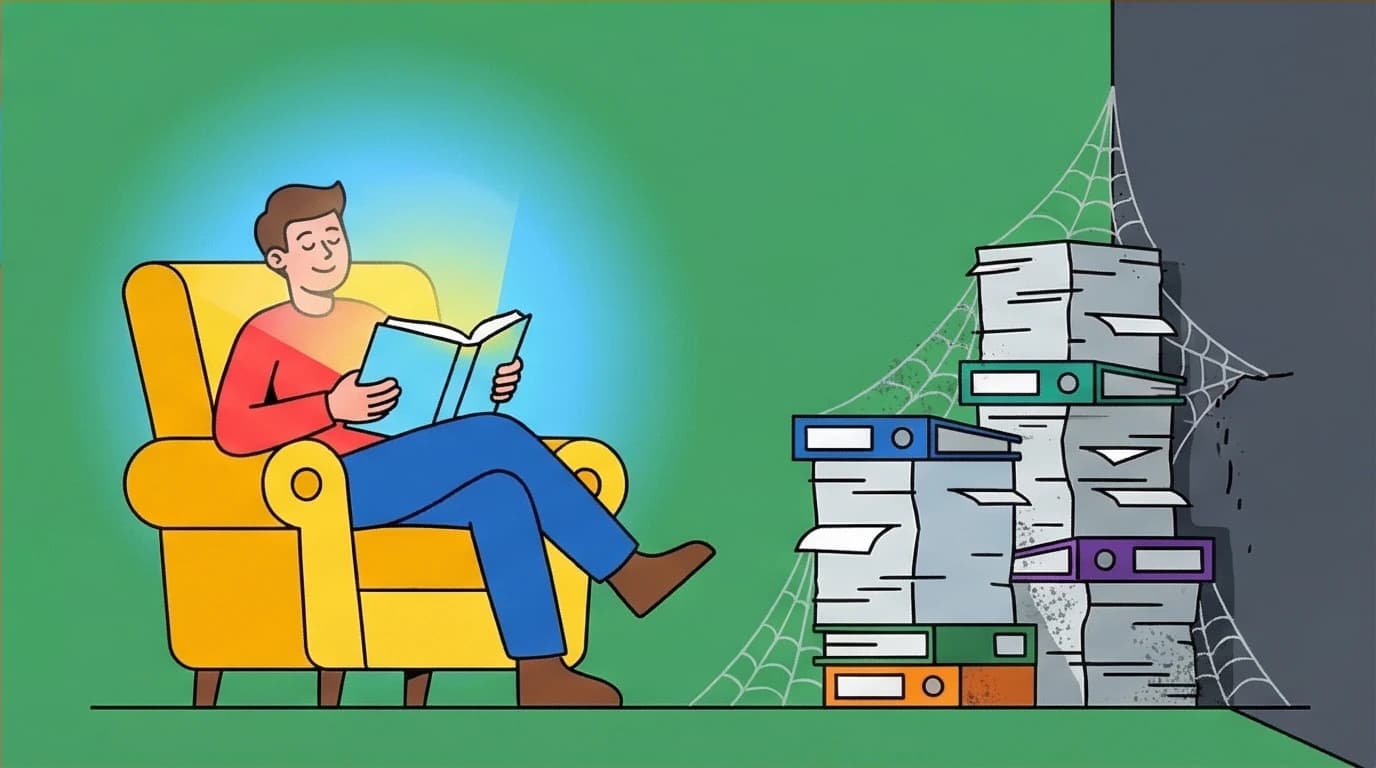
There is a well-documented phenomenon where reading self help books for productivity triggers a dopamine release identical to actually doing the work. You finish a chapter of Atomic Habits, feel a surge of motivation, and mistakenly tell your brain you have accomplished something. You haven't. You have merely consumed information.
To avoid this trap, implement the One-Chapter Rule. For every chapter you read, you must identify one physical action to take in the real world before starting the next chapter. If a book tells you to clear your digital desktop, stop reading and clear it. Action bridges the gap between theory and transformation.
Reading provides the framework, but action creates results. If you're ready to move from theory to practice with a set of immediate, actionable techniques, we've compiled some proven methods to get you started.
FAQ
Is reading a book about procrastination just another way to procrastinate?
Yes, it absolutely can be. This is known as "productive procrastination." You feel like you are working on the problem, but you are actually delaying the difficult task in front of you. To bypass this, limit your reading to your commute or before bed. Do not use reading as an excuse to avoid your primary work block during the day.
Yes, it absolutely can be. This is known as "productive procrastination." You feel like you are working on the problem, but you are actually delaying the difficult task in front of you. To bypass this, limit your reading to your commute or before bed. Do not use reading as an excuse to avoid your primary work block during the day.
Should I listen to an audiobook or read a physical copy?
It depends on your retention style and the book's structure. Theoretical and psychological books (Deep Work, The Now Habit) make excellent audiobooks. Highly tactical habit building books that require you to fill out charts or reference lists (Atomic Habits, Eat That Frog!) are generally better consumed as physical or Kindle books where you can highlight and bookmark easily.
It depends on your retention style and the book's structure. Theoretical and psychological books (Deep Work, The Now Habit) make excellent audiobooks. Highly tactical habit building books that require you to fill out charts or reference lists (Atomic Habits, Eat That Frog!) are generally better consumed as physical or Kindle books where you can highlight and bookmark easily.
I’ve read multiple books on this topic, but nothing sticks long-term. What am I doing wrong?
You are likely trying to overhaul your entire personality overnight. Books provide frameworks, but humans adapt slowly. Pick one single friction point—like leaving your phone in another room—and practice it for 30 days. Discard the rest of the book's advice until that one single habit becomes involuntary.
You are likely trying to overhaul your entire personality overnight. Books provide frameworks, but humans adapt slowly. Pick one single friction point—like leaving your phone in another room—and practice it for 30 days. Discard the rest of the book's advice until that one single habit becomes involuntary.
Are there scientific books on this, or is it all just motivational speaking?
There is a massive difference between motivational fluff and behavioral science. If you want strict science, skip the mainstream business section. Go directly to Dr. Timothy Pychyl's Solving the Procrastination Puzzle or research papers by Dr. Piers Steel. These are grounded entirely in neurobiology and clinical psychology rather than personal anecdotes.
There is a massive difference between motivational fluff and behavioral science. If you want strict science, skip the mainstream business section. Go directly to Dr. Timothy Pychyl's Solving the Procrastination Puzzle or research papers by Dr. Piers Steel. These are grounded entirely in neurobiology and clinical psychology rather than personal anecdotes.