

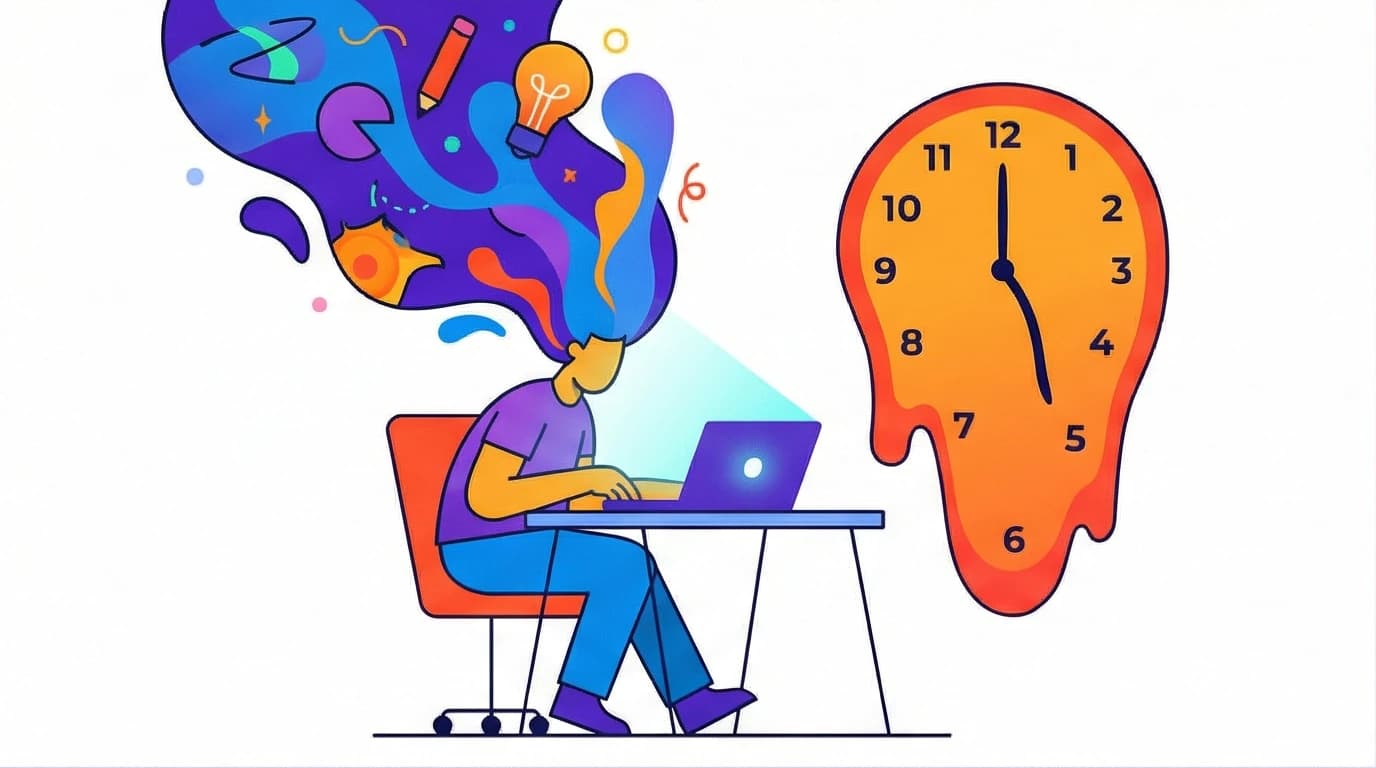
You sit down at your desk to tackle a difficult project, and suddenly, three hours vanish. You didn't check your phone, you didn't hear the Amazon delivery driver at the door, and the work just poured out of you effortlessly. Athletes often refer to this as being "in the zone." Psychologists call it flow.
If you have recently heard a productivity podcaster or a Silicon Valley executive mention it, you might wonder if this is just another self-help buzzword. It is not. Being in the zone psychology is rooted in decades of rigorous scientific research. Understanding the cognitive mechanics behind this state is the first step toward replicating it, turning peak performance from a happy accident into a repeatable process.
What is Flow State? The Core Psychological Definition
To understand what happens in your brain during peak performance, we have to look at the origins of the concept. The term was coined in the 1970s by the late psychologist Mihaly Csikszentmihalyi. He was fascinated by painters who would get so absorbed in their canvas that they would ignore food, water, and fatigue. He wanted to decode the psychology of optimal experience.
Through extensive interviews with chess players, surgeons, rock climbers, and musicians, the Mihaly Csikszentmihalyi flow theory established that flow is not an exclusive talent reserved for elite performers. It is a universal human cognitive state.
Csikszentmihalyi identified several distinct characteristics that define a true flow state:
- Action and Awareness Merge: You stop thinking about the mechanics of what you are doing. The action becomes automatic.
- Loss of Self-Consciousness: The inner critic in your head goes entirely silent. You stop judging your performance.
- Time Distortion: Time either speeds up (hours feel like minutes) or slows down (a basketball player seeing the ball move in slow motion).
- Autotelic Experience: The activity becomes its own reward. You are not doing it solely for the end result; the process itself is deeply satisfying.
These are the telltale signs of being in the zone. Each one plays a critical role in the psychology of optimal experience, and understanding them helps in recognizing and cultivating this state.
If you want to dive straight into the source material that started the entire movement around peak performance, there is no better starting point than the original work by Mihaly Csikszentmihalyi himself. His groundbreaking research on the psychology of optimal experience lays out exactly how we can engineer more joy and meaning into our daily lives—whether we are at the office, playing a sport, or just working on a weekend hobby. It is an essential read for anyone serious about mastering their mental state.
For those who want a condensed version of his key findings before committing to the full text, a detailed summary of the book Flow can provide an excellent overview of its foundational concepts.
Flow
Mihaly Csikszentmihalyi
 37 Min
 8 Key Points
 4.6 Rate
If you're eager to absorb the principles from foundational books like Flow but find it hard to set aside hours for reading, you can get a head start on the core concepts.
---APP_DATA--- description: Understand the key insights from foundational psychology books like Flow in 15-minute audio or text summaries, perfect for absorbing big ideas on a busy schedule. ---END_APP---
The Neuroscience: What Happens Inside Your Brain?
Flow state psychology goes far beyond subjective feelings. Modern neuroscience reveals massive shifts in brain function when you enter this zone.
Transient Hypofrontality
The most significant neurological shift during flow is called transient hypofrontality. "Transient" means temporary. "Hypo" means less. "Frontality" refers to the prefrontal cortex—the front part of your brain responsible for complex decision-making, conscious thought, and self-awareness.
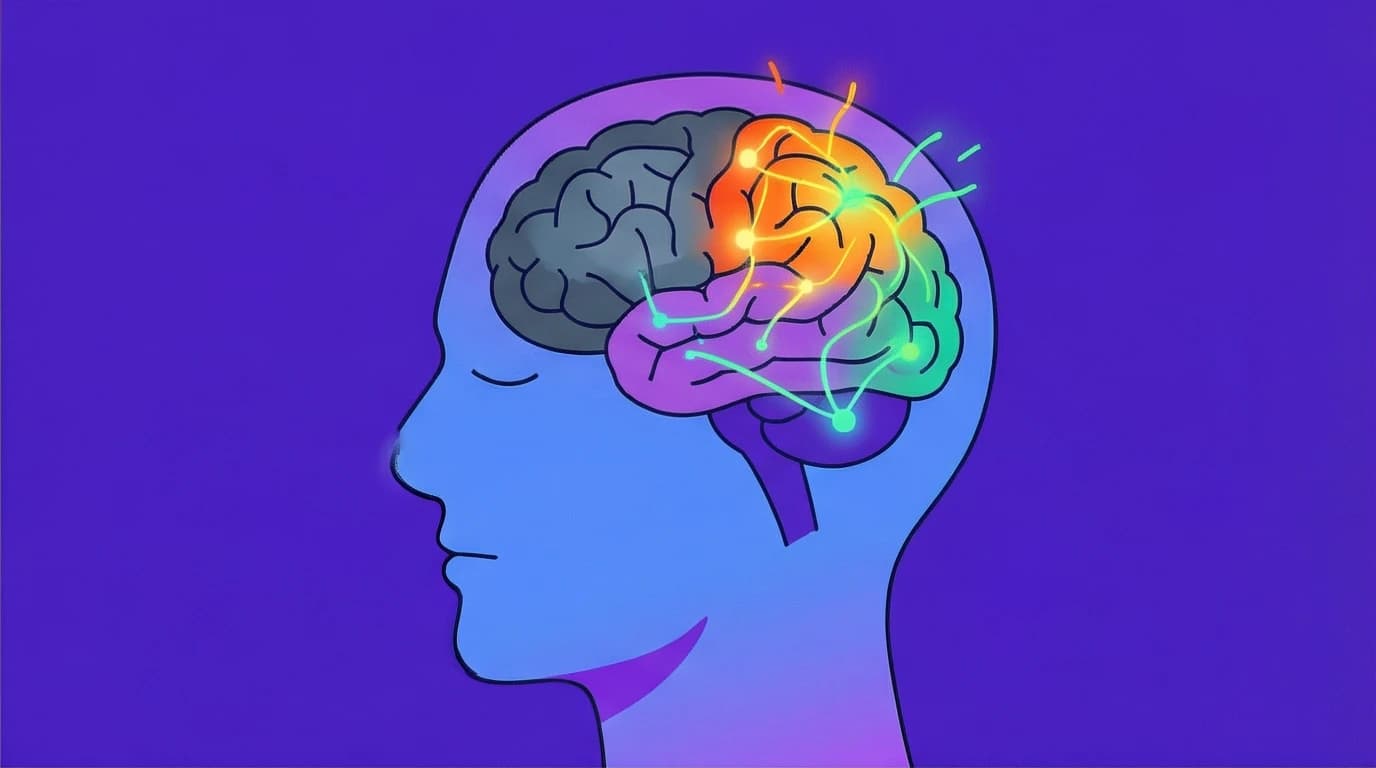
In flow, your prefrontal cortex temporarily powers down. You trade conscious, deliberate thinking for rapid, subconscious processing. Because the part of your brain that houses your inner critic is offline, you act without hesitation or self-doubt.
The Shift in Brain Waves
When you are awake and actively working, your brain operates in Beta waves. When you relax, you shift to Alpha waves. Flow exists right on the borderline between Alpha and Theta waves. This is the exact frequency your brain operates in during REM sleep or deep meditation. It is the signature of high creativity and lateral thinking.
The Neurochemical Cocktail
Entering the zone triggers a massive release of performance-enhancing neurochemicals.
- Dopamine: Sharpens focus and increases pattern recognition.
- Norepinephrine: Speeds up your heart rate, pumping more glucose to the brain to keep you locked in.
- Endorphins: Mask physical and mental pain, allowing you to push through fatigue.
- Anandamide: Elevates mood and expands lateral thinking (helping you connect disparate ideas).
- Serotonin: Floods the system after the flow state ends, creating a lasting sense of accomplishment.
Curious about just how far this neurochemical cocktail can push the human body? Exploring how extreme sports athletes use this exact neurobiology reveals how tapping into the zone allows humans to achieve feats that once seemed physically impossible. By decoding the biology of ultimate human performance, you can gain actionable insights on how everyday professionals in the United States—from Silicon Valley engineers to Wall Street analysts—can harness that same neurobiology to drastically elevate their work and creative output.
The Rise of Superman
Steven Kotler
20 Min8 Key Points4.5 RateThe Flow Channel: Balancing Skill and Challenge
The fundamental rule of the psychology of optimal experience is that flow can only occur under specific conditions. You cannot force it by simply staring intensely at a computer screen.
Csikszentmihalyi discovered that flow lives on a tightrope between boredom and anxiety. It requires a highly specific intersection of challenge and skill.
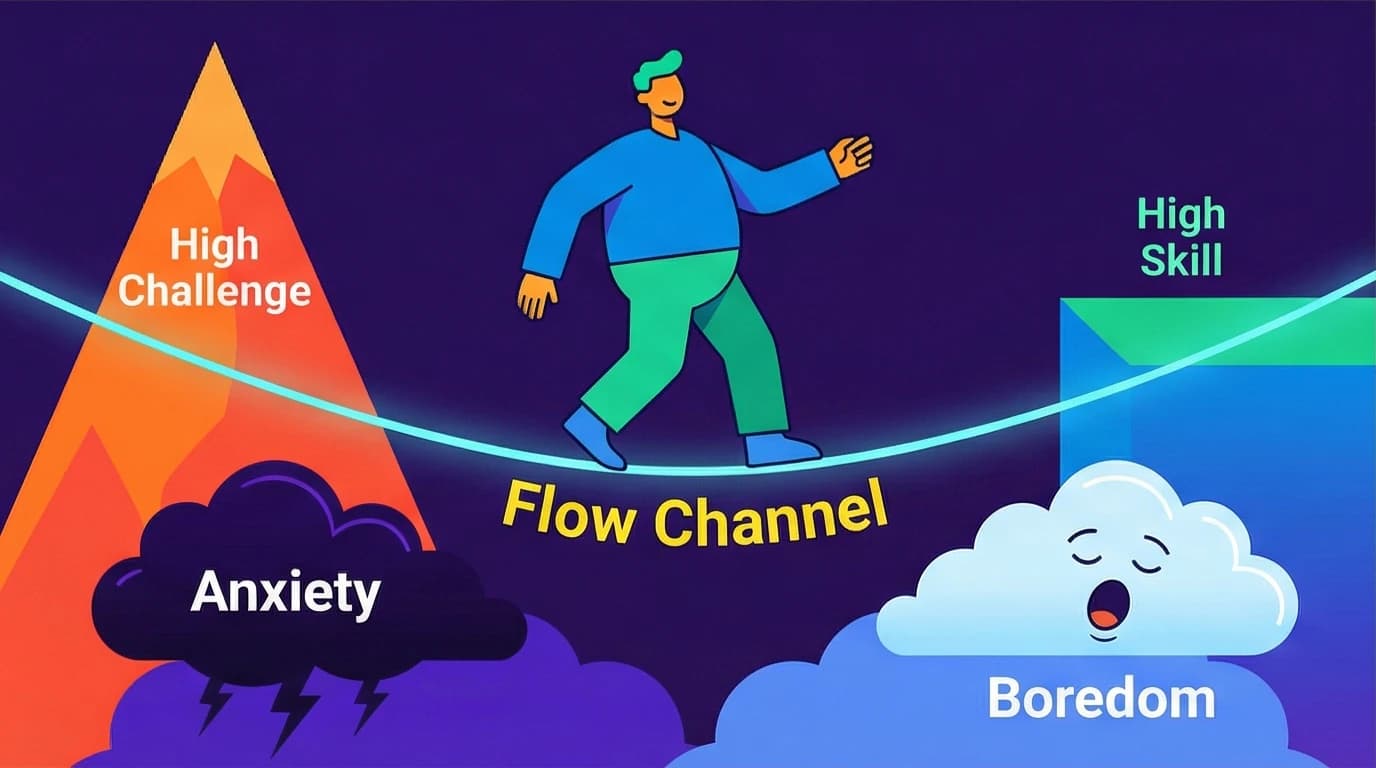
- High Challenge + Low Skill = Anxiety. If you are asked to play a complex Beethoven sonata but you only know basic piano chords, you will feel overwhelmed.
- Low Challenge + High Skill = Boredom. If you are an expert programmer tasked with writing basic HTML tags for eight hours, your mind will wander.
- High Challenge + High Skill = Flow. You enter the flow channel when a task pushes you slightly beyond your current comfort zone. Researchers estimate that the sweet spot is a task that is about 4% harder than your current skill level. It requires your absolute full attention to succeed, but you have the tools to pull it off.
How to Engineer Flow in Your Daily Routine
You do not need to be climbing a mountain to achieve flow. You can trigger it while writing an essay, organizing a spreadsheet, or coding software. But the environment and the task must be engineered correctly.
1. Define Utterly Clear Goals
Flow requires a roadmap. If you sit down and think, "I am going to work on my novel," your brain lacks direction. If you say, "I am going to write 1,000 words about the protagonist's backstory," your brain knows exactly what success looks like. Ambiguity kills the zone.
2. Seek Immediate Feedback
Your brain needs to know how it is doing in real-time to adjust and stay engaged. For a tennis player, the feedback is instant: the ball lands in or out. For a knowledge worker, you have to create feedback loops. This could mean testing your code after every few lines, or structuring an essay paragraph by paragraph and verifying the logic as you go.
3. Eliminate Every Ounce of Distraction
Flow is an incredibly fragile state. It takes the average person 10 to 15 minutes of uninterrupted focus to cross the threshold into flow. A single ping from your phone, an email pop-up, or a notification from your Audible app instantly boots you out of the zone. You then have to start the 15-minute ramp-up process all over again. Put your devices in another room. Block out 90 minutes of dedicated time.

Protecting your focus is arguably the hardest challenge in the modern American workplace. With smartphones buzzing and Slack channels constantly pinging, achieving that 15-minute ramp-up to flow can feel nearly impossible. If you are struggling to keep your devices from hijacking your attention, learning how to build an environment immune to interruptions is a game-changer. Taking control of your digital habits is the vital first step before you can reliably slip into a state of deep, uninterrupted focus.
Indistractable
Nir Eyal
23 Min10 Key Points4.5 Rate4. Embrace the Struggle Phase
People often quit right before flow happens. The initial phase of any complex task feels terrible. Your brain is loading information, analyzing variables, and burning energy. This is the "struggle phase," and it is mandatory. When you feel that urge to check your phone or walk away because the task feels too hard, recognize that you are at the gate of the flow state. Push through for another ten minutes.
Applying these principles consistently is the key to turning this powerful mental state from a random accident into a deliberate practice. If you're looking for more structured techniques to make this happen, it's helpful to explore a dedicated guide.
The Cycle: Why You Cannot Stay in Flow Forever
A common misconception is that once you master the psychology of flow, you can live in it for eight hours a day. Biologically, this is impossible.
The neurochemicals required to sustain flow consume a massive amount of metabolic energy. The human brain can typically sustain a deep flow state for about 90 to 120 minutes. After that, your system needs to recover.
Operating in the zone must be treated as a cycle:
- Struggle: Loading the data and pushing through the initial friction.
- Release: Stepping back mentally, taking a breath, and letting the subconscious take over.
- Flow: The peak performance phase.
- Recovery: The absolute necessity of rest. You cannot jump from one intense flow state directly into another without depleting your serotonin and burning out. Drink water, step away from the desk, and let your nervous system reset.
Structuring your workday around these cycles of intense concentration and deliberate recovery is the ultimate hack for long-term career success. If you want a step-by-step framework for implementing this kind of highly focused, distraction-free effort into a standard 9-to-5 schedule, mastering the art of deep, meaningful work is crucial. Cultivating this rare skill will not only help you produce better results in less time, but it will also protect your mental energy from the constant drain of shallow, reactive tasks.
Deep Work
Cal Newport
47 Min8 Key Points4.6 RateFeeling inspired by books like Deep Work and Flow but overwhelmed by the thought of adding them to your reading list? There's a more efficient way to absorb these powerful ideas.

Get the main takeaways from bestselling books on productivity and psychology in just 15 minutes, making it easy to learn even when you're short on time and energy.

Download LeapAhead App now
FAQ
What is the difference between flow state and hyperfocus?
While they look similar from the outside, they are psychologically different. Hyperfocus is often associated with conditions like ADHD and involves an intense, sometimes uncontrollable fixation on a task. It can cause you to ignore urgent priorities or personal needs to your detriment. Flow state is a highly organized, beneficial state where your skills perfectly meet a challenge, leading to optimal performance and a positive psychological aftermath.
While they look similar from the outside, they are psychologically different. Hyperfocus is often associated with conditions like ADHD and involves an intense, sometimes uncontrollable fixation on a task. It can cause you to ignore urgent priorities or personal needs to your detriment. Flow state is a highly organized, beneficial state where your skills perfectly meet a challenge, leading to optimal performance and a positive psychological aftermath.
Can anyone learn to trigger a flow state?
Yes. Mihaly Csikszentmihalyi's research proved that flow is accessible to everyone regardless of age, profession, or background. Factory workers on an assembly line can achieve flow by creating internal games to beat their own speed records. It is about how you structure the task—matching challenge with skill—rather than the task itself.
Yes. Mihaly Csikszentmihalyi's research proved that flow is accessible to everyone regardless of age, profession, or background. Factory workers on an assembly line can achieve flow by creating internal games to beat their own speed records. It is about how you structure the task—matching challenge with skill—rather than the task itself.
How often should I try to enter a flow state?
For maximum productivity and mental well-being, aiming for one or two 90-minute flow blocks per day is highly effective. Because it taxes your central nervous system heavily, trying to force more than four hours of deep, unbroken flow daily often leads to cognitive fatigue and burnout.
For maximum productivity and mental well-being, aiming for one or two 90-minute flow blocks per day is highly effective. Because it taxes your central nervous system heavily, trying to force more than four hours of deep, unbroken flow daily often leads to cognitive fatigue and burnout.