


You sit down at your desk with a massive project ahead of you. Five minutes in, your phone buzzes. A Slack notification pops up. Before you know it, you have spent 45 minutes scrolling through emails and checking Amazon deliveries without typing a single word of your report.
You know what it feels like to be completely absorbed in a task—where time bends, your hands move automatically, and the work feels effortless. But right now, forcing yourself to concentrate feels like pushing a boulder uphill. You do not need another motivational speech. You need a system to hijack your brain's chemistry and force it into gear.
That incredible feeling of being 'in the zone' has a name and a scientific framework. Understanding its key components is the first step to achieving it intentionally.
Here is exactly how to enter flow state on command, push past distraction, and do your best work.
The Core Formula: How to Trigger Flow State
Flow is not magic. It is a specific neurobiological state where your brain floods with dopamine, norepinephrine, and anandamide. To get there, you cannot just wait for inspiration to strike. You have to build the exact environment your brain needs to flip the switch.
1. Match the Challenge to Your Skill Level
This is the golden rule of flow. If a task is too hard, you feel anxious and paralyzed. If a task is too easy, you feel bored and look for distractions.
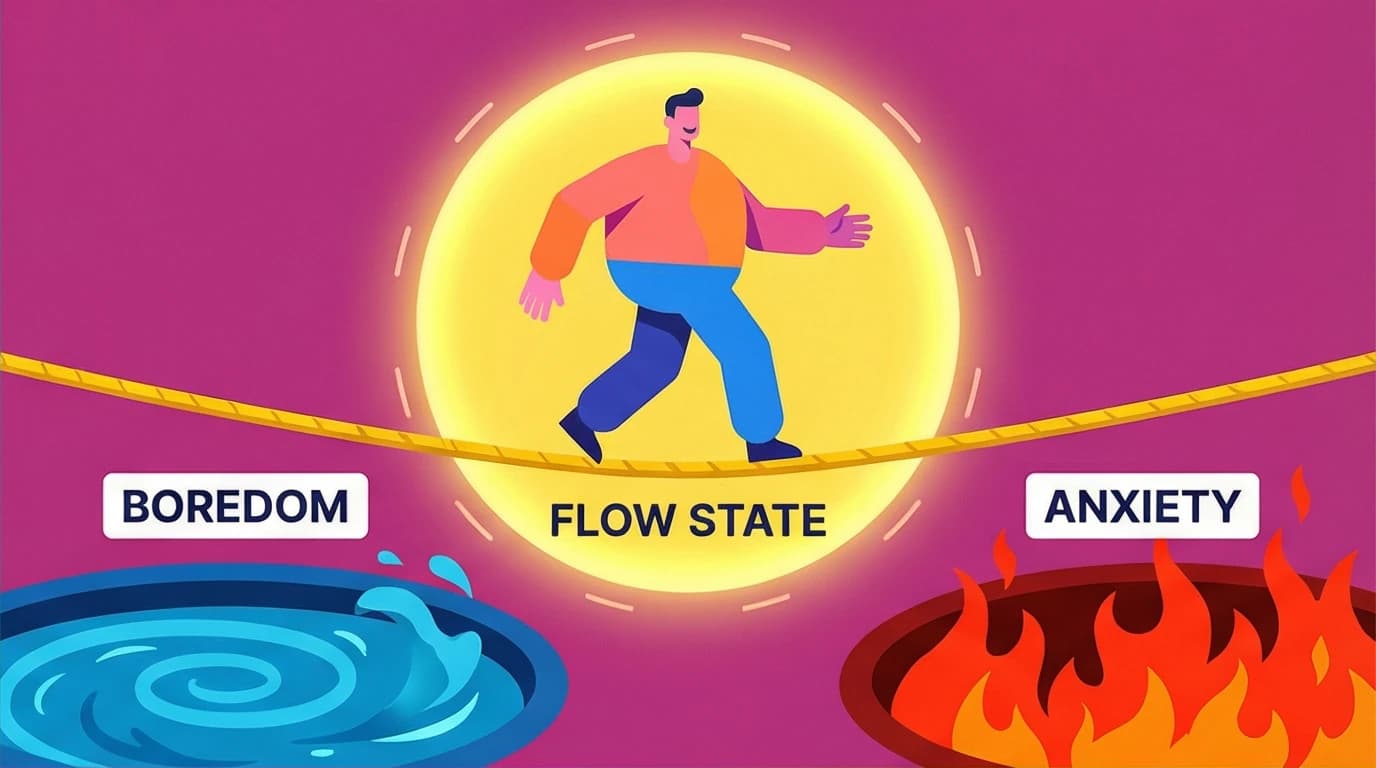
To learn how to trigger flow state consistently, you must find the sweet spot. The task needs to stretch your abilities by about 4%.
- If the task is too big: Break it down. Do not sit down to "write a book." Sit down to "write 500 words about the protagonist's childhood."
- If the task is too boring: Make it a game. Set a timer for 20 minutes and race against the clock. Force yourself to complete a routine spreadsheet task using only keyboard shortcuts. Add a layer of artificial difficulty.
This crucial balance between challenge and skill is the central pillar of Mihaly Csikszentmihalyi's groundbreaking research on optimal experience. For a comprehensive overview of his findings, a summary of his work is an excellent starting point.
If you find yourself constantly struggling to find that perfect balance between anxiety and boredom, you might want to explore the underlying psychology of this phenomenon. Understanding the exact mechanics of optimal human experience can transform how you approach your daily tasks. For a masterclass on how to consistently find that sweet spot and unlock your highest level of performance, diving into the foundational research on this topic is an absolute game-changer.
Flow
Mihaly Csikszentmihalyi
 37 Min
 8 Key Points
 4.6 Rate
2. Define a Crystal-Clear Goal
Your brain cannot enter a high-performance state if it does not know what the finish line looks like. "Work on the marketing presentation" is a terrible goal. It is vague and open-ended.
"Draft the first three slides of the Q3 marketing presentation, including the revenue graphs" is a perfect goal. You know exactly what you are doing, and you will know exactly when you are done.
3. Eliminate the Switching Penalty
Every time you glance at a text message or check a quick email, your brain experiences a "switching penalty." It takes an average of 23 minutes to regain your previous level of focus after an interruption.
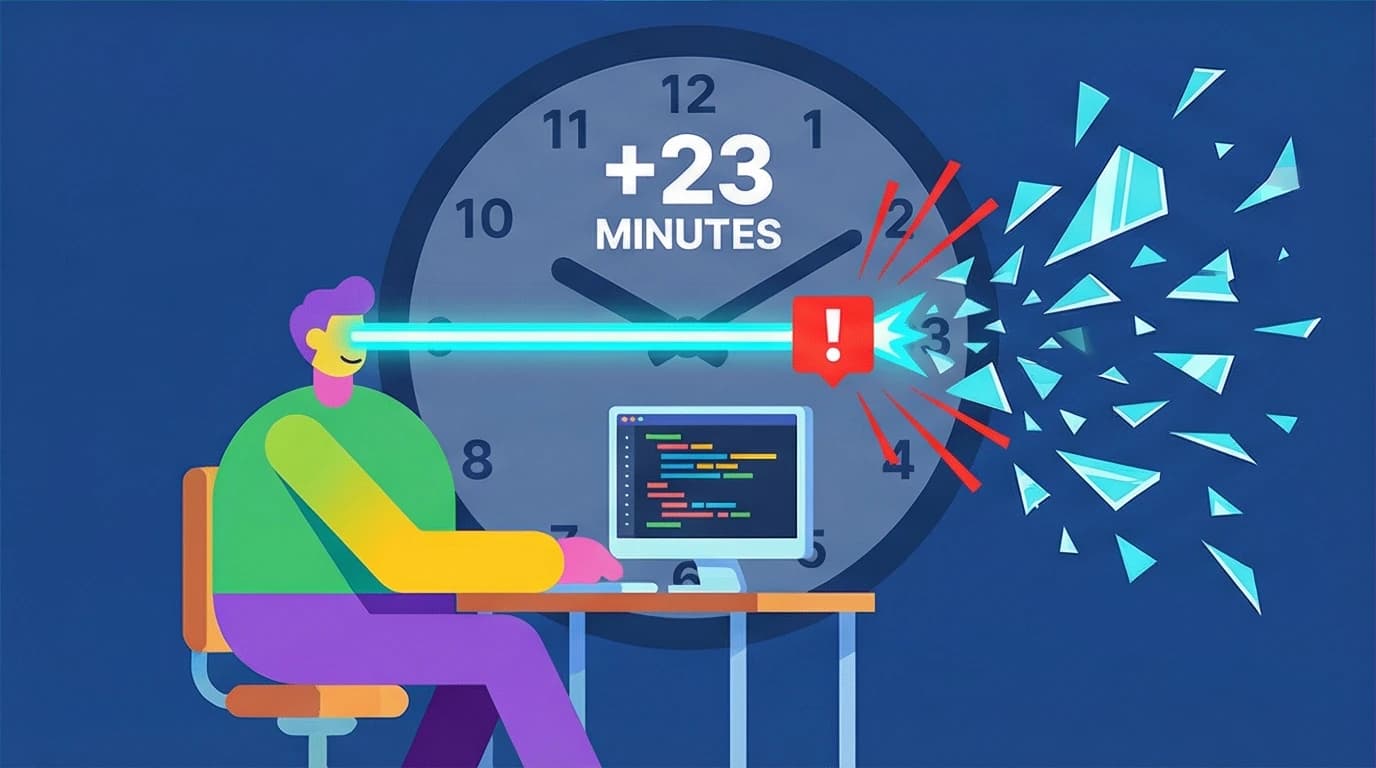
You cannot enter flow if you are constantly bleeding attention. Turn your phone on Airplane Mode. Put it in another room. Close every single browser tab that is not related to the task at hand.
Protecting your attention is arguably the most valuable skill you can develop in today's constantly connected workplace. Even with the best intentions, those pings and pop-ups are engineered to hijack your brain's reward system. If you are tired of losing hours to endless scrolling and want a proven framework to take back control of your digital life, learning how to build an environment that completely shields your focus is the next logical step.
Indistractable
Nir Eyal
23 Min10 Key Points4.5 RateAnd if the idea of reading through these recommended books feels overwhelming on a packed schedule, it's worth exploring tools designed for modern, fragmented attention.

This app distills the key ideas from bestselling books on focus and productivity into 15-minute audio or text summaries, helping you learn even when deep work isn't an option.
 LeapAhead
A 4-Step Routine for Achieving Flow State at Work
The modern office—whether a noisy open floor plan or a lonely remote desk with a fridge nearby—is designed to destroy your attention. Achieving flow state at work requires a ruthless, defensive routine. Treat this like an athlete stepping up to the starting line.
Step 1: The Pre-Flight Checklist
Preparation separates amateurs from professionals. Before you even touch your keyboard, set up your physical space.
- Clear your desk: Put away the scattered papers and coffee cups from yesterday.
- Block digital noise: Use apps like Freedom or Cold Turkey to block distracting websites. Turn off notifications on your computer.
- Set the temperature: Research shows humans focus best in a room that is roughly 70 to 72 degrees Fahrenheit. Adjust your thermostat if you can.
Step 2: The Struggle Phase (The First 15 Minutes)
This is where 90% of people fail. Getting into the zone is not instantly pleasurable. The first 10 to 15 minutes of any deep work session will feel uncomfortable. Your brain will actively fight you. It will beg for a cheap dopamine hit from social media.
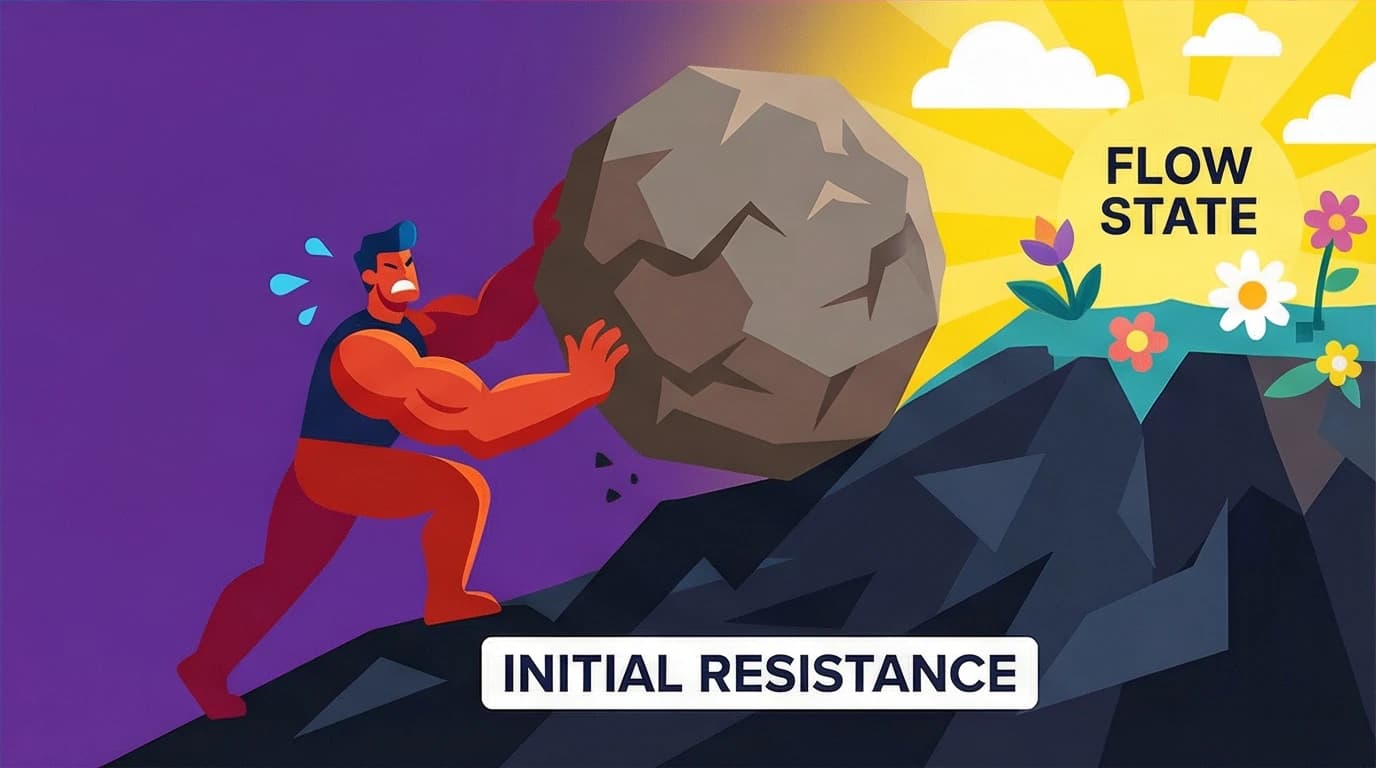
Expect this friction. Recognize it as the cost of admission. Do not negotiate with your brain. Sit there, stare at the screen, and force yourself to start typing, coding, or designing, even if it feels like garbage. You are warming up the engine.
Step 3: The Release and Flow
Right around the 15-minute mark, the friction vanishes. The task stops feeling like a chore. The rest of the world fades away. You stop thinking about how you are doing the work, and you simply do the work.
Protect this phase at all costs. Do not stop to check your phone as a "reward." Ride the wave until it breaks.
Step 4: The Recovery Phase
Flow is highly metabolically expensive. It drains your brain's energy reserves. You cannot sustain a deep flow state for 8 hours a day. World-class creatives and athletes typically cap out at 2 to 4 hours of true, unbroken flow per day.
When you naturally fall out of the zone, stop working. Step away from the screen. Go for a walk, drink a glass of water, or stare out a window. Do not jump straight into checking emails. Your brain needs time to process and recover.
You'll often hear the term 'deep work' used in discussions about flow. While they are closely related concepts for achieving high-value output, they have important distinctions. Understanding the difference can help you apply the right mindset to the right task.
Mastering this four-step routine is just the beginning of reclaiming your peak productivity. Once you understand how to navigate the friction and protect your cognitive energy, you can start applying these principles to your larger career goals. If you are ready to train your brain to embrace intense concentration and completely redefine what you can accomplish in a standard workday, studying the habits of the world's most focused knowledge workers will give you a massive competitive edge.
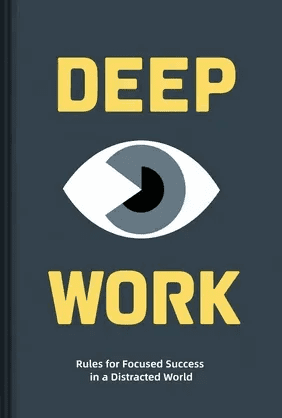
Deep Work
Cal Newport
47 Min8 Key Points4.6 RateProven Flow State Focus Techniques
If you are following the steps above but still hitting a wall, use these tactical flow state focus techniques to force your brain into the right frequency.
Auditory Triggers: Binaural Beats and White Noise
Silence can actually be distracting if you are hyper-aware of every creaking floorboard or distant siren. Sound is one of the fastest ways to hack your state.
- Binaural Beats: Listen to tracks with specific frequencies (around 15-20 Hz, known as Beta waves) which encourage concentration. You can find these on Spotify or Apple Music.
- Video Game Soundtracks: Soundtracks from games are specifically composed to keep you engaged, moving forward, and slightly energized without distracting vocals.
- Looping Tracks: Play a single song you like on repeat. Eventually, the brain tunes out the song and uses the rhythm as a metronome for deep focus.
The Caffeine Timing Strategy
Caffeine is a powerful tool, but most people use it wrong. Do not chug a giant coffee while you are scrolling the internet.
Drink your coffee or tea right as you sit down to start the struggle phase. It takes about 15 to 20 minutes for caffeine to hit your bloodstream—which perfectly aligns with the moment you need to break through the initial friction and enter flow.
The Hemingway Bridge
Writer Ernest Hemingway used a specific trick to make it easy to start working the next day: he always stopped writing mid-sentence.
You can apply this to any job. When you end your workday, leave a task half-finished with very clear instructions on what to do next. Leave the document open. Leave the code half-written. The next morning, you do not have to face the terror of a blank page. You just finish the sentence. This creates instant momentum, rocketing you straight back into the zone.
Common Roadblocks: Why You Keep Failing to Focus
Even with the best intentions, you might accidentally sabotage your own ability to reach peak concentration. Watch out for these traps.
Trap 1: The Multitasking Myth
You cannot write code, listen to a podcast, and answer Slack messages at the same time. Multitasking is scientifically impossible for the human brain. You are actually rapid-task-switching. This destroys your working memory and makes flow impossible. Pick one tab. Pick one task.
You cannot write code, listen to a podcast, and answer Slack messages at the same time. Multitasking is scientifically impossible for the human brain. You are actually rapid-task-switching. This destroys your working memory and makes flow impossible. Pick one tab. Pick one task.
Trap 2: Perfectionism and Fear of Failure
If you sit down demanding that your first draft be flawless, you will trigger anxiety. Anxiety kicks you straight out of the flow channel. Give yourself permission to do terrible work for the first 20 minutes. You can always edit bad work later. You cannot edit a blank page.
If you sit down demanding that your first draft be flawless, you will trigger anxiety. Anxiety kicks you straight out of the flow channel. Give yourself permission to do terrible work for the first 20 minutes. You can always edit bad work later. You cannot edit a blank page.
Trap 3: Physical Exhaustion
You cannot outwork a sleep deficit. If you slept four hours last night, your prefrontal cortex is compromised. Your willpower is depleted. Do not try to force a deep flow state when you are exhausted. Handle mindless administrative tasks instead, go to bed early, and try again tomorrow.
You cannot outwork a sleep deficit. If you slept four hours last night, your prefrontal cortex is compromised. Your willpower is depleted. Do not try to force a deep flow state when you are exhausted. Handle mindless administrative tasks instead, go to bed early, and try again tomorrow.
Recognizing these roadblocks is half the battle, but completely rewiring how your brain manages attention requires deliberate practice. Whether you are dealing with chronic multitasking, perfectionism, or simple burnout, shifting your daily habits can help you sustain that coveted state of effortless concentration. If you want to dive deeper into the science of attention and discover actionable strategies to direct your focus exactly where it needs to go, this insightful read is a fantastic resource to keep on your desk.
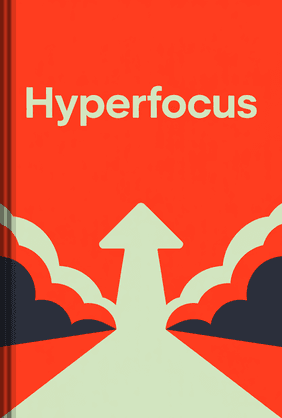
Hyperfocus
Chris Bailey
17 Min7 Key Points4.6 RateBuilding the discipline for deep focus is a marathon, not a sprint. For those days when you're too drained for a heavy work session but still want to invest in your personal growth, a micro-learning approach can be a game-changer.
LeapAhead lets you absorb career-boosting insights from top nonfiction books in short, 15-minute sessions, perfect for your commute or when you're too tired for intense reading.
LeapAheadFAQ
How long does it take to enter a flow state?
For most people, it takes 10 to 15 minutes of uninterrupted, focused effort to push past the initial mental resistance and trigger a flow state. If you get distracted during this window, the clock resets to zero.
For most people, it takes 10 to 15 minutes of uninterrupted, focused effort to push past the initial mental resistance and trigger a flow state. If you get distracted during this window, the clock resets to zero.
Can I get into a flow state if I hate the task?
It is extremely difficult to enter flow if you despise what you are doing. However, you can trick your brain by gamifying the task. Add artificial constraints, like trying to finish a boring data entry task in record time, to increase the challenge and engage your brain.
It is extremely difficult to enter flow if you despise what you are doing. However, you can trick your brain by gamifying the task. Add artificial constraints, like trying to finish a boring data entry task in record time, to increase the challenge and engage your brain.
How long can you stay in a flow state?
The human brain can typically sustain a deep flow state for 90 to 120 minutes at a time. After that, focus naturally degrades. Elite knowledge workers generally max out at around 4 hours of deep flow per day, broken up into separate sessions.
The human brain can typically sustain a deep flow state for 90 to 120 minutes at a time. After that, focus naturally degrades. Elite knowledge workers generally max out at around 4 hours of deep flow per day, broken up into separate sessions.
Do I need total silence to get into the zone?
No. While sudden, unpredictable noises (like people talking) break focus, steady background noise can actually help. Many people use noise-canceling headphones with white noise, rain sounds, or instrumental music to build an acoustic wall around their attention.
No. While sudden, unpredictable noises (like people talking) break focus, steady background noise can actually help. Many people use noise-canceling headphones with white noise, rain sounds, or instrumental music to build an acoustic wall around their attention.